Choosing the right Knife Gate Valve in 2026 requires more than comparing prices or connection sizes. The correct choice begins with the process itself. What fluid will pass through the valve? Will it contain abrasive solids, fibrous material, corrosive chemicals, or trapped sediment?
Philip L. Skousen, author of Valve Handbook, offers a useful principle: “Valve selection must begin with the process, not the valve.” This idea remains practical for engineers, plant operators, and maintenance teams. A valve that performs well in clean water may struggle in mining slurry. A stainless-steel body may resist corrosion, yet its seat could wear quickly under abrasive service.
Pressure, temperature, flow direction, and shutoff requirements deserve careful review. So does the actuator. Manual operation may suit a small, accessible pipeline, while pneumatic or electric actuation may improve control in a remote treatment plant. The wrong actuator creates delays, unsafe access, and unnecessary maintenance.
Small details matter.
This guide examines body materials, gate designs, seating options, port configurations, and automation needs. It also considers installation space and future servicing. These factors are sometimes ignored during procurement. That is a mistake.
Still, no selection guide replaces field experience. Actual media can behave differently from laboratory data. Product specifications can also be misunderstood. Engineers should verify operating conditions with qualified manufacturers and review relevant technical standards before approval.
The goal is not to find the cheapest Knife Gate Valve. It is to find a dependable match for the process, environment, and maintenance plan. Sometimes, that answer becomes clear only after questioning the original specification.
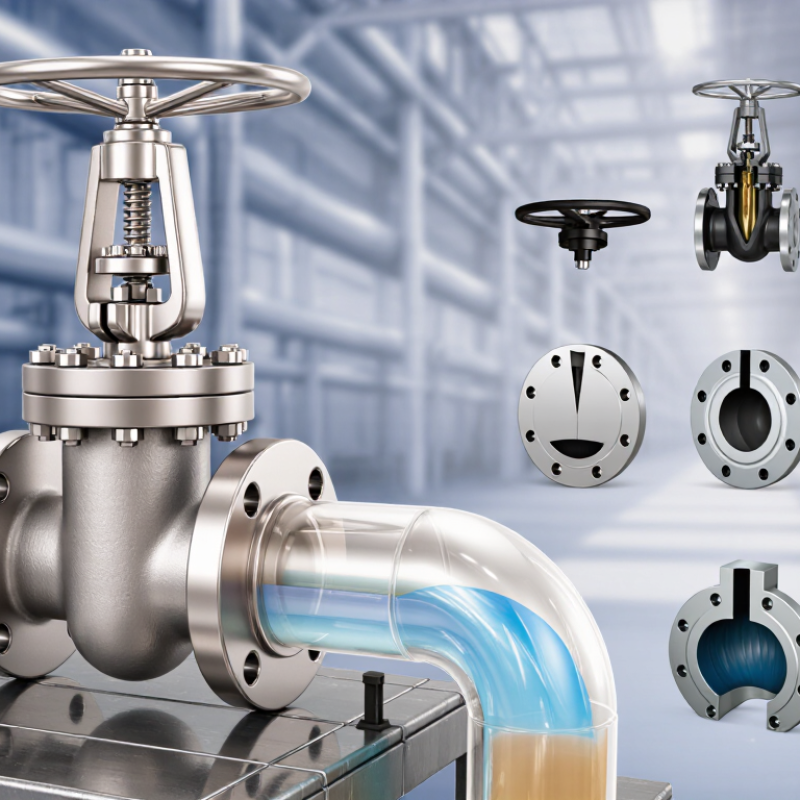
A knife gate valve uses a thin blade to control or isolate flowing media. The blade moves vertically through the body, creating a clear, straight passage when fully open. This design reduces obstruction and can handle thick fluids, slurry, pulp, and wastewater. It is not a precision throttling valve.
Choosing the right valve in 2026 still begins with process facts, not catalog appearance. Identify the medium, temperature, pressure, pipe size, and flow direction. Abrasive slurry may require a reinforced body and wear-resistant seats. Clean water usually needs a simpler configuration. A rising stem offers visible position feedback, while a non-rising stem saves space above the pipeline. The wrong seat material can cause leakage quickly. That detail matters.
Common applications include treatment plants, mining pipelines, paper production, and industrial drainage systems. Installation also affects performance. Keep the valve aligned, support heavy piping, and provide enough clearance for maintenance. Check whether solids may settle beneath the blade. Real systems are rarely tidy; drawings can be incomplete, and operating data may change. A rushed selection can work during commissioning, then struggle after months of cycling. Periodic inspection of packing, seats, bolts, and stem movement gives operators useful evidence before failure becomes obvious.
Process conditions should lead the selection, not the pipeline diameter. Start with the medium: wastewater, abrasive slurry, powder, or fibrous stock. Record solids concentration, particle size, temperature, pressure, flow direction, and expected cycling. A valve facing dense slurry needs different materials and actuator torque than one handling clean water. The U.S. EPA’s 2022 Clean Watersheds Needs Survey estimates $630.1 billion in wastewater infrastructure needs over 20 years. That scale makes reliable isolation more important than a quick purchase decision. I have seen projects specify the valve first, then discover that trapped solids prevent full closure.
Check pressure drop and installation space before approving the drawing. A full-port body may reduce buildup, but it cannot solve every process problem. Review corrosion exposure, abrasion, seat design, stem orientation, and access for maintenance. For critical isolation, require documented testing under ISO 5208 or the applicable project specification. The wrong leakage class can create costly surprises. It is an easy detail to miss.
Tips: Build a simple process-condition sheet. Include normal and upset pressure, temperature, solids percentage, particle size, cycle frequency, and failure position. Ask the supplier to confirm torque at the worst credible condition, not clean-water conditions. Also challenge the assumed valve size. Larger is not always safer; it may increase actuator load, weight, and cost. Recheck the choice after startup data becomes available. Field conditions are often less tidy than the design basis.
How to Choose the Right Knife Gate Valve in 2026?
Choosing a knife gate valve starts with the process media, not the catalog. In field inspections, I have seen clean-looking water carry sand, fibers, and chemical residue. These details can change the required material completely. Abrasive slurry may need a hardened gate and reinforced body. Chloride-rich water can attack ordinary stainless steel faster than expected. Highly corrosive media may require specialized alloys or nonmetallic lining. Confirm chemical compatibility at the actual concentration and temperature.
Pressure and temperature must be checked together. A valve rated for moderate pressure at room temperature may lose capacity when the process becomes hot. Review the pressure class, operating temperature, pressure spikes, and shutoff direction. Consider the seats carefully. Resilient seats often suit general water service, while metal seats may tolerate heat and abrasive particles better. They may also allow more leakage. Small details matter.
Corrosion is not only visible rust. It can appear as pitting, galvanic attack, or stem damage beneath deposits. I once focused too much on body material and overlooked the stem environment. That was a useful mistake. Check every wetted component, including bolts, packing, gate, and seat retainers. Ask for tested data, inspection records, and clear material certificates. When uncertain, consult a qualified valve engineer and compare the selection with the actual process conditions.
| Media / Service | Typical Operating Conditions | Recommended Body Material | Gate and Stem Material | Seat / Packing Selection | Corrosion and Design Notes | Suitable Valve Configuration |
|---|---|---|---|---|---|---|
| Water, treated water, and low-corrosivity liquids | Up to approximately 10–16 bar; 0–80°C | Ductile iron or carbon steel; stainless steel for higher chloride exposure | Stainless steel 304 or 316; 316 is preferred where chlorides are present | EPDM for water service; graphite packing for higher temperature | Confirm chloride level, dissolved oxygen, and risk of microbiologically influenced corrosion | Unidirectional resilient-seated or bidirectional wafer/lug design |
| Raw sewage and municipal wastewater | Generally 6–16 bar; 0–60°C; suspended solids and fibrous matter | Ductile iron or coated carbon steel | 316 stainless steel or coated stainless steel; rising stem preferred for inspection | EPDM or NBR, depending on oils and biological contaminants; resilient elastomer seat | Use a non-clogging gate edge and flushable body cavity; consider hydrogen sulfide exposure | Through-conduit or non-rising-stem design for solids-handling isolation |
| Abrasive slurry, tailings, and mineral concentrates | Typically 6–16 bar; up to approximately 100°C; high solids concentration | Carbon steel or ductile iron with replaceable wear components | Hardened stainless steel gate; abrasion-resistant coatings may be used | Replaceable elastomer seat such as natural rubber, EPDM, or polyurethane, selected by chemistry and temperature | Prioritize abrasion resistance, a protected seat, adequate actuator thrust, and minimized dead space | Slurry knife gate valve with reinforced seat and wear-resistant gate |
| Pulp, paper stock, and fiber-bearing process fluid | Approximately 6–16 bar; 0–120°C; fibrous solids may bridge the bore | Stainless steel 316 for corrosive stock; coated carbon steel for mild service | 316 stainless steel; duplex stainless steel for more aggressive chloride-containing liquor | EPDM or PTFE-based seat; braided graphite or PTFE packing as temperature requires | Use a full-port, non-clogging design and verify compatibility with bleaching chemicals and caustic liquor | Through-conduit knife gate valve with flush ports where required |
| Dry powder, dust, ash, and bulk solids | Usually low pressure, up to approximately 6–10 bar; 0–200°C depending on material | Carbon steel with abrasion-resistant liner or stainless steel for corrosive powders | Stainless steel or hardened carbon steel gate; corrosion-resistant stem | Metal-seated or resilient seat; graphite packing for elevated temperature | Specify dust-tight packing, purge connections, and suitable sealing for abrasive particles | Bi-directional dry bulk knife gate valve, often with pneumatic actuation |
| Air, gas, and non-corrosive dry process gas | Approximately 6–16 bar; −20–150°C, subject to seal limits | Carbon steel, ductile iron, or stainless steel | 304 or 316 stainless steel gate; stainless steel stem recommended | PTFE, graphite, or suitable elastomer according to temperature and leakage requirements | Knife gate valves are mainly isolation devices; do not use for continuous throttling unless specifically designed for it | Lug or wafer pattern with packing designed for the gas composition |
| Acidic or chloride-bearing chemicals | Pressure and temperature vary widely; often 0–10 bar and below 100°C | 316 stainless steel for moderate conditions; duplex, alloy-lined, or fluoropolymer-lined construction for severe service | 316 stainless steel, duplex stainless steel, or corrosion-resistant alloy selected from chemical compatibility data | PTFE or chemically compatible elastomer; graphite may be unsuitable in strongly oxidizing media | Do not select material by fluid name alone; evaluate concentration, temperature, pH, oxidizing potential, and crevice corrosion risk | Lined or corrosion-resistant knife gate valve with compatible wetted trim |
| Caustic soda and alkaline process liquids | Commonly 6–16 bar; 0–100°C, with concentration-dependent limits | Carbon steel may be suitable at controlled concentration and temperature; stainless steel for more demanding conditions | 316 stainless steel or compatible alloy; verify resistance to caustic stress corrosion | PTFE or EPDM, selected according to concentration and temperature; graphite packing may be used when compatible | Material limits depend strongly on sodium hydroxide concentration and operating temperature | Resilient-seated design with chemically compatible wetted components |
| Hot water, steam, and high-temperature process fluid | Approximately 10–25 bar; 150–400°C depending on pressure class and construction | Carbon steel or stainless steel with a temperature-rated body and bonnet arrangement | Stainless steel or heat-resistant alloy gate and stem | Metal seat and flexible graphite packing; avoid standard elastomers above their rated temperature | Check thermal expansion, packing emissions, pressure-temperature derating, and actuator temperature exposure | High-temperature metal-seated knife gate valve with extended bonnet where needed |
| Hydrocarbon liquids, oily water, and fuel-related service | Approximately 6–16 bar; −20–120°C depending on fluid and seal type | Carbon steel or stainless steel | 316 stainless steel or coated stainless steel | NBR for many petroleum-based fluids; FKM or PTFE where temperature and chemical compatibility require it | Verify aromatic content, flash point, fire-safe requirements, fugitive-emission limits, and elastomer swell | Metal-seated or resilient-seated isolation valve selected for the applicable safety standard |
| High-purity, hygienic, or pharmaceutical liquid | Typically low to moderate pressure; 0–150°C with clean-in-place or sterilization cycles | 316L stainless steel with smooth, cleanable wetted surfaces | 316L stainless steel; polished and crevice-minimized wetted trim | PTFE or approved hygienic elastomer; packing selected for cleanability and emission control | Specify surface finish, drainability, dead-leg control, clean-in-place compatibility, and applicable hygienic requirements | Sanitary-design knife gate valve only where the process and validation requirements permit its use |
Actuation affects speed, control, and maintenance access. Manual handwheels suit infrequent isolation and remote locations without power. Pneumatic actuators respond quickly, making them useful for repetitive cycles and automated process lines. Electric actuators offer precise positioning, but moisture protection and cable routing require careful planning. Hydraulic systems deliver high force for large valves, although their pumps and hoses add maintenance points. Select the actuator after checking valve size, pressure, cycle frequency, and available utilities. Oversizing the actuator can waste energy and stress the stem.
Sealing choice depends heavily on the media. Resilient seats work well with water, dry powders, and moderate temperatures. Metal seats tolerate abrasive slurry and heat better, but they may allow minor leakage. A double-direction seal can simplify operation where flow direction changes. However, no sealing option performs perfectly in every service. I have seen premature wear caused by fine grit entering the seat cavity, not by poor valve construction. Regular flushing may matter more than the original specification.
Installation details often decide service life. Leave enough clearance above the valve for stem travel and actuator removal. Align the pipeline carefully; forced alignment can distort the body. Support heavy actuators separately when the piping cannot carry their weight. Check flow direction, gasket compression, flange condition, and drain access before tightening bolts. After installation, operate the valve slowly and inspect for binding, leakage, and abnormal vibration. A practical commissioning record should include pressure, temperature, cycle time, and observed seal condition.
When choosing a knife gate valve in 2026, examine maintenance before comparing purchase prices. A low-cost valve can become expensive after repeated packing adjustments, seat replacements, or unplanned shutdowns. Select designs with accessible packing, replaceable wear parts, and clear service instructions. For abrasive slurry, inspect the seat and gate materials carefully. A polished stem also reduces packing damage and cleaning time.
Safety features deserve equal attention. Use visible open-close indicators, stem guards, and locking devices where accidental operation could endanger workers. Confirm the valve’s pressure, temperature, and media ratings against the actual pipeline conditions. Fail-safe actuation may matter during power loss, but it should match the process risk. A detail is easy to miss: poor drainage can leave hazardous residue inside the body. That affects maintenance and exposure.
Tips: Calculate total ownership cost over five years. Include installation, actuator power, spare parts, inspections, labor, and downtime. Ask for maintenance intervals based on similar service, not laboratory assumptions. Keep critical seals on site. Measure the pipeline before ordering; small alignment errors can create large stresses. Also, question optimistic service-life claims. Conditions vary, and real operating data is often incomplete. A short trial in the harshest line may reveal more than a polished specification sheet.
Evaluate maintenance needs, safety features, and total ownership cost
This comparison uses a 1–5 engineering evaluation scale for three common knife gate valve configurations. Higher maintenance and safety scores indicate greater suitability for demanding service, while the ownership cost score represents better five-year value. Resilient-seated valves generally offer lower initial and maintenance costs, metal-seated valves provide stronger wear resistance in abrasive service, and slurry-duty designs are better suited to frequent cycling and solids handling.
It uses a thin blade to isolate flowing media. The blade moves vertically through the valve body. Fully open, it creates a mostly clear passage. It is mainly an isolation valve, not a precision flow-control valve.
Common services include wastewater, thick fluids, slurry, pulp, powders, and fibrous materials. A full-port design can reduce buildup around the blade. Dense solids may still block closure. Real process conditions can be messy.
Record the medium, temperature, pressure, pipe size, flow direction, and cycling frequency. Also measure solids concentration and particle size. Normal conditions are not enough. Include credible upset conditions.
Resilient seats suit water, dry powders, and moderate temperatures. Metal seats tolerate more abrasion and heat. They may permit slight leakage. Fine grit can damage the seat cavity quickly.
Manual handwheels suit occasional isolation without available power. Pneumatic actuators support fast, repeated cycling. Electric actuators provide accurate positioning. Hydraulic systems deliver high force for large valves.Choose carefully.
Align the pipeline before tightening flange bolts. Leave clearance above the valve for stem movement and actuator removal. Support heavy actuators separately when necessary. Forced alignment can distort the valve body.
Usually, no. Its blade provides effective isolation when fully open or closed. Continuous throttling can increase wear and vibration. A different valve type may provide better control.
Inspect packing, seats, bolts, and stem movement periodically. Record pressure, temperature, cycle time, and leakage observations. Check for binding after installation. I might trust a drawing too much; startup data deserves another review.
Choosing the right Knife Gate Valve in 2026 begins with understanding how its gate-style design controls, isolates, or regulates challenging media. Before selecting a valve, assess the process conditions, including the type of material, flow characteristics, operating pressure, temperature range, solids content, and frequency of cycling. These factors determine the appropriate valve structure and performance requirements for applications involving liquids, slurries, powders, or other demanding process media.
Material selection should match the media’s chemical and abrasive properties while providing suitable pressure, temperature, and corrosion resistance. It is also important to compare manual, pneumatic, electric, and hydraulic actuation methods, along with seat and sealing options that support reliable shutoff. Installation space, flow direction, pipeline alignment, and access for inspection should be considered early. Finally, evaluate maintenance intervals, safety features, replacement-part availability, energy use, and expected service life. A valve with a higher initial cost may offer better total ownership value when it reduces leakage, downtime, and long-term maintenance demands.