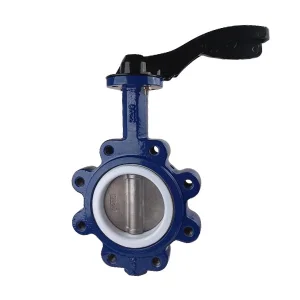
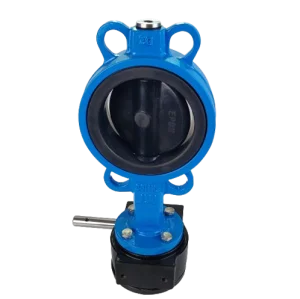
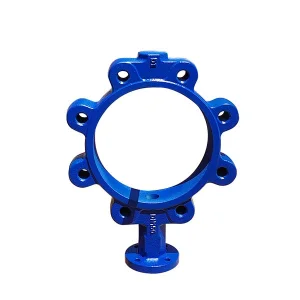
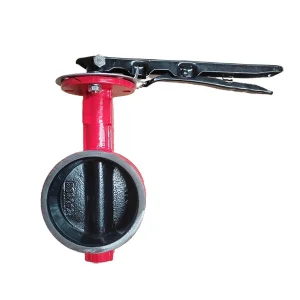
Featured Industrial Flow Solutions
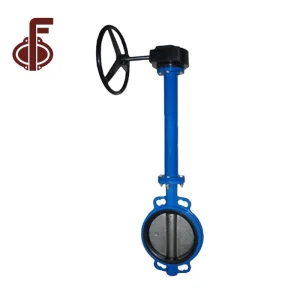
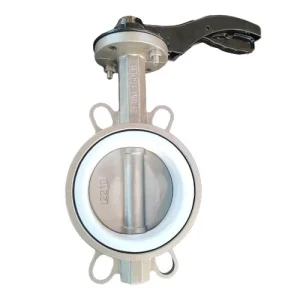
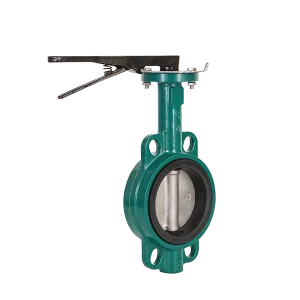
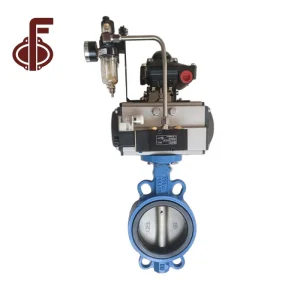
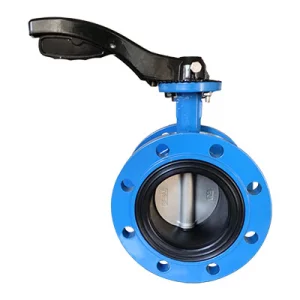
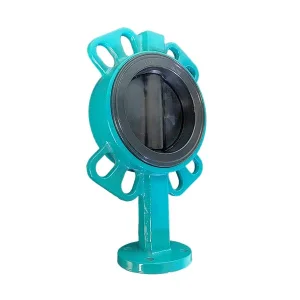
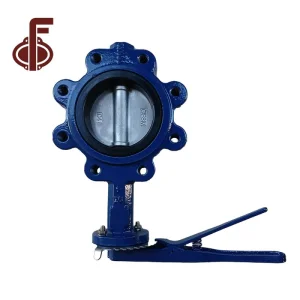
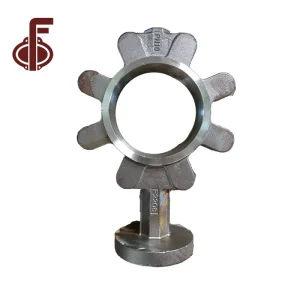
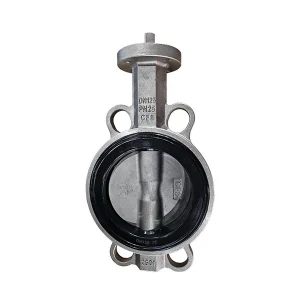
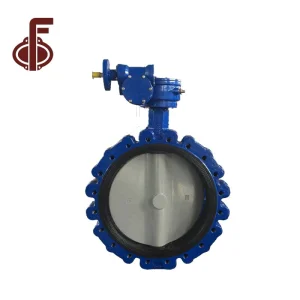
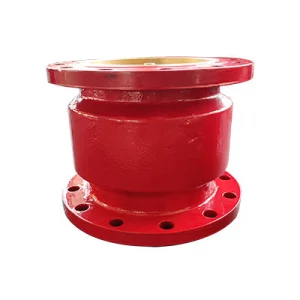
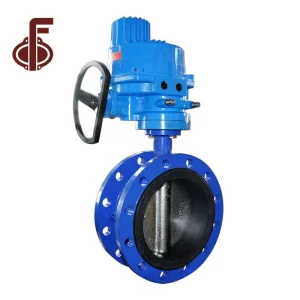
Engineered for full-bore, minimal pressure drop isolation. Examine our project-ready pipeline hardware manufactured directly to BS, DIN, ANSI, and ISO global criteria.
Technical Roadmap & Future Outlook
The transition from mechanical isolation valves to smart, condition-monitored infrastructure components dictates the evolution of the modern gate valves factory.
Predictive Cavitation & Leak Sensors
Integration of IoT-ready pressure transducer ports and acoustic emission sensors in large-diameter municipal gate valves to detect internal seat bypass long before visible pipe failure occurs.
Advanced Polymeric & Ceramic Coatings
Moving beyond standard fusion-bonded epoxy (FBE). Next-generation gate wedges utilize graphene-reinforced EPDM elastomers and nano-ceramic thermal spray seats for corrosive saline media.
Zero-Stem-Emission Fugitive Control
Meeting ISO 15848-1 Class AH through self-energizing chevron live-loaded packing glands, reducing methane and VOC release across industrial and petrochemical utility branches.
Macro-Industry Solutions & System Integration
A gate valves factory must design tailored assemblies to accommodate hydraulic dynamics, viscous slurries, and severe pressures across key sectors.
Municipal Water Treatment
Soft-seal resilient wedge gate valves designed to DIN 3352 / BS 5163 standards with WRAS-compliant vulcanized EPDM wedges, ensuring zero head-loss and 100% drip-tight shutoff.
Mining Slurry & Tailings
Knife gate valves with bidirectional elastomer sleeves and scraper blades that shear through thick pulp, mineral tailings, and suspended fiber matrices without seat pocket jamming.
Thermal Power & Steam
Cast carbon steel (WCB) and alloy steel metal-seated parallel slide or flexible wedge gate valves built to ANSI Class 150/300/600 for reliable high-temperature isolation.
Desalination & Marine
Nickel Aluminum Bronze (C95800) and Duplex Stainless Steel (2205/2507) gate assemblies specifically cast to counteract chloride pitting and crevice corrosion.
China Factory 4.0: Supply Chain Resilience & Casting Integrity
Tianjin Zhongfa Valve Co., Ltd. (ZFA) applies strict smart factory methodologies to eliminate raw material defects, guarantee wall thicknesses, and shorten global delivery times.
| Manufacturing Stage | Legacy Foundry Approach | ZFA Factory 4.0 Standard | Procurement Advantage |
|---|---|---|---|
| Casting & Metallurgy | Manual green sand casting with variable porosity | Automated furan resin sand molding + direct optical emission spectrometry | Defect-Free Shells Zero blowholes, certified QT450-10 ductile iron |
| CNC Machining | Multi-setup manual lathe tooling | Single-clamping 5-axis machining centers for body flanges and guide rails | True Wedge Alignment Torque reduction up to 25%, extending seat lifetime |
| Vulcanization | Adhesive-glued wedge seals prone to peeling | Direct high-pressure vulcanized encapsulation with EN 681-1 rubber | Zero Peeling 100% bonded wedge surface resistant to high flow shear |
| Hydrostatic Testing | Random batch sampling at atmospheric hold | 100% automated pressure logging: Shell (1.5x PN) and Seat (1.1x PN) | EN 12266-1 Leakage Rate A Total zero-bubble pressure containment |
Procurement Specifications for Global Engineering Teams
Enterprise EPC and distributor procurement requirements differ significantly based on pipeline operating constraints. Use this structural comparison when issuing your RFQ.
Resilient Soft-Seal Gate Valves
Primary Standard: DIN 3352 F4/F5, BS 5163, AWWA C509/C515.
Seat Design: Full rubber wedge vulcanization (EPDM/NBR).
In-line Fluid: Clean water, wastewater, neutral fluids (-10°C to 80°C).
Core Advantage: Straight-through bottom channel without sediment trapping pockets.
Metal-to-Metal Industrial Gate Valves
Primary Standard: API 600, ASME B16.34, BS 1414.
Seat Design: Solid Stellite 6 overlay or bronze rings pressed into WCB/CF8M.
In-line Fluid: Steam, petrochemicals, hydrocarbons (up to 425°C).
Core Advantage: Excellent thermal shock tolerance and extreme fire-safe integrity.
Knife Gate & Specialty Valves
Primary Standard: MSS SP-81, TAPPI-TIS 405.
Seat Design: 316 Stainless beveled knife edge with PTFE or metal seat.
In-line Fluid: Papermaking stock, fly ash, mining slurries, granulated solids.
Core Advantage: Ultra-narrow wafer face-to-face dimension saving plant space.
Localized Support, Engineering Compliance & OEM Capability
A true export partner operates with full technical traceability. Tianjin Zhongfa Valve provides end-to-end documentation packs ensuring smooth plant commissioning globally.
EN 10204 3.1 Material Certification
Every delivery batch of ductile iron (GGG40/GGG50) or cast steel is supplied with chemical analysis and tensile/elongation test records traceable to individual melt furnace numbers.
ISO 9001 & CE Pressure Equipment Compliance
Production processes conform directly to PED 2014/68/EU Module H, ensuring our gate valves, butterfly valves, and check valves can be specified on European Union municipal tenders.
Private Labeling & Rapid Spares Support
Custom body casting trademarks, specialized RAL polyurethane coating colors for corrosive atmospheric environments, and off-the-shelf stem and seat replacement kits for global plant operators.
Frequently Asked Questions (FAQ)
Essential technical and procurement insights addressing real plant operating conditions.
Why is a non-rising stem (NRS) gate valve chosen over an OS&Y design?
Non-Rising Stem (NRS) gate valves keep the stem threads inside the valve body, retaining an identical overall height whether open or closed. They are optimal for underground municipal burial or compact water treatment chambers. Outside Screw and Yoke (OS&Y) gate valves display open/closed status via stem elevation, which is mandatory for fire sprinkler and industrial safety systems.
Can gate valves be utilized to throttle or regulate pipeline volume?
No. Gate valves are strictly intended for on/off isolation. Operating a gate valve in a partially throttled state causes extreme fluid velocity across the bottom edge of the wedge, resulting in severe high-frequency flutter, cavitation, wire-drawing erosion, and rapid seat failure. When throttling is required, choose concentric or eccentric butterfly valves or specialized globe designs.
What prevents sedimentation buildup at the bottom of resilient seat gate valves?
Traditional metal-seated gate valves relied on a recessed groove at the bottom of the body to seat the wedge, which routinely captured grit, rust, and silt. Modern resilient seated gate valves manufactured by ZFA feature an unobstructed, flat bore design. When closed, the vulcanized rubber wedge compresses directly against the smooth cast body floor, preventing sedimentation traps.
How does ZFA test gate valve integrity prior to dispatch?
Every individual gate valve undergoes factory hydrostatic and pneumatic testing according to ISO 5208 and EN 12266-1. The body shell is pressurized with water to 1.5 times nominal rating (PN) to test casting density. The seat is tested bidirectionally to 1.1 times PN to ensure zero-bubble seal integrity (Rate A compliance). Complete inspection test plans (ITP) are issued with shipment documentation.
Complete High-Performance Valves Inventory
Explore additional certified isolation, non-return, and process valves manufactured across our production lines in Tianjin, China.