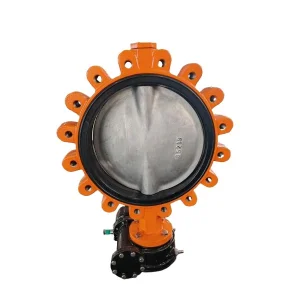
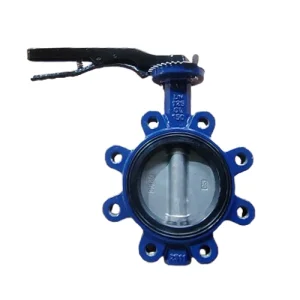
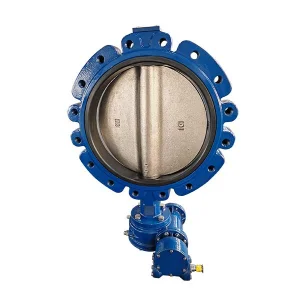
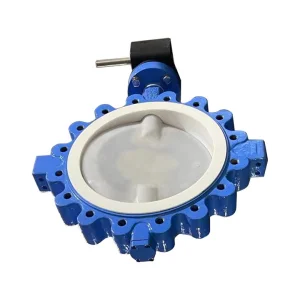
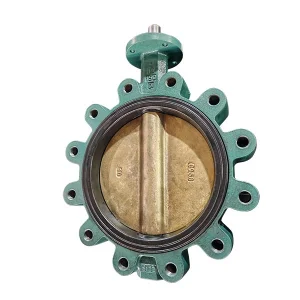
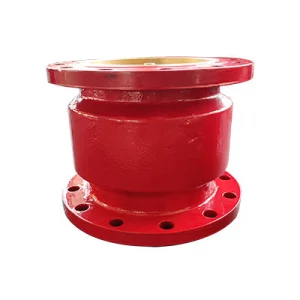
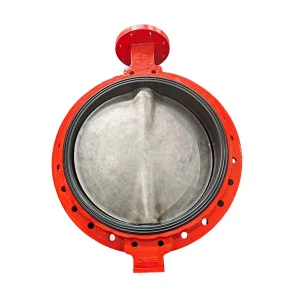
Precision Lug Butterfly Valve Series
Explore our premium product line manufactured with ductile iron, high-grade stainless steels, and engineered polymers for demanding industrial utilities.
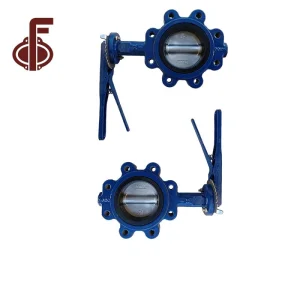
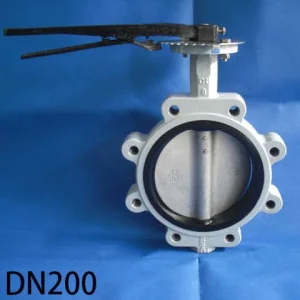
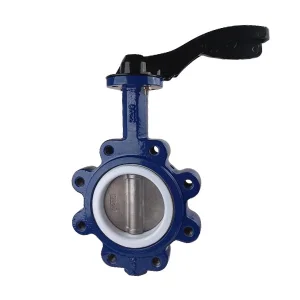
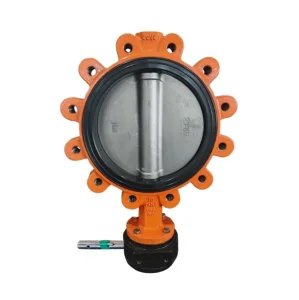
Engineering Principles of Lug Type Butterfly Valves
Analyzing mechanical design, flange fastening mechanics, and structural superiority in pipeline isolation and dead-end duty.
Full Lug vs. Wafer Architecture
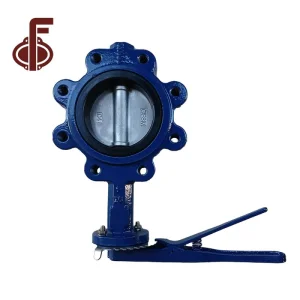
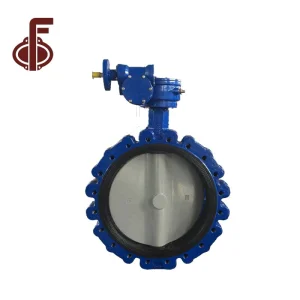
Unlike wafer designs that are clamped passively between mating flanges via extended through-bolts, a lug style valve features tapped, threaded eyelets matching ASME B16.5, DIN EN 1092-1, or JIS B2238 bolt patterns. This enables bolt attachment from either side without passing through the entire body, delivering robust mechanical stability in high-vibration systems.
True Dead-End Service Capability
A primary structural advantage of the lugged butterfly configuration is downstream line disconnectability. Technicians can unbolt and isolate downstream equipment for overhaul or inspection while the valve holds operating system pressure upstream up to its maximum rating (typically 10 bar or 16 bar for resilient seated variants) without line evacuation.
Sealing Integrity & Elastomer Bonding
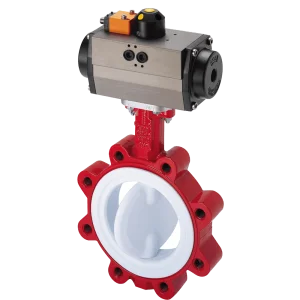
Equipped with phenolic backed, dovetail seated, or vulcanized elastomers (EPDM, NBR, FKM) as well as chemically inert PTFE/PFA linings. The compressive seal prevents medium from reaching the valve body casing and external stem packing, achieving Zero-Leakage (API 598 rate A / EN 12266-1) across hundreds of thousands of cycles.
China Factory Ecosystem & Global Compliance
How state-of-the-art foundry clustering and rigorous quality assurance guarantee engineering repeatability and rapid project turnaround.
Foundry & Machining Clustering
Situated in the industrial center of Tianjin, our facility utilizes vertical manufacturing integration: in-house resin sand casting, CNC multi-axis boring centers, automated electrostatic epoxy powder coating lines (250μm thickness), and hydrostatic pressure test rigs. This reduces lead times by 35% compared to Western counterparts while maintaining exceptional metallurgical purity.
Local Approval & Regional Harmonization
Valves are engineered to seamlessly meet national potable water and pressure vessel directives. Full compliance documentation includes CE-PED (Pressure Equipment Directive 2014/68/EU), WRAS/NSF-61 compliant rubber compounds for drinking water networks, and EAC certification for the Eurasian Customs Union, streamlining municipal and EPC import qualification.
Complete MTR & Traceability Verification
Procurement teams receive EN 10204 3.1 Mill Test Reports with direct heat number mapping on cast valve bodies (Ductile Iron QT450-10, WCB, CF8, CF8M, Aluminium Bronze C95800). Comprehensive spectral analysis, tensile testing, elongation metrics, and NDT reports ensure full transparency for engineering asset registries.
Industrial Applications & Global Procurement Dynamics
Targeted solutions for challenging utility environments across energy, water treatment, chemical processing, and naval applications.
HVAC & District Cooling
Ideal for central chiller plant isolation, cooling towers, and boiler headers. Lug bodies enable pump servicing without purging the entire hydronic loop.
Wastewater & Potable Plants
Corrosion-resistant ductile iron with EPDM soft seating provides bubble-tight shut-off for aeration basins, sludge manifold lines, and filtration skids.
Aggressive Chemicals
Full PTFE/PFA-lined split body lug valves prevent harsh acids, caustic slurries, and organic solvents from attacking structural body casings.
Desalination & Marine
Nickel Aluminium Bronze (C95800) discs paired with high-grade rubber seats resist pitting and stress cracking in high-salinity seawater systems.
Material Compatibility & Engineering Parameters
Essential matrix for cross-referencing chemical media, thermal tolerances, and pressure ratings.
| Seat Material | Applicable Media | Operating Temperature | Recommended Disc Substrate | Leakage Class |
|---|---|---|---|---|
| EPDM Food Grade | Potable water, glycol, mild alkalis, wastewater | -20°C to +120°C | Ductile Iron (Nylon coated), SS304 | ISO 5208 Rate A / Zero-Leak |
| NBR (Buna-N) | Mineral oils, hydraulic oils, compressed air, fuels | -10°C to +82°C | SS304, CF8M (SS316) | ISO 5208 Rate A / Zero-Leak |
| PTFE Virgin / Modified | Sulfuric acid, chlorine media, corrosive chemicals | -25°C to +180°C | CF8M, Hastelloy, PTFE-encapsulated | API 598 Soft Seat / Zero-Leak |
| FKM (Viton) | Hydrocarbons, chlorinated solvents, extreme steam | -15°C to +200°C | CF8M (SS316), Duplex 2205 | ISO 5208 Rate A / Zero-Leak |
| Metal-to-Metal Hard Faced | High temperature steam, catalytic cracking, hot dust | Up to +450°C | Stellite faced WCB / CF8M | FCI 70-2 Class IV / V |
Technological Evolution in Butterfly Valve Manufacturing
Addressing automation readiness, emissions abatement, and digitalization across plant systems.
ISO 5211 Direct Mount Automation
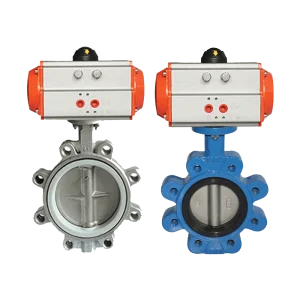
Modern process automation requires direct actuator-to-valve integration without custom brackets. Modern lug valves integrate ISO 5211 top flanges and standardized square or double-D stems, enabling plug-and-play matching with pneumatic quarter-turn actuators, Modbus/Profibus electric motors, and fail-safe electro-hydraulic actuators.
Fugitive Emission Control (ISO 15848-1)
With aggressive global decarbonization regulations (EPA, REACH), stem packing design has migrated to live-loaded dynamic PTFE chevrons and dual O-ring secondary barriers. These configurations eliminate atmospheric VOC leaks in toxic processing environments.
Lightweight High-Strength Alloys
To reduce pipe rack structural loads, foundries are replacing heavy nodular iron with high-tensile austempered ductile irons (ADI) and lean duplex stainless steels (e.g., 2101, 2205), maintaining full Class 150 pressure ratings while reducing body mass by up to 25%.
Frequently Asked Questions by EPC Buyers & Engineers
Direct technical answers addressing installation, pressure ratings, actuation, and sourcing standards.
What is the crucial difference between a lug type and wafer type butterfly valve?
A wafer butterfly valve has through-holes or centering lugs and must be sandwiched between two pipeline flanges using long studs. If piping on one side is disconnected, the valve cannot maintain pressure. Conversely, a lug type butterfly valve features female threaded metal lugs that receive individual bolts from both pipeline flanges. This mechanical feature permits true bi-directional dead-end service and downstream line isolation without compromising line integrity upstream.
Can a resilient seated lug butterfly valve be utilized for end-of-line (dead-end) duty?
Yes, but the engineer must verify whether the valve is rated for full or reduced dead-end pressure. Premium lug valves engineered with retained or dovetail seats are fully rated to hold up to 16 bar bi-directionally without downstream backing flanges. Standard slip-in boots, however, may require a blind companion flange for dead-end containment over 10 bar.
Which testing protocols do Chinese manufacturers utilize prior to export clearance?
Exported industrial valves undergo 100% shell and seat testing in strict compliance with API 598 or EN 12266-1. Shell testing is executed hydrostatically at 1.5 times the rated cold working pressure (e.g., 24 bar for a PN16 body), while resilient seats are tested hydrostatically and pneumatically at 1.1 times the design pressure to guarantee Zero-Leakage (Rate A).
How do I prevent galvanic corrosion when mating ductile iron lug valves with stainless pipe?
To eliminate galvanic cell potential between dissimilar metals, engineers should specify dielectric flange insulation kits (comprising Mylar/G10 sleeves, phenolic insulating washers, and non-conductive gaskets) and select stainless steel disc trims (such as CF8M/316) mounted within epoxy-coated ductile iron bodies, preventing electrochemical degradation.
What parameters are required to generate an accurate RFQ quotation?
A comprehensive RFQ requires: nominal diameter (DN/NPS), pipeline class rating (PN10/PN16/Class 150), flange drilling standard (ASME B16.5, EN 1092-1), body casting material (Ductile Iron, WCB, CF8M), disc alloy, elastomer seat grade (EPDM, NBR, PTFE), media description, operational temperature range, and preferred operator (Bare shaft, 10-position lockable lever, worm gear operator, or electric/pneumatic actuator).
High-Spec Lug & Isolation Valves
Heavy-duty, specialized disc materials, and large-bore engineering designs manufactured for extreme municipal and industrial duties.