High-Performance Non-Return Valves: Rapid Dispatch Series
Explore our foundational non-return valve configurations designed for critical water networks, chemical processing, fire safety, and industrial pumping systems worldwide.
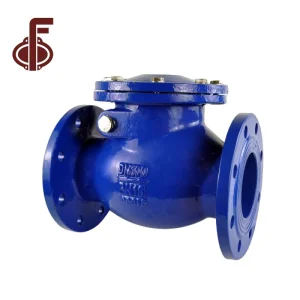
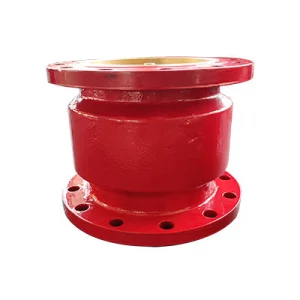
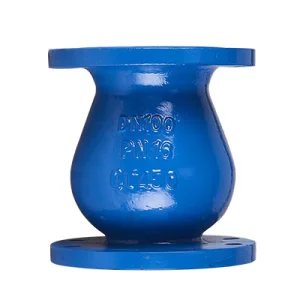
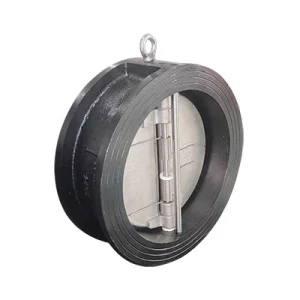
Engineering Taxonomy of Non-Return Flow Control Systems
A comprehensive examination of check valve hydrodynamic kinetics, mechanical design variables, and structural sealing integrity across high-demand industrial circuits.
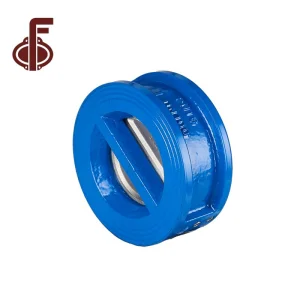
Dual Plate Wafer Check Valves
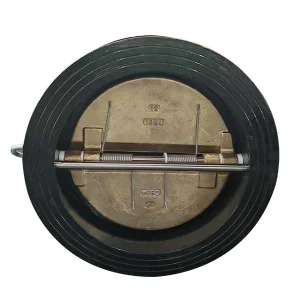
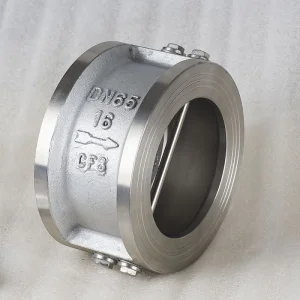
Characterized by twin semi-circular spring-loaded discs hinged around a central pin, this compact design delivers rapid closure characteristics, exceptional weight reduction, and minimal face-to-face dimensions conforming to API 594. Torsion springs ensure proactive seat engagement before flow deceleration reaches zero, substantially abating hydraulic hammer.
- Face-to-Face: API 594 Short Pattern
- Mounting: Wafer, Lug, and Double Flanged
- Key Benefit: 80% lighter than classic swing check valves
Axial Flow / Silent Nozzle Valves
Engineered for mission-critical clean water and hydrocarbon loops subject to extreme pressure surges. An aerodynamically contoured central body paired with a short disc stroke minimizes turbulence ($C_v$ optimization) and achieves near-instantaneous non-slam closure ($t < 0.15\,\text{s}$), eliminating pressure spikes that cause catastrophic piping collapse.
- Dynamic Response: Spring-assisted frictionless guide
- Acoustic Rating: Decibel-suppressed silent operation
- Application: High-head multi-pump lift stations
Heavy Hammer & Rubber Flap Dampeners
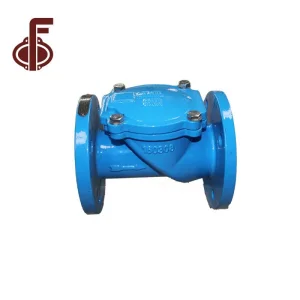
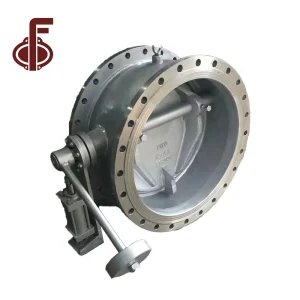
For raw water lines with fibrous solids, the reinforced synthetic rubber flap check valve provides an unobstructed full-bore pathway with an integral steel flexor hinge rated for millions of cycles. When combined with adjustable counterweight arms and hydraulic dashpots in large-diameter butterfly check valves, closure velocity can be calibrated across dual stages to eradicate back-pressure reverberation.
- Sealing: Bonded EPDM/NBR over ductile core
- Media Resilience: Zero hinge corrosion, slurry friendly
- Control: Micro-regulated external counter-weight dashpot
Global Enterprise Procurement Standards & Metallurgical Matrix
Enterprise procurement teams in Europe, the Middle East, the Americas, and APAC demand strict traceability, certified metallurgy, and defect-free pressure boundary validation.
| Material Class | International Standard Spec | Corrosion & Yield Profile | Typical Industrial Media | Certified Temp Range |
|---|---|---|---|---|
| Ductile Iron (DI) | ASTM A536 65-45-12 / EN-GJS-400-15 / GGG40 | Tensile 450 MPa; ductile elongation > 15%; excellent damping | Potable water, raw sewage, chilled water, HVAC | -10°C to +120°C (with EPDM/NBR) |
| Cast Carbon Steel (WCB) | ASTM A216 WCB / EN 10213 1.0619 (GP240GH) | High strength pressure boundary; tensile > 485 MPa | Refinery feed, industrial steam, boiler feedwater | -29°C to +425°C |
| Austenitic Stainless (CF8/CF8M) | ASTM A351 CF8 (SS304) / CF8M (SS316) / 1.4408 | High pitting resistance; passive chromium-nickel oxide film | Deionized water, weak acids, organic chemicals, CIP loops | -196°C to +550°C (Cryogenic to High Temp) |
| Duplex Stainless (2205) | ASTM A890 4A (CD3MN) / UNS S31803 / 1.4462 | Austenitic-ferritic microstructure; yield > 450 MPa, PREN > 35 | Seawater desalination, brine injection, off-shore oil/gas | -40°C to +260°C |
| Super Duplex Stainless (2507) | ASTM A890 5A (CE3MN) / UNS S32750 / 1.4410 | Severe pitting resistance; PREN > 42; immune to chloride stress cracking | Hypersaline reverse osmosis, deep sea subsea manifolds | -40°C to +280°C |
Full Inspection Traceability (EN 10204 3.1)
Every shipment is furnished with comprehensive inspection documentation: spectral chemical analysis, tensile and Charpy V-notch impact test logs, Brinell/Rockwell hardness testing, and heat-number tracking directly cast onto the valve body wall.
Third-Party Factory Audits & NDT
We maintain full procedural compliance for third-party inspection agencies including SGS, TÜV, Bureau Veritas, and Lloyd's Register. Non-Destructive Testing (NDT) comprises 100% Magnetic Particle (MPI), Liquid Penetrant (DPI), Radiographic (RT), and Ultrasonic (UT) testing.
International Statutory Compliance
Our manufacturing protocols align with CE-PED (Pressure Equipment Directive 2014/68/EU Module H), WRAS for UK drinking water contact, DVGW standards for municipal water distribution, API 594 dimensions, and API 598 zero-bubble low/high-pressure gas testing.
Integrated China Factory & Advanced Supply Chain Strengths
Harnessing the industrial strength of Tianjin's advanced manufacturing cluster to provide global EPC contractors and distributors with superior cost optimization, high batch capacity, and compressed lead times.
Closed-Loop Foundry Automation
By operating internal sand reclamation, vacuum-assisted lost foam casting, and automated induction melting furnaces, we maintain total metallurgical control. Porosity defects are eliminated at the source, yielding casting densities that surpass industry benchmarks.
Multi-Axis CNC Precision Machining
Precision valve seat bores, hinge pin alignments, and sealing faces are finished on high-precision horizontal and vertical CNC machining centers. Tolerances are held to within $\pm 0.01\,\text{mm}$, ensuring concentricity and uniform seat compression.
25–40% CapEx Optimization
Our vertical integration eliminates middleman markups across raw scrap, casting, machining, epoxy coating, vulcanization, and hydro-testing, translating into direct 25% to 40% capital savings for international procurement tenders.
Compressed Production Cycles
With an extensive stock of standard pattern plates, semi-finished bodies, and stainless steel internal discs (SS304/SS316/Al-Bronze), standard orders ship in 3 to 4 weeks—half the delivery lead time of traditional European or North American foundries.
Fluid Dynamics: Water Hammer Mitigation & Dynamic Slam Suppression
Preventing system ruptures through mathematically modeled disc closure kinematics, flow deceleration handling, and precise spring torque calibration.
The Physics of Valve Slam
Valve slam occurs when a check valve closes after reverse flow has already developed in the pipeline. The rapid deceleration of the returning liquid column converts kinetic energy into an acoustic pressure surge described by the Joukowsky equation: $\Delta P = \rho c \Delta v$. In high-head pump systems, this surge can exceed operating pressure by 300% to 500%, fracturing flange bolts and destroying impellers.
Dynamic Deceleration Response
Our dual plate check valves incorporate independent Inconel X-750 or Hastelloy springs that apply continuous closing torque against the dual discs. As the forward velocity decays ($\text{d}v/\text{d}t$), the discs close smoothly, reaching the fully seated position exactly when flow velocity hits zero ($v=0$), thereby eliminating reverse flow velocity and preventing the slamming impulse.
Dual-Stage Hydraulic Dashpots
For high-capacity municipal discharge mains (DN600 to DN2400), we equip heavy hammer butterfly check valves with dual-stage hydraulic dampers. The first stage closes 80% of the stroke rapidly to cut off the bulk fluid column, while the second stage gently cushions the remaining 20% over several calibrated seconds, smoothing out line deceleration.
Localized Engineering Applications & Environment Adaptations
Configured specifically to counter site-specific mechanical wear, galvanic corrosion, thermal cycling, and chemical degradation across global industries.
Desalination & Seawater RO Plants
Reverse osmosis high-pressure trains demand super duplex materials. Our ASTM A890 5A / 2507 dual plate check valves provide PREN > 42, guaranteeing complete immunity to localized pitting and crevice attack in high-chloride, 70-bar brine discharge circuits.
- Locations: Middle East (GCC), Mediterranean, Western Australia
- Trim Material: Monel K500 / Nickel Aluminum Bronze
District Cooling & Megacity HVAC
High-rise residential and institutional chilled water systems cannot tolerate acoustic resonance or flow vibration. Axial flow silent check valves with copper-free stainless trim dampen operating sound down to undetectable decibel levels while operating maintenance-free within tight riser shafts.
- Locations: Southeast Asia, UAE, North American High-Rise Centers
- Media: Chilled water, glycol mixtures, condenser lines
Municipal Wastewater & Biosolids
Raw sewage laden with stringy rag debris readily clogs internal hinge pins of conventional valves. Our ductile iron rubber flap check valves feature an unobstructed 100% full-pipe bore design. The seamless elastomeric flap swings freely away from the flow path, preventing rag accumulation.
- Locations: Municipal utility districts, WWTP clarifiers
- Coating: Fusion Bonded Epoxy (FBE) ≥ 250 μm (AWWA C550)
Global Logistics Engineering, Anti-Corrosion Packaging & EPC Assurance
Valves are delivered ready for installation through specialized ocean-transit packaging and documented supply chain workflows.
Protective Preservation Protocol
Every machined face is coated with VCI (Vapor Corrosion Inhibitor) rust-preventive film. Wafer and flanged gasket contact surfaces are protected with UV-stabilized heavy-duty polyethylene end caps, sealed against moisture, dust, and sand intrusion during multimodal container transit.
ISPM-15 Solid Timber Packaging
All shipping crates are custom-fabricated from kiln-dried, heat-treated fumigated plywood bearing IPPC stamps. Heavy-duty internal structural steel strapping and foam cushioning isolate the valves from dynamic shock and maritime vibration during rough ocean transit.
EPC Documentation Packs
International infrastructure projects require comprehensive document control. We supply customized submittal packages within 72 hours, including general assembly (GA) drawings, 3D STEP models, calculation sheets, weld maps, paint adhesion peel tests, and hydro-test certificates.
Emerging Industry Trends: Decarbonization & Smart Flow Dynamics
Next-generation non-return systems balance reduced carbon footprints, hydrogen readiness, and digital IoT diagnostics.
CFD-Optimized Low-Loss Profiles
With industrial pumping systems consuming nearly 20% of the world's electrical energy, minimizing permanent pressure head loss ($\Delta h$) is essential. Our advanced computational fluid dynamics (CFD) modeling optimizes internal nozzle curves, reducing hydraulic drag by up to 18%.
IoT Predictive Flutter Sensing
Unstable low-flow regimes induce valve disc fluttering, causing accelerated hinge pin and spring wear. We now offer optional integrated acoustic emission and piezoelectric vibration sensors that feed real-time disc stability data to DCS and SCADA networks.
Hydrogen & Clean Energy Readiness
As green hydrogen production accelerates, non-return valves in electrolyzer balance-of-plant skids face micro-leakage risks and hydrogen embrittlement. We engineer check valves with specialized high-nickel austenitic alloys and ultra-pure elastomeric seals qualified to ISO 15848-1.
Engineering FAQ: Questions Procurement Teams Ask Check Valve Exporters
In-depth technical answers addressing sizing, hydrodynamics, maintenance intervals, and specification guidelines for project procurement managers.
Cracking pressure—the minimum differential upstream pressure required to initiate disc movement from the seat—must balance positive seat disengagement with prompt backflow closure. For standard spring-assisted dual plate valves, typical cracking pressures range from 0.02 to 0.05 bar (0.3 to 0.7 psi). In pump suction lines or low-head gravity feeds, lighter custom spring calibrations can be specified down to 0.01 bar to prevent starvation. For vertical piping runs with upward flow, disc weight must be factored into spring selection to ensure full stroke extension under minimal operating velocity.
API 594 governs compact wafer, lug, and double-flanged check valves, setting strict face-to-face dimensions that are roughly 75% to 80% shorter and lighter than equivalent ASME B16.10 swing check valves. Mechanically, dual plate API 594 designs divide the single swing disc into two semi-circular plates. This halves the travel distance of each disc and significantly lowers the moment of inertia, dramatically accelerating dynamic closure response and effectively mitigating severe water hammer.
Standard dual plate check valves must not be installed in vertical downward flow lines. Downward flow causes the disc mass to work counter to spring return dynamics, resulting in unstable flutter, premature hinge pin galling, and erratic sealing. Dual plate check valves perform optimally in horizontal orientations (with the central hinge pin placed vertically) or in vertical lines with upward flow. For downward piping runs, our axial flow nozzle check valves with high-force linear springs should be specified.
Achieving ISO 5208 Rate A (zero detectable liquid leakage and zero bubble gas leakage) requires resilient elastomeric or thermoplastic seat rings—such as vulcanized EPDM, NBR, Viton (FKM), or virgin PTFE—mechanically bonded or dovetailed into the valve body cavity or disc periphery. For high-temperature, high-pressure environments where soft seals degrade (>200°C), precision metal-to-metal seating featuring Stellite 6 or 13Cr overlay welding is machined and lapped to satisfy API 598 metal-seat leakage standards (often Rate C or D).
Petrochemical and refinery tenders require comprehensive QA/QC dossiers prior to export release: EN 10204 3.1 Material Test Reports (MTRs) detailing chemical heat analysis and mechanical tensile/yield/Charpy tests, 100% Hydrostatic and Pneumatic Pressure Test Reports per API 598, Positive Material Identification (PMI) logs verifying alloy content, Non-Destructive Testing (NDT) reports (UT/RT/PT/MT), paint thickness and spark-test inspection reports (AWWA C550/ISO 12944), and EU Declarations of Conformity under PED 2014/68/EU.
Tianjin serves as Northern China's primary hub for industrial flow control, integrating ductile iron, carbon steel, and alloy foundries, automated mold-making facilities, CNC machining shops, and certified testing laboratories in a 50-kilometer radius. Close proximity to Tianjin Xingang Port—one of the largest deepwater container hubs in the world—streamlines container consolidation, customs clearance, and vessel dispatch, cutting total supply lead times by 30 to 45 days compared to inland production regions.
Specialty Non-Return & Flow Control Engineering Series
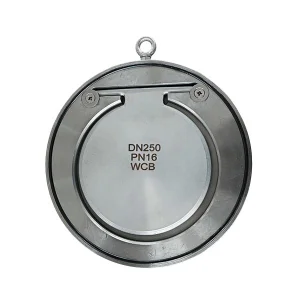
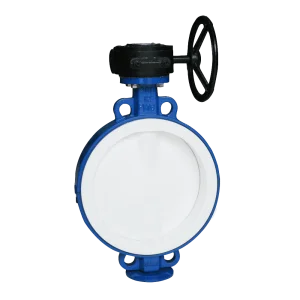
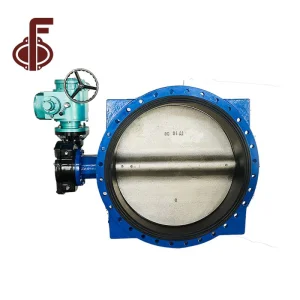
Advanced configurations engineered for severe service: single disc wafer check valves, large-diameter multi-door valves, fully lined chemical units, and complementary pipeline isolation assets.