
Industrial Isolation & Flow Control Valves
Factory-direct ball valves, eccentric butterfly valves, and resilient-seated gate assemblies engineered to international pressure and material standards (ASTM, ANSI, DIN, BS, JIS).
Ball Valve Kinematics, Hydrodynamic Efficiency & Sealing Integrity
A comprehensive engineering assessment of floating versus trunnion architectures, seat energization dynamics, and cavitation mitigation in modern process isolation.
Floating Ball Dynamics
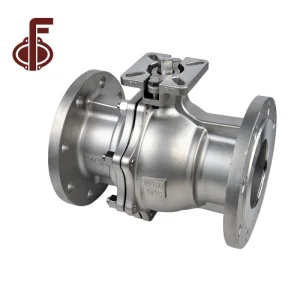
In floating ball valve topologies, the spherical closure element is suspended between two elastomeric or thermoplastic annular seat rings. Line pressure acting against the upstream surface forces the ball downstream, creating mechanical compression against the downstream seat.
Ideal for pipeline sizes DN15 through DN200 and pressure classes ASME 150# to 600#, floating ball valves provide bi-directional, bubble-tight shutoff (API 598 Rate A) with compact valve envelope dimensions and minimized operational torque.
Trunnion-Mounted Systems
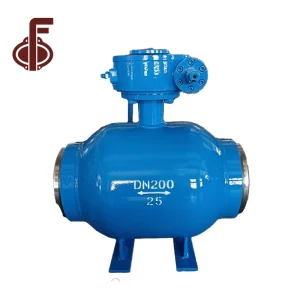
For high-pressure regimes (ASME Class 900# to 2500#) and large bore diameters (DN200 to DN1400), trunnion-mounted ball valves utilize rigid mechanical anchoring via upper stem journals and lower trunnion plates, absorbing hydraulic thrust forces.
Spring-energized floating seats move independently toward the static ball under line differential pressure. Features include Double Block and Bleed (DBB) capability, single/double piston effect (SPE/DPE), and automatic internal body cavity relief.
Fire-Safe & Fugitive Integrity
ZFA Valve incorporates secondary metal-to-metal seating steps machined adjacent to the resilient primary seat inserts. In the event of fire destruction of soft polymer components, the pre-stressed secondary metal lip engages the ball surface, maintaining compliance with API 607, API 6FA, and ISO 10497.
Stem assemblies feature blowout-proof internal shoulders, Belleville live-loaded packing washers, and graphite secondary packing rings satisfying ISO 15848-1 Class AH fugitive emission metrics.
Tianjin Precision Valve Cluster: Factory Engineering Advantages
Tianjin Zhongfa Valve Co., Ltd. (ZFA Valve), established in 2006, operates within China’s premier Bohai Rim heavy-industrial manufacturing zone. The synergy of regional high-grade foundries, robotic machining cells, and coastal logistics enables unparalleled price-to-performance velocity.
Metallurgical Foundry Ecosystem
Our production ecosystem utilizes vacuum-assist induction melting and automated resin sand moulding to cast defect-free bodies in ASTM A216 WCB/WCC, ASTM A351 CF8/CF8M/CF3M, and high-nickel alloys such as Monel 400, Hastelloy C276, and Super Duplex 2507.
Every melt heat undergoes direct-reading spark optical emission spectrometry (OES) analysis, ensuring tight carbon stoichiometry, ferrite number control, and resistance to intergranular corrosion per ASTM A262 Practice E.
5-Axis CNC Precision Machining
Critical spherical geometry and seat recess pockets are machined on specialized 5-axis horizontal CNC machining centers in temperature-controlled workshops. Valve balls achieve sphericity tolerances within ±0.01 mm, paired with mirror-finish Ra 0.2 μm diamond polishing.
This ultra-smooth surface finish minimizes torque drag, extends seat wear life by over 300% under high operating cycle regimes, and guarantees Zero-Leakage (Rate A) during low-pressure gas testing.
Quality Assurance & Full Traceability
ZFA operates under strict ISO 9001 and CE-PED Module H directives. In-house testing infrastructure includes non-destructive testing (Radiographic, Ultrasonic, Magnetic Particle, Liquid Penetrant) and full hydrostatic testing bunkers.
Every valve is tagged with an engraved stainless-steel nameplate displaying heat codes, pressure-temperature ratings, and QR serial codes linked directly to EN 10204 Type 3.1 Material Test Reports (MTR).
Macro Engineering Architectures & Sector Applications
Engineering customized valve packages for high-risk fluid isolation, supercritical steam networks, cryogenic gasification, and offshore desalination plants.
Hydrocarbons & Natural Gas Pipelines
Direct-buried fully welded ball valves for high-pressure gas transport mains. Featuring forged steel bodies (ASTM A105 / A694 F52 to F70), electroless nickel-plated (ENP) balls, explosive decompression-resistant Viton AED O-rings, and extended stems for below-ground operation without vault structures.
Petrochemical & Acid Regeneration
Specialized CF8M and Hastelloy split-body floating ball valves lined with virgin PTFE or PFA for aggressive chlor-alkali, sulfuric acid, and hydrochloric acid service. Engineered to isolate volatile hazardous chemicals without dead spots or cavity permeation.
Municipal Water & Desalination RO
High-pressure Class 300# to 600# Duplex Stainless Steel (UNS S31803 / S32750) ball valves installed on reverse osmosis feed pump skids. Pitting Resistance Equivalent Number (PREN) ≥ 42 guarantees immunity to localized pitting and crevice corrosion in hypersaline environments.
Seat Material Selection & Boundary Operational Limits
Proper specification of seat insert polymers and metallic hardfacings is paramount to prevent cold flow, catastrophic thermal degradation, and excessive operating torques.
| Seat Compound / Alloy | Continuous Temp. Limit | Primary Industrial Media | Key Mechanical Advantages | Limitations / Contraindications |
|---|---|---|---|---|
| Virgin PTFE (Teflon) | -50 °C to +180 °C | Deionized water, light acids, hydrocarbons | Lowest coefficient of friction, universal chemical inertia | Prone to cold-flow creep under high ΔP; avoid steam |
| RPTFE (15% Glass Reinforced) | -40 °C to +220 °C | Saturated steam (up to 150 psi), thermal oils, solvents | Enhanced compressive strength, lower cold-flow deformation | Slightly increased operational torque versus virgin PTFE |
| Virgin PEEK (Polyetheretherketone) | -60 °C to +260 °C | Superheated steam, high-pressure gas, offshore skids | Exceptional resistance to abrasive particles, ultra-high yield strength | High seating torque; requires precision diamond-polished balls |
| Devlon V-API (High Molecular Polyamide) | -50 °C to +180 °C | High-pressure crude oil, offshore manifolds (ASME 1500#+) | Extremely high impact resistance, zero water absorption | Not compatible with oxygen or strong oxidizing chemical acids |
| Metal-to-Metal (TCC / Stellite 6) | -196 °C to +550 °C | Slurry, catalyst cracking, coke fines, high-temp steam | Immune to thermal shock, rockwell hardness up to HRC 68–72 | Higher cost; requires Class V or Class VI lapping pairing |
Decarbonization, Hydrogen Service & Digital Valve Automation
How modern valve engineering addresses green hydrogen transition, fugitive emission mandates, and intelligent Industrial IoT process automation.
Hydrogen Service Compatibility
Pure hydrogen transport pipelines present severe technical risks of atomic hydrogen embrittlement and high permeability through elastomeric seals. ZFA engineers ball valves utilizing low-carbon austenitic stainless steels (316L with nickel > 12%) and ultra-dense forged components.
Valves undergo helium mass-spectrometer sniffing tests at 1.1x working pressure, verifying leak rates well under $1 \times 10^{-6}\text{ mbar}\cdot\text{L/s}$ to safeguard clean energy distribution.
Smart Actuation & Industrial IoT
Integration of intelligent electro-pneumatic and multi-turn electric actuators equipped with HART 7, Modbus RS-485, and Foundation Fieldbus protocols. Onboard microprocessors continuously measure real-time dynamic stem torque profiles.
Automated Partial Stroke Testing (PST) routines execute without interrupting active pipeline throughput, verifying safety-instrumented functions up to SIL-3 compliance standards per IEC 61508.
Supersonic Laser Cladding (HVOF)
To conquer aggressive mineral slurry abrasion and catalyst fines in refinery FCC units, ZFA applies High-Velocity Oxygen-Fuel (HVOF) and robotic laser cladding. We deposit continuous, pore-free coatings of Tungsten Carbide-Cobalt (WC-Co-Cr) and Nickel-Chromium.
These metallurgical coatings produce bond shear strengths exceeding 70 MPa and surface hardness levels exceeding 1000 HV, eliminating galling in severe throttling applications.
Global Procurement Checklist: Navigating Tenders & Standards
Key technical parameters global EPC procurement teams, engineering consultants, and valve distributors must verify prior to purchase order placement.
Datasheet Verification & Normative Cross-Referencing
Cross-verify dimensional and test compliance across disparate regional regimes: ASME B16.34 (wall thickness and pressure-temperature ratings), ASME B16.10 (face-to-face dimensions), and API 6D (pipeline valves) against European standards DIN EN 12516, EN 558, and EN 1092-1.
Ensure sour hydrocarbon services strictly conform to NACE MR0175/ISO 15156, requiring controlled hardness values (maximum 22 HRC for carbon steels) to prevent sulfide stress cracking (SSC).
Testing, Inspection & Factory Witness Protocols
Establish third-party inspection (TPI) agencies (SGS, Bureau Veritas, DNV, TÜV) inspection test plans (ITP). Mandatory testing milestones include Positive Material Identification (PMI) on pressure boundary components, 1.5x hydrostatic shell testing, and 1.1x high-pressure seat integrity testing.
Low-pressure air testing at 80 psi (6 bar) per API 598 is vital for soft-seated ball valves to reveal micro-imperfections undetectable under high-pressure mechanical seat distortion.
Frequently Asked Engineering & Procurement Questions
In-depth answers from our chief engineers regarding valve design, certification, material limits, and factory direct customization.
What parameters dictate selecting a floating ball valve versus a trunnion-mounted valve?
How does ZFA Valve achieve zero fugitive emissions compliance to ISO 15848-1?
What is the functional difference between Single Piston Effect (SPE) and Double Piston Effect (DPE) seats?
How are cryogenic ball valves designed to handle liquefied gases down to -196 °C?
What certifications and test reports accompany each export shipment from Tianjin Zhongfa?
Engineered Check, Butterfly & Fire Protection Systems
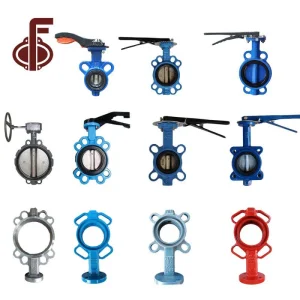
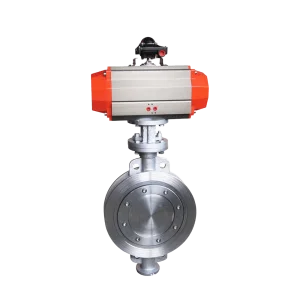
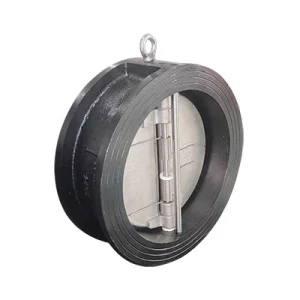
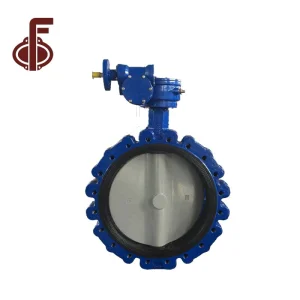
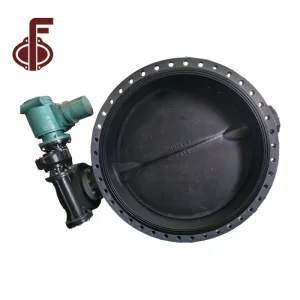
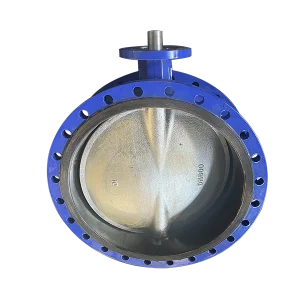
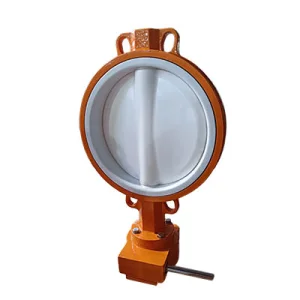
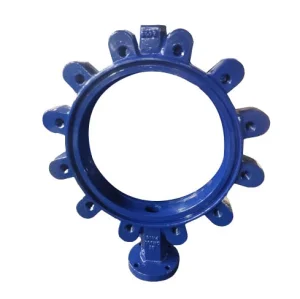
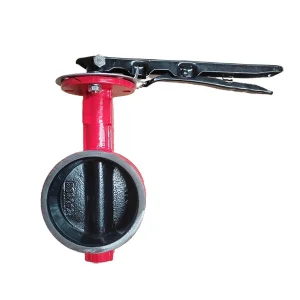
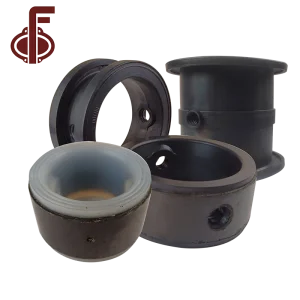
Complementing our ball valve production, ZFA engineers high-reliability non-return check valves, resilient butterfly valves, and UL/FM fire line valves.
Connect with ZFA Valve Chief Technical Specialists
Whether requiring custom valve casting metallurgy, high-pressure trunnion sizing, or high-volume OEM project deliveries, our sales engineering team provides full specification reviews, GA drawings, and competitive quotes within 24 hours.
