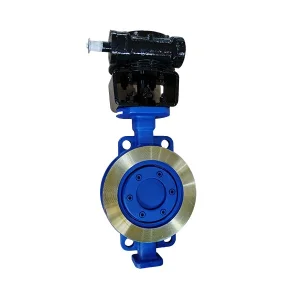
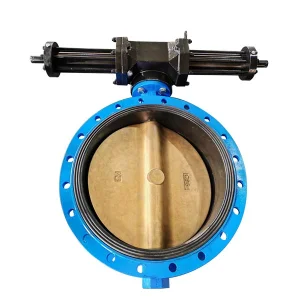
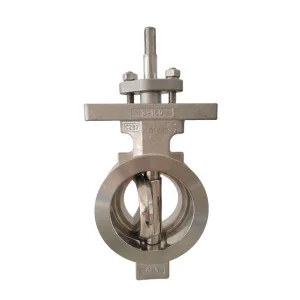
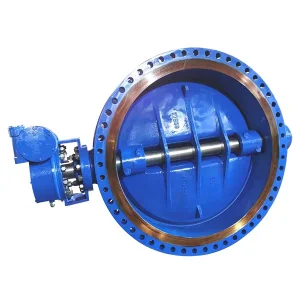
High-Efficiency Manual Lever & Actuated Butterfly Solutions
Engineered to deliver bidirectional bubble-tight shutoff, rapid manual operation, and extended service cycles across municipal waterworks, HVAC circuits, and chemical processing.
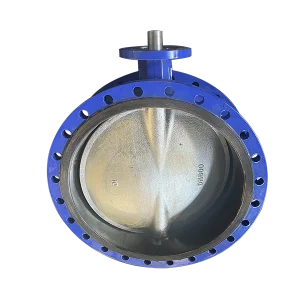
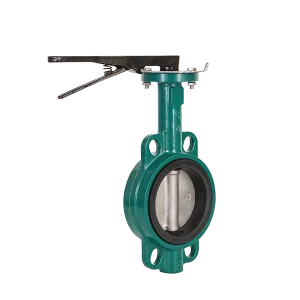
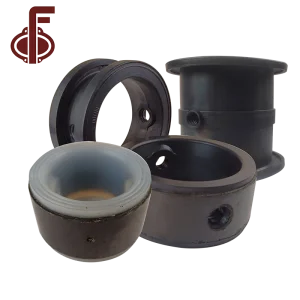
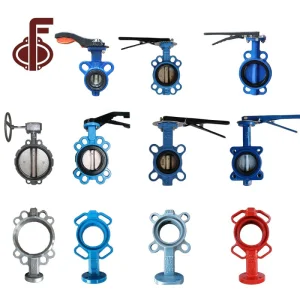
Macro Dynamics & Sourcing Demands for Lever-Operated Butterfly Valves
Analyzing global supply chain evolution, automation transitions, and why international EPC engineering teams partner with premier Chinese casting & valve manufacturing clusters.
Tier-1 Procurement Resilience
Global procurement teams in North America, Western Europe, and Southeast Asia face severe lead-time constraints with traditional western valve foundries. Tier-1 Chinese manufacturers offer complete vertical integration—from high-grade ductile iron foundry melts to precision CNC turning—compressing procurement cycles by up to 45% while ensuring compliance with EN 10204 3.1 certification.
- Elimination of intermediary margins
- Fully traceable cast heat numbers
- Guaranteed batch-to-batch consistency
Ergonomic Throttling Control
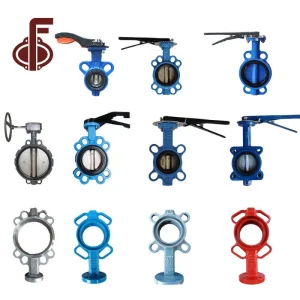
The manual lever-operated configuration remains the gold standard for rapid quarterly-turn line isolation and coarse volume modulation. Engineered notch plates with secure squeeze-lock grips empower on-site technicians to verify disc positioning visually from across the facility floor, eliminating human operation errors in mission-critical environments.
- Cast aluminum or pressed carbon steel options
- Corrosion-resistant epoxy or Dacromet coatings
- Standard padlock holes for lockout-tagout (LOTO)
Total Cost of Ownership (TCO)
By implementing vulcanized rubber seats or cartridge-replaceable elastomer boots, facilities minimize downtime. Concentric lever-type butterfly valves manufactured in Tianjin feature low torque requirements, extending manual operational life without stem binding or mechanical fatigue even after decades of continuous line cycling.
- Minimal hydrodynamic pressure drop
- Zero requirement for auxiliary power supplies
- Lightweight profile lowering pipe rack stress
Engineering Architecture: Lever-Type Butterfly Valve Design Disciplines
Understanding critical mechanical differences ensures optimal operational longevity across diverse fluid systems.
| Component | Material Engineering Options | Operational Function | Performance Specification |
|---|---|---|---|
| Valve Body | Ductile Iron (QT450-10 / GGG40), Cast Iron (HT200), WCB, CF8M | Pressure boundary containment conforming to EN 12516-2 & ASME B16.42 | Hydrostatic shell test at 1.5x PN; Wafer, Lug, or Flanged body connection |
| Disc (Vane) | CF8, CF8M, Ductile Iron with Nylon 11 coating, Aluminum Bronze (C95400) | Hydrodynamic fluid obstruction and sealing surface generation | Spherical polished edge (Ra ≤ 0.4 µm) minimizing seat abrasion & torque |
| Resilient Seat | EPDM, NBR, Viton (FKM), PTFE, Hypalon | Zero-leakage resilient shutoff & flange gasket isolation | Resilient boot design or vulcanized bonding directly to the cast body |
| Drive Shaft / Stem | SS416, SS420, SS431, SS316, 17-4PH Monel | Torque transfer from manual lever arm to disc assembly | Two-shaft pinless design or splined/through-pin heavy-duty shafting |
| Lever Assembly | Cast Aluminum Alloy, Ductile Iron, Heavy Gauge Carbon Steel | Manual actuation, multi-step notch indexing, lock-out enforcement | 10-position indexing throttle plate with ergonomic thumb squeeze latch |
Macro Industry Solutions Powered by China Lever Valve Specialists
Targeted fluid-handling infrastructure solutions engineered for durability, pressure integrity, and strict ecological compliance.
Municipal Water Treatment & Distribution
Potable water transmission and sewage treatment facilities require non-toxic, durable valves with certified coatings. Concentric lever-operated wafer valves coated with WRAS/NSF-61 certified fusion-bonded epoxy (FBE) eliminate internal scaling and ensure zero microbiological contamination in high-volume distribution manifolds.
- WRAS/NSF certified EPDM elastomers
- Zero bi-metallic galvanic corrosion
- Bi-directional zero-leakage shutoff
Commercial HVAC & Cooling Tower Circuits
Chilled water systems, central hydronic heating, and condenser cooling loops demand rapid manual balancing and tight seasonal isolation. Compact lever-operated valves fit within cramped mechanical pipe galleries, providing rapid visual position identification and trouble-free condensate resistance.
- Lightweight wafer patterns saving rack space
- Extended neck design accommodating insulation
- Thermal tolerance from -20°C up to +120°C
Marine, Offshore & Ballast Systems
Saltwater ballast tanks, sea chest lines, and shipboard auxiliary pumping circuits operate under harsh marine corrosion conditions. Lever valves constructed with Nickel Aluminum Bronze (C95400) discs and vulcanized synthetic liners withstand aggressive cavitation and saline impingement.
- High resistance to chloride pitting
- Compact footprint suitable for ship bilges
- Det Norske Veritas (DNV) / BV casting compliance
Technology Roadmap: The Modernization of China Valve Foundries
Transitioning from labor-heavy assembly to automated robotics, smart predictive modeling, and sustainable green casting methodologies.
Disamatic Automation
Modern Chinese foundries employ high-pressure flaskless Disamatic molding lines. Sand molds maintain micro-precision tolerances, reducing casting wall thickness deviations to under ±0.3 mm and eliminating internal blowholes.
Automated Seat Vulcanization
Moving beyond loose rubber boot slip-ins, automated thermal vulcanization machines cure the elastomer directly to the cast iron body. This guarantees zero seat shifting or distortion during extreme high-velocity media flows.
IoT-Ready ISO 5211 Pads
Next-generation lever valves feature standardized ISO 5211 direct-mounting flanges. This allows rapid conversion from manual lever operation to smart electric or pneumatic actuation without line disassembly or costly adapter brackets.
100% Automated Pressure Testing
ZFA and leading factories deploy pneumatic/hydrostatic test rigs. Every single unit undergoes bidirectional bubble-leak detection under ISO 5208 guidelines before barcode registration and packaging dispatch.
Localized Engineering Support & International Compliance Matrix
Mitigating cross-border procurement risks through exhaustive factory auditing, international certifications, and technical consulting.
International Compliance Architecture
Valves are fully engineered to mate interchangeably with global pipe flanges: ANSI Class 125/150, EN 1092-2 PN10/PN16, AS 2129 Table E, and JIS 10K. Every valve body carries CE/PED compliance markings and comprehensive ISO 9001 documentation.
- Full conformity to API 609 / EN 593
- Face-to-face dimensions to ISO 5752 series 20
- Pressure rating certified up to 25 bar (362 PSI)
Dedicated OEM/ODM White-Labeling
For international valve distributors and established valve brands, ZFA provides comprehensive OEM contract manufacturing. From customized body castings displaying your brand logo to custom-engineered handle lengths, personalized nameplates, and tailored retail packaging.
- Custom 3D CAD modeling & rapid prototyping
- Proprietary color electrostatic powder coatings
- Individual laser engraving and QR barcoding
Logistical Security & Material Warranties
Export packaging complies strictly with ISPM-15 wooden crating standards. Precision wrapping with moisture-absorbent desiccant packs ensures sea freight transit protection against salt spray oxidation, backed by a comprehensive 18-month warranty.
- Complete mill test reports (MTR) provided
- Third-party inspections accepted (SGS, TÜV, BV)
- Guaranteed rapid sea and air export logistics
Frequently Asked Questions: Lever-Type Butterfly Valves
Expert answers addressing operating limits, torque factors, sizing rules, and installation practices.
Why is manual lever operation generally limited to nominal sizes DN300 (12") and below?
Manual lever operators rely strictly on human torque exertion. As the nominal valve diameter increases above DN200 or DN300, the hydrodynamic torque and unseating friction generated by line differential pressures escalate drastically. Attempting to close a DN350 valve with a lever could require excessive physical strength, potentially leading to erratic closure, water hammer, or operator injury. For valves larger than DN250/300, worm gear operators or automated actuators are strongly recommended to ensure smooth, controlled, and safe closure.
What is the difference between a pinless shaft and a pinned shaft design?
In a pinned design, taper pins pass through both the disc and the stem to lock them together. While mechanically secure, these pin penetrations create potential leak paths or localized stress risers where corrosive line media can attack the shaft. In contrast, modern concentric valves utilize a pinless drive (such as square, double-D, or splined broached connections). This keeps the stem completely isolated from the working fluid, significantly prolonging component lifespan and simplifying elastomer seat maintenance.
Can a lever-operated wafer butterfly valve be used for dead-end line isolation?
Standard wafer-type butterfly valves should not be used for dead-end pipeline service because they are designed to be clamped between two opposing pipe flanges. Removing the downstream flange eliminates the mechanical compression required to maintain seat sealing. For dead-end isolation, a Lug-Type or Double-Flanged butterfly valve with threaded holes must be specified, allowing downstream pipework to be detached while maintaining full upstream line pressure.
How does seat elastomer selection impact valve operating torque?
Seat elastomer hardness (measured in Shore A durometer) directly dictates the compressive force needed by the valve disc to achieve bubble-tight shutoff. Softer EPDM compounds (65-70 Shore A) exhibit lower operating torque compared to stiffer PTFE liners or high-temperature Viton. When sizing actuators or manual levers, engineers must factor in a safety torque margin (typically 25-35%) to account for elastomer swell, dry running, and media viscosity changes over time.
How can overseas buyers verify the metallurgical composition of Chinese cast valves?
Reputable Chinese manufacturers like ZFA operate on-site optical emission spectrometers (OES). Prior to pouring molten iron or stainless steel, chemical composition is verified against ASTM A536 or EN 1563 standards. Buyers receive certified EN 10204 3.1 inspection certificates documenting exact percentages of Carbon, Silicon, Manganese, Phosphorus, Sulfur, and nodularity ratings. In addition, third-party inspection authorities (SGS, DNV, Bureau Veritas) can be commissioned to oversee mechanical tensile tests and hydrostatic pressure trials.
High-Performance & Severe-Service Butterfly & Flow Assemblies
Explore our heavy-duty industrial valve range including triple-offset high-performance units, check valves, and fluoropolymer-lined solutions for harsh process media.