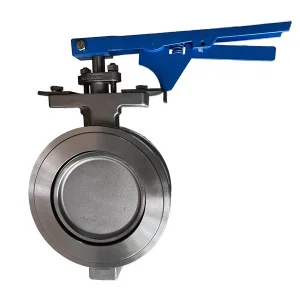
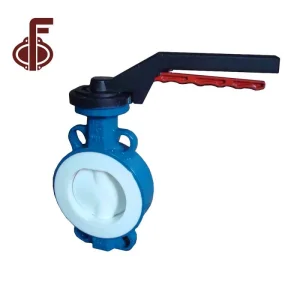
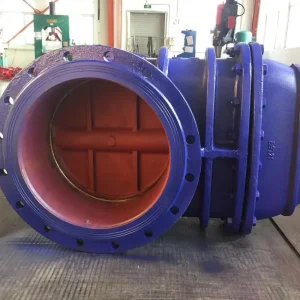
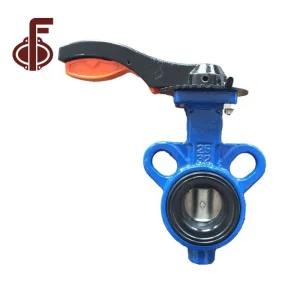
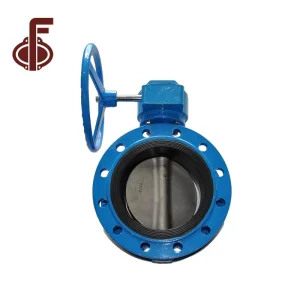
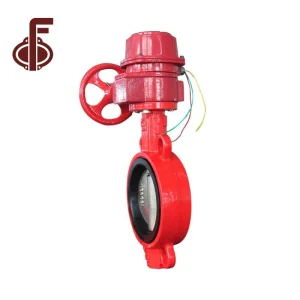
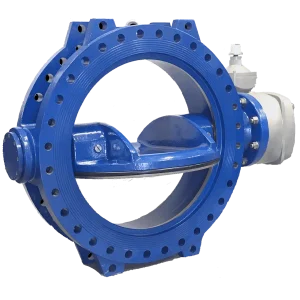
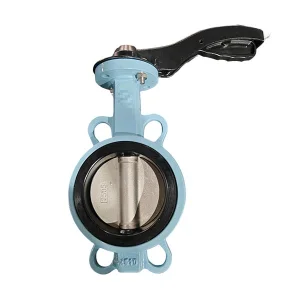
Primary Flanged & Industrial Valve Portfolio
Direct factory supply of certified butterfly, check, and gate valves built to ASTM, ANSI, BS, DIN, and ISO standards for municipal and EPC contractors.
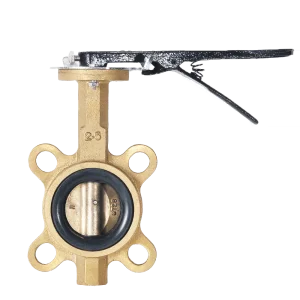
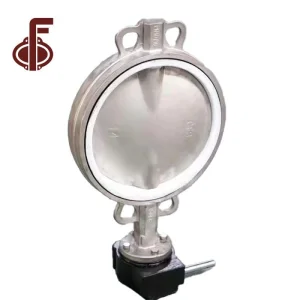
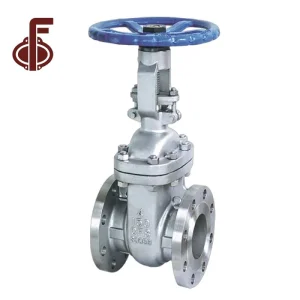
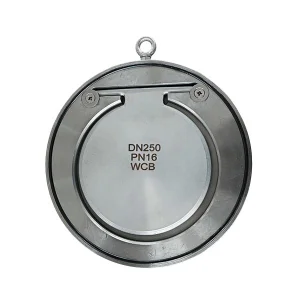
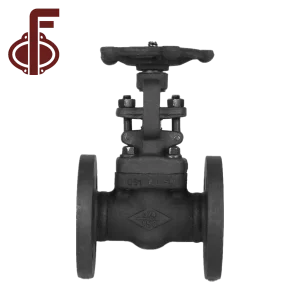
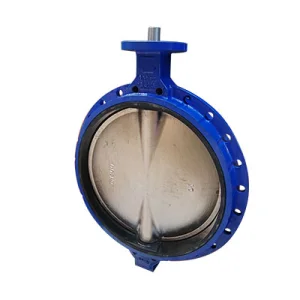
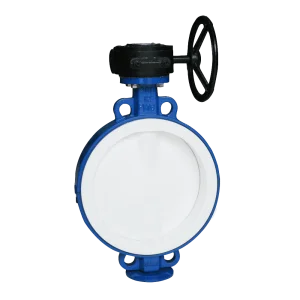
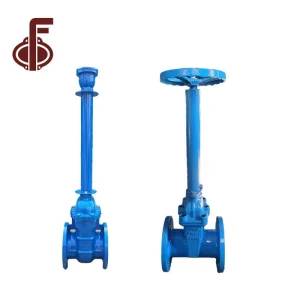
Industrial Macro-Solutions & Systems Integration
Modern process plants demand valves that withstand mechanical stresses, hydrodynamic cavitation, and corrosive media without system down-time.
Municipal Water Treatment & Desalination
Double flanged butterfly valves with vulcanized EPDM liners or duplex stainless steel disc configurations provide bubble-tight bi-directional sealing in massive cross-country raw water conduits, reverse osmosis high-salinity lines, and urban distribution hubs, eliminating pipe joint displacement risk.
District HVAC & Industrial Cooling Loops
Flange-type designs allow complete inline isolation and downstream maintenance without draining whole hydronic circuits. Integrated with smart motorized actuators, these valves deliver dynamic modulating capability with linear flow characteristics and negligible torque hysteresis.
Heavy Petrochemical & Slurry Transport
For aggressive hydrocarbon vapors, abrasive slurry handling, and high-temperature catalytic crackers, our factory produces triple-offset stellite-hardfaced flanged butterfly valves engineered to zero-leakage API 598 and ISO 5208 standards under sustained thermal expansion.
Global Commercial Reality: Why China Flanged Butterfly Valve Factories Lead
Analyzing procurement economics, modern casting integrity, and full supply-chain vertical integration.
Total Lifecycle Cost Efficiency
Western project owners previously absorbed inflated pricing driven by intermediary branding. Direct procurement from ISO-certified Chinese industrial valve hubs like Tianjin eliminates margin stacking while offering certified chemical spectrographic tracing, reducing initial capital expenditures by up to 35-45% without compromising ASTM/DIN safety factors.
Advanced Foundry & CNC Automation
Modern Chinese valve manufacturing has evolved from manual foundry operations to automated resin sand molding, continuous induction furnaces, and multi-axis CNC horizontal machining centers. This guarantees flange parallelism, accurate bolt circle drilling (PCD), and micro-inch stem bore finishes that extend O-ring packing lifecycles.
Supply Chain Resilience & Lead Times
Tianjin Zhongfa Valve maintains fully integrated in-house casting partners, vulcanizing workshops, automated electrostatic epoxy powder coating lines, and computerized hydro-testing stations. This internal cohesion mitigates logistical chokepoints and drastically shrinks delivery turnaround for custom-bored DN50 to DN2400 valve bodies.
Engineering Matrix: Flange Butterfly Valve Seat Selection
Matching dynamic elastomer liners and metal seats to physical chemical vectors to avoid premature valve failure in the field.
| Seat Compound | Applicable Media Class | Operating Temp Range | Key Strengths | Contraindicated Environments |
|---|---|---|---|---|
| EPDM (Food Grade / Resilient) | Potable water, sewage, chilled hydronic, mild alkalis | -20°C to +120°C | High elastic rebound, tensile durability, ozone resistance | Hydrocarbons, mineral oils, concentrated acids |
| NBR (Nitrile Butadiene) | Petroleum derivatives, crude fluids, compressed air, oily water | -10°C to +82°C | Hydrocarbon swell resistance, low friction coefficient | Strong oxidizing chemicals, aromatic ketones, ozone |
| PTFE / PFA (Isostatically Molded) | Aggressive acids (H2SO4, HCl), caustics, pharmaceutical batches | -20°C to +180°C | Universal chemical inertness, frictionless disc clearance | High-velocity abrasive grit, nuclear radiation |
| Stellite / Stainless Metal-to-Metal | Superheated steam, high-pressure hot gases, refining streams | -50°C to +425°C+ | Fire-safe API 607 certified, zero blowout, cavitation resistant | Slurries without pre-straining (unless hardened) |
Localized Project Execution & Strict Compliance
How ZFA Valve bridges cross-border procurement with exhaustive qualification frameworks, mill test documentation, and global standard adaptations.
Full EN 10204 3.1 Traceability
Every casting batch undergoes optical emission spectrometry (OES) analysis and mechanical tensile testing. Certified MTRs accompany shipments, correlating heat numbers back to raw melt ladles.
Multi-Standard Flange Drilling
We manufacture flanged valves accommodating dual and multi-standard drill patterns: ASME B16.1 Class 125/150, EN 1092-2 PN10/PN16, AS 2129 Table E, and JIS B2239 10K within identical face-to-face dimensions.
ISO 5211 Direct Automation Top
Machined top flanges comply precisely with ISO 5211 dimensional standards. Our square or keyed drive stems enable instant plug-and-play retrofit of quarter-turn pneumatic, motorized, or hydraulic actuators.
Protective Coating Systems
Corrosion mitigation via electrostatic applied fusion-bonded epoxy (FBE) powder coating with 250μm-300μm dry film thickness (DFT), tested for zero pinholes via high-voltage spark detectors per EN 14901.
Rigorous 5-Stage OEM Quality Assurance Protocol
A zero-defect methodology implemented across every customized flange-type butterfly valve order.
FEA & Spec Audit
CAD/SolidWorks design cross-verified with Finite Element Analysis (FEA) to confirm disc hydrodynamic deflection under 1.5x working pressure.
Metallurgical Check
Spectrographic analysis of ductile iron (QT450/GGG40/DI 65-45-12), WCB cast steel, or CF8M stainless castings to avoid porosity and impurities.
Precision CNC Milling
Micron-accurate flange sealing face finish, disc edge contour radiusing, and stem bore alignment performed on high-precision machining centers.
Dual Pressure Testing
Each unit undergoes API 598 shell testing at 1.5x design pressure and bi-directional seat leakage testing at 1.1x design pressure with zero bubble allowance.
Coating & Packing
WRAS/NSF certified powder coating, customized OEM laser tagging, dried internal chambers, and reinforced seaworthy fumigated timber crating.
Future Engineering Outlook: Next-Gen Valve Architectures
Pioneering smart flow technology, weight optimization, and extreme lifecycle sustainability.
IoT & Integrated Predictive Telemetry
The industrial internet of things (IIoT) is changing quarter-turn valve management. Our factory is integrating stem-mounted wireless vibration, cycle-torque monitoring, and temperature sensors to predict elastomeric degradation and schedule predictive seal replacement prior to catastrophic blowout.
Hydrodynamic Profile Optimization
Computational Fluid Dynamics (CFD) modeled disc contours reduce turbulence wake zones behind the disc. This elevates flow coefficients (Cv/Kv values) by 14-18%, markedly lowering pumping energy consumption across continuously operating municipal booster networks and power plant circulators.
Low-Emission Fugitive Packing Standards
In accordance with ISO 15848-1 and EPA Method 21 standards, our stem sealing architecture adopts live-loaded Belleville washer spring sets combined with PTFE V-rings and graphite chevron rings, ensuring stem leakage rates lower than 50 ppmv for volatile organic chemical transport.
Frequently Asked Questions (Procurement & Engineering FAQ)
Authoritative technical answers to assist EPC contractors, mechanical consultants, and global procurement officers.
What makes a double-flanged butterfly valve preferable over wafer or lug styles?
Which design and manufacturing standards do ZFA valves comply with?
How do you choose between concentric, double eccentric, and triple eccentric flanged valves?
What OEM and custom manufacturing capabilities does your factory provide?
What is your testing protocol for double-flanged butterfly valves prior to dispatch?
Specialized Heavy-Duty & Actuated Valve Series
High-torque concentric, eccentric, and signal butterfly valves tailored for automated firefighting, high-pressure distribution, and utility loops.