Precision Flow Isolation & Control Assemblies
Factory-direct engineering compliant with ISO, ANSI, AWWA, and DIN specifications for global agronomic networks.
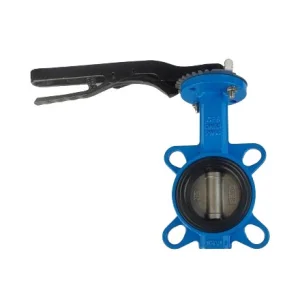
China GGG50 Body CF8 Disc Wafer Style Butterfly Valve
View Specifications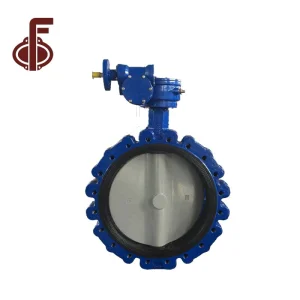
OEM Worm Gear DI Body Lug Type Butterfly Valve
View Specifications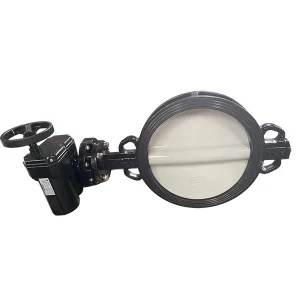
OEM Nylon Disc Wafer Type Electric Actuated Valve
View Specifications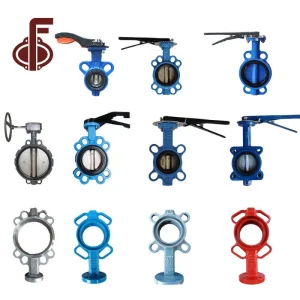
China DN50-1000 PN16 CL150 Wafer Butterfly Valve
View Specifications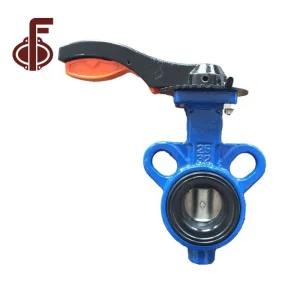
OEM Wafer Butterfly Valve with Aluminum Handle
View Specifications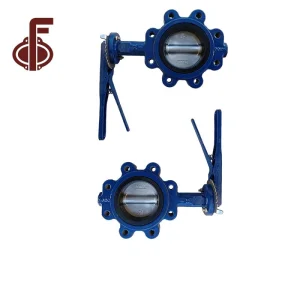
China Ductile Iron SS304 Disc Lug Type Valve
View Specifications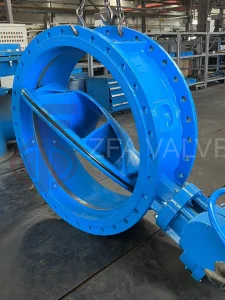
OEM Flange Type Double Offset Butterfly Valve
View Specifications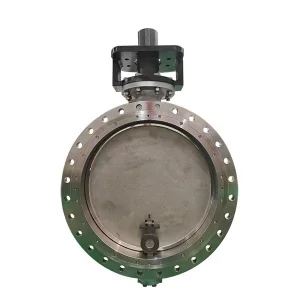
China CF8 Double Flange Performance Valve DN1000 PN16
View SpecificationsCommercial Status & Global Macro Trends in Agricultural Hydrology
Comprehensive whitepaper on the role of specialized gate valves in stabilizing water conservation frameworks and industrial macro-irrigation networks.
The global agricultural sector faces an unprecedented convergence of challenges: intensifying water scarcity, climatic volatility, escalating energy costs for pressurized distribution, and stringent environmental mandates. Within this landscape, Tianjin Zhongfa Valve Co., Ltd. (ZFA Valve) operates as a tier-one China irrigation gate valve exporter, engineering resilient-seated gate valves, high-performance butterfly valves, and knife gate systems that minimize pressure differentials, eliminate line turbulence, and eradicate unmetered volumetric losses.
Engineering Imperative: In high-capacity agricultural irrigation channels, the head loss across throttling or isolation equipment directly impacts pump energy expenditure. Our full-bore resilient-seated gate designs ensure straight-through passage with zero obstruction, yielding the lowest drag coefficient ($C_v$) possible and protecting against sediment compaction in raw ditch water.
Current Global Market Dynamics
Modern irrigation infrastructure requires specialized metallurgy and elastomer engineering. Unlike pristine municipal potable networks, irrigation fluid media frequently carries suspended solids, silt, chemical fertilizers, algae, and biological detritus. Standard metal-to-metal seating mechanisms suffer rapid galling and wire-drawing erosion under these operating parameters. As experienced exporters, ZFA equips resilient wedge gate valves with vulcanized EPDM/NBR encapsulated wedges and fusion-bonded epoxy (FBE) electrostatic coatings exceeding 250 microns, effectively insulating ductile iron bodies from micro-galvanic corrosion and soil moisture degradation in buried services.
Emerging Macro Trends Across Irrigation Infrastructure
Three distinct structural trajectories define modern procurement strategies across agricultural engineering consortia:
1. Shift to Intelligent Low-Torque Actuation: With distributed solar-powered telemetry commanding remote pump manifolds, modern gate valves must offer predictable, reduced operating torque profiles. Through precision CNC-machined bronze or stainless steel stem nuts and low-friction rolling thrust bearings, our rising and non-rising stem gate valves interface reliably with low-draw solar actuators.
2. Surge in Recycled Water & Fertigation Schemes: As secondary treated municipal wastewater and fertigation chemical injection gain traction in commercial orchards, valve elastomers must exhibit enhanced resistance against chemical breakdown, ozone weathering, and nitrate enrichment. Our specialized EPDM formulations prevent polymer embrittlement over decades of seasonal exposure.
3. Lifecycle Total Cost of Ownership (TCO) Prioritization: Commercial farms and sovereign water authorities are aggressively phasing out cast gray iron (CI) in favor of high-tensile spheroidal graphite ductile iron (GGG50 / QT450). The resilience to ground subsidence, vehicle compaction loads, and hydraulic transients (water hammer) makes ductile iron the universal standard for non-destructive pipeline longevity.
Regional Operating Environments & Strategic Solutions
Tailored hydraulic control configurations addressing climatic, chemical, and topological challenges worldwide.
Arid Zone Center-Pivot Networks
Common across the Middle East, North Africa, and Western Australia. Requires continuous desert UV resistance, dust-sealed gland packings, and PN16/Class 150 pressure resilience against deep-well high-head pump discharge lines.
Subsurface Drip Irrigation (SDI)
Widespread in North American vineyards and European commercial groves. Deploys non-rising stem (NRS) gate valves inside subterranean valve boxes with extension spindles, preventing surface tampering and soil contamination.
Agricultural Canal Sluice & In-take
Typical across South and Southeast Asian rice paddy canals. Employs large-diameter knife gate valves and double-flanged resilient gate valves to manage raw untreated river waters carrying high mud loads and floating foliage.
Municipal Treated Effluent (Reuse)
Rapidly expanding across metropolitan agricultural belts. Configured with specialized fluoropolymer or EPDM linings, SS316 stems, and sacrificial zinc anodes to resist elevated chlorides, bio-solids, and sanitation residues.
Engineering Specifications & Architectural Roadmap
Comprehensive baseline data defining our irrigation valve export programs alongside next-generation flow-control systems.
| Component Feature | Standard Agricultural Configuration | Heavy-Slurry / Canal Variant | High-Chemical / Saline Variant |
|---|---|---|---|
| Body & Bonnet Material | Ductile Iron GGG50 / EN-GJS-500-7 | Ductile Iron GGG50 + Wear Ring | CF8M (SS316) / Nickel Aluminum Bronze |
| Wedge / Disc Sealing | DI Fully Encapsulated EPDM / NBR | Beveled SS304/SS316 Knife Gate | PTFE / Viton Encapsulation |
| Stem Metallurgy | Stainless Steel 2Cr13 / SS420 | Stainless Steel SS304 / SS316 | Duplex 2205 / Hastelloy C |
| Pressure Rating | PN10 / PN16 / Class 125 / Class 150 | PN10 / Max 10 Bar Slurry Service | PN16 / PN25 / Class 150 / Class 300 |
| Coating & Corrosion Protection | Fusion Bonded Epoxy ≥ 250 μm | Abrasion Resistant Ceramic Epoxy | Thermoplastic High-Purity Fluoropolymer |
| Standard Compliance | DIN 3352 / BS 5163 / AWWA C509 / C515 | MSS SP-81 / TAPPI-TIS 405 | ISO 10434 / API 600 / ASME B16.34 |
Roadmap: Telemetric Smart Actuation
Integrating LoRaWAN and NB-IoT direct-to-cloud diagnostic actuators capable of reporting valve seat torque trends, early leakage signatures, and cavitation alerts to district SCADA software.
Roadmap: Ultra-High-Strength Nanocoatings
Pioneering graphene-doped fusion-bonded epoxy polymers yielding twice the impact resistance and zero pinhole micro-porosity during abrasive sand-carrying river water transit.
Roadmap: Zero-Cavitation Anti-Surge Wedges
Developing calibrated slotted bypass gates to dissipate extreme pressure transients generated by sudden emergency shutoffs across high-volume irrigation mainlines.
Turnkey Hydraulic Architecture for Commercial Agricultural Consortia
Holistic engineering support for international contractors, turnkey developers, and sovereign irrigation ministries.
Bespoke OEM Specification Matching
Complete flexibility in drilling patterns (ANSI Class 125/150, BS EN 1092-2 PN10/PN16, AS 2129 Table D/E, JIS 10K). Cast-in brand identification, specialized packaging for harsh maritime transit, and comprehensive test documentation.
ISO 9001 & CE Quality Assured Verification
Each production run undergoes hydro-shell testing at 1.5x nominal pressure and bi-directional seat testing at 1.1x nominal pressure in accordance with EN 12266-1 and API 598 standards before release from our factory.
Full Hydraulic Ancillary Packages
Streamline project logistics by combining gate valves with matching air release valves, foot valves, non-slam wafer check valves, Y-strainers, and dismantle joints from a singular verified Chinese export source.
Frequently Asked Questions by International Engineering Buyers
Critical insights addressing specification, operation, and logistics for irrigation gate valve acquisitions.
Why is a resilient seated gate valve preferred over a metal-seated valve in irrigation lines?
Raw agricultural water carries fine sand, silt, and organics. Metal-seated valves rely on exact machined contact between brass or bronze rings, which are easily scored or obstructed by suspended solids, causing continuous weeping. Resilient seated gate valves use a rubber-encapsulated wedge (EPDM/NBR) that compresses securely around particulates without damaging the sealing face, providing 100% bubble-tight shutoff even in heavily silted waters.
What is the functional difference between Rising Stem (OS&Y) and Non-Rising Stem (NRS) valves in field installations?
Rising Stem (Outside Screw and Yoke - OS&Y) valves feature an exposed stem that elevates as the valve opens, offering immediate visual indication of flow status. They are ideal for pump houses, filtration stations, and above-ground manifolds. Non-Rising Stem (NRS) valves maintain a constant overall height because the stem threads rotate inside the wedge; this compact profile makes NRS valves the global standard for direct buried service, trench applications, and subterranean valve boxes operated via extension spindles.
Can ZFA Valve produce valves meeting distinct national flange standards simultaneously?
Yes. Our Tianjin foundry utilizes multi-standard CNC machining programs. We regularly manufacture valve flanges conforming to ANSI/ASME B16.1 Class 125, B16.5 Class 150, EN 1092-2 PN10/PN16, AS 2129 Table D/E, and JIS B2212/B2213 10K. We also supply multi-drilled or universal flange configurations for distributor stock optimization.
What corrosion protection standard is applied to buried agricultural gate valves?
All ZFA agricultural gate valves receive electrostatically applied, thermally bonded blue epoxy coating (FBE) applied both internally and externally according to DIN 30677-2 and AWWA C550 standards. The standard layer thickness is ≥ 250 microns, tested for zero holiday porosity up to 1.5 kV, ensuring maximum protection against acidic agricultural fertilizers and subterranean soil moisture.
High-Efficiency Flow Control & Slurry Valve Solutions
Complementary isolation systems, knife gates, and butterfly valves optimized for modern agricultural automation.
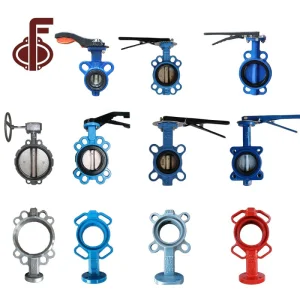
OEM DI CI SS304 SS316 Butterfly Valve Body
View Specifications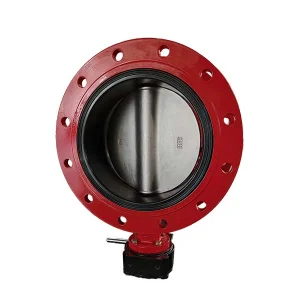
OEM Replaceable Seat Double Flange Butterfly Valve
View Specifications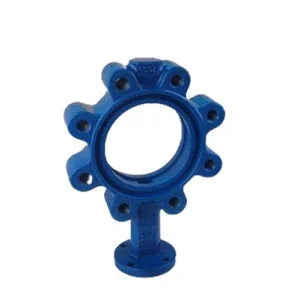
China DN100 PN16 Butterfly Valve Lug Body Assembly
View Specifications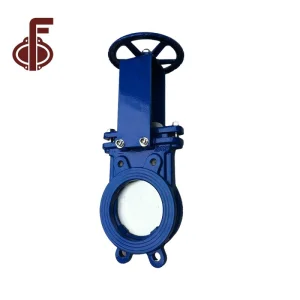
OEM Ductile Iron PN10/16 Wafer Knife Gate Valve
View Specifications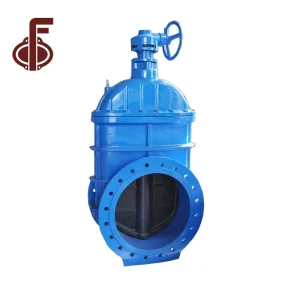
OEM DI PN10/16 Class150 Soft Sealing Gate Valve
View Specifications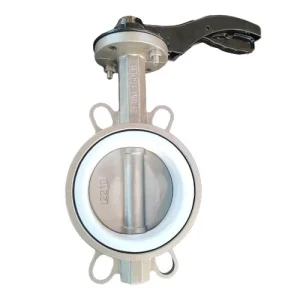
China CF8M Body/Disc PTFE Seat Wafer Butterfly Valve
View Specifications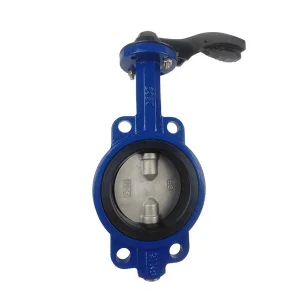
China DN100 4-Inch Hard Back Seat Wafer Butterfly Valve
View Specifications