
Featured Flow Control Assemblies: Tier-1 Lineup
Explore heavy-duty isolation units, high-performance knife gate valves, and resilient seated multi-standard butterfly valves tested for bidirectionally bubble-tight operations.
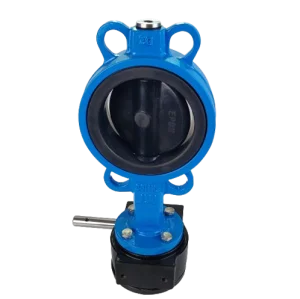
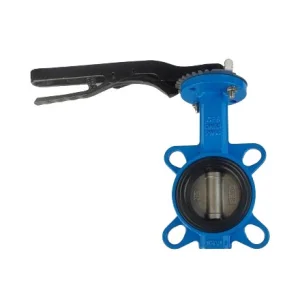
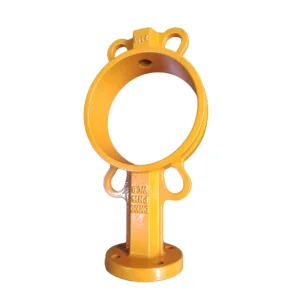
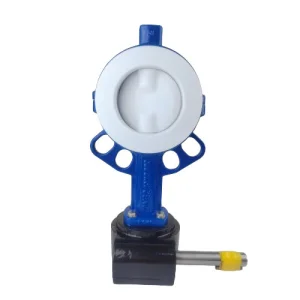
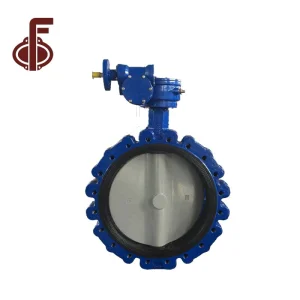
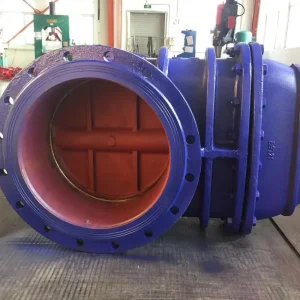
Single Flange Butterfly Valve Architecture: Mechanical Dynamics & Flange Optimization
A rigorous review of mono-flange / single flange body configurations, hydro-structural advantages over standard wafer and lug geometries, and compliance benchmarks across global pipeline standards.
In modern industrial process engineering, the single flange butterfly valve (often categorized as a mono-flange or semi-lug butterfly valve) occupies a critical niche between ultra-compact wafer style designs and heavier, fully double-flanged units. Characterized by a single integral outer flange containing drilled, smooth, or tapped bolt holes, this geometry resolves one of the foremost pain points in skid design and pipeline assembly: achieving secure end-of-line bolting and rigid pipe clamping without adding excessive weight or extending the face-to-face envelope dictated by ISO 5752 Basic Series 20 and EN 558 Series 20.
Tianjin Zhongfa Valve Co., Ltd. (ZFA Valve) has engineered single flanged butterfly valve bodies to eliminate the bending moments and bolt-deflection hazards frequently observed in thin-body wafer valves subjected to long cross-bolt thermal expansion. When standard wafer valves are clamped between pipe flanges over extensive lengths, elevated fluid temperatures induce differential thermal expansion across the studs. This leads to bolt stretch, reducing seal pre-compression and causing environmental fugitive leakage. By contrast, a single flange pattern allows shorter, localized studs to anchor directly into tapped blind holes on the valve face, confining torque directly against the ductile iron or cast steel body perimeter.
From a hydrodynamic perspective, the single flange profile incorporates an optimized, spherically machined disc edge contoured via multi-axis CNC tooling. This geometric alignment ensures that upon closure, the disc compresses the vulcanized or replaceable elastomeric boot seal symmetrically along 360 degrees. The resultant sealing stress profile eliminates localized pinching at the upper and lower stem journals—traditionally the most common site of elastomer extrusion, tearing, and micro-channel leakage.
| Body Architecture | Face-to-Face Standard | Dead-End Service Capability | Structural Rigidity | Weight vs. Performance | Primary Industrial Sector |
|---|---|---|---|---|---|
| Single Flange (Mono-Flange) | EN 558 / ISO 5752 Col. 20 | Full Differential Rating | High (Tapped / Flanged Anchor) | Optimal (~25% lighter than double flange) | Marine Bulkheads, Pump Headers, Desalination |
| Wafer Concentric | API 609 Cat A / EN 558 | Not Permitted (Sandwich Only) | Moderate (Subject to stud stretching) | Lowest initial weight and cast cost | HVAC, Potable Water Lines, Light Fire Loops |
| Full Lug Style | MSS SP-67 / API 609 | Fully Capable (Tapped Lug Web) | High (Independent stud engagement) | Moderate (Higher material weight) | Process Chemical, Commercial HVAC Risers |
| Double Flanged (Concentric/Eccentric) | EN 558 Series 13 / 14 / AWWA C504 | Fully Capable (Dedicated Flange Sets) | Maximum (Dual monolithic rings) | Heaviest installation profile | Raw Municipal Transmission, Buried Intake Mains |
The Tianjin Valve Manufacturing Hub: Economies of Scale, Metallurgical Precision & Export Advantage
Why Tier-1 engineering procurement contractors (EPCs) across Europe, the Middle East, and the Americas source single flange butterfly valves from our Tianjin facility.
End-to-End Vertical Supply Chain
Tianjin hosts China's most consolidated industrial valve infrastructure. Rather than relying on third-party sub-assemblers, ZFA Valve oversees the complete value stream from sand casting and computerized lost-foam mold casting through precision CNC boring, in-house electrostatic epoxy coating, and direct containerization.
- Traceable molten iron spectroscopy (QT450-10 & GGG50)
- In-house elastomer vulcanization and formulation testing
- Zero intermediary handling costs directly benefiting EPC budgets
Logistical Proximity to Tianjin Xingang Port
Situated within rapid logistics proximity to Xingang Port—one of the largest deep-water export shipping hubs globally—our manufacturing campus guarantees seamless maritime logistics, specialized heavy-crane freight handling, and reduced drayage transit cycles for heavy containerized valve consignments.
- Weekly ocean liner routes to Rotterdam, Houston, Jebel Ali, Singapore
- Climate-controlled export crating meeting ISPM-15 phytosanitary rules
- FOB, CIF, and DDP export agility for global tenders
Agile OEM/ODM Multi-Drilling Customization
Global projects frequently mandate inter-standard mating dimensions on a single project site. Our high-speed CNC drilling lines permit rapid adaptation of single flange bodies to dual- or multi-standard bolt circles within the same manufacturing cycle without expensive re-tooling delays.
- Simultaneous compliance: ANSI 150#, PN10, PN16, JIS 10K, AS 2129
- Customized stem shaft keyways and ISO 5211 direct-mount pads
- Client-branded casting relief logos, custom RAL color finishes
Elastomer Tribology & Metallurgical Substrates in Resilient Single Flange Sealing
A rigorous examination of seat polymer resistance, shaft retention mechanisms, and galvanic corrosion prevention across demanding fluid regimes.
Peroxide-Cured EPDM
Formulated for potable water, district cooling, wastewater, and mild alkalis. Vulcanized under controlled heat to optimize compression set and prevent permanent deformation over 50,000+ mechanical cycles.
- Thermal Range: -20°C to +120°C (-4°F to 248°F)
- WRAS / FDA: Certified formulation compounds
- Non-Compatible: Hydrocarbons, synthetic diester oils
High-Acrylonitrile NBR
Engineered with increased acrylonitrile content to withstand swelling, hardening, and permeation in fuel handling, oily water separators, compressed air networks, and marine lube lines.
- Thermal Range: -10°C to +85°C (14°F to 185°F)
- Hydrocarbon Resilience: Superior mineral oil resistance
- Non-Compatible: Strong oxidizers, ketones, ozone
Virgin / Modified PTFE
Isostatically molded fluoropolymer liners backed by resilient silicone or viton cushions, providing complete chemical inertness for corrosive pickling acids, bio-pharm, and semiconductor chemical delivery.
- Thermal Range: -29°C to +180°C (-20°F to 356°F)
- Permeation Resistance: Ultra-dense molecular chain
- Friction Coefficient: < 0.04 torque optimization
Fluoroelastomer (FKM)
Selected for aggressive industrial process fluids where simultaneous exposure to aromatic hydrocarbons, aggressive solvents, and elevated thermal excursions exceeds the thresholds of standard rubbers.
- Thermal Range: -15°C to +200°C (5°F to 392°F)
- Oxidation Stability: High resistance to weathering/ozone
- Mechanical Toughness: High tensile and tear retention
Shaft Integrity: Pinless Splined Connection vs. High-Tensile Taper Pinning
Valve stem blowout prevention and disc-to-stem mechanical backlash govern actuator sizing and long-term control precision. ZFA Valve manufactures single flange butterfly valves in two primary shaft drive architectures:
1. Splined / Double-D Pinless Design
The shaft transfers torque directly via high-precision internal broached splines or double-D flats within the disc core. Eliminates disc penetrations, ensuring zero chance of media leakage through stem pin holes or galvanic crevice corrosion behind pin welds.
2. Heavy-Duty Tangential Taper Pins
Utilized on large-diameter single flange valves (DN600–DN1200) experiencing severe hydrodynamic flutter and shock loads. Precision-machined 17-4PH or 316SS taper pins are press-fitted and expansion-locked, mechanically anchoring the disc against stem slip.
3. Dual Blowout Proofing (API 609)
All single flange units incorporate an integral collar or retaining ring arrangement below the ISO 5211 actuator mounting flange. Even under complete actuator removal or external stem packing maintenance, internal pressure cannot eject the stem upward.
Macro-Sector Deployment: Engineering Solutions Across Critical Infrastructure
Real-world integration parameters for single flange butterfly valves in high-stakes municipal, marine, and continuous process plant applications.
SWRO Seawater Desalination
High-chloride seawater intake and brine effluent reject lines destroy carbon steel and standard cast iron. Our single flange desalination assemblies employ:
- Disc Metallurgy: Nickel-Aluminum Bronze (ASTM B148 C95800) or 2507 Super Duplex
- Body Coating: 300μm fusion-bonded epoxy with holiday testing
- Cavitation Control: Low torque hydrodynamic disc profiling
District Cooling & Chilled Water
Megawatt chiller plant headers in urban centers require low pressure-loss coefficients ($C_v$) and condensed installation envelopes between headers:
- Extended Neck Design: Accommodates 50mm–80mm lagging insulation
- Vapor Tight Sealing: Zero condensation penetration into top gearboxes
- Zero Headloss: High $C_v$ contour minimizing plant pumping energy
Marine Ballast & Cargo Stripping
Vessel bulkheads and double-bottom void spaces demand compact valves capable of being unbolted from one side without spilling ballast tanks:
- Mono-Flange Rigidity: Direct bulkhead bolting through tapped holes
- Class Compliance: Hydrostatic strength verified for marine certifications
- Shaft Material: Monel K500 or 316L stainless steel trims
Flue Gas Desulfurization (FGD)
Lime slurry neutralization lines in thermal power plants rapidly erode soft metals and standard commercial valves:
- Liner Architecture: Heavy-wall molded PTFE/PFA or abrasion-resistant NBR
- Disc Core: Solid Hastelloy C276 or titanium Gr. 2
- Slurry Cleanout: Smooth transition throat preventing particle buildup
Industry Trends: Digitalization, Smart Actuation & Fugitive Emission Containment
The transition from manual mechanical isolation toward predictive Industry 4.0 automation and net-zero fugitive emission compliance.
Intelligent IIoT Actuator Integration
Single flange valves exported by ZFA Valve are increasingly pre-packaged with intelligent electric and electro-hydraulic actuators featuring fieldbus communications (Modbus, Profibus DP, Foundation Fieldbus, HART).
- Continuous torque signature monitoring for predictive seat wear diagnostics
- Non-intrusive infrared calibration without opening enclosure covers
- Emergency shutdown (ESD) battery fail-safe modules for power interruption
Zero Fugitive Stem Emissions (ISO 15848-1)
Global environmental mandates (including TA-Luft and Clean Air regulations) require industrial valve stems to prevent VOC and hazardous vapor escape over thousands of continuous mechanical actuations.
- Dual dynamic O-ring seals combined with adjustable V-ring chevron packing
- Machined stem micro-finish ($R_a < 0.4\mu\text{m}$) reducing packing wear
- Class A/B fugitive emission certification on high-performance trims
Finite Element Analysis (FEA) Weight Optimization
Modern China foundries have evolved beyond heavy, over-designed casting. Using dynamic CAD/FEA simulation software, ZFA Valve engineers optimize wall thickness along stress axes, trimming dead weight while reinforcing the single flange web.
- 12% reduction in raw metal consumption per body casting
- Enhanced hydrodynamic disc profile achieving higher flow coefficients ($K_v$)
- Elimination of cavitation vortex nodes at micro-throttling disc positions
Global Sourcing Strategy: Total Cost of Ownership (TCO) & Rigorous Factory Acceptance Protocols
A roadmap for international procurement managers to navigate factory audits, metallurgical verification, and zero-defect quality inspection.
When engineering procurement teams evaluate valve manufacturers in China, the initial purchase price (CapEx) accounts for less than 22% of the total cost of ownership (TCO) across a 15-year facility lifecycle. Premature valve failure results in unscheduled pipeline downtime, hazardous environmental remediation, pump cavitation damage, and extreme labor costs during maintenance shutdowns. Strategic buyers qualify suppliers based on verifiable metallurgical control and hydrostatic compliance.
PMI & Spectrometry
Positive Material Identification (PMI) of all casting ladles and bar stock to verify nodularity, nickel content, chromium grade, and carbon limits prior to machining.
Multi-Axis CNC Boring
Computerized turning of upper stem journals, disc sealing profiles, and flange face serrations ensuring precise geometric concentricity (±0.02mm).
Dual-Direction Testing
100% of manufactured valves are hydrostatically tested to 1.5× working pressure for body integrity, and 1.1× working pressure for bubble-tight bi-directional seat shutoff.
Coating Spark Testing
Electrostatic epoxy coatings undergo holiday high-voltage spark testing (up to 3.0 kV) to detect pinholes, micro-porosity, and guarantee minimum 250μm thickness.
EN 10204 3.1 Traceability
Full project documentation dossiers provided including physical and chemical Mill Test Reports (MTRs), dimensional inspection sheets, and CE Declaration of Conformity.
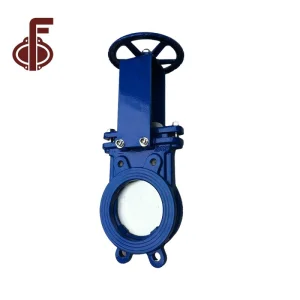
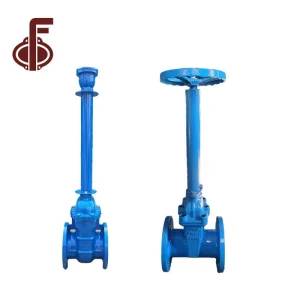
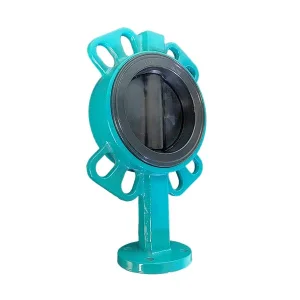
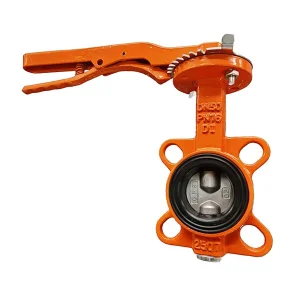
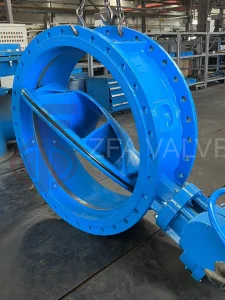
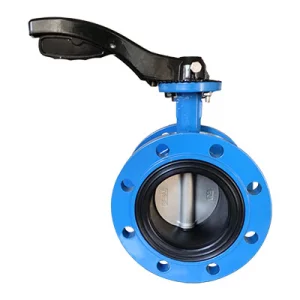
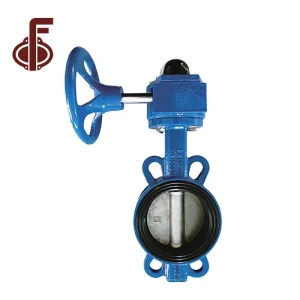
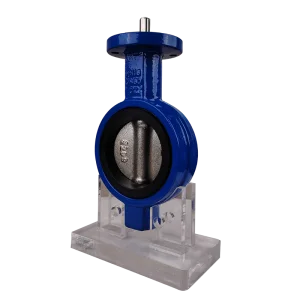
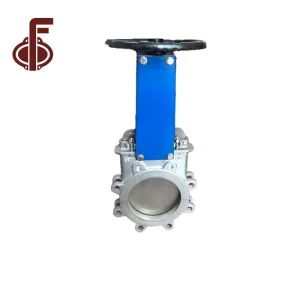
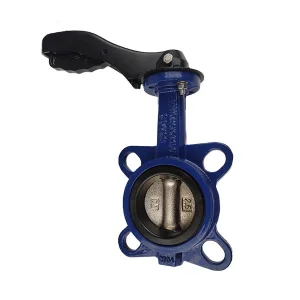
Engineered Product Showcase: Multi-Standard Industrial Valves
Industrial gate, high-temperature double offset, multi-standard wafer, and hard-back seat butterfly valves manufactured for continuous severe service.
Frequently Asked Questions by Industrial Valve Buyers & EPC Engineers
Comprehensive engineering clarifications addressing single flange mechanics, international standard cross-referencing, testing criteria, and OEM procurement.
What distinguishes a single flange (mono-flange) butterfly valve from a full lug or double-flanged body? +
A single flange butterfly valve features one integrated outer flange equipped with either clearance through-holes or tapped blind holes, combined with an ultra-short face-to-face dimension compliant with ISO 5752 Series 20 / EN 558 Series 20. In contrast, double-flanged butterfly valves possess two full, separate flanges with long face-to-face bodies (EN 558 Series 13 or 14). Compared to a full-lug valve (which has individual lug ears surrounding the entire body circumference), the single flange structure provides exceptional radial rigidity and permits unbolting of downstream pipework while functioning as an end-of-line isolation boundary without requiring an additional companion blanking flange.
Can ZFA single flange butterfly valves be used for dead-end service under full design pressure? +
Yes. Our single flange butterfly valves engineered with tapped flange holes are fully rated for continuous dead-end service at their rated nominal pressure (PN10, PN16, or ASME Class 150). When installed at the terminal end of a pipeline, the body's threaded anchor holds the seat liner firmly in compression against line fluid pressure, allowing complete downstream piping removal for pump overhaul or system expansion without pipeline de-pressurization upstream.
How does ZFA Valve guarantee zero leakage (API 598 / ISO 5208 Rate A) on resilient seats? +
Every single valve undergoes factory hydrostatic testing prior to packaging. Body shells are tested to 1.5× nominal working pressure (e.g., 24 bar for PN16). The elastomeric seats (EPDM, NBR, Viton, or PTFE) undergo bi-directional pneumatic and hydrostatic testing to 1.1× working pressure (17.6 bar for PN16) with zero allowable droplet or air bubble passage over the specified hold duration, fully complying with ISO 5208 Rate A and API 598 standards.
What international drilling standards can single flange bodies be customized to match? +
Thanks to our CNC multi-spindle drilling centers, ZFA Valve fabricates single flange butterfly valves compatible with ASME/ANSI B16.1 Class 125, ASME B16.5 Class 150, EN 1092-2 / BS 4504 (PN10 and PN16), JIS B2239 (10K and 16K), AS 2129 (Table D and Table E), and Russian GOST 12815 standards. Multi-drilled bolt circles are available to allow distributors to service different pipeline standards from a single inventory stock.
What are the key advantages of sourcing butterfly valves directly from a Tianjin manufacturer? +
Tianjin represents northern China's premier industrial valve manufacturing cluster, combining automated ductile iron foundries, elastomer compounding plants, and world-class testing laboratories within a 50km radius. This geographic concentration delivers massive scale economies, total quality oversight from raw melt to finished assembly, rapid tooling turnaround for bespoke OEM patterns, and direct, low-cost ocean container dispatch via the deep-water port of Tianjin Xingang.
How should buyers choose between bonded (vulcanized) seats and replaceable boot seats? +
Vulcanized (Bonded) Seats: The rubber is molecularly vulcanized directly to the valve casting or a phenolic hard-back skeleton. This completely eliminates seat movement or collapse under high-velocity flow, vacuum applications, or abrasive slurries.
Replaceable Boot Seats: The elastomeric seat is field-removable. While slightly more economical to service in the field, replaceable seats are not recommended for vacuum service or line velocities exceeding 4.5 m/s, where bonded seats provide far superior service life.
What documentation and inspection certificates are included with global export shipments? +
All international orders are supported by a complete quality verification pack: EN 10204 Type 3.1 Mill Test Certificates containing chemical ladle spectroscopy and tensile/elongation physical tests, hydrostatic pressure test acceptance certificates, coating thickness and spark test logs, CE Declaration of Conformity under Pressure Equipment Directive (PED 2014/68/EU), and Certificate of Origin (CO) documentation.
What is the standard production lead time for full container loads (FCL) of single flange valves? +
Standard production cycles for custom-configured or OEM-branded single flange butterfly valve orders range between 25 and 35 calendar days for a 20ft/40ft container load. For standard stock sizes (DN50 to DN300 in ductile iron with EPDM seats), pre-machined inventory bodies allow dispatch within 7 to 10 working days from order confirmation.
