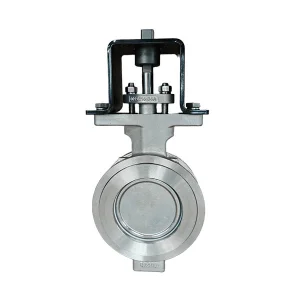
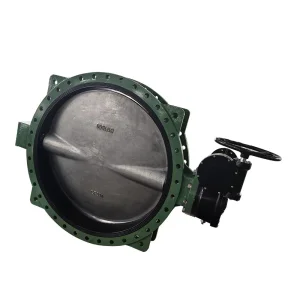
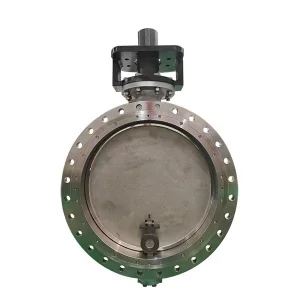
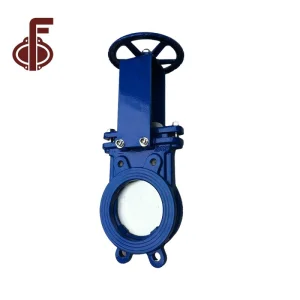
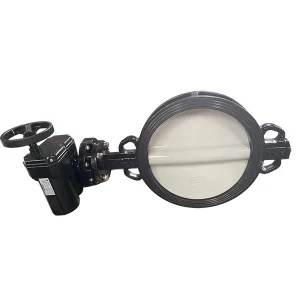
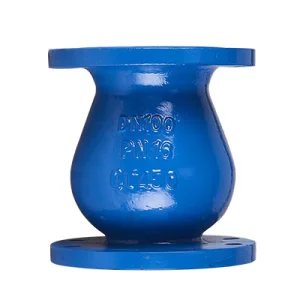
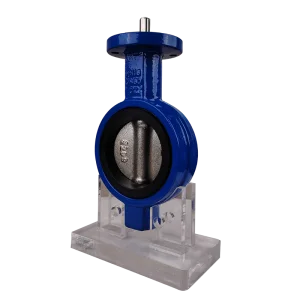
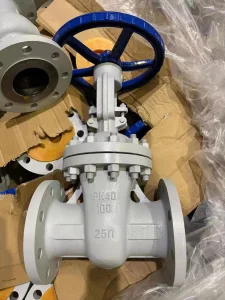
Precision Flow Isolation & Control Assemblies
Explore our export-certified industrial butterfly, gate, and dual-plate check valve systems designed for zero-leakage resilience across extreme process media.
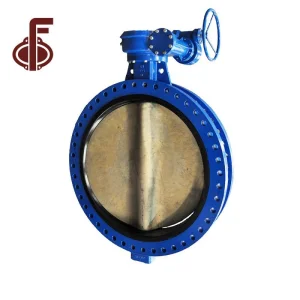
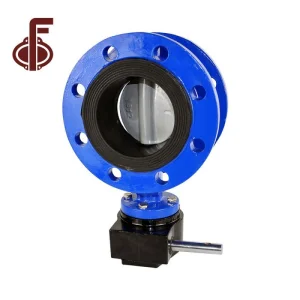
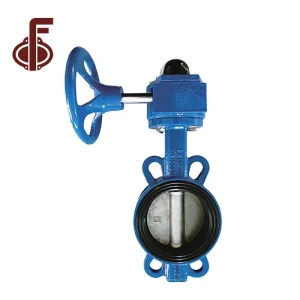
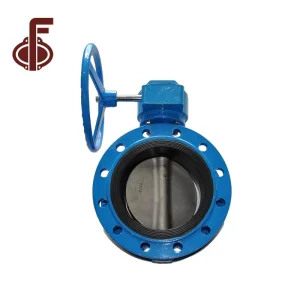
Engineering Principles of Modern Wafer Check Valves
A rigorous examination of fluid dynamics, zero water hammer prevention, and metallurgical integrity in dual plate and single plate non-return designs.
Dynamic Response & Water Hammer Mitigation
Wafer check valves, particularly dual-plate spring-loaded configurations (API 594), solve catastrophic transient pressure surges. By utilizing torsion springs calibrated to break fluid column reverse acceleration before flow velocity drops to zero, our valves eliminate mechanical slamming, reducing pressure spikes across high-head pumping stations by over 82% compared to conventional swing check mechanisms.
Optimized Hydrodynamic Flow Profiles
The compact face-to-face wafer profile inherently reduces system payload and spatial constraints. Internal CFD profiling minimizes aerodynamic turbulence behind the plate assembly. By shaping the disc profile and optimizing hinge-pin clearances, our engineering prevents eddy formation, delivering low pressure-drop coefficients (Cv) that yield significant lifetime operating cost savings across continuous-duty pumping circuits.
Resilient vs. High-Performance Metal Sealing
ZFA engineers manufacture elastomeric seats (EPDM, NBR, Viton) vulcanized or mechanoid-retained directly into the body to achieve API 598 Bubble-Tight zero leakage for municipal water and HVAC. For corrosive, erosive, or extreme-temperature media (-50°C to 450°C), our precision-lapped metal-to-metal stellite seats provide fire-safe shutoff conforming strictly to API 6D and ISO 5208 Class A/B testing protocols.
China Factory Integration & Manufacturing Superiority
How vertical integration, state-of-the-art ductile iron foundries, and smart CNC clusters deliver cost-performance benchmarks for global supply chains.
Vertically Integrated Casting
Unlike trading assemblers, our Tianjin casting facilities maintain direct spectral analysis over raw melt chemistries for Ductile Iron (QT450-10 / ASTM A536 65-45-12), WCB carbon steel, and CF8M stainless steel, guaranteeing zero porosity and high impact resilience.
Automated Multi-Axis CNC
Disc faces, hinge-pin bores, and sealing planes undergo processing on computerized machining centers. Maintaining critical dimensional tolerances within ±0.015mm guarantees perfect axial alignment and frictionless disc articulation under micro-differential pressures.
Comprehensive Pressure Testing
Every individual check valve manufactured undergoes shell hydrostatic testing to 1.5× PN rating and resilient/metal seat leakage testing according to API 598 and EN 12266-1 before painting and packaging, ensuring zero defective units escape the shop floor.
Agile OEM/ODM Customization
We empower international brands, EPC contractors, and distributors with turnkey private label production. From casting mold design and customized face-to-face dimensions to proprietary epoxy powder coatings and laser etching, we tailor products to exact market demands.
Localized Support & Cross-Border Compliance
Ensuring frictionless procurement, border clearance, and pipeline commissioning through deep international standards harmonization.
| Target Region | Standards Harmonization | Critical Compliance Metrics | Export Documentation Package |
|---|---|---|---|
| North America (USA, Canada) | API 594, ASME B16.34, ASME B16.5, AWWA C518 | Class 150/300 pressure ratings, lead-free brass/bronze or ductile iron, NSF/ANSI 61 & 372 drinking water safety. | MTRs (EN 10204 3.1), Certificate of Origin, Third-Party Hydrostatic Test Logs. |
| European Union & UK | EN 12334, EN 558-1 Series 16, EN 1092-2, BS 5153 | Pressure Equipment Directive (PED 2014/68/EU) CE mark compliance, WRAS approved elastomers for potable water. | Declaration of Conformity (DoC), CE/UKCA marking documentation, Material Traceability. |
| Middle East & North Africa | ISO 5752, API 594, BS EN 12266 | High ambient temperature epoxy coatings (min. 250μm), NACE MR0175 sour service compliance for saline & petrochemical flow. | Inspection Test Plans (ITP), Third-Party Witness Verification (SGS/TÜV), SASO certification. |
| Eurasia & Russia (CIS) | GOST 12820-80, GOST 27477, EAC TR CU 010/032 | Low-temperature impact resilience (-40°C to -60°C steels), PN10/PN16/PN25 flange alignment. | EAC Declaration, Factory Passports in Russian, Complete Physical-Chemical Test Certificates. |
Mission-Critical Industry Deployment Scenarios
Engineered to handle severe operating stresses, turbulent flows, and aggressive fluids across regional municipal and industrial infrastructures.
Municipal Water & Wastewater Treatment
Installed immediately downstream of vertical turbine and booster pump stations. The dual-plate configuration prevents destructive pump reverse spin upon sudden power shutoff. Epoxy-coated ductile iron bodies with vulcanized EPDM seats ensure resistance to chloramines, sewage bio-corrosion, and line sedimentation.
District Cooling & Commercial HVAC Systems
Ideal for urban high-rise cooling towers and central chiller skids where space and weight are strictly limited. Wafer check valves install compactly between standard EN or ASME flanges, ensuring silent check operation, zero valve chatter at partial fluid flow, and total elimination of noise transmission throughout inhabited facilities.
Industrial Desalination & Marine Operations
Deployed in reverse osmosis (RO) high-pressure membrane feed loops and shipboard ballast water treatment systems. Manufactured utilizing Nickel Aluminum Bronze (C95800) or Duplex Stainless Steel (2205 / 2507) to withstand intense chloride-induced crevice corrosion, pitting, and cavitation erosion.
Emerging Industry Trends in Wafer Check Valve Technology
Technological trajectories shaping modern fluid network engineering over the coming decade.
Integration of Smart Acoustic & Position Sensing
Municipal and industrial plant operators increasingly demand non-intrusive monitoring. The newest wafer check valve architectures incorporate low-profile external magnetic sensors and high-frequency ultrasonic transducers to monitor real-time disc oscillation, seat landing velocity, and internal debris entrapment without breaching the pressure boundary.
Advanced Metallurgical Coatings & Composite Discs
To reduce dynamic inertia and speed up closing times, advanced lightweight polymers (PEEK) and ceramic composite discs are being integrated into wafer checks handling aggressive slurry and petrochemical refining lines. Furthermore, thermally sprayed Tungsten Carbide and HVOF nickel-based claddings drastically extend mechanical life in high-abrasion pipelines.
Decarbonization & Pumping Energy Reduction
With corporate carbon disclosure frameworks enforcing strict pumping energy accounting, valve design is moving toward hyper-optimized fluid dynamics. Manufacturers use generative CFD optimization to re-engineer check valve body interiors, reducing hydrodynamic resistance coefficients (zeta values) by 15-20%, reducing lifecycle gigawatt-hour pumping consumption.
Frequently Asked Questions (FAQ)
Essential considerations for procurement teams, mechanical engineers, and plant maintenance directors.
What are the key technical differences between Dual-Plate and Single-Plate Wafer Check Valves?
Can wafer check valves be installed in vertical down-flow configurations?
How does ZFA Valve guarantee zero porosity and metallurgical integrity in ductile iron bodies?
What are the minimum piping spacing requirements upstream and downstream of a wafer check valve?
What custom OEM private label options does your factory provide to overseas valve brands?
Extended Industrial Valve Assemblies & Parts
Reliable flow regulation, non-return protection, and high-performance pipeline isolation components direct from our Tianjin manufacturing plant.