
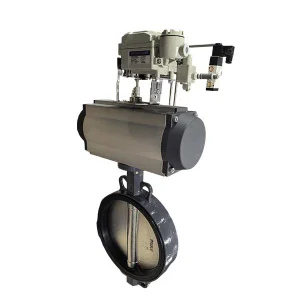
OEM DN100 PN16 E/P Positioner Pneumatic Wafer Butterfly Valves Exporter, Exporters
Engineered to work seamlessly alongside Y strainers and filtration units, protecting vital mechanical equipment against abrasive debris and pressure shocks.
OEM DN100 PN16 E/P Positioner Pneumatic Wafer Butterfly Valves Exporter, Exporters
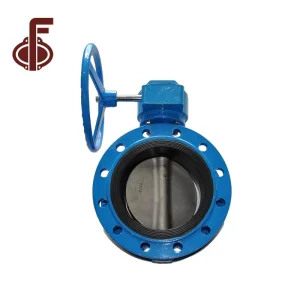
China DI SS304 PN10/16 CL150 Double Flange Butterfly Valve Factories, Exporters
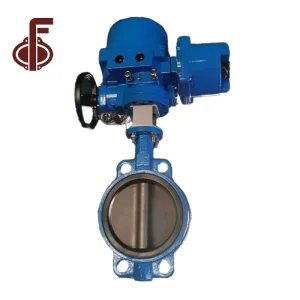
OEM Electric Actuator Wafer Butterfly Valve Factories, Exporter
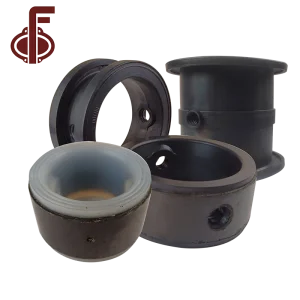
OEM Soft/Hard Back Seat Butterfly Valve Seat Exporter, Exporters
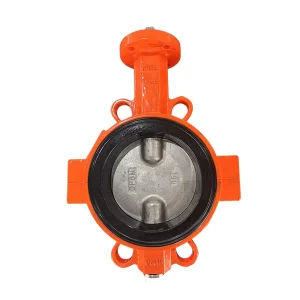
OEM 5" WCB Two PCS Split Body Wafer Butterfly Valve Exporter, Exporters
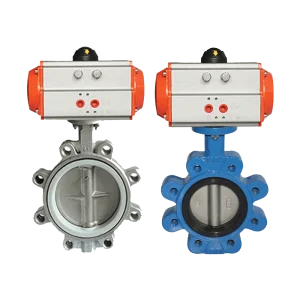
China Pneumatic Soft Seal Lug Butterfly Valve OEM Factory, Factories
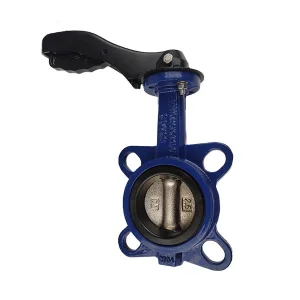
China Casting Iron Body EPDM Hard Back Seat Wafer Butterfly Valve Manufacturers, Exporter
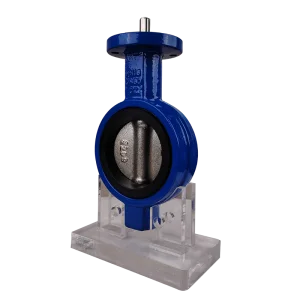
OEM Earless Wafer Type Butterfly Valve Manufacturer, Exporter
In modern industrial hydraulic systems, the Y filter is the first and most critical physical line of defense. As piping networks scale toward higher pressures and volatile fluid dynamics, the demand for high-durability cast-body filtration modules has accelerated across the globe.
Modern industrial architectures demand ultra-clean fluids to protect costly downstream components such as modulating control valves, high-pressure multistage pumps, flowmeters, and steam traps. A microscopic particle of slag or scale escaping downline can induce immediate mechanical scouring, cavitation damage, and unrecoverable downtime. Leading OEM Y filter factories no longer view the Y filter as a basic piece of hardware, but as a hydrodynamic instrument designed using computational fluid dynamics (CFD) to minimize head loss while maximizing sediment capture capacity.
Procurement teams from tier-one engineering firms require traceable manufacturing, documented metallurgy, and rapid multi-standard customization.
Global operators eliminate failure risks by enforcing strict foundry audits. Ductile Iron (QT450-10 / ASTM A536), Cast Steel (WCB), and Austenitic Stainless Steel (CF8/CF8M) must adhere to certified tensile thresholds, elongation criteria, and chemical composition bounds.
Modern plant managers demand low differential pressure drops across strainers. Clean internal fluid tracks, non-turbulent branch angles (45-degree inclination), and expanded screen open-area ratios prevent unneeded pump power draw.
Global brands outsource manufacturing to certified Chinese hubs to achieve scale without quality degradation, relying on automated machining lines, private brand casting marks, and customized surface coatings.
Cross-sector performance benchmarks comparing filtration configurations across high-reliability operating environments.
| Operating Sector | Predominant Body Material | Filter Mesh Standard | Primary Valve Configuration | Compliance Standards |
|---|---|---|---|---|
| Municipal Water & Desalination | Ductile Iron (GGG40 / GGG50) with FBE Coating | SS304 / SS316 Perforated Screen (1.5mm–3.0mm) | Double Flange Butterfly & Resilient Gate Valves | ISO 7005-2 / BS EN 593 |
| Commercial HVAC & District Cooling | Cast Iron (GG25) / Ductile Iron | Mesh 20 to Mesh 60 SS304 Wire Cloth | Wafer & Lug Type Resilient Seated Valves | DIN 3202 / ANSI B16.1 |
| Petrochemical & Refinery Loops | Carbon Steel (WCB) / Stainless Steel (CF8M) | Mesh 100 to Mesh 200 Multi-Layer SS316 Screen | Triple Eccentric Metal Seated Butterfly Valves | ASME B16.34 / API 609 |
| Fire Protection Infrastructure | Ductile Iron (ASTM A536 65-45-12) | Rigid Heavy-Gauge Perforated Basket | Grooved & Flanged Fire Protection Butterfly Valves | UL Listed / FM Standard |
A rigorous five-stage production framework guarantees absolute traceability and performance consistency across international supply chains.
Every ladle of molten metal undergoes spectrometer inspection to confirm chemical limits for sulfur, phosphorus, carbon, and chromium before pouring.
Body flange facings, strainer basket landing seats, and blow-off ports are finished using multi-axis CNC lathes to verify micro-finish roughness standards.
100% of manufactured strainers and valves undergo shell strength and seat tightness tests according to EN 12266-1 and API 598 before surface treatment.
Seamless adaptability across ASTM, ANSI, ISO, BS, DIN, GOST, JIS, and KS engineering frameworks enables immediate installation into global projects.
The convergence of predictive industrial analytics, advanced metallurgy, and zero-loss geometry is shaping the next era of industrial filtration.
Next-generation Y strainers feature pre-drilled ports ready for wireless IoT differential pressure transmitters. These modules notify operators the moment clogging reaches threshold levels, preventing manual blow-off overhead.
By refining internal flow deflectors, current CAD/CFD tools lower the resistance coefficient (Cv/Kv values) by 14%, reducing pump electricity demand over long-cycle operations.
To resist harsh marine cooling and chemical applications, modern OEM production applies Super Duplex Stainless Steels (2507) and high-bond thermoplastic coatings for severe anti-corrosive resistance.
Key technical considerations for pipeline engineers, contractors, and industrial procurement professionals.
A dependable Y strainer should feature a free screen open-area ratio of at least 3:1 to 4:1 relative to the internal cross-sectional area of the mating pipe. This ratio prevents excessive pressure drops across the line and prolongs operating cycles before cleaning is required.
Y strainers are typically mounted horizontally with the filter leg pointing downward, ensuring captured debris settles away from the main stream. They can also be installed in vertical lines when flow runs downward, allowing gravity to retain particles inside the screen basket.
Finer mesh sizes capture smaller particles but clog faster and create higher pressure drops. Most industrial pipelines use a coarser perforated screen (such as 1.5mm to 3mm) for preliminary debris removal, combined with a fine stainless mesh lining (20 to 100 mesh) sized to match the downstream equipment clearance tolerances.
Comprehensive OEM manufacturing packages include EN 10204 Type 3.1 material test certificates, hydrostatic shell and seat pressure test reports, dry film thickness (DFT) paint reports, and dimension verification sheets signed off by qualified quality control personnel.
Explore our heavy-duty valve series designed to maintain fluid integrity, reduce line turbulence, and integrate with industrial filtration equipment.
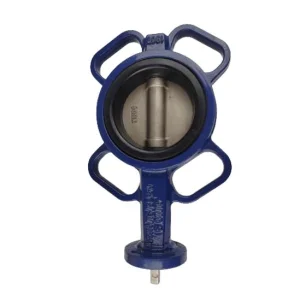
China DN80 PN10/PN16 Ductile Iron Wafer Butterfly Valve Manufacturers, Exporters
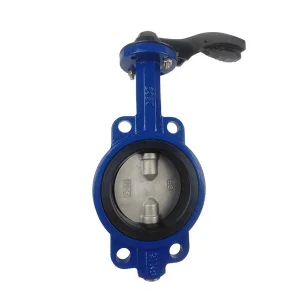
China DN100 4inch Hard Back Seat Wafer body Butterfly Valve Exporter, Exporters
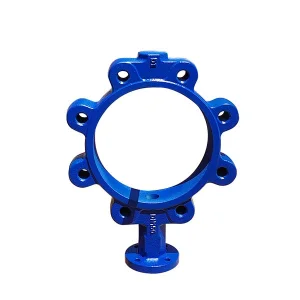
OEM Butterfly Valve Lug Body for Sea Water Exporter, Exporters
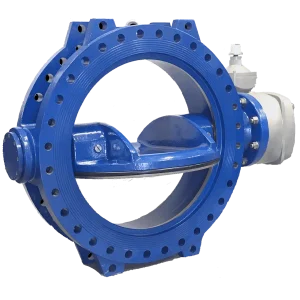
OEM AWWA C504 Double Eccentric Butterfly Valve Factories, Exporter
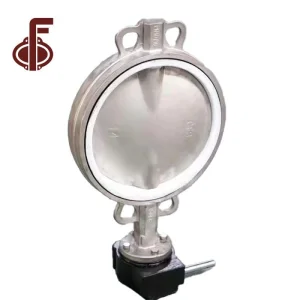
OEM PTFE Seat Wafer Type Butterfly Valve Manufacturer, Exporter
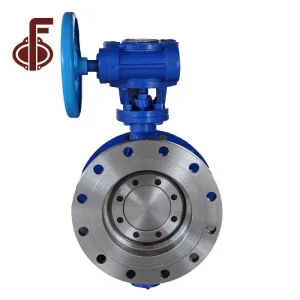
China Double Flanged Triple Offset Butterfly Valve Manufacturer, Factories
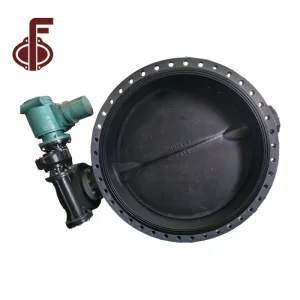
China Electric Rubber Full Lined Flange Type Butterfly Valve Manufacturer, Factory
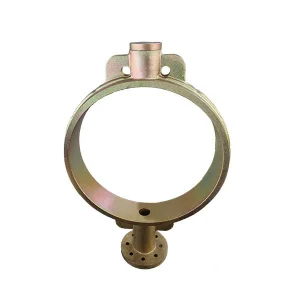
OEM Hot-dip Galvanized Wafer Butterfly Valve Body Manufacturer, Manufacturers
