
Engineered Double Eccentric Butterfly Valve Series for Mumbai Projects
Precision-crafted high performance butterfly valves engineered for continuous isolation, rapid cycle modulation, and municipal bulk water transmission schemes across Maharashtra.
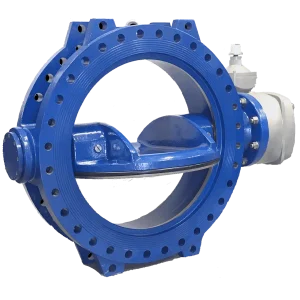
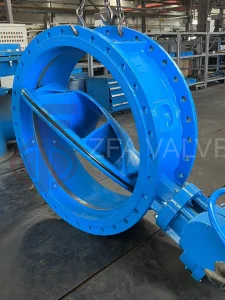
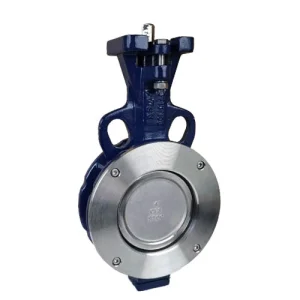
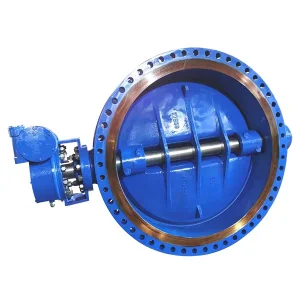
The Industrial & Infrastructure Landscape of the Mumbai Metropolitan Region (MMR)
The Mumbai Metropolitan Region, incorporating Navi Mumbai, Thane-Belapur, and extending into the chemical belts of Taloja, Rasayani, and Tarapur, represents one of South Asia’s densest epicenters for industrial fluid processing and heavy municipal hydraulic engineering. As India continues its massive urban modernization under the Smart Cities Mission and the Mumbai Water Distribution Master Plan executed by the Brihanmumbai Municipal Corporation (MCGM), the technical requirements imposed on flow control equipment have evolved dramatically.
Traditional concentric resilient-seated valves commonly face premature elastomeric deformation, seat gouging, and accelerated seal fatigue due to high line pressures (PN10/PN16/PN25), abrasive particulate carryover in raw river intakes, and aggressive marine atmosphere exposure along the Konkan coast. This challenging environment requires the rigorous implementation of Double Eccentric (Double Offset) Butterfly Valves.
From the bulk water supply aqueducts feeding the Bhandup Complex and Pise-Panjrapur pumping stations to the cooling water auxiliary skids of offshore logistics bases along JNPT (Jawaharlal Nehru Port Trust) and the chemical storage terminals in Nhava Sheva, our high performance double eccentric valves solve critical challenges:
- Elimination of Seat Wear: Offset shaft geometry breaks seat contact within 1–3 degrees of opening, avoiding 90-degree rotational friction.
- Severe Saline & Coastal Resistance: High-grade casting integrity with fusion bonded epoxy (FBE) or polyurethane coating exceeding 300 microns for coastal Mumbai air.
- Bespoke Face-to-Face Standards: Full conformity with ISO 5752 series 13, 14, 15, and AWWA C504 short and long pattern configurations for easy replacement without piping rework.
MCGM Bulk Water Modernization
Integrated pipeline upgrades demand DN600 through DN2400 valves capable of bubble-tight shutoff against dynamic surge events, reducing non-revenue water loss across municipal transmission networks.
Taloja & Thane-Belapur MIDC Corridors
Petrochemical offsites, bulk drug synthesis, and specialty chemical manufacturers require fire-tested, API 609 Cat B PTFE-seated valves to handle corrosive hydrocarbons, process solvents, and effluent recycling streams.
JNPT Maritime & Desalination Skids
Offshore bunkering lines and seawater reverse osmosis (SWRO) intake stations demand super duplex (2507) and Nickel Aluminum Bronze (NAB) disc configurations to counter localized pitting and chloride stress corrosion.
The Mechanics of Double Eccentricity: Why Offset Geometry Matters
A deep technical examination of primary and secondary shaft offsets and how they transform valve operational lifecycle in high-stress fluid piping networks.
The Geometry of Dual Displacements
In standard concentric butterfly valves, the disc and stem rotate directly along the pipeline centerline and seal plane. This continuous compressive engagement creates substantial seat scrubbing across the full 90 degrees of travel, driving rapid elastomer degradation, high operating break-away torques, and frequent seat blowouts under differential pressure.
The Double Eccentric (Double Offset) architecture systematically solves these mechanical constraints through two distinct spatial offsets:
- Offset 1 (Centerline of Sealing Plane): The stem axis is positioned behind the plane of the valve seating surface. This displacement establishes an unbroken 360-degree sealing contact perimeter, eliminating the common leak paths found at the top and bottom stem penetrations in centric designs.
- Offset 2 (Centerline of Pipe Bore): The stem axis is shifted laterally away from the center of the pipeline. As the valve initiates its opening cycle, this second eccentricity induces a mechanical "camming" action. The disc lifts instantly away from the seat within just 2 to 3 degrees of rotation, completely disengaging both upper and lower sealing edges from friction.
This combined kinematic action limits seat contact exclusively to the point of final closure. As a result, operating torque profiles drop by 30% to 45% compared to centric valves of identical nominal diameter, allowing piping designers to specify smaller pneumatic or electric actuators while significantly lengthening operational service intervals.
Reduced Breakaway Torque Dynamics
By eliminating radial friction against the seat during opening, break-away torque spikes are substantially smoothed, minimizing hydraulic transients and mitigating actuator motor strain over high cycle counts.
Self-Energizing Pressure-Assisted Sealing
Whether utilizing energized EPDM for clean water or RTFE/CF8 rings for chemicals, upstream line pressure acts naturally behind the disc to enhance seat interface stress, guaranteeing bi-directional bubble-tight shutoff.
True Field-Replaceable Retaining Systems
Sealing seats are mechanically locked into position with heavy-duty retaining rings. Operators can inspect, calibrate, or renew sealing components in line without requiring offsite factory refurbishment.
| Design Criterion | Concentric (Centric) Valve | Double Eccentric (Double Offset) | Triple Eccentric (Triple Offset) |
|---|---|---|---|
| Sealing Principle | Pure interference elastomer jamming | Cam-action mechanical liftoff with bi-directional seal | Non-rubbing right-angled conical metal seal |
| Seat Rubbing Angle | 0° through 90° (Continuous wear) | < 3° on seating engagement only | 0° (Pure line contact at closure) |
| Typical Temperature Range | -10°C to +120°C (Elastomer bound) | -50°C to +260°C (PTFE / R-PTFE / Metal) | -196°C to +600°C (Cryogenic to High Temp) |
| Pressure Rating Scope | PN6 – PN16 (Class 125/150) | PN10 – PN50 (Class 150, 300, 600) | PN10 – PN100 (Class 150 to 900) |
| Capital Cost vs Life Expectancy | Low CapEx / High Maintenance | Optimal Balanced TCO for Plant Lifespans | High Initial CapEx for extreme services |
| Target Industrial Roles | Low-pressure HVAC, standard irrigation | Municipal Water Mains, Petrochemical, Desalination | Superheated Steam, Hydrocracker units, LNG |
Global Enterprise Procurement & Critical Testing Specifications
How our manufacturing lines strictly align with the compliance frameworks demanded by Tier-1 EPC contractors, international engineering consultants, and public sector undertakings.
International Design Codes
Every valve is strictly engineered and manufactured in compliance with globally recognized valve standards:
- API 609 Category B: Flanged, lug, and wafer high performance valves with offset stems.
- AWWA C504 & C516: Heavy-duty municipal waterworks valves for bulk pipelines.
- BS EN 593 / ISO 10631: European pressure equipment directives and water supply mandates.
- ASME B16.34: Valves flanged, threaded, and welding end pressure-temperature ratings.
Pressure & Tightness Testing
Rigorous shop floor non-destructive testing (NDT) guarantees leak-free integrity prior to container dispatch:
- ISO 5208 Rate A: Zero detectable leakage with resilient EPDM and virgin/carbon-filled PTFE seats.
- API 598 Shell & Seat: Hydrostatic shell test at 1.5x PN; high-pressure seat test at 1.1x PN.
- Low-Pressure Pneumatic Air Test: 6 bar air under water inspection verifying microscopic shutoff.
- Torque Verification: Dynamic measuring of breakaway, running, and reseating torques on calibrated benches.
Material Traceability & Safety
Full raw material compliance and fire containment verification protecting mission-critical installations:
- EN 10204 3.1 & 3.2 MTC: Chemical analysis and mechanical tension/impact test heat tracking.
- API 607 / ISO 10497 Fire Safe: Secondary metal-to-metal seating containment post elastomer burn-off.
- Fugitive Emissions ISO 15848-1: Live-loaded gland packings conforming to Class AH and BH specs.
- NACE MR0175 / ISO 15156: Sour gas and sulfide stress cracking metallurgy for hydrocarbon refining.
Turnkey Flow Solutions for Strategic Heavy Sectors
Tailoring metallurgy, trim dynamics, and actuation packages to withstand extreme cavitation, aggressive chemistries, and severe mechanical throttling.
1. Bulk Potable & Raw Water Supply
For municipal pipeline trunk mains (DN400 to DN3200), ductile iron bodies (EN-GJS-400-15 / ASTM A536) combined with aluminum bronze or stainless steel disc edges provide decades of maintenance-free service. Integrally molded or profile-locked EPDM seats prevent bacteriological accumulation and withstand severe water hammer transients.
2. Petrochemical, Refineries & Storage
In midstream tank farms, crude oil bunkering, and hydro-processing units around Trombay and Uran, cast carbon steel (ASTM A216 WCB) and CF8M stainless valves handle volatile hydrocarbons, kerosene, and aromatic solvents. Reinforced PTFE (R-PTFE) and Grafoil secondary fire rings ensure tight isolation under cyclic thermal loading.
3. Power Utility & Circulating Cooling Loops
Thermal power plants, captive co-generation facilities, and district cooling complexes deploy short pattern U-shaped and double flanged double offset butterfly valves on condenser cooling water loops. Streamlined hydro-dynamic disc profiles maximize flow coefficients (Cv/Kv), drastically lowering pump operating heads.
Technology Roadmap: Next-Generation Valve Engineering
How digital manufacturing, composite materials, and condition monitoring systems are redefining flow performance over the next decade.
Smart Actuation & Predictive IoT Telemetry
As Indian megacities and industrial clusters shift toward automated SCADA management, the static butterfly valve has transformed into an intelligent pipeline monitoring node. Modern electric and electro-hydraulic actuators now interface seamlessly via HART, Modbus, Profibus DP, and industrial Ethernet protocols.
By capturing high-frequency operational metrics—such as torque curves during seat entry, cycle transit times, temperature shifts, and acoustic cavitation signatures—onboard microprocessors provide real-time condition monitoring. Plant reliability teams receive automated alerts if abnormal torque trends indicate mineral scaling or particulate jamming, transitioning facilities from scheduled shutdowns to predictive maintenance regimes.
Zero Fugitive Emissions & Advanced Metallurgy
With stringent global carbon neutrality and environmental emissions targets (such as EPA Method 21 and TA-Luft guidelines), stuffing box integrity has become a core design focus. Our engineering roadmap integrates cup-and-cone live-loaded Belleville spring packing glands that maintain constant compressive load on pure graphite and virgin PTFE packing sets over 50,000 continuous full-stroke cycles without re-torquing.
Furthermore, metallurgy is expanding beyond basic 316 stainless steel to embrace advanced Duplex 2205, Super Duplex 2507, Hastelloy C-276, and titanium trim configurations, specifically addressing the rapid chloride stress cracks typical of Arabian Sea seawater cooling intakes.
Additive Manufacturing & CFD Optimization
Employing Finite Element Analysis (FEA) and Computational Fluid Dynamics (CFD) modeling to streamline disc ribs, reducing wake turbulence by up to 18% while enhancing structural stiffness under sudden dead-end closure.
Cavitation Trim & Anti-Vibration Liners
Integrating perforated perimeter trims for low-opening throttle duties, dissipating micro-jet energy before imploding against downstream pipe walls, eliminating noise, vibration, and cavitation pitting.
Low-Torque Ceramic Hybrid Coatings
Utilizing high-velocity oxygen-fuel (HVOF) tungsten carbide and ceramic seat cladding for severe geothermal, mining slurry, and corrosive ash handling duties up to 350°C.
Seamless Trade Corridors to Mumbai: Nhava Sheva / JNPT Direct Routing
Accelerated container transit, comprehensive Indian import compliance, and third-party inspection readiness for public and private enterprise buyers.
Strategic Maritime Gateways
Direct maritime container shipping from major manufacturing hubs straight to JNPT (Nhava Sheva) and Mumbai Port (MbPT). Dedicated export packaging includes heavy sea-worthy fumigated plywood crates with silica vapor phase inhibitors (VCI) preventing saline corrosion during passage.
Third-Party Inspection (TPI) Endorsement
We routinely facilitate third-party engineering inspection witnesses prior to dispatch. We welcome global inspection authorities including Bureau Veritas (BV), Lloyd's Register (LR), TÜV SÜD, DNV, and SGS to witness hydrostatic testing, dimensional checks, and PMI (Positive Material Identification).
Complete Project Documentation
Shipments arrive accompanied by complete engineering dossiers: MTC according to EN 10204 Type 3.1, hydrostatic inspection certs, paint DFT thickness records, hydro-torque logs, and bilingual installation and maintenance manuals.
Customs Clearance & Regulatory Alignment
Navigating cross-border industrial equipment delivery into India requires strict compliance with international documentation, customs tariffs, and local infrastructure requirements. As an experienced exporter to Mumbai and Western India, we ensure that every commercial invoice, packing list, certificate of origin, and bill of lading matches Indian customs classifications (HS Code 848180) to guarantee swift port clearance without costly demurrage.
Whether servicing public tenders floated by MCGM, CIDCO, or MIDC requiring stringent compliance or private industrial projects in the chemical hubs of Dahej and Hazira along the Western corridor, our sales engineering team manages full engineering alignment, technical datasheet freeze, and actuator interface sizing (ISO 5211 top flange mounting) prior to metal casting.
Connect with Our Valve Engineering Specialists
Whether you are drafting technical specs for a Mumbai municipal tender, upgrading chemical pipeline infrastructure, or seeking dependable OEM manufacturing with full EN 10204 3.1 traceability, our engineering team responds within 24 hours.
Send Inquiry NowFrequently Asked Questions: High-Performance Butterfly Valves
Detailed, engineering-backed answers addressing the most frequent technical, procurement, and installation inquiries raised by project engineers and EPC estimators.
What is the fundamental difference between double eccentric and concentric butterfly valves?
The primary distinction lies in stem axis positioning. In a concentric (rubber-lined) butterfly valve, the stem passes directly through the disc centerline, maintaining constant interference contact with the rubber seat across the entire 90-degree sweep. This causes steady friction, higher operating torques, and wear.
In contrast, a double eccentric (double offset) valve offsets the stem behind the sealing plane (Offset 1) and laterally from the pipe centerline (Offset 2). This creates a geometric cam action: the disc disengages completely from the seat within 1 to 3 degrees of rotation, virtually eliminating seat rubbing, decreasing operating torque by up to 40%, and vastly extending valve lifespan under higher differential pressures.
Which seat material is best suited for water distribution versus chemical processing?
For municipal water distribution, potable transmission, and raw water cooling lines (such as MCGM and MIDC municipal pumping schemes), EPDM is the preferred seat material. It provides excellent elasticity, resistance to chlorination, and long service life from -20°C to +120°C with bubble-tight Class VI / ISO 5208 Rate A sealing.
For petrochemical, aromatic hydrocarbon, and chemical processing in areas like Taloja, Virgin PTFE or Glass/Carbon-Reinforced PTFE (R-PTFE) is recommended. PTFE exhibits virtually universal chemical inertness across pH 0–14 and elevated temperature stability up to +200°C. For severe hot oil or fire-safe mandates, secondary metal-to-metal (Stellite/Inconel) fire-safe seats are utilized.
How does the camming motion of double offset valves prevent seat degradation?
The camming motion is dictated by the secondary shaft offset. When the valve begins its opening stroke, the eccentric pivot forces the disc profile to move along an elliptical path rather than a pure circular arc. The disc lifts cleanly away from the sealing circumference almost instantaneously.
Because there is zero mechanical friction during intermediate modulation between 5 and 85 degrees of opening, the elastomeric or plastomeric seat suffers no compressive shear, tearing, or deformation. Wear occurs only during the brief moment of final shutoff compression.
Can double eccentric butterfly valves be used for throttling and modulating control?
Yes. High performance double eccentric butterfly valves feature an inherent modified equal-percentage flow characteristic between 20° and 70° disc opening. This makes them highly effective for dynamic flow regulation, balancing, and pressure reduction across water mains and process loops.
When selecting valves for throttling duties, engineers must verify the valve sizing coefficient (Cv/Kv) against the system's cavitation index (σ). Operating below the critical cavitation index may require anti-cavitation trim plates or downstream orifices to prevent localized fluid flashing and vapor bubble implosions.
What international standards govern your double eccentric valve manufacturing?
Our production facilities design, cast, machine, and test double eccentric valves strictly against major global standards: API 609 (Category B) for high-performance industrial valves, AWWA C504 & AWWA C516 for large-bore waterworks infrastructure, BS EN 593 and ISO 10631 for industrial applications, and ASME B16.34 for pressure and temperature boundary integrity.
Face-to-face dimensions comply with ISO 5752 (Series 13, 14, 15, and 16), EN 558, and ASME B16.10, ensuring seamless drop-in field interchangeability without altering existing piping spools.
What third-party inspection agencies do you support for Indian project deliveries?
We routinely accommodate third-party inspection (TPI) protocols specified by EPC contractors and public sector undertakings. Clients frequently commission agencies such as Bureau Veritas (BV), Lloyd's Register (LR), TÜV SÜD, DNV, SGS, and Engineers India Limited (EIL) approved auditors.
These inspectors witness heat-treatment verification, raw casting RT/UT/MPI non-destructive evaluations, PMI spectral analysis, shell hydrostatic strength tests at 1.5x rating, bi-directional bubble-tight seat tests at 1.1x rating, and dry film paint thickness measurements prior to container loading.
What lead time and shipping transit can buyers in Mumbai expect via Nhava Sheva (JNPT)?
For standard configured double eccentric butterfly valves (DN50 to DN600 in WCB or CF8M with manual gearboxes or pneumatic actuators), typical manufacturing lead time ranges from 2 to 4 weeks. Custom engineered large-diameter units (DN700 to DN2400) or special alloys (Duplex/NAB) typically require 4 to 7 weeks.
Ocean freight transit from our coastal shipping terminal directly to Nhava Sheva / JNPT Port takes approximately 14 to 20 sailing days, ensuring fast, predictable delivery for ongoing EPC construction schedules in Maharashtra.
How does the valve handle bi-directional pressure in dead-end service?
Our double eccentric valves engineered with flanged and full-lug bodies conform strictly to API 609 Category B full rated dead-end service requirements. The seat retaining ring is secured by high-tensile fasteners calculated to safely absorb the full differential hydraulic force without downstream pipe flange support.
The asymmetric pressure-assisted seat geometry provides zero leakage (ISO 5208 Rate A) whether fluid pressure originates from the preferred shaft-upstream direction or reverse shaft-downstream direction, allowing safe isolation for downstream pump maintenance.
What surface treatment is applied to combat coastal Mumbai atmospheric corrosion?
Given the aggressive marine humidity and industrial emissions around the Mumbai harbor and coastal belts, external surface preparation begins with automated SA 2.5 blast cleaning to remove all scale and oxidation. Bodies then receive a high-performance coating system:
For water distribution valves, we apply electrostatically deposited, non-toxic Fusion Bonded Epoxy (FBE) coating to a minimum dry film thickness (DFT) of 250 to 300 microns, fully holiday-tested at 1.5 kV. For chemical or coastal offshore skids, a 3-coat marine epoxy/polyurethane system (zinc-rich primer, epoxy intermediate, aliphatic polyurethane topcoat) provides outstanding UV and salt-spray resistance exceeding 1,500 hours ASTM B117 testing.
Can existing manual double eccentric valves be retrofitted with electric or pneumatic actuators?
Yes. Every valve body is manufactured with an integral ISO 5211 direct-mounting top flange and standardized square or keyed drive shaft. This design enables plant technicians to easily remove manual worm gearboxes or hand levers and mount pneumatic quarter-turn actuators, electric multi-turn/quarter-turn motorized units, or electro-hydraulic actuators without disassembling the valve from the line.
Extended High-Performance Flow Control Series for Global & Regional Supply
Explore our full manufactured range of wafer, flanged, large-diameter CF8/CF8M, and stainless process valves engineered for extreme reliability across industrial pipelines.
-
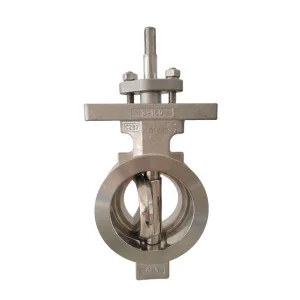
China Polished Stainless Steel Wafer High Performance Butterfly Valve Factory, Exporters
-
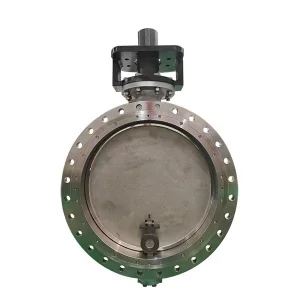
China CF8 Double Flange High Performance Butterfly Valve DN1000 PN16 Manufacturer, Factories
-
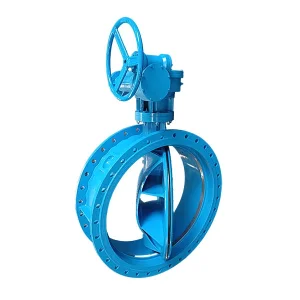
OEM Flange Connection Double Eccentric Butterfly Valve Manufacturers, Exporters
-
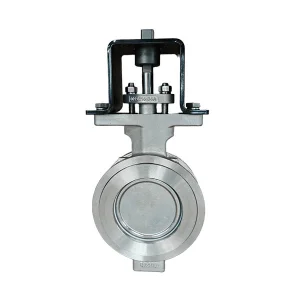
China CF8 Wafer High Performance Butterfly Valve with Support Manufacturers, Factories
-
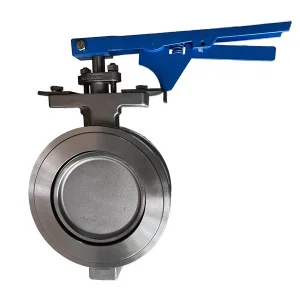
OEM Lever OP Wafer High Performance Butterfly Valve HP BFV Factory, Exporters
-
OEM Lever OP Wafer High Performance Butterfly Valve HP BFV Factory, Exporters
-
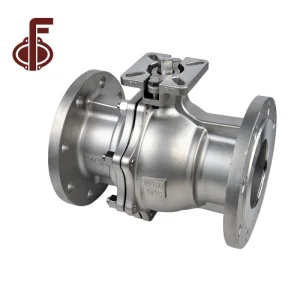
China Stainless Steel Flange Type Floating Ball Valve Factory, Exporter
-
China Polished Stainless Steel Wafer High Performance Butterfly Valve Factory, Exporters
