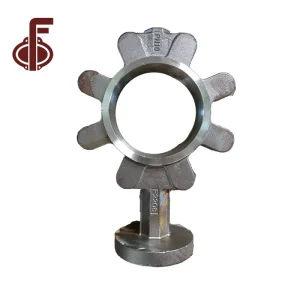
Core OEM Butterfly Valve Components for the US Market
Engineered to exact ANSI Class 125/150 and AWWA standards with traceable chemistry, precision tolerances, and customized metallurgy.
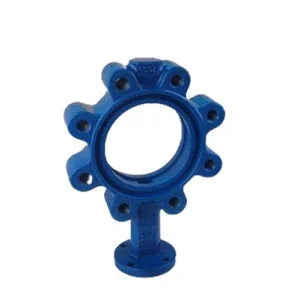
OEM Lug Type Butterfly Valve with Body Factory, Exporter (US Spec)
View Product Specs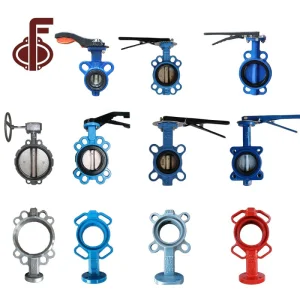
OEM DI CI SS304 SS316 Butterfly Valve Body Manufacturers, Factory
View Product Specs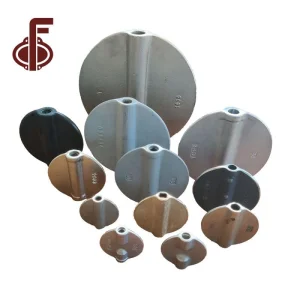
OEM Ductile Cast Iron Butterfly Valve Disc Factories, Exporter
View Product Specs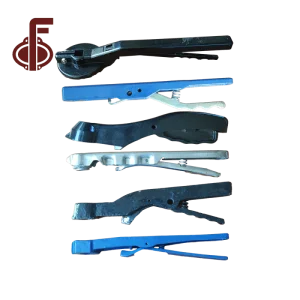
China Ductile Cast Iron Butterfly Valve Handle Factories, Exporters
View Product SpecsCommercial & Industrial Realities: Butterfly Valve Parts in the United States Market
The industrial landscape for butterfly valve assemblies across the United States has experienced profound shifts driven by supply chain restructuring, the federal Infrastructure Investment and Jobs Act (IIJA), domestic reshoring of high-value assembly, and stringent environmental compliance codes. While high-volume engineering and final system integration frequently take place in states such as Texas, Ohio, Pennsylvania, and California, domestic valve original equipment manufacturers (OEMs) and valve packagers increasingly rely on dependable, audit-verified offshore precision manufacturing partners to supply raw, semi-finished, and finished valve components.
Butterfly valve components—consisting predominantly of valve bodies (wafer, lug, double-flanged), internal discs, stems/shafts, resilient elastomer seats (EPDM, NBR, Viton), virgin and modified PTFE liners, and manual gear operators—constitute the mechanical backbone of fluid isolation. Within the US marketplace, mechanical failure is commercially untenable. Valve bodies must withstand severe hydraulic surges, dynamic bending moments imparted by unanchored piping runs, and external atmospheric corrosion in aggressive coastal refineries along the Gulf Coast or sub-zero municipal pump stations across the Great Lakes corridor.
ASTM Material Fidelity
Every casting must accurately conform to ASTM A536 ductile iron grades (such as 65-45-12), ASTM A216 WCB carbon steel, or ASTM A351 CF8/CF8M austenitic stainless steel, verified through on-site optical emission spectrometry.
Precision CNC Machining
Lug drilling, tapping in Unified National Coarse (UNC) or metric threads, and stem broaching require tight geometric dimensioning and tolerancing (GD&T) to interface seamlessly with standard North American actuators.
Elastomeric Compliance
Seals must strictly fulfill NSF/ANSI 61 and 372 lead-free standards for potable drinking lines, alongside FDA CFR 177.2600 sanitary ratings for food, dairy, and beverage fluid processing applications.
The strategic challenge facing US valve brands is maintaining margin competitiveness while upholding unwavering quality thresholds. The cost of domestic foundry operations—impacted by air permit restrictions, soaring energy overheads, and foundry labor shortages—has positioned high-tier international component fabricators as essential long-term partners. A sustainable OEM collaboration requires much more than basic component replication; it necessitates rigorous pattern tooling development, computerized solid-phase solidification simulations to prevent porosity, and coordinate measuring machine (CMM) multi-axis validation.
Engineering Specification Matrix: Butterfly Valve Parts Metallurgy
Comprehensive metallurgical criteria, pressure containment properties, and machining standards matching US industrial procurement mandates.
| Component Name | Common Materials | Standard Specification | Mechanical / Design Strengths | Typical US Application Areas |
|---|---|---|---|---|
| Valve Body (Lug & Wafer) | Ductile Iron, Cast Iron, WCB Carbon Steel, CF8M Stainless | ASTM A536 65-45-12, ASTM A216 WCB, ASME B16.42 | Tensile strength ≥ 450 MPa, elongation ≥ 12%, hydro test rating up to 25 bar shell | HVAC chilled water loops, municipal water lines, industrial wastewater plants |
| Closure Disc Trim | Ductile Iron (Nylon 11/Epoxy coated), CF8M (316 SS), Aluminum Bronze | ASTM A351 CF8M, ASTM B148 C95400/C95800 | Hydrodynamic streamlined profile; ultra-low torque friction, mirror polished edge Ra ≤ 0.4 μm | Desalination plants, chemical dosing skids, cooling towers, ballast systems |
| Drive Shaft / Stem | SS410, SS416, 17-4PH (UNS S17400), SS316, Monel K-500 | ASTM A564 Grade 630, ASTM A276 Type 316 | High torsional shear resistance, blowout-proof retention, double D, square, or keyed drive tang | High-cycle actuated isolation, automated emergency shutdown, heavy slurries |
| Resilient Seat Liner | EPDM, Food-Grade NBR, Viton (FKM), PTFE bonded to EPDM back | NSF/ANSI 61, FDA 21 CFR 177.2600, ASTM D2000 | Compression set ≤ 20%, bubble-tight shutoff (API 598 zero leakage), broad pH range | Municipal potable networks, hydrocarbons, high-temperature brine, boiler blowdown |
| Operator Hardware | Malleable Iron, Cast Aluminum, Carbon Steel with anti-corrosion bake | ISO 5211 Direct Actuator Pad, ANSI Standard Hand levers | 10-position notched throttle plate with memory stop, rugged worm-gearboxes IP65/IP67 rated | Manual bypass lines, field balancing, fire protection valve lockouts |
Tolerance Control and ISO 5211 Actuation Top Flange Interfaces
A vital consideration for North American valve packagers is actuator interchangeability. Whether retrofitting an existing Bray, Keystone, or DeZURIK valve body in an American paper mill, or installing a brand-new modulating pneumatic rack-and-pinion actuator, precision mating dimensions are mandatory. Standardized top mounting flanges matching ISO 5211 (from F05 through F25) eliminate expensive intermediate bracket machining.
Stem journal tolerances are held to h9 / f7 fits, preventing packing gland extrusion and stem wobbling under sustained pneumatic cycling. Disc-to-stem connections utilize either precision high-tensile stainless taper pins or cutting-edge pinless splined architectures. Splined and internal broached drives eliminate potential leak pathways through disc pin holes, extending seat and disc longevity in slurry and abrasive media services.
Localized US Industrial Application Scenarios
Custom OEM parts engineering developed specifically for North American regional operating conditions and environmental standards.
Gulf Coast Petrochemical Corridors
Texas and Louisiana oil refining complexes demand high-performance fire-safe butterfly valve components meeting API 607 / API 609 Cat B parameters. Valve bodies cast in ASTM A216 WCB or 316SS with Stellite-clad seating surfaces deliver bubble-tight sealing during fluctuating thermal expansions up to 450°C.
Midwest Municipal Water Infrastructure
Driven by EPA clean water funding across the Great Lakes and Mississippi basin, municipal drinking and wastewater treatment facilities require heavy-duty ductile iron bodies compliant with AWWA C504, electrostatically applied NSF-61 certified epoxy coatings (≥ 250 μm DFT), and bi-directional resilient seats.
Hyperscale Data Center District Cooling
Surging construction of AI data center facilities in Northern Virginia, Texas, and Oregon requires high-volume DN150-DN600 concentric wafer and lug butterfly valves for chilled water loops. Low operating torque, ultra-smooth flow coefficients (Cv), and 100% drop-tight shutoff minimize pumping energy consumption.
Technological Roadmap: The Evolution of Industrial Butterfly Valve Components
The valve industry is progressing beyond conventional sand casting and manual fitting. As environmental protocols tighten, valve components must meet new thresholds for fugitive emissions, operational lifespan, and digital integration:
- Low Fugitive Emissions (ISO 15848-1 & EPA Method 21): Stem seal cavities are engineered with live-loaded Belleville spring packing systems, chevron PTFE V-rings, and secondary graphite seals to restrict volatile organic compound (VOC) emissions below 100 ppmv.
- PFAS-Free Elastomer Formulation: In anticipation of state and federal PFAS/PFOA chemical bans, advanced research is focused on peroxide-cured EPDM and crosslinked fluoroelastomers that retain resilient mechanical spring-back without toxic fluorinated processing aids.
- Additive Trim & Laser Cladding: Valve discs operating under high-velocity cavitation regimes receive laser-clad nickel-chromium-boron (NiCrBSi) or Stellite hardfacing on critical sealing edges, extending service longevity by up to 300% over bare stainless steel.
- Full Process Traceability & Digital Metallurgical Twin: Component production data—including optical spectrometer heats, heat treatment annealing charts, vacuum degassing records, and CMM dimensional logs—are cataloged to satisfy Tier-1 EPC audit requirements.
Macro-Level OEM Engineering & Turnkey Supply Solutions
How rigorous manufacturing quality systems protect valve brand reputation and eliminate field catastrophic liabilities.
Full Metallurgical & Mechanical Integrity Verification
Inferior raw materials are the primary cause of valve body cracking during bolt torquing or water hammer pressure surges. Our foundry utilizes automatic green sand and resin-coated shell molding lines combined with medium-frequency induction furnaces. Every cast heat undergoes spectroscopic chemical evaluation before tapping to verify nodularity ≥ 90% in ductile iron (ASTM A536) and precise carbon limits (≤ 0.25% in WCB). Mechanical test bars are pulled to verify tensile, yield, and Charpy V-notch impact strength under sub-zero regimes.
Custom Tooling, Private Labeling & Finish Coatings
OEM partnerships require customized branding and complete design privacy. We manufacture private-label patterns with integrated manufacturer logos, pressure ratings (Class 150, PN10, PN16), heat code numbers, and flow direction arrows. Component surfaces are treated with shot blasting to Sa 2.5 profile followed by fusion bonded epoxy (FBE), polyester powder, or fluorocarbon (Rilsan / Nylon 11) coatings engineered to withstand 1,000+ hours of ASTM B117 salt spray exposure.
Engineering & Procurement FAQ: US Market Butterfly Valve Components
Clear, direct engineering answers to high-stakes questions asked by US procurement heads, valve design engineers, and technical distributors.
Our production lines employ dedicated multi-axis CNC horizontal machining centers equipped with Renishaw optical touch probes. Bolt circle diameters (BCD), hole spacing, and counterbore depths strictly follow ASME B16.5 / B16.42 Class 150 drilling templates. Before mass production, pilot castings undergo 3D laser coordinate measuring machine (CMM) dimensional verification to guarantee true position tolerances within ±0.15 mm, eliminating flange misalignment during field piping installation.
Yes. Every OEM shipment of pressure-retaining valve bodies, discs, and shafts is delivered with full EN 10204 Type 3.1 certification. The documentation details the exact heat number, chemical composition breakdown (C, Si, Mn, P, S, Cr, Ni, Mo, Cu), physical tensile strength, yield point, percentage elongation, Brinell hardness (HB), and hydrostatic test logs verifying shell integrity according to API 598.
A soft/hard backed (phenolic or aluminum back) seat features an elastomer vulcanized directly onto a rigid composite or metallic carrier ring, preventing seat collapse under full vacuum or high flow velocities. A bonded seat is vulcanized directly onto the inner valve body casting, providing superior stability for dead-end service but preventing field replacement. A cartridge/replaceable seat allows maintenance crews to remove and swap out worn EPDM/NBR liners on-site, significantly reducing total lifecycle costs for municipal water authorities.
We manufacture casting patterns featuring your custom registered brand name, trademark, and model designators directly cast onto the body. We provide electrostatic powder coating in specific RAL colors (such as OSHA Safety Blue, Safety Orange, Industrial Grey, or Fire Protection Gloss Red). Finished parts are vacuum sealed, rust-preventive oiled (for machined bare steel faces), wrapped with protective flange covers, and packed in reinforced ISPM 15 heat-treated fumigated plywood crates optimized for standard 40ft container shipping directly to US logistics ports (Houston, Los Angeles, Savannah, New York).
Precision OEM Valve Bodies, Seats & Assemblies for US Supply Chains
Explore our complete OEM product lineup built to international standards with customizable patterns, materials, and pressure classes.
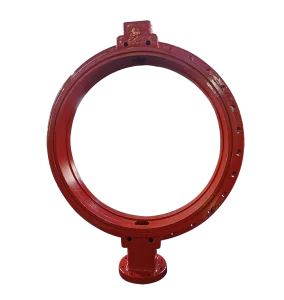
China Ductile Iron Single Flanged Wafer Type Butterfly Valve Body Factory, Exporter (US Project Ready)
View Product Specs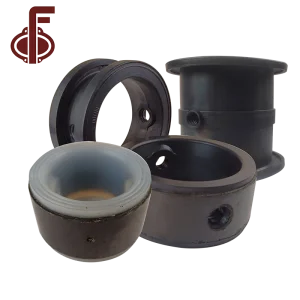
OEM Soft/Hard Back Seat Butterfly Valve Seat Exporter, Exporters (High Resilience Liner)
View Product Specs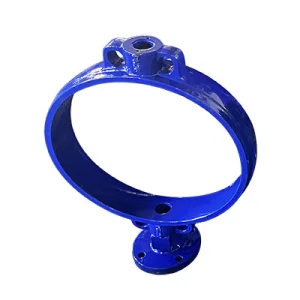
China Wafer Type Butterfly Valve Ductile Iron Body Manufacturers, Exporter (Class 150 Match)
View Product Specs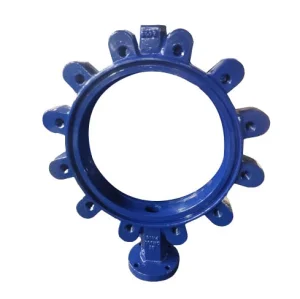
OEM Butterfly Valve Fully Lug Body Manufacturers, Exporter (Full UNC / Metric Threaded)
View Product Specs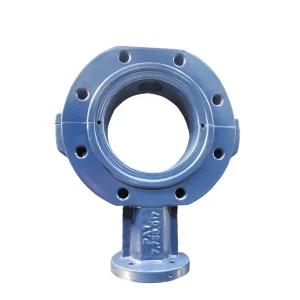
China Fully Lug Butterfly Valve Two Pieces Body Manufacturer, Factory (Severe Chemical Corrosives)
View Product Specs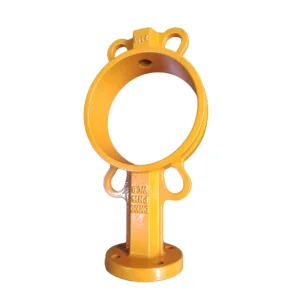
China DN100 PN16 Wafer Butterfly Valve WCB Body Factory, Exporter (High Temp Steam & Oil)
View Product Specs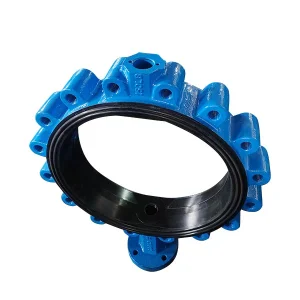
China EPDM Replaceable Seat Ductile Iron Lug Type Butterfly Valve Body Manufacturer, Exporter
View Product Specs