
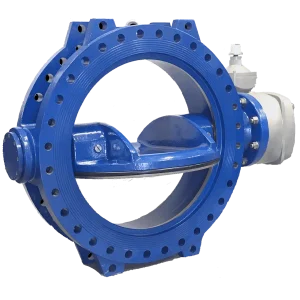
Precision Engineered Solutions
High-Performance Double Offset Butterfly Valves for Danish Projects
Direct from factory floor: ISO 9001 and CE certified valves custom-engineered for optimal seal life and ultra-low hydraulic resistance.
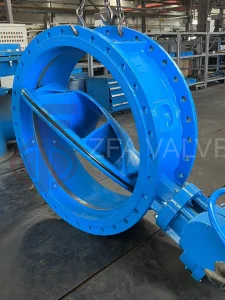
OEM Flange Type Double Offset Butterfly Valve (EN 1092-1 / PN16 / PN25)
Explore Specifications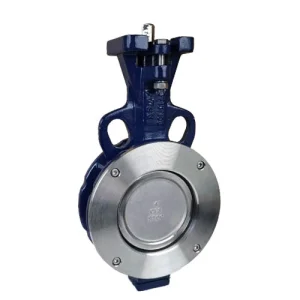
OEM Double Eccentric Wafer High Performance Butterfly Valve for Nordic HVAC
Explore Specifications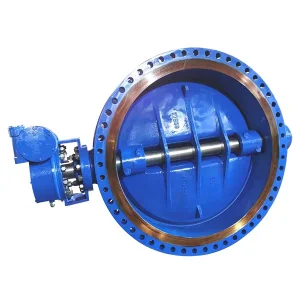
OEM Short Pattern U Shape Double Eccentric Butterfly Valve for Compact Lines
Explore Specifications
Strategic Industrial Analysis
Engineering Flow Solutions for the Danish Green Transition
Decarbonization, high-efficiency district networks, and strict maritime environmental mandates require an evolution in industrial valve kinematics.
65%+
Danish Homes on District Heating
ZERO
Fugitive Emission Target (ISO 15848)
PN10-PN40
Pressure Integrity Range
< 20 ppm
Low Leakage Seal Capability
Danish District Heating (Fjernvarme)
Denmark’s centralized thermal grid relies on pressurized hot water networks circulating between 70°C and 130°C. Conventional concentric valves suffer rapid elastomer degradation and dynamic torque surges under intermittent throttling. Our double eccentric design lifts the disc completely off the seat within the first few degrees of rotation, drastically eliminating localized wear, extending seat life past 100,000 cycles, and lowering thermal loss.
North Sea & Baltic Maritime Applications
Operating across Esbjerg, Aarhus, and Copenhagen ports, marine scrubbers, ballast systems, and offshore substations demand uncompromising resistance to chloride crevice corrosion. We furnish OEM assemblies cast in high-grade Nickel Aluminum Bronze (C95800), 254 SMO, and Duplex Stainless Steel (2205/2507) with vulcanized elastomeric liners or high-resilience PTFE seats.
Biogas & Power-to-X Infrastructure
Denmark leads Europe in anaerobic digestion and hydrogen-synthetic fuel synthesis. Our double offset high-performance butterfly valves provide gas-tight bi-directional sealing to EN 12266-1 Rate A, mitigating volatile methane leakage and accommodating corrosive trace elements (H2S, bio-sludge) without stem seizure or unseated seal blowout.
Procurement Assurance: Mitigating Total Cost of Ownership (TCO)
For Danish mechanical engineering contractors (EPCs) and municipal utilities, valve procurement is governed by life-cycle predictability rather than baseline CAPEX. The double offset geometry reduces operating break-away torque by up to 35%, facilitating smaller electric and pneumatic actuator sizing (ISO 5211 direct-mount), which cuts total installation envelope footprint and operational power draw across multi-megawatt facilities.
Kinematics & Materials
Double Offset Mechanics: The Engineering Advantage
A systematic breakdown of double eccentricity and its mechanical superiority over conventional concentric valve designs.
The Dual Cam Principle Explained
In a high-performance double eccentric valve, two independent spatial offsets eliminate 360-degree contact between disc and seat when the valve is in transition:
- Offset 1 (Shaft Axis behind Seat Plane): Places the stem center-line behind the sealing plane, establishing an unbroken 360-degree sealing perimeter without interruption from shaft penetration holes.
- Offset 2 (Shaft Axis off Pipe Center-Line): Places the stem slightly eccentric to the pipeline center, allowing the disc to cam outward instantly upon rotation, drastically curbing seat scrubbing and cold-flow deformation.
| Engineering Attribute | Standard Concentric | ZFA Double Eccentric (High-Perf) |
|---|---|---|
| Friction Contact | Continuous 360° wiping | Disengages at 1° to 3° open |
| Operating Cycle Life | 10,000 – 25,000 cycles | 100,000+ zero-leakage cycles |
| Differential Pressure | Up to PN16 typically | Full rated up to PN25 / PN40 / CL300 |
| Fugitive Emissions | Standard O-ring packing | Live-loaded, adjustable V-packing |
| Actuation Power | High breakaway torque | 30–35% Lower Actuator Sizing |
Strategic Roadmap
Future-Proof Engineering for Nordic Standards
Addressing EU carbon border policies (CBAM), smart grid digitisation, and resilient maritime supply pipelines.
IoT-Enabled Smart Positioners
Danish plant operations increasingly require predictive failure models. Our OEM configurations offer integrated brackets for 4-20mA HART, Profibus, and Modbus digital field-transmitters, tracking real-time torque profiles to diagnose line cavitation or sediment build-up well before catastrophic operational shutdown occurs.
Environmental & Traceability Compliance
Complete 3.1 Material Test Certificates (EN 10204:2004) accompany every batch shipped to Scandinavian ports. Traceable optical emission spectrometry validates chemistry: 316L, CF8M, WCB, and Hastelloy grades, guaranteeing anti-corrosion benchmarks and effortless audit alignment with Danish Arbejdstilsynet safety regulations.
Carbon Intensity Reduction
With the EU implementing CBAM declarations, ZFA optimizes foundry casting methods using induction electric furnaces powered by controlled emission grids. Streamlined valve hydrodynamic body geometry (minimized disc drag) cuts downstream pumping kilowatt draw, compounding energy savings across utility life spans.
Comprehensive Export Portfolio
Full Range OEM Flow-Control Valves for European Municipalities & EPCs
Explore our certified valve catalog covering heavy industrial, municipal water distribution, marine handling, and high-purity pipelines.
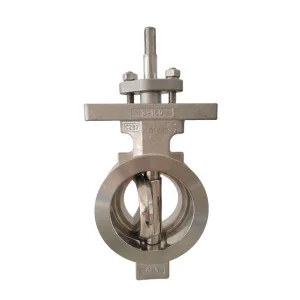
Polished Stainless Steel Wafer High Performance Butterfly Valve for Nordic Pharma
Explore Specifications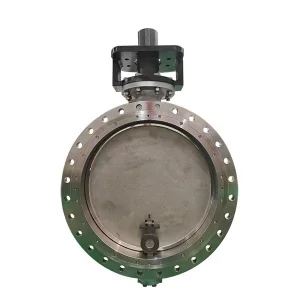
CF8 Double Flange High Performance Butterfly Valve DN1000 PN16 for Bulk Transmission
Explore Specifications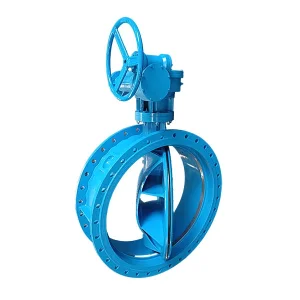
OEM Flange Connection Double Eccentric Butterfly Valve for Utility Pumping
Explore Specifications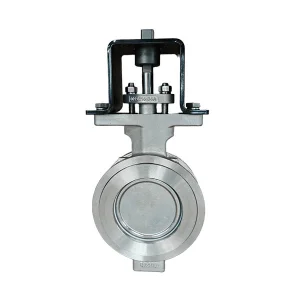
CF8 Wafer High Performance Butterfly Valve with Rigid Foot Support for Process Skids
Explore Specifications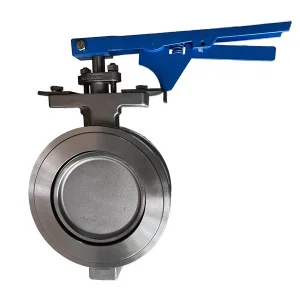
OEM Lever Operated Wafer High Performance Butterfly Valve HP BFV Series
Explore Specifications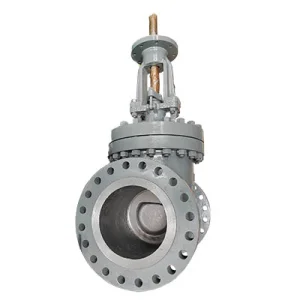
DN600 WCB OS&Y Rising Stem Heavy Gate Valve for Thermal Plant Main Inlets
Explore Specifications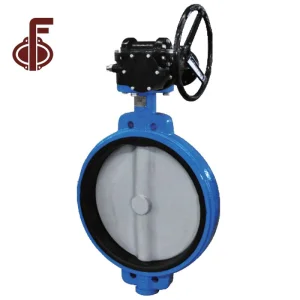
Heavy Duty Worm Gear Operated Wafer Type Butterfly Valves for Marine Cooling
Explore Specifications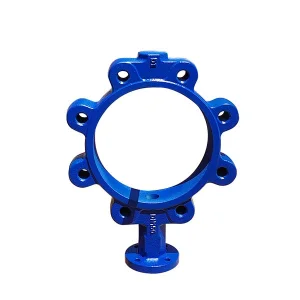
OEM Full Lug Body Butterfly Valve Engineered for Seawater Desalination & Offshore
Explore Specifications
Zero Defect Verification
Strict Factory Quality Assurance for Scandinavian Delivery
Stringent hydrostatic shell, seat tightness, and destructive test protocols conform to rigorous European harmonized directives.
Pressure Testing (EN 12266-1)
100% of manufactured double eccentric butterfly valves undergo hydrostatic shell testing at 1.5x design pressure and resilient seat leakage tests at 1.1x design differential pressure. Bi-directional Rate A zero-bubble shutoff ensures airtight integrity in hazardous environments.
NDT & Ultrasonic Casting Scan
Critical valve bodies fabricated in WCB, CF8M, or Duplex undergo Non-Destructive Testing (NDT), Dye Penetrant Inspection (DPI), and radiographic wall thickness verification, ensuring zero sub-surface gas porosity or micro-fissuring in cyclic, high-temperature service.
Corrosion Barrier Coatings
Ductile iron valves destined for marine or humid coastal installations are sandblasted to Sa 2.5 and electrostatic coated with fusion-bonded epoxy (WRAS & DVGW compliant) with an average dry film thickness (DFT) exceeding 250 μm to 300 μm.
Procurement Knowledge Base
Frequently Asked Technical & Logistics Questions
Clear engineering clarifications to streamline your supplier qualification and project tender evaluation.
What makes double eccentric butterfly valves preferred over triple eccentric or ball valves in Danish district heating?
Double eccentric butterfly valves deliver the ideal balance between capital cost and thermodynamic longevity in closed-loop district heating networks (typically ≤ 150°C, PN16 to PN25). While triple eccentric valves with metal seats are suitable for extreme thermal spikes (> 250°C) or superheated steam, their high torque requirements and premium price add unnecessary capital expense for hot-water networks. Conversely, ball valves become extremely bulky and costly above DN200. Double offset valves with reinforced PTFE or high-temp EPDM seals provide zero bubble leakage, lower breakaway torque, and a far more compact face-to-face envelope.
How does ZFA support European and Danish flange drilling specifications?
We manufacture fully standard-compliant bodies conforming to EN 1092-1 (PN6, PN10, PN16, PN25, PN40) and ASME B16.5 / B16.47 Class 150/300. We also accommodate universal multi-standard flange bolt hole machining, permitting our double eccentric wafer or lug valves to mate seamlessly with existing pipeline assets without line re-engineering.
What quality and inspection documentation is supplied with Danish shipments?
Every export shipment includes comprehensive Dossier packs: EN 10204 Type 3.1 chemical and mechanical mill test certificates, hydrostatic and pneumatic test charts, paint thickness calibration reports, CE conformity certificates, and complete installation/maintenance manuals in English.
Can ZFA configure valves with customized automation protocols?
Yes. All ZFA double eccentric butterfly valves feature an ISO 5211 direct-mount top flange with keyed or double-D stem splines. We can assemble and test valves with pneumatic (single or double-acting), intelligent electric (Auma, Rotork, or certified equivalent), or electro-hydraulic actuators complete with solenoid valves, limit switches, and intelligent 4-20mA positioning controls before packing.
What is typical production lead time and shipping transit to Denmark?
Standard OEM production spans 20 to 35 business days depending on foundry casting requirements and custom trim alloys. Sea freight transit from Tianjin Port directly to Port of Aarhus or Copenhagen averages 32 to 38 calendar days. Urgent engineering components and sample valves can be dispatched via air-freight courier within 5-7 business days.
Initiate Your Engineering Consultation Today
Whether submitting public utility tenders, engineering modern district heat sub-stations, or configuring seawater ballast systems, consult our technical sales engineering team for precise CAD drawings, 3D step files, and factory-direct commercial quotations.
Send Inquiry Now