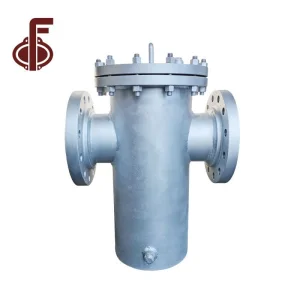
Heavy Silt Capacity
View Product Specs
Engineered to isolate coarse particulate matter, avoid impeller abrasion in water lifting stations, and suppress backpressure surge events throughout municipal and industrial piping systems.
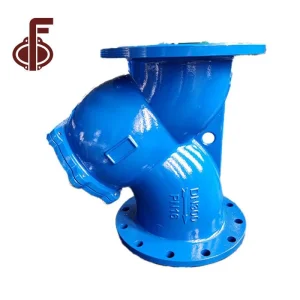
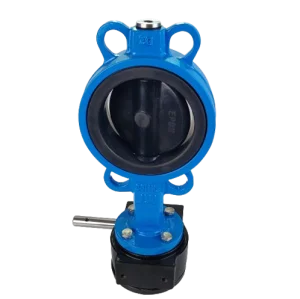
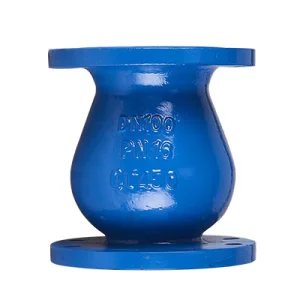
Situated in the heart of the fertile Eastern Nile Delta along the east bank of the Damietta branch of the Nile, Mansoura serves as the commercial, agricultural, and administrative capital of Egypt's Dakahlia Governorate. Its geographic position places it at the center of intensive fluid processing: from raw water purification plants feeding over six million provincial residents to massive agricultural drainage, irrigation canals, textile processing facilities in Talkha and surrounding municipal clusters, and chemical fertilizer manufacturing.
Engineers and procurement managers operating in Mansoura face distinct hydraulic challenges. Raw intake water sourced from the Nile carries variable suspended solids, ranging from heavy organic silt during seasonal agricultural runoff to fine silica particles and fibrous vegetative matter. In industrial sectors across Talkha and Mansoura's industrial zone, cooling towers, boiler feed loops, and wet processing pipelines are perpetually vulnerable to scale accumulation, chemical corrosion, and pump impeller erosion. Without robust upstream pipeline strainers, expensive high-lift pumps and sensitive control valves face recurring downtime, mechanical seal destruction, and unplanned plant outages.
Engineering Imperative: In Dakahlia's water purification works and industrial heating/cooling installations, strainer screens must endure prolonged abrasive particulate impingement while sustaining an open area ratio exceeding 300% to preserve system pressure heads and curtail pumping kilowatt consumption.
Tianjin Zhongfa Valve Co., Ltd. (ZFA Valve) engineers heavy-duty flow-control and filtration assemblies configured specifically to conquer these Nile Delta operational variables. By pairing ductile iron (EN-GJS-450-10 / ASTM A536) and carbon steel (WCB) bodies with dual-layered SS304 or SS316 sintered wire mesh screens, our filtration units combine robust structural burst thresholds with fine micro-debris retention capabilities.
Water networks operated by the Dakahlia Water and Drainage Company require heavy-duty pre-filtration at river intakes and lift stations to prevent silt, debris, and mollusks from entering clarifiers and booster pump stages.
The fertilizer and petrochemical complex in Talkha demands specialized strainers and valves that resist severe ammonia compounds, nitrates, and high-temperature condensate return lines without pitting.
Textile mills in Dakahlia rely heavily on continuous hot water washing, bleaching, and dye circulation skids where loose lint, fibers, and caustic chemistry can rapidly choke unshielded regulation valves.
A rigorous examination of fluid dynamics, perforated cylinder design, burst pressure calculations, and differential pressure parameters essential for long-term reliability in Egyptian infrastructure.
A fundamental vulnerability in industrial piping across developing industrial corridors is the improper specification of strainer screen open area ratios. A standard pipeline strainer functions not merely as a barrier but as a calibrated flow diverter. When fluid enters a Y-pattern or Basket body, velocity diminishes, introducing localized turbulence as fluid passes through screen perforations. If the total free open area of the basket is less than three times (3:1) the internal cross-sectional area of the mating pipe, the clean pressure drop accelerates dramatically, inducing cavitation at the suction side of downstream pumps.
ZFA Valve strainers are hydrodynamically modeled utilizing Computational Fluid Dynamics (CFD) to attain an Open Area Ratio (OAR) between 3.5:1 and 4.2:1. This generous volume ensures that even when the screen is 50% clogged with Nile river sediments or textile lint, the pressure differential remains below 0.15 bar (2.1 psi), safeguarding pump bearings from dry-run cavitation and avoiding excessive dynamic load on electrical motor drives.
Under sudden surge events—such as unexpected check valve closures or rapid pump restarts—unsupported fine wire mesh screens can instantaneously collapse inward. When a screen ruptures, concentrated bursts of captured debris surge directly into delicate downstream equipment, typically culminating in catastrophic damage to turbine flow meters, control valve trim, or plate heat exchangers.
To eliminate mesh blowout risks, our export-grade strainers incorporate a dual-element construction:
| Service Medium / Sector | Recommended Body Type | Standard Metallurgy | Filtration Rating | Sealing Material | Primary Application Site |
|---|---|---|---|---|---|
| Raw River Water (Nile Intakes) | Flanged Basket Strainer | Ductile Iron GGG50 / WCB | 1.5 mm – 3.0 mm Perforated | EPDM / NBR | Mansoura Lift Stations |
| Potable Water Distribution | Flanged Y-Strainer | Ductile Iron (Fusion Epoxy) | 40 Mesh (400 μm) SS304 | Food-Grade EPDM | Municipal Booster Plants |
| Boiler Feed & Steam Returns | High-Temp Y-Strainer | Cast Steel WCB / WC6 | 60 to 100 Mesh SS316 | Flexible Graphite + SS304 | Talkha Power & Steam Skids |
| Textile Dye & Caustic Lines | Duplex Basket Strainer | CF8M Stainless / WCB | 80 to 150 Mesh SS316 | PTFE / Viton | Dakahlia Textile Finishing |
| Agricultural Drip Irrigation | Angle / Y-Pattern Filter | Cast Iron / Ductile Iron | 120 to 200 Mesh SS304 | NBR | Nile Delta Canal Pumping |
How forward-thinking procurement teams in Egypt and the Middle East bypass speculative middle-tier brokers by forging direct manufacturer partnerships in Tianjin.
In large-scale water treatment, civil infrastructure, and petrochemical revamps across Egypt, procurement departments have historically contended with fragmented supply chains. Sourcing through local multi-brand traders frequently results in mixed metallurgical grades, inconsistent foundry origins, mismatched flange standard drillings (e.g., DIN PN16 flanges forced into ANSI Class 150 bolt circles), and absent EN 10204 Type 3.1 Material Test Reports (MTR).
By engaging directly with Tianjin Zhongfa Valve Co., Ltd. (ZFA Valve), EPC contractors and Egyptian project directors secure full, uncompromised traceability from blast furnace to finished hydrostatic test bench. Established in 2006, our 15,000 m² production complex houses automated molding lines, CNC boring machines, electrostatic fusion-bonded epoxy (FBE) coating bays, and calibrated pressure testing arrays compliant with ISO 9001 and European Pressure Equipment Directives (CE-PED).
Logistical Advantage for Mansoura: Marine container shipments originate from the Port of Tianjin and route directly through the Suez Canal to the Port of Damietta—located merely 65 kilometers northeast of Mansoura. This strategic gateway slashes inland transit costs, accelerates customs clearance, and allows seamless transport directly to job sites throughout the Dakahlia Governorate.
Substandard castings plagued by subsurface sand holes, porosity, and uneven wall thickness inevitably weep or fail under sustained water hammer conditions. ZFA Valve executes strict quality gates on every export batch destined for Egyptian municipal and industrial clients:
Integrating telemetry, differential pressure sensors, and specialized metallurgy into modern Egyptian process systems to minimize manual human intervention and eliminate flow downtime.
Traditional pipeline maintenance relies on visual gauges or reactive unclogging. The future demands digital ΔP transmitters feeding SCADA networks to trigger automated predictive flushing before flow velocities degrade.
Manual clean-outs on large-bore lines cause operational disruption. Integrating automated electric ball valves onto strainer drain ports allows cyclical timed or ΔP-actuated blowdown under live pipeline pressure.
As brackish drainage water reuse and chemical processing intensify across Dakahlia, standard SS304 mesh faces pitting. Next-generation strainers integrate Duplex 2205, Hastelloy C276, and titanium screens.
Capital engineering projects in Mansoura, whether sponsored by the Holding Company for Water and Wastewater (HCWW), the Ministry of Housing, or private manufacturing consortia, demand strict compliance with international and regional codes. Tianjin Zhongfa Valve guarantees turnkey documentation ready for review by consulting engineering bodies (such as ECG, Dar Al-Handasah, or Khatib & Alami):
Full conformance with EN 1092-2, DIN 2501, BS 4504, and ASME B16.1/B16.5 flange dimensions. Pressure ratings calibrated to PN10, PN16, PN25, and Class 150/300, guaranteeing exact face-to-face drop-in alignment with existing Egyptian pipeline infrastructure.
Every consignment arrives accompanied by EN 10204 3.1 Mill Test Certificates, Third-Party Inspection release notes (SGS, BV, or TÜV available upon request), Hydrostatic Test Reports, and Certificate of Origin attested for Egyptian customs clearance (ACID system compliant).
In-depth responses covering installation geometry, mesh size calculations, lead times to Damietta, and customs compliance for Egyptian procurement projects.
For raw river intakes along the Damietta branch serving Mansoura, we recommend a staged filtration strategy. Primary intake strainers should feature a robust perforated basket with 2.5mm to 3.5mm hole diameters to stop larger organic debris, mollusks, and reeds without rapid clogging. Downstream booster stages protecting high-pressure pumps and flow sensors should utilize an SS304/SS316 wire mesh liner between 40 mesh (400 microns) and 60 mesh (250 microns). This prevents cavitation while shielding precision mechanical seals.
Selection depends on installation orientation, pipeline diameter, and solid particulate loading. Y-Strainers are compact, economical, and can be installed either horizontally or vertically (with flow downwards). They are ideal for clean water distribution, steam loops, and pipelines with low debris concentrations. Basket Strainers are installed solely on horizontal pipelines, hold significantly higher debris volumes, offer an open area ratio exceeding 4:1, and produce lower head losses, making them the preferred choice for heavy raw water, intake pumping, and cooling circuits.
Yes. Our valve bodies and strainers conform to international benchmarks that satisfy EOS standards, including EN 1092-2 and ISO 7005-2 for flanges, ISO 5208 for pressure testing, and DIN 3202 for face-to-face dimensions. We regularly support municipal submittals to HCWW (Holding Company for Water and Wastewater) and ensure all paperwork conforms to standard Egyptian project specifications.
Ocean freight transit from the Port of Tianjin to Damietta Port typically ranges between 22 and 28 days via direct container liners transiting the Suez Canal. For custom-cast ductile iron or stainless steel strainers, standard manufacturing lead times range from 15 to 30 days depending on order volume. We provide advance shipment documentation to register via Egypt's Advanced Cargo Information (ACI / Nafeza) system, avoiding demurrage at arrival.
Every cast iron and ductile iron valve and strainer undergoes shot blasting to Sa 2.5 standard followed by electrostatic application of thermosetting Fusion-Bonded Epoxy (FBE) powder. The coating is cured at high temperatures to achieve a uniform thickness of 250 μm to 300 μm. Each batch is subjected to a 100% pinhole spark test at 1500V to guarantee zero micro-porosity, preventing pitting in corrosive soil and high-salinity Delta groundwater environments.
Yes. As a direct manufacturer, ZFA Valve supplies complete spare part kits with every consignment or on demand. We fabricate precision replacement baskets in SS304, SS316, or Super Duplex to exact chamber dimensions, alongside pre-cut EPDM, NBR, Viton, or flexible graphite bonnet gaskets. This ensures your maintenance teams in Mansoura can restore original operational parameters within minutes during scheduled turnarounds.
Consult with our sales engineering team today for technical datasheets, CAD dimensional drawings, material certifications, and competitive factory-direct quotations tailored to Dakahlia projects.
Send Inquiry NowHigh-integrity butterfly valves, non-return check valves, gate valves, and raw cast valve components engineered under ISO 9001 and CE quality certifications.