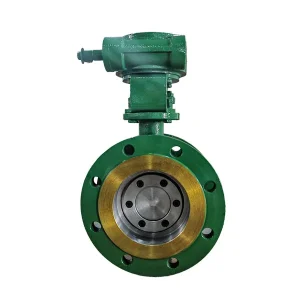
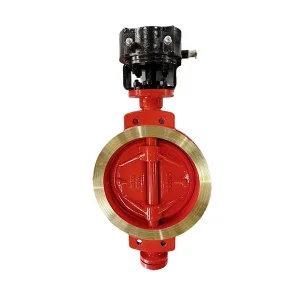
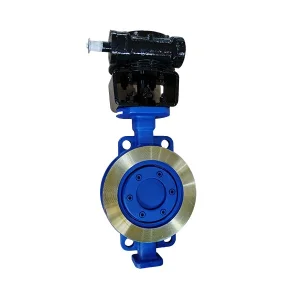
Kuwait Project Ready: Engineered Triple Offset Configurations
Pre-inspected valve assemblies meeting strict API 609 Cat. B and NACE MR0175 protocols for swift shipping to Mina Al Ahmadi and Shuwaikh Port.
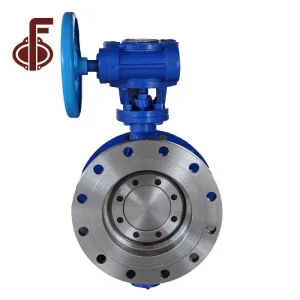
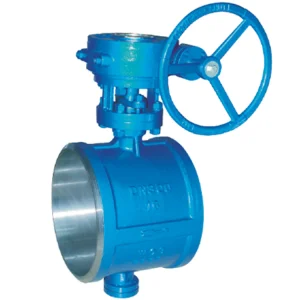
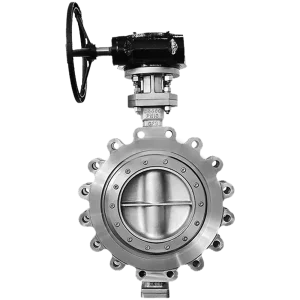
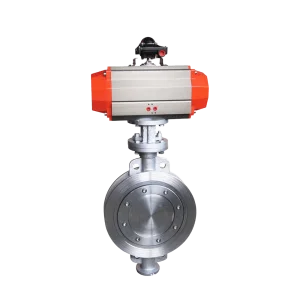
Industrial Landscape: Hydrocarbon Refining, Desert Heat & Marine Salinity
The operating climate in the State of Kuwait imposes severe thermal, chemical, and atmospheric stress on heavy equipment. In regions such as the Burgan Oil Field, North Kuwait jurassic gas fields, and coastal petrochemical hubs at Shuaiba and Mina Abdulla, ambient ambient desert temperatures routinely surge to 55°C (131°F) during peak summer, leading to line pipe skin temperatures exceeding 80°C under intense direct solar radiation. The pervasive presence of airborne, silica-dense sand particles acts as an aggressive abrasive on external actuation mechanisms, packing glands, and shaft seals.
Process fluids in Kuwait further complicate valve survival. Upstream crude streams extracted from heavy reservoirs contain heightened ratios of wet hydrogen sulfide (H2S up to 15-20% in deep sour reservoirs) paired with carbon dioxide (CO2), establishing catastrophic sour gas environments prone to Sulfide Stress Cracking (SSC) and Hydrogen-Induced Cracking (HIC). In downstream processing, the Al-Zour Refinery (615,000 bpd capacity) and KNPC's Clean Fuels Project (CFP) execute severe hydrocracking, desulfurization, and delayed coking where process media range from cryogenic liquefied gases (-196°C) to superheated hydrocracker steam exceeding +550°C under extreme operational pressures.
Severe Sour Service (NACE)
Multi-phase crude with wet H2S and brine content mandates strict compliance with NACE MR0175/ISO 15156. Body castings and seat retainers must maintain controlled hardness (<22 HRC) to completely eliminate sulfide stress corrosion risks.
Thermal Cycling Extremes
Fluctuating cycles between daytime solar thermal accumulation and chilly desert night drops create differential expansion between valve components. Triple offset conical seals prevent thermal binding that disables gate and standard plug valves.
Hypersaline Marine Cooling
Kuwait's Ministry of Electricity & Water (MEW) desalination and coastal refinery cooling loops utilize Persian Gulf seawater featuring elevated total dissolved solids (TDS > 45,000 ppm) and heavy chloride contents demanding Super Duplex or Nickel Bronze trims.
Kinematic Geometry: The Tribology Behind Friction-Free Sealing
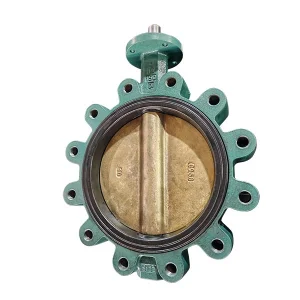
The standard resilient-seated or high-performance double-offset butterfly valve depends upon material deformation or sustained rubbing friction between the disc edge and the seat ring across the initial 15° to 20° of rotation. In harsh petroleum services containing entrained sand, coke fines, or scale, this rubbing quickly tears elastomers, scores PTFE, and induces catastrophic line leakage. The Triple Eccentric Butterfly Valve (TOV) resolves this mechanical failure mode via three distinct geometric deviations:
Offset 1: Shaft Behind Sealing Plane
The shaft axis is placed downstream of the sealing surface plane. This provides a continuous, unbroken sealing perimeter around the entire circumference of the valve bore, avoiding shaft-penetration sealing compromises typical in concentric units.
Offset 2: Shaft Offset from Centerline
The stem centerline is positioned slightly eccentric to the pipeline and valve bore centerline. During disc rotation, this offset utilizes a camming action that pulls the disc cleanly away from the seat ring within the first degrees of opening stroke.
Offset 3: Oblique Conical Seat Profile
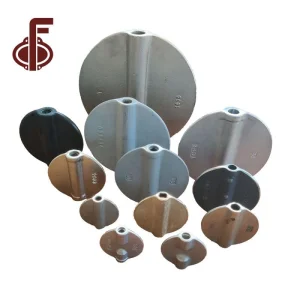
The seat and seal ring cone profiles are machined with their apex tilted at an angled axis. This eliminates all frictional wiping contact. Contact between the disc seal and body seat happens strictly at the final point of mechanical closure (0°), achieving a non-rubbing cam action.
API 598 & ISO 5208 Rate A Metal-to-Metal Zero Leakage
Because the laminated graphite/stainless seal ring approaches the hardfaced Stellite body seat perpendicularly (like an engine poppet valve), there is zero galling, zero friction, and zero wear on the sealing elements. This mechanical closure delivers bidirectional, bubble-tight shutoff (API 598 / ISO 5208 Rate A) even under severe steam, hydrogen, and sour gas pipeline services.
Alloy Selection Matrix for Kuwait Hydrocarbons & Marine Operations
| Service Environment | Shell Material (ASTM) | Trim & Shaft Alloy | Seat & Seal Configuration | Typical Project Application |
|---|---|---|---|---|
| General Hydrocarbon / Utility | A216 WCB / WCC | 17-4PH / A182 F316 | SS316 + Flexible Graphite Laminate / Stellite Gr.6 | Mina Al Ahmadi Utility Steam, Flare Isolation |
| High H2S Sour Crude (Upstream) | A216 WCB (NACE MR0175) / A352 LCC | Inconel 718 / F51 Duplex | Inconel 625 Laminated Ring with Stellite 21 Clad Seat | KOC North Kuwait Jurassic Gas Gathering Centers |
| Corrosive Acid / Desulfurization | A351 CF8M / CF3M | A182 F316L / Nitronic 50 | Full Solid Stellite Metal-to-Metal Hard Seat | KNPC Clean Fuels Hydrocracker Desulfurization Units |
| Marine Seawater Desalination | Nickel Aluminum Bronze (B148 C95800) / Duplex 2205 | Monel K500 / 2507 Super Duplex | C95800 Disc with Monel / PTFE or Nickel Alloy Trim | Doha & Shuwaikh MSF / RO Seawater Intake Loops |
| Cryogenic Hydrocarbons (LNG/LPG) | A351 CF8 / CF8M (Impact tested @ -196°C) | A182 F304 / F316 with Extended Bonnet | Austenitic Stainless + Graphite Cryogenic Packings | Al-Zour LNG Import Terminal Regasification Units |
CAPEX vs. OPEX: Replacing Bulky Gate & Ball Valves with TOVs
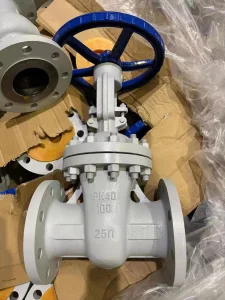
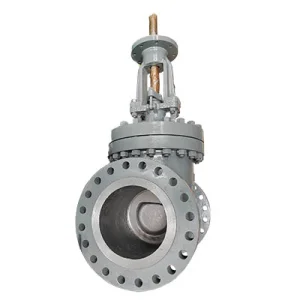
Historically, upstream and downstream plant designers utilized rising-stem wedge gate valves or trunnion-mounted ball valves for critical pipeline shutoff. However, in large line sizes (DN300 / 12-inch up to DN1800 / 72-inch) and pressure ratings from ASME Class 150 to Class 600, traditional valves present prohibitive structural and commercial liabilities.
A comparable Class 300 DN600 (24-inch) cast steel gate valve weighs roughly 2,400 kg and requires a large vertical footprint for stem travel. In contrast, an equivalent Class 300 DN600 Double Flanged Triple Offset Butterfly Valve weighs less than 680 kg—a massive 70% weight reduction. In offshore drilling rigs, pipe-rack skids, and densely packed refinery revamps across Kuwait, this structural lightweighting radically reduces steel support structures, simplifies installation cranes, and prevents pipeline stress concentrations.
From an operational perspective (OPEX), gate valves routinely suffer from wedging due to thermal expansion, packing stem galling, and debris accumulation in bottom body cavities that prevents full closure. Triple eccentric butterfly valves utilize a self-cleaning through-conduit profile without dead body cavities where solids can lodge. Actuator torque demands are up to 50% lower than comparable ball valves, allowing EPCs to specify smaller, more energy-efficient electric or pneumatic actuator packages.
70% Weight Reduction
Dramatically lower dead-weight loads on pipe racks, module structures, and foundation footings throughout mega-project builds like Al-Zour.
Lower Actuation Cost
Quarter-turn quarter-stroke operation with quartered operating torque allows the specification of compact, cost-effective pneumatic Scotch-yoke or electric actuators.
Rapid 90° Emergency Shutoff
While multi-turn gate valves require minutes to crank closed during process upsets, quarter-turn triple offset butterfly valves stroke in seconds, maximizing plant emergency safety.
Compliance Verification: Meeting KOC-MS-001 & KNPC Standards
Supplying the Kuwait market demands total traceability from the raw foundry melt to final hydrostatic pressure testing. Every triple offset butterfly valve leaving our manufacturing plants undergoes exhaustive inspection aligned with KOC (Kuwait Oil Company) Engineering Standards and KNPC Project Specifications:
1. Material Test Reports (MTRs): Certified EN 10204 Type 3.1 or 3.2 inspection certificates covering 100% heat-traceable chemical composition, tensile strength, Charpy V-notch impact testing down to sub-zero temperatures, and microstructural analysis confirming ferrite fractions in Duplex/Super Duplex alloys.
2. NDT & Non-Destructive Examination: Critical casting geometries are subjected to Liquid Penetrant Testing (PT), Magnetic Particle Inspection (MT), Ultrasonic Testing (UT), and Radiographic Examination (RT) conforming to ASME B16.34 Annex B to guarantee absolute zero internal voids, inclusions, or shrinkage cavities.
3. Fugitive Emissions ISO 15848-1 Class AH: Environmental compliance in Kuwait demands zero VOC hydrocarbon vapor leakage. Our valve assemblies feature live-loaded, multi-ring die-formed pure graphite packing arrangements with double O-ring or lip-seal redundant barriers capable of enduring 10,000 mechanical cycles under thermal variations without fugitive gland leakage.
4. Independent Third-Party Witness Testing: Seamless collaboration with renowned inspection agencies including Bureau Veritas (BV), Lloyd's Register (LR), DNV, and SGS to witness factory acceptance testing (FAT), hydrostatic shell testing at 1.5x design pressure, and bidirectional high/low pressure gas seat leak tests.
Ready to Review Our Technical Vendor Documentation?
Request our comprehensive engineering submittal package, K-Company compliant ITP (Inspection & Test Plan), casting qualification records, and complete dimensional drawings for your Kuwait project bid.
Send Inquiry NowTechnology Roadmap: Smart Automation & Kuwait Vision 2035
Under the umbrella of Kuwait Vision 2035 ("New Kuwait"), the regional energy sector is transitioning from standard manual plant operations toward autonomous, digitalized, and decarbonized installations. To power this industrial evolution, our factory engineering division has integrated forward-looking technological capabilities directly into our triple eccentric butterfly valve assemblies:
Digital Twin & Smart Diagnostics: Integration with smart electro-pneumatic positioners equipped with HART, Foundation Fieldbus, and Profibus protocols. Advanced partial-stroke testing (PST) allows SIL-3 emergency shutdown (ESD) valves to be mechanically verified during active line operations without interrupting critical continuous production cycles. Dynamic torque signatures detect seat scale buildup or packing degradation weeks before physical failures can occur.
Green Hydrogen & Carbon Capture Readiness: As Kuwait expands downstream petrochemical ventures and initiates pilot green hydrogen projects at Shuaiba, our valves are certified for low-molecular-weight hydrogen service. Precision-machined, polished shafts and specialized micro-braided graphite packings mitigate the extreme embrittlement and permeation hazards inherent in pure hydrogen transmission lines.
SIL-3 Safety Loops
Engineered for high-integrity pressure protection systems (HIPPS) and rapid ESD trip systems in high-risk KOC gas manifolds.
Additive Laser Cladding
Application of high-velocity robotic laser cladding for Stellite 6, Inconel 625, and tungsten carbide coatings onto critical seat faces ensures uniform microstructures.
Cryogenic Extended Bonnets
Extended column designs with gas-vaporizer spaces that prevent cryogenic process fluids from freezing stem packings in LNG terminal transfer manifolds.
Frequently Asked Technical Questions (Kuwait Procurement)
Why is a Triple Eccentric Butterfly Valve preferred over a Double Offset valve in Kuwait refinery units?
Double offset high-performance butterfly valves utilize an elastomer or polymeric (PTFE/RTFE) seat, or a metal seat that relies on friction rubbing during initial contact. Under Kuwait process temperatures exceeding 200°C or within dirty hydrocarbon lines carrying sand or sulfur particles, soft seats quickly char, soften, or shred. The Triple Offset Valve utilizes an all-metal Stellite/Inconel seating interface with complete friction-free cam action, guaranteeing zero leakage and indefinite operational lifespan in high-temp, sour, or abrasive refining streams.
Can Triple Offset Butterfly Valves provide true bidirectional bubble-tight isolation?
Yes. Although early legacy triple offset designs were predominantly un-directional (preferred flow pushing disc into seat), modern high-precision engineering utilizes optimized conical angles and robust shaft retention that ensures bi-directional zero-leakage shutoff complying with API 598 and ISO 5208 Rate A. When installed in dead-end service or bidirectional distribution networks (such as gas cross-over headers at Al-Zour), the valve securely isolates line pressure from either flow direction without seat distortion.
How does your factory prevent galvanic corrosion in MEW Kuwait desalination seawater lines?
For Kuwait Ministry of Electricity & Water (MEW) seawater intake, multi-stage flash (MSF) evaporation, and reverse osmosis (RO) units, standard carbon or simple stainless steels suffer rapid pitting and crevice corrosion. We manufacture valve bodies from Nickel Aluminum Bronze (ASTM B148 C95800) or 2507 Super Duplex Stainless Steel paired with Monel K500 shafts. Furthermore, internal trim components maintain identical electrochemical galvanic potentials, completely preventing galvanic cells from forming in high-chloride, warm Persian Gulf seawater.
What testing documentation is delivered with valves destined for KOC gathering centers?
Every valve package is accompanied by an exhaustive KOC-compliant Quality Dossier containing: Certified EN 10204 3.1 or 3.2 Material Test Reports (MTRs) with actual chemical and mechanical melt analysis; NACE MR0175/ISO 15156 hardness verification; Positive Material Identification (PMI) logs; 100% NDT inspection reports (Radiography/UT on pressure-retaining castings); hydrostatic shell test logs; high/low pressure seat leakage logs (API 598); firesafe certificates (API 607); and ISO 15848-1 Class AH fugitive emission type test approvals.
How are actuator torque sizing safety factors calculated for high-ambient Kuwait conditions?
In desert installations where temperatures reach 55°C and process media may be dirty, dry gas, or viscous crude, baseline factory torque figures must be derated. We apply a minimum safety margin factor of 1.3 to 1.5 times the dynamic breakaway torque under maximum differential shutoff pressure (ΔP). For sour slurry or sand-entrained applications, this safety factor is calibrated higher to prevent actuator stall and ensure positive seat camming under all operating conditions.