
Primary Severe-Service Butterfly Valve Solutions
Immediate access to our prime triple-offset and high-performance configurations manufactured to DIN, EN, and ASME tolerances for European industrial infrastructure.
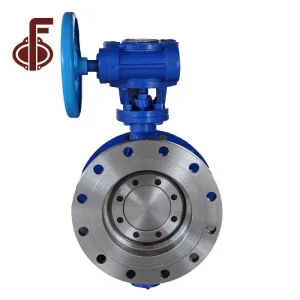
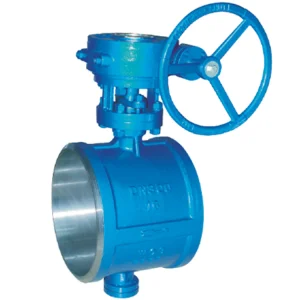
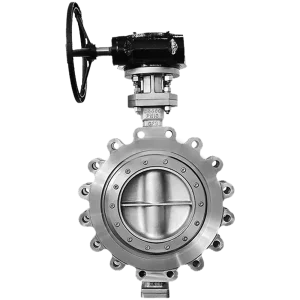
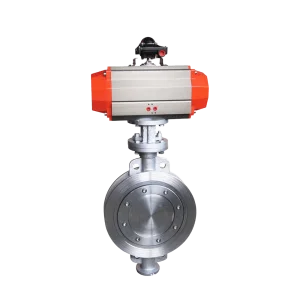
The Critical Role of Triple Offset Technology in the Paris Metropole
Navigating complex urban subterranean utility corridors, stringent environmental thresholds, and thermal resilience parameters across Greater Paris and the Île-de-France economic basin.
CPCU Steam Network & Subterranean Paris Infrastructure
The Paris metropolitan district heating network, primarily operated by the Compagnie Parisienne de Chauffage Urbain (CPCU), comprises more than 500 kilometers of high-temperature, high-pressure steam distribution pipelines buried beneath dense urban historical architecture. Running at operating temperatures up to 235°C and pressures reaching 20 bar, these lines present unique metallurgical and mechanical challenges.
Traditional gate valves, historically deployed across Parisian utility chambers, frequently suffer from thermal binding, stem packing degradation, and massive actuation torque requirements. Our triple eccentric butterfly valves (TOBVs) introduce a frictionless, camming mechanical shutoff that eliminates sliding friction between the disc seal ring and body seat. This design eradicates galling—a persistent risk in rapid thermal cycling associated with peak Parisian winter heating demands.
- Frictionless Cam-Action Disengagement: Disc separates cleanly from the conical seat within 1–2 degrees of rotation, preventing seat rubbing and extended lifecycle operation.
- Compact Face-to-Face Footprint: Conforming to ISO 5752 and EN 558 Series 13/16, reducing overall chamber excavation volumes in historic Paris districts.
- Integral Hardfaced Stellite Seats: High-resistance weld overlays prevent particle scouring from ancient condensate lines.
Paris Climespace & Seine Environmental Protection
In addition to steam, Paris operates one of Europe's largest chilled water distribution networks—Fraîcheur de Paris (Climespace). Utilizing cold water pumped through heat-exchange stations along the Seine, cooling systems require bi-directional bubble-tight valves capable of operating under fluctuating water-hammer pressures without elastomer degradation.
Environmental regulations imposed by the DRIEAT (Direction Régionale et Interdépartementale de l'Environnement, de l'Aménagement et des Transports) require zero micro-leakage of synthetic heat-transfer fluids or chemical water treatment additives into natural river interfaces. Our triple eccentric metal-to-metal configuration ensures mechanical bubble-tight shutoff conforming to EN 12266-1 Rate A in both flow directions.
The Mechanics of Triple Eccentricity: Elimination of Friction & Wear
An authoritative evaluation of geometric offsets, Stellite hardfacing weld processes, and finite element stress mitigation under extreme thermal gradients.
Offset 1: Shaft Axis Shifted from Seat Plane
The valve shaft center is positioned behind the plane of the sealing surface. This fundamental offset converts rotation into an uninterrupted, circular swing pattern, enabling continuous uninterrupted contact around the full 360-degree circumference without splitting the seat ring.
Offset 2: Shaft Offset from Pipe Centerline
The rotational axis of the stem is shifted laterally from the longitudinal centerline of the valve bore. This lateral offset produces a natural cam effect, immediately pulling the disc away from the body seat upon opening to completely eliminate circumferential scrubbing.
Offset 3: Conical Axis Angle Incline
The sealing cone center axis is tilted away from the pipe axis by an optimized angle (typically 15° to 22°). This geometrical conical geometry ensures contact is made purely at the final mechanical shutoff point, operating on mechanical torque compression rather than dynamic interference fit.
| Component | Standard Paris Industrial Spec | High-Temperature / Petrochemical | Cryogenic / Paris-Saclay R&D |
|---|---|---|---|
| Valve Body | Cast Steel 1.0619 (WCB) / Ductile Iron GGG40.3 | Forged/Cast SS316L (1.4404) or A217 WC6/WC9 | A351 CF8M / 1.4408 Low-Temp Austenitic |
| Disc Body | Carbon Steel WCB + 13Cr overlay / CF8 | Cast Stainless 1.4408 (CF8M) + Stellite Gr. 6 | Austenitic CF8M with Cryogenic Stress Relief |
| Seal Ring Laminate | AISI 316 + High-Purity Flexible Graphite | Inconel 625 / 718 + Pure Mica / Graphite | Solid High-Resilience 316L / Kel-F Composite |
| Seat Profile | Solid Stellite 21 Hardfacing (>38 HRC) | Stellite 6 Laser-Clad Solid Bore (>42 HRC) | Integral Precision-Lapped 316L SS Seat |
| Stem Metallurgy | 17-4PH (1.4542) High-Strength Martinistic | Nitronic 50 (XM-19) / Inconel 718 | Monel K500 / 316Ti Cryo Stabilized |
ISO 15848-1 & TA-Luft Fugitive Emissions Mandates
European environmental enforcement (EU Industrial Emissions Directive 2010/75/EU) requires drastic reduction of volatile organic compound (VOC) emissions across industrial chemical corridors, such as those along the Seine downstream toward Normandy. Traditional valves account for over 50% of fugitive emissions via stem packings.
Our triple eccentric valves incorporate live-loaded stem seal arrangements using Belleville spring washers combined with die-formed flexible graphite rings and dual O-ring safety containment barriers. Fully certified to ISO 15848-1 Class AH & BH and VDI 2440 (TA-Luft), ensuring less than 10-4 mbar·l/s·m leakage through more than 100,000 thermal stroke cycles.
Decarbonization, CCUS & Hydrogen Blending across France
As France accelerates its Stratégie Nationale Bas-Carbone (SNBC), heavy industrial installations across the Île-de-France corridor are transitioning toward hydrogen blending in gas transport pipelines and Carbon Capture, Utilization, and Storage (CCUS).
Gaseous hydrogen poses acute risks of embrittlement in standard ductile iron and forged steels. Our factory employs vacuum-degassed low-carbon austenitic stainless steels (316L, 1.4404) and special nickel alloys (Alloy 20, Hastelloy C-276) that prevent hydrogen atom migration along grain boundaries. The inherent non-rubbing mechanical seal prevents localized friction hotspots, eliminating potential ignition hazards in ATEX Zone 0 and Zone 1 environments.
- Hydrogen-Ready Packing Systems: High-density non-porous secondary graphite seals tested for H2 micro-permeation.
- Dense CO2 Phase Isolation: Resisting extreme rapid Joule-Thomson cooling events (-78.5°C) without brittle fracture.
Compliance Framework for Engineering Projects in France & the EU
Full traceability and certification aligned with European Union Directives, French national standards, and third-party inspection agencies.
PED 2014/68/EU Module H / H1
Certified for Category I through IV pressurized fluid systems. Complete documentation packages including full material design calculations, safety margin verification, and CE marking approved for pressurized hazardous gases and liquids.
ATEX Directive 2014/34/EU
Full electrical continuity testing between disc, stem, and body to avoid electrostatic sparking. Certified for deployment in explosive gas and dust environments (Ex II 2 GD c IIC T6...T1).
EN 10204 3.1 & 3.2 Traceability
Complete heat batch traceability from raw ingot casting to final hydrostatic testing. Independent mill test reports covering chemical spectroscopy (PMI), mechanical tensile tests, Charpy V-notch impact, and radiography (RT).
Specialized Deployment Across Greater Paris Municipal & High-Tech Nodes
From geothermal energy extraction in the Dogger aquifer to critical cooling for Tier-IV data centers in Seine-Saint-Denis.
Dogger Aquifer Geothermal Heat Stations
Operating across the southern and eastern Paris suburbs (e.g., Cachan, Alfortville), geothermal loops extract 70°C–85°C brackish, corrosive saline water. Our duplex stainless steel (1.4462 / 2205) triple offset valves provide absolute immunity to chloride pitting (PREN > 35) and mineral scale build-up.
Data Center Hubs in Plaine Commune
Massive colocation hubs in Saint-Denis and Aubervilliers demand non-stop chiller circuit availability. Our lightweight wafer and lug TOBVs integrate ISO 5211 direct-mount automation packages with ultra-fast electric fail-safe actuation, safeguarding server uptime during line power transients.
Paris-Saclay Scientific & Cryo Laboratories
Handling liquid nitrogen (-196°C) and noble gases at synchrotron and nuclear research facilities requires extended vapor columns (cryogenic bonnets conforming to BS 6364). These prevent valve packing from freezing while holding helium tight seal integrity down to absolute vacuum.
Valve Technology Roadmap: Digital Twins, IoT Sensing & Laser Deposition
Anticipating the technological requirements of Industry 4.0 automation and green transformation throughout Europe.
Additive Manufacturing & Laser Powder Cladding (LMD)
Moving beyond manual TIG overlay welding, our manufacturing lines utilize automated 6-axis robotic Laser Metal Deposition (LMD). This technique reduces the heat-affected zone (HAZ) in seat welds to less than 0.5 mm, avoiding body distortion and delivering uniform Stellite 6 hardness of 42–46 HRC without micro-porosity.
Integrated IoT Torque Diagnostics
Modern smart infrastructure across Paris requires real-time diagnostic reporting. By outfitting our quarter-turn pneumatic and electric actuators with optical strain sensors and continuous pressure monitoring, we provide automated "Torque Signature Verification." This feature detects abnormal friction spikes long before mechanical leakage can materialize, eliminating unplanned shutdowns in district energy tunnels.
Lifecycle Assessment (LCA) & Circularity
In accordance with European eco-design guidelines, every valve component is engineered for in-line refurbishability. Instead of discarding entire valve assemblies, our localized Paris engineering partner stations can swap the laminated seal ring and seat retainers in-line, reducing raw material waste by 78% and lowering project carbon footprints.
Frequently Asked Questions by Valve Specifiers
Comprehensive answers addressing specific mechanical, sizing, and European regulatory inquiries.
Why choose a triple eccentric butterfly valve over a metal-seated ball valve for steam isolation in Paris?
How does the triple offset geometry achieve bi-directional Rate A zero-leakage?
What are the critical advantages of laminated graphite/stainless seal rings vs. solid metal seats?
Are your triple eccentric butterfly valves certified for French fire-safe standards?
What testing documentation is delivered with valves destined for Île-de-France projects?
Can the valve stem packing be serviced or adjusted while the line is pressurized?
Extended Flow Control & Specialized Butterfly Valve Range
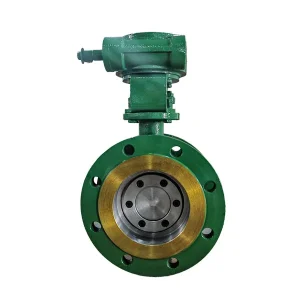
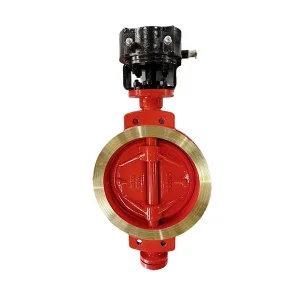
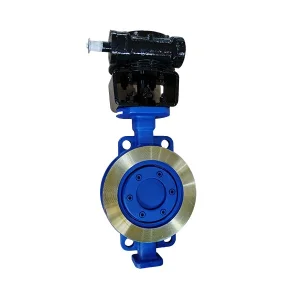
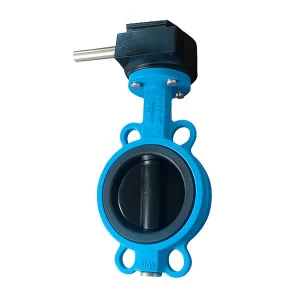
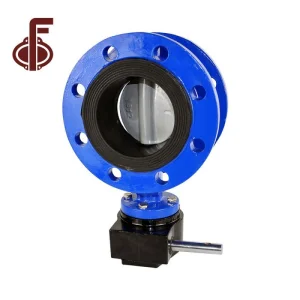
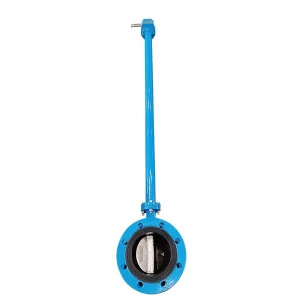
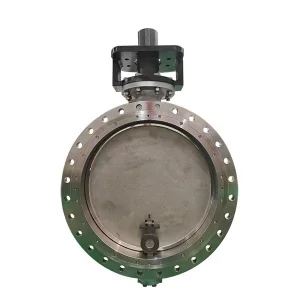
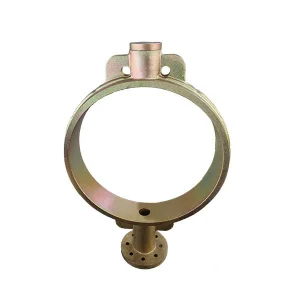
Explore our broader industrial portfolio spanning carbon steel, ductile iron, vulcanized rubber lined, and large-bore utility valves.
Accelerate Your Project with European Engineering Rigor
Connect directly with our valve application engineers. From 2D dimensional CAD drawings and 3D STEP files to customized Cv flow calculations and tender documentation packs for Île-de-France installations.
