Engineered Butterfly & Severe Service Flow Solutions
Explore our core industrial valve assemblies built in Tianjin, rigorously calibrated to ASME B16.34, EN 593, and API 609 standards with end-to-end traceability.
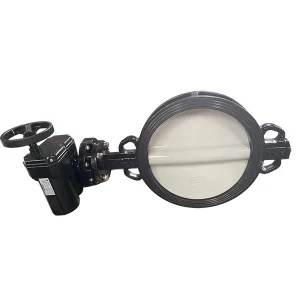
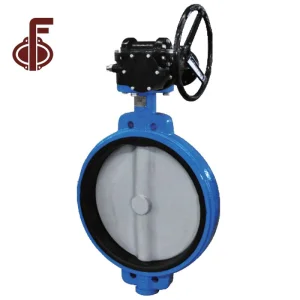
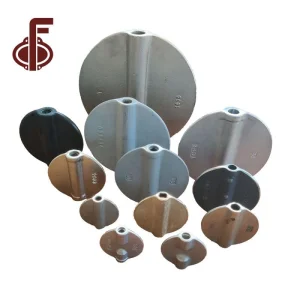
OEM Nylon Disc Wafer Type Honeywell Electric Butterfly Valve Manufacturer, Exporters
View Specifications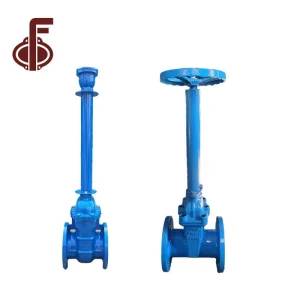
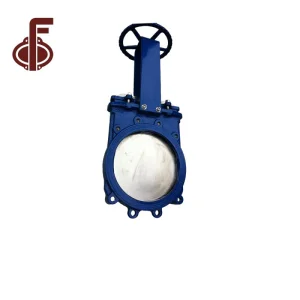
China DI PN10/16 class150 Long Stem Soft Sealing Gate Valve Manufacturers, Factories
View Specifications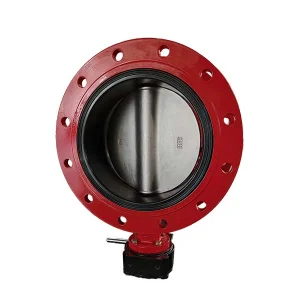
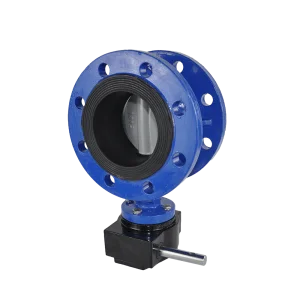
OEM Two Shaft Replaceable Seat Double Flange Butterfly Valve Manufacturers, Exporter
View Specifications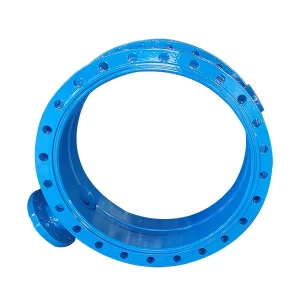
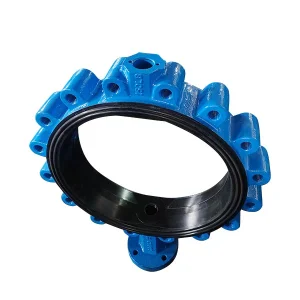
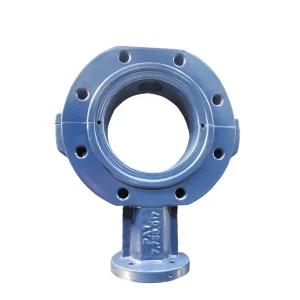
OEM Double Flanged Butterfly Valve Body for Replaceable Seat Manufacturer, Manufacturers
View Specifications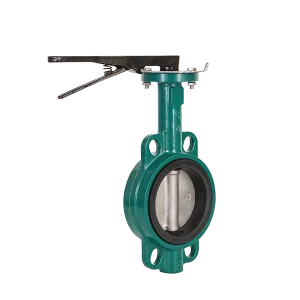
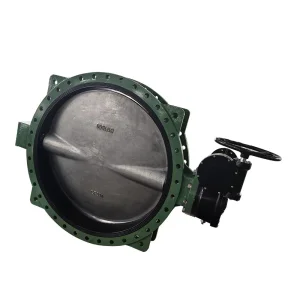
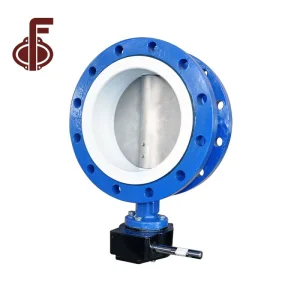
OEM DN1500 Vulcanized EPDM Seat Large Flange Butterfly Valve Exporter, Exporters
View Specifications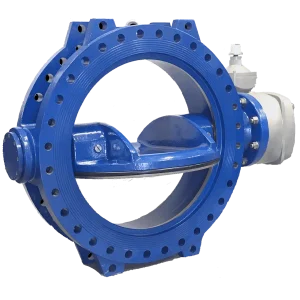
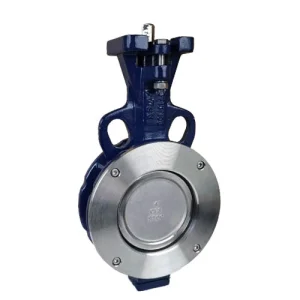
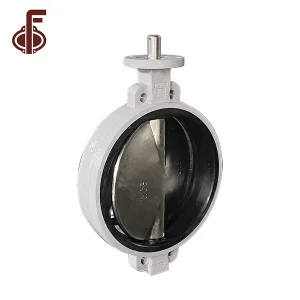
OEM Double Eccentric Wafer High Performance Butterfly Valve Factories, Exporters
View SpecificationsThe Tri-Eccentric Geometry: Eliminating Friction & Galling
A comprehensive engineering review of how three distinct angular offsets convert continuous rotational friction into a frictionless, cam-action mechanical seal.
Offset 1: Shaft Behind Disc Plane
The stem axis is positioned downstream behind the sealing plane of the disc. This primary offset enables an unbroken, continuous 360-degree perimeter seal ring, eliminating problematic split-stem pass-through points that are prone to localized erosion in severe lines.
- Eliminates traditional stem-penetration leaks
- Uninterrupted uninterrupted seat geometry
Offset 2: Eccentric Shaft Centerline
The shaft centerline is laterally offset from the pipe center axis. As stroke rotation begins, the disc cams away instantly from the seat face, drastically minimizing mechanical rubbing contact to mere initial fractions of a degree during the breakaway cycle.
- Cam-action liftoff within 2° to 3° of travel
- Drastically cuts breakaway operational torque
Offset 3: Inclined Conical Sealing Profile
The sealing cone axis is tilted obliquely relative to the pipeline axis. This conical geometry creates a true wedging action where mechanical contact occurs only at final shutoff (0°). Metal-to-metal rubbing is eliminated, ensuring zero scuffing and zero galling over 50,000+ cycles.
- Pure wedging compression, no sliding shear
- Torque-seated zero leakage bi-directional seal
Procurement Analysis: Triple Offset vs. Gate & Metal Ball Valves
How global EPC project managers reduce steel tonnage, structural footprint, structural load, and long-term actuator expenditure by converting lines to TOVs.
| Evaluation Parameter | Triple Offset Butterfly Valve (TOV) | Flexible Wedge Gate Valve | Metal-Seated Ball Valve (MSBV) |
|---|---|---|---|
| Face-to-Face & Weight | Benchmark Compact API 609, up to 70% lighter weight | Bulky face-to-face, requires heavy structural pipe racks | Heavy intermediate footprint, high pipe load stress |
| Breakaway Torque Dynamics | Frictionless cam-lift enables low sizing torque (Smaller Actuator) | Extreme wedge friction, requires large multi-turn operators | Extremely high seat breakaway torque, oversized gearboxes |
| Fugitive Emissions (ISO 15848-1) | Class AH 90° non-rising stem avoids packing scuff | Linear rising stem drags line debris into packing gland | Quarter-turn stem; high side-load friction over time |
| Thermal Shock Tolerance | Torque-seated disc automatically compensates for expansion | Susceptible to thermal binding and wedge entrapment | Thermal expansion causes ball-seat seizing in high temp |
| Maintenance & Trim Repair | Field-replaceable seal ring & seat without body removal | Body cavity grinding, field weld cutouts required | Requires shop lapping and precision match-grinding sets |
Macro Industry Solutions: Engineering in Demanding Media
From cryogenic LNG cold boxes to high-temperature refining catalyst lines, our triple eccentric valves provide uncompromised process isolation.
LNG Liquefaction & Cryogenics
Engineered for down to -196°C in liquid methane, nitrogen, and ethylene services. Features deep extended vapor columns (bonnet extension per BS 6364), austenitic stainless-steel CF8M/CF3M cryogenic castings, and spring-energized packing keeping volatile gases hermetically isolated.
- BS 6364 Cryogenic Helium Leak Testing Verified
- Zero seat distortion through thermal flash
Refining FCCU, Steam & Hydrocarbon
Supercritical boiler headers, catalytic cracking units, and steam isolation lines subject valves to 450°C to 650°C. With solid Stellite 21 hardfaced body seats and SS316+flexible graphite laminated disc rings, these assemblies withstand mechanical erosive particulates and thermal shocks.
- API 607 / ISO 10497 Certified Fire-Safe
- Zero acoustic vibration or disc flutter in high steam flow
Sour Gas, Desalination & Offshore SW
Handling wet H2S, marine brines, and chlorinated environments requires metallurgical expertise. We produce valve bodies in Duplex 2205, Super Duplex 2507, Hastelloy C276, and Nickel Aluminum Bronze complying with strict NACE MR0175/ISO 15156 stress corrosion cracking standards.
- NACE MR0175 / ISO 15156 Hardness Compliance
- Pitting Resistance Equivalent Number (PREN) > 42
Casting Metallurgy & 5-Axis Precision Tooling Protocol
The manufacturing integrity of a China valve exporter is defined by raw melt chemistry, robotic hardfacing, and sub-micron conical seat machining.
Foundry Spectrometry & Melt Control
Every casting charge is verified via direct-reading emission spectrometers. Chemical compositions (Carbon, Chrome, Nickel, Moly) are verified to ASME Section II and ASTM specifications prior to pouring. Radiographic (RT) and ultrasonic (UT) inspections eliminate micro-porosity.
- EN 10204 Type 3.1 & 3.2 Material Certs
- Full heats and ASTM grain size testing
5-Axis CNC Conical Generation
Generating the inclined elliptical cone profile demands high-rigidity CNC machining centers. Robotic plasma transferred arc (PTA) overlays Stellite Grade 21 onto the body seat with minimal iron dilution, followed by 5-axis continuous coordinate milling for perfect profile conformity.
- PTA Stellite hardness checked at 38–42 HRC
- Sub-micron surface roughness finish (Ra < 0.4 µm)
100% Hydrostatic & Low-Pressure Gas Testing
Every completed valve undergoes shell strength testing at 1.5× rated working pressure and bi-directional seat testing at 1.1× differential pressure per API 598 and ISO 5208 Rate A (zero visible leakage). High-pressure gas and fugitive emission helium sniffing are carried out upon project specification.
- Zero-bubble resilient gas seat integrity
- Calibrated digital torque signature recording
Technological Evolution & The Future of Severe Isolation
A strategic overview of upcoming advancements in additive surfacing, digital health telemetry, and hydrogen process sealing frameworks.
Additive Laser Cladding
Replacing standard weld buttering with high-speed direct laser deposition (DLD). Yields microstructures with zero dilution, enhanced carbide uniformity, and improved resistance to cavitation erosion.
IoT Acoustic Diagnostics
Direct integration of ultrasonic piezoceramic sensors into the gland flange, allowing continuous monitoring of high-frequency internal leakage acoustic signatures before process failure manifests.
Green Hydrogen Sealing
Development of ultra-tight packing matrices capable of containing sub-microscopic H2 molecules below 10 ppmv at Class 900 operating pressures, compliant with evolving ISO 15848-1 AH guidelines.
Optical CMM Seat Profiling
Incorporation of automated laser optical scanning coordinates directly within the CNC fixture to verify tri-eccentric conical taper tolerances to +/- 0.005mm prior to cleanroom assembly.
Global Logistics Assurance & Standardized Documentation
Ensuring transparent international shipping from Tianjin Xingang port, backed by comprehensive project dossier submissions and customs documentation.
Full EPC Quality Dossiers
Every export consignment includes a comprehensive Manufacturer Data Report (MDR). Packaged dossiers feature raw foundry heat numbers, PMI reports, hydrostatic charts, painting thickness tests, and dimensional conformance drawings.
- EN 10204 3.1 & 3.2 Inspector sign-off
- NACE MR0103 / MR0175 Verification
Severe Marine Transit Packaging
Valves are coated with high-solid epoxy mastic primers and polyurethanes, followed by flange face rust inhibitor coatings, heavy plastic flange protectors, vapor corrosion inhibitor (VCI) hermetic bagging, and reinforced fumigated IPPC wooden crates.
- ISPM-15 Certified Export Wooden Crates
- Dual-barrier moisture absorption packets
Incoterms & Global Project Sourcing
Headquartered in Tianjin with rapid logistical clearance via Tianjin Port (Tianjin Xingang), ZFA Valve supports FOB, CIF, CFR, and DDP shipments. We accommodate third-party inspection (SGS, TÜV, Lloyd’s Register, Bureau Veritas) and structured commercial terms.
- Proximity to international sea lanes
- Flexible Letter of Credit (L/C) facilities
Engineering FAQ: Specifying Triple Offset Butterfly Valves
Authoritative technical answers to critical design questions asked by piping designers, procurement auditors, and plant operations teams.
How does a Triple Offset Valve achieve true bi-directional bubble-tight shutoff?
Unlike position-seated concentric or double-eccentric valves that rely on interference fit and elastomer deflection, the triple offset valve relies on torque-seating. The mechanical wedge generated by the conical geometry (Offset 3) allows the actuator to push the seal ring firmly into the stationary body seat. In the reverse flow direction, the line pressure acts upon the back of the disc, which is balanced by proper shaft diameter sizing and mechanical seat angle optimization, ensuring zero leakage across the full ASME pressure rating in both directions per ISO 5208 Rate A and API 598.
What is the structural difference between a laminated seat and a solid metal seat?
A laminated seat consists of alternating layers of high-grade stainless steel (such as ASTM A240 Gr. 316) and flexible expanded graphite sheets. The graphite layers provide micro-conformability against the hardfaced body seat, ensuring ANSI Class VI / ISO Rate A zero-bubble shutoff even in dirty media up to 450°C. In contrast, a solid metal seat features a homogeneous machined alloy ring (often Inconel 718, Monel, or Stellite-treated stainless) designed specifically for severe erosive media, abrasive slurries, and extreme temperatures up to 650°C where graphite oxidation could pose a risk.
Why is API 609 Category B the global standard for high-performance butterfly valves?
API 609 differentiates between Category A (concentric, low-pressure resilient-seated butterfly valves with standard short face-to-face dimensions) and Category B (offset disc architecture, higher pressure ratings up to ASME Class 1500, with enlarged wall thicknesses, blowout-proof stem retaining mechanisms, and defined face-to-face dimensions compatible with ASME B16.10). By specifying API 609 Category B, engineers ensure that the valve possesses the structural rigidity required to resist line bending stresses without causing seat binding.
What sizing torque safety factor should be applied when sizing pneumatic or electric actuators?
Because triple offset valves are torque-seated, operating torque consists of dynamic fluid dynamic torque, bearing friction, packing friction, and the seat wedging torque. For standard clean fluid services (water, lube oils, clean condensate), an actuator safety factor of 20% to 25% over maximum calculated breakout torque is standard. For viscous fluids, slurries, dry dirty gas, or high-temperature steam lines, engineering practice recommends a safety factor of 30% to 50% to prevent sluggish closing and ensure guaranteed shutoff under upset differential conditions.
Can Triple Offset Butterfly Valves be utilized effectively for throttling/control applications?
Yes. The inherent flow characteristic of a tri-eccentric valve closely resembles an equal percentage curve between 15° and 70° of opening. Because the disc cams away instantly from the seat without rubbing, fine throttling can be maintained without localized seal erosion. When paired with high-resolution digital electro-pneumatic positioners, TOVs provide excellent control resolution (rangeability up to 100:1), eliminating the requirement for separate control and isolation valves in many process skids.
How does ZFA Valve guarantee compliance with fugitive emissions standards like ISO 15848-1?
Stem emissions are controlled via a multi-tiered engineering approach: 1) Precision burnishing of the valve stem to a mirror surface roughness (Ra ≤ 0.2 μm) eliminating micro-grooves; 2) Live-loaded Belleville disc springs maintaining constant compressive force on the stuffing box; 3) Die-formed flexible graphite rings bounded by braided anti-extrusion carbon yarn rings. This design achieves Class AH and BH compliance under helium sniffing testing (< 10-5 mg/(s·m) per stem circumference), satisfying strict TA-Luft and Clean Air Act mandates.
Heavy-Duty Process & General Industrial Valve Series
Explore our extensive line of factory-direct wafer, lug, double-flange butterfly, and resilient gate valves manufactured with premium metallurgy.