
Featured Industrial Butterfly Valve Bodies & Assemblies
High-precision cast iron, ductile iron, carbon steel (WCB), and CF8M stainless valve components manufactured for international EPC projects, municipal networks, and heavy processing plants.
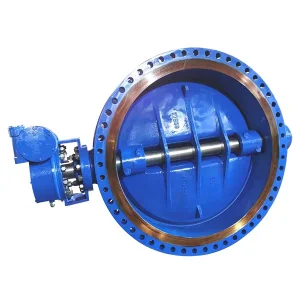
OEM Short Pattern U Shape Double Eccentric Butterfly Valve
Explore Specification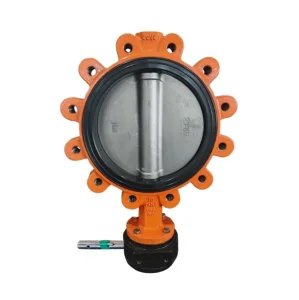
OEM Replaceable Seat CF8M Disc Lug Butterfly Valve DN250 PN10
Explore Specification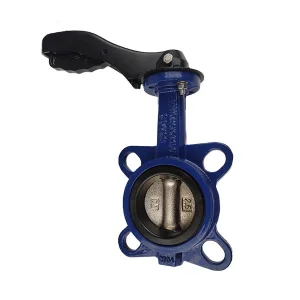
China Casting Iron Body EPDM Hard Back Seat Wafer Butterfly Valve
Explore Specification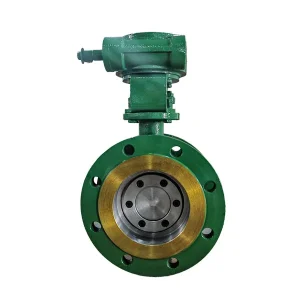
OEM WCB Double Flanged Triple Offset Butterfly Valve
Explore Specification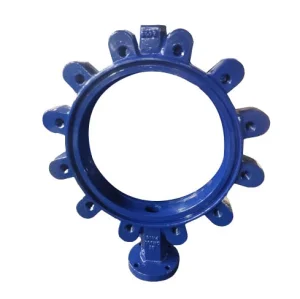
OEM Butterfly Valve Fully Lug Body Casting Solutions
Explore Specification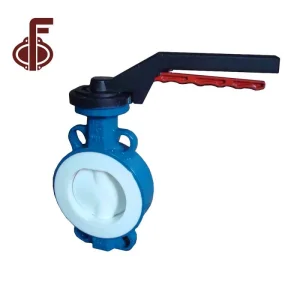
OEM Concentric Cast Iron Full Lined Butterfly Valve
Explore Specification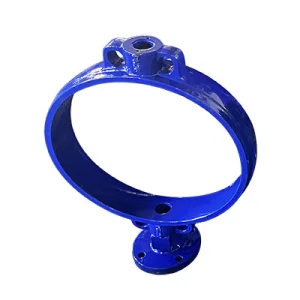
China Wafer Type Butterfly Valve Ductile Iron Body
Explore Specification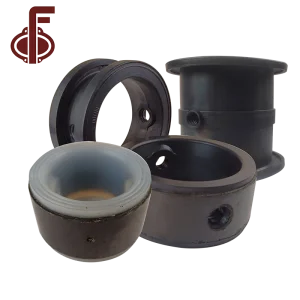
OEM Soft/Hard Back Seat Elastomer Valve Replacements
Explore SpecificationThe Global Commercial Reality of Industrial Butterfly Valve Bodies
An engineering and metallurgical analysis of modern foundry practices, dimensional stability under thermal cycle, and the competitive shift toward Chinese precision valve manufacturing hubs.
Geographical Sourcing Dynamics
The global flow control sector has experienced fundamental restructuring. Over the past twenty years, original equipment manufacturers and fluid infrastructure contractors have shifted casting and body manufacturing toward high-competence Chinese valve corridors, notably the Tianjin valve industrial belt.
By blending high-volume resin sand moulding with electric induction melting, Tier-1 Chinese manufacturers provide metallurgical integrity identical to European and North American foundries at significantly enhanced operational velocity and competitive unit economics.
Metallurgical Evolution & Casting
Modern valve performance is determined by internal shell porosity, grain boundary consistency, and tensile tensile tolerance. Leading foundries have phased out rudimentary green sand casting for automated phenolic urethane no-bake casting lines.
This process controls internal wall thickness variations to within ±0.3 mm on critical body dimensions, drastically minimizing localized turbulent flow, pressure drops, and galvanic corrosion across ductile iron (QT450-10) and duplex alloy castings.
Tight-Shutoff Sealing Mechanics
A butterfly valve body is not merely a static structural shell; it serves as the reactive sealing datum. When torque is applied through pneumatic, electric, or manual actuators, concentric or offset bodies experience dynamic radial deflection.
Engineered bodies manufactured by ZFA feature reinforced circumferential ribs, finite-element-optimized neck heights to accommodate ISO 5211 direct-mount automation, and precision-machined internal seat retention profiles preventing liner displacement under full line velocity.
Structural Typologies: Wafer vs. Lug vs. Double-Flanged Bodies
Selection of valve body configurations dictates operational maintainability and pipeline safety margins. Wafer Type Bodies utilize compact face-to-face dimensions clamping between pipe flanges via through-bolts; this format is exceptionally cost-effective, yet unsuitable for isolating downstream systems. Lug Type Bodies integrate tapped female bolt holes across the circumference, allowing upstream line maintenance while maintaining line pressure under dead-end service conditions up to design limits. Double Flanged Bodies represent the pinnacle of structural rigidity, essential for large diameters (DN600–DN2000), preventing shear stresses generated in thermal-expansion prone district heating and cross-country potable transmission pipelines.
Engineering the Next Decade of Fluid Valve Bodies
From digital sand core 3D printing to predictive IoT edge sensors embedded within valve stuffing boxes, examine how valve body manufacturing is transforming.
Multi-Axis CNC Machining
Integration of dedicated horizontal machining centers (HMCs) with twin-pallet changers, executing body flange drilling, seat boring, and stem journal machining in a single fixturing sequence to eliminate concentricity runout.
Additive Binder-Jet Moulding
Eliminating wood patterns for low-volume, highly complex valve bodies. 3D printed sand molds enable hydro-dynamically curved rib geometries that reduce material weight by 18% while enhancing burst pressure thresholds.
Anti-Microbial & HVOF Coatings
Application of High-Velocity Oxygen-Fuel (HVOF) tungsten-carbide cladding directly onto valve body sealing throats, along with fusion-bonded epoxy (FBE) rated for 250 microns to eliminate galvanic pitting in saline brine lines.
Smart Integrated Valve Castings
Direct integration of acoustic leak detection cavities and strain-gauge bosses into cast iron and carbon steel valve bodies, providing automated PLC feedback on fugitive stem emissions and cavitation dynamics.
Localized Industrial Solutions Across Global Infrastructure
Valve body requirements differ radically depending on chemical corrosivity, operating velocity, and cycle frequency. Here is how our engineering tackles core application environments.
Municipal Water & Desalination
Seawater reverse osmosis (SWRO) and urban potable water transport require total immunity from bio-fouling and dezincification.
- Body Configuration: Short-pattern concentric or double eccentric flanged.
- Metallurgy: Ductile iron (GGG40/50) with WRAS-approved NSF-61 certified epoxy coatings; Super Duplex discs for brine service.
- Key Benefit: Zero contamination, low torque operating curve under high cyclic demand.
Commercial HVAC & District Cooling
Chilled water loops and high-rise condenser circuits demand low hydrodynamic resistance and seamless actuator modularity.
- Body Configuration: Fully wafer or lugged designs with extended neck for insulation jacket clearance.
- Liner Selection: High-resilience EPDM vulcanized or replaceable hard back seats rated from -20°C to +120°C.
- Key Benefit: Drop-tight Class VI shutoff eliminating seasonal BTU cooling loss.
Petrochemical & Heavy Process
Hydrocarbon distribution, flare lines, and boiler feed lines mandate extreme temperature endurance and firesafe design certification.
- Body Configuration: WCB carbon steel or CF8M triple eccentric metal-seated configurations.
- Sealing System: Multi-layer laminated stainless steel and graphite seal ring with stellite-welded body seats.
- Key Benefit: Non-rubbing 90-degree rotary travel, non-jamming zero-leakage shutoff.
Material Engineering Reference for Procurement Teams
Correct pairing between body substrate, disc alloy, and elastomer liner dictates operational mean time between failures (MTBF). Review standard parameters below.
| Seat / Body Material | Base Compatibility | Working Temp Scope | Ideal Pipeline Media | Operational Restrictions |
|---|---|---|---|---|
| EPDM (Hard/Soft Back) Cast / Ductile Iron |
Potable Water, Neutral Wastewater, Glycol | -20°C to +120°C | Municipal Networks, HVAC Cooling Towers | Avoid with oils, fuels, hydrocarbons |
| NBR (Nitrile) Ductile Iron / WCB |
Petroleum Oils, Compressed Air, Fuels | -10°C to +82°C | Refinery Fuel Lines, Marine Bunkering | Avoid with hot ozone, ketones, polar solvents |
| PTFE / PFA Lined CF8M / Cast Steel |
Aggressive Inorganic Acids, Solvents | -20°C to +180°C | Chemical Processing, Pharma Synthesis | Avoid with high abrasive slurries |
| Metal-to-Metal (Stellite) WCB / Super Duplex |
Superheated Steam, Hydrocarbons | -50°C to +450°C | Power Generation, Geothermal, Steam Headers | Higher seating torque; precision matching needed |
Automated & Heavy-Pattern Valve Lines
Explore our two-piece split body designs, PTFE-lined corrosion valves, gear-operated, and electric Honeywell actuated assemblies engineered for seamless automation.
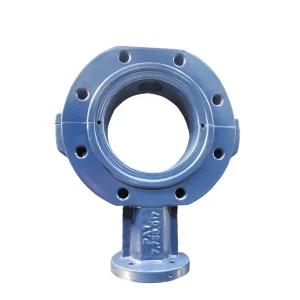
China Fully Lug Butterfly Valve Two Pieces Body
Explore Specification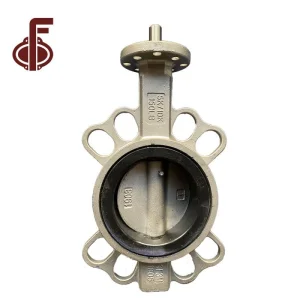
OEM 5k 10k 150LB PN10 PN16 Wafer Butterfly Valve
Explore Specification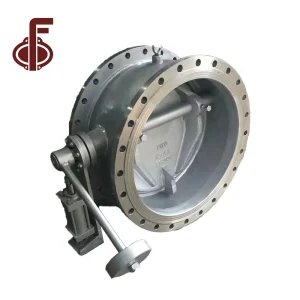
OEM Butterfly Check Valve with Heavy Hammer
Explore Specification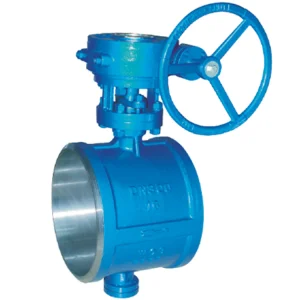
OEM Butt Welded Triple Offset Butterfly Valve
Explore Specification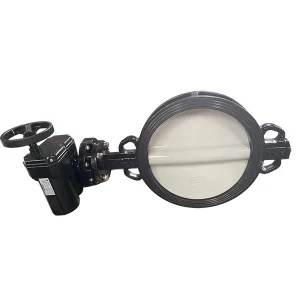
OEM Nylon Disc Wafer Type Honeywell Electric Valve
Explore Specification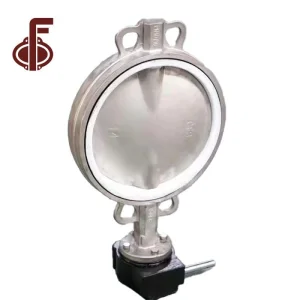
OEM PTFE Seat Wafer Type Chemical Butterfly Valve
Explore Specification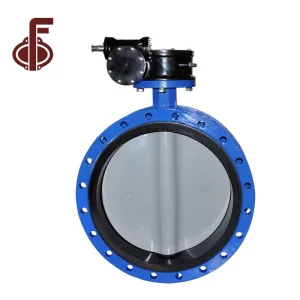
OEM NBR Seat Flanged Resilient Seated Butterfly Valve
Explore Specification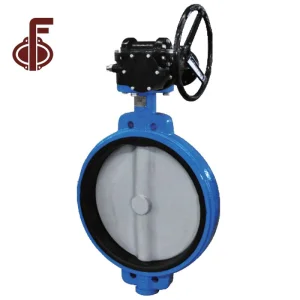
China Worm Gear Operated Wafer Type Butterfly Valves
Explore SpecificationFrequently Addressed Procurement Questions
Clear technical insights on body castings, international pressure test protocols, and custom OEM manufacturing lead times.
Which international design and flange standards are supported?
ZFA valve bodies are engineered with universal flange alignment compatible with ASME B16.5 Class 150, EN 1092-1 PN10/PN16, JIS B2239 10K, and AS 2129 Table E. Multi-standard bolt hole patterns reduce distributor inventory complexity by fitting multiple international flanges.
What quality tests are executed prior to body dispatch?
Every casting undergoes raw material spectroscopic analysis, wall thickness ultrasonic testing, and 100% hydrostatic shell testing according to ISO 5208 / API 598 at 1.5 times nominal design pressure to certify absence of internal porosity.
Does ZFA supply rough castings or fully machined bodies?
We provide complete OEM agility: clients can source fully assembled and hydro-tested complete butterfly valves, or individual bare bodies, CNC-machined and epoxy powder-coated ready for localized assembly in overseas partner workshops.
How does ZFA prevent shaft leakage in resilient seated valves?
Our concentric bodies utilize a dual secondary shaft seal combining precision-moulded elastomer flat faces with secondary O-rings backed by self-lubricating PTFE bushings, preventing fluid entry into the upper stem bore under cycling.
