
Precision-Engineered PN16 Isolation & Flow Valves
Factory-tested with 100% bidirectional zero-leakage verification according to EN 12266-1 and API 598. Review our immediate export offerings manufactured under ISO 9001 and CE-PED quality oversight.
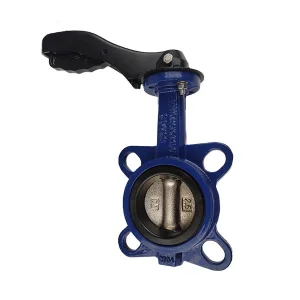
Cast Iron Body EPDM Hard Back Seat Wafer Butterfly Valve
Product Specs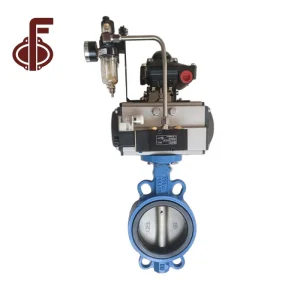
Pneumatic Actuator Wafer Butterfly Valve Assembly
Product Specs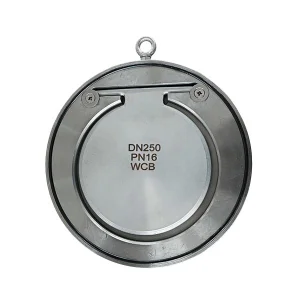
Stainless Steel / WCB Single Disc Check Valve PN16
Product Specs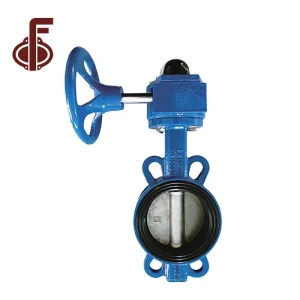
Heavy Duty Worm Gear Wafer Butterfly Valve
Product Specs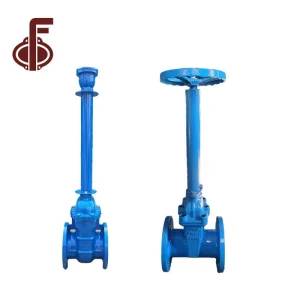
DI PN10/16 Class 150 Long Stem Soft Sealing Gate Valve
Product Specs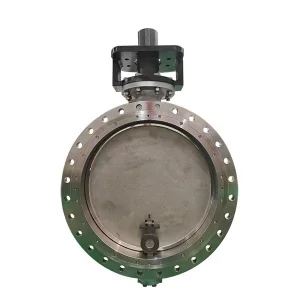
CF8 Double Flange Butterfly Valve DN1000 PN16
Product Specs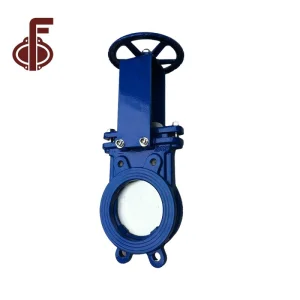
Ductile Iron PN10/16 Wafer Support Knife Gate Valve
Product Specs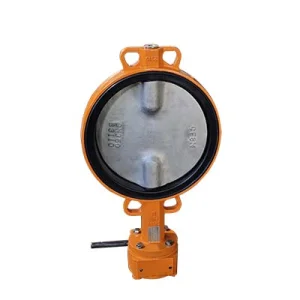
Gear Operated CF8 Disc Double Stem Wafer Valve
Product SpecsStrategic Sourcing of PN16 Butterfly Valves in Global Supply Chains
Modern engineering, procurement, and construction (EPC) conglomerates demand more than unit-level cost parity. In multi-million-dollar infrastructure investments, selecting a verified Chinese valve manufacturer requires comprehensive material traceability, casting integrity, standardized face-to-face dimensions, and automated quality controls.
Total Cost of Ownership (TCO) Metrics
Global fluid distribution systems operate under aggressive duty cycles. Enterprise procurement teams prioritize long-term Mean Time Between Failures (MTBF) over immediate FOB costs. Selecting vulcanized EPDM seats over non-bonded liners reduces friction-induced wear, lowers operating torque, and optimizes the lifecycle sizing of electric and pneumatic quarter-turn actuators.
Metallurgical Verification & Traceability
Structural reliability begins in the foundry. Premium China export facilities leverage automated spectrometer inspection before pouring to verify Ductile Iron QT450-10 / EN-GJS-400-15 chemistry. Every batch includes full EN 10204 3.1 material test certification tracking carbon-silicon ratios, tensile yield strengths, and nodularity percentages exceeding 85%.
Multi-Flange Universal Drill Alignment
To satisfy multi-regional export schedules across North America, the European Union, the Middle East, and Asia, modern PN16 wafer butterfly valves utilize slotted universal body drilling. This design interfaces directly with EN 1092-1 PN10/PN16, ASME B16.5 Class 150, BS 10 Table E, and JIS B2239 10K flanges without modifying on-site pipe bolt patterns.
Systemic Engineering Solutions Across Critical Infrastructure
Operating at nominal 16 bar (232 PSI) pressure, PN16 butterfly valves represent the workhorse of industrial fluid handling. Below is a comprehensive engineering breakdown of media dynamics, configuration profiles, and material pairings across vital industries.
Water Supply & Desalination
In municipal distribution, raw reservoir intake, and reverse osmosis plants, valves encounter abrasive silts and electrolytic saline solutions. Solution: Epoxy powder electrostatic coating (minimum 250 µm thickness) with WRAS/NSF-61 certified food-grade EPDM liners and Nickel-plated Ductile Iron or Nickel Aluminum Bronze (C95800) discs preventing bi-metallic pitting.
District Cooling & Commercial HVAC
Centralized chiller plants and high-rise hydronic loop circuits necessitate low head-loss profiles and condensation prevention. Solution: Centric wafer valves with extended neck designs allowing 50 mm thermal lagging insulation. Streamlined CF8M disc profiles maximize flow coefficients (Cv values), reducing pump parasitic power consumption across continuous operation cycles.
Chemical & Corrosive Processing
Aggressive acid dilution, solvent transfer, and bleach processing rapidly degrade standard elastomer seats. Solution: Fully encapsulated PTFE/PFA lined butterfly valves featuring virgin fluoropolymer liners backed by resilient silicone or FKM energizers. The disc-shaft assembly is dynamically encapsulated with pure PTFE, isolating metal components completely from active media.
Power Generation & Thermal Plant
Thermal cooling loops and auxiliary steam recovery systems involve dynamic hydraulic surges and cyclical thermal gradients up to 200°C. Solution: High-performance double eccentric or metal-to-metal seated triple offset butterfly valves with SS316 laminated graphite seal rings. These assemblies maintain fire-safe shut-off compliance to ISO 10497 and API 607.
| Component Element | Standard Material Grade | High-Corrosion / Demanding Spec | Operating Temperature | Primary Industrial Sector |
|---|---|---|---|---|
| Valve Body | Ductile Iron (EN-GJS-400-15 / A536 65-45-12) | Cast Steel WCB (1.0619) / CF8M (SS316) | -20°C to +120°C | Water Works, HVAC, General Industry |
| Closure Disc | DI with Nylon 11 Coating / CF8 (SS304) | CF8M, Hastelloy C276, Al-Bronze C95800 | -30°C to +150°C | Seawater, Chemical, Effluent Systems |
| Resilient Seat | EPDM (Drinking Water Certified) | PTFE / R-PTFE, FKM (Viton), High-Temp NBR | -20°C to +200°C | Potable Water, Hydrocarbons, Acids |
| Drive Shaft / Stem | Martensitic SS 416 / 420 (1.4021) | Austenitic SS 316, 17-4PH Precipitation Hardened | -40°C to +250°C | High-Torque Actuated Assemblies |
| Stem Bushing | PTFE-Lined Carbon Steel / Bronze | Self-Lubricating Composite Polymers | -40°C to +200°C | Continuous Modulation Cycles |
A common failure mode in budget PN16 butterfly valves is liner deformation under vacuum or high-velocity turbulent flow (>3.5 m/s). Chinese precision manufacturing facilities resolve this through dovetail tongue-and-groove seat retainers or phenolic hard-back cartridges, which eliminate elastomer elongation and prevent downstream seat dislodgement during partial throttling.
Technological Roadmap: The Next Era of Industrial Valve Manufacturing
The global pipeline industry is pivoting towards digitalization, fugitive emission mitigation, and sustainable metallurgy. Discover how next-generation Chinese valve manufacturing integrates Industry 4.0 automation and green foundry operations.
Smart Actuation & IoT Field Diagnostics
Integration of ISO 5211 direct-mount automation pads paired with brushless DC smart electric actuators. These units feature embedded Modbus/Profibus diagnostics tracking torque-signature spikes, positioning micro-deviations, and preventative seal degradation alerts before hydraulic line failure occurs.
Fugitive Emissions Control (ISO 15848-1)
Stringent global carbon-neutrality initiatives require valves to prevent volatile organic chemical (VOC) leakage. Modern PN16 assemblies incorporate live-loaded stem seals with twin O-ring barriers and energizing Belleville washers to satisfy ISO 15848-1 Class B tightness under dynamic thermal cycles.
Hydrodynamic Low-Cavitation Geometries
Utilizing computational fluid dynamics (CFD) modeling, valve discs are cast with hydrofoil cross-sections. This minimizes downstream eddy generation, significantly elevates pressure recovery coefficients, and prevents localized cavitation erosion when valves operate in modulating 45° to 70° intermediate arcs.
Commercial Landscape: Why China Leads Global PN16 Valve Exporting
China’s dedicated valve manufacturing clusters—particularly within the Tianjin and Zhejiang industrial corridors—deliver unparalleled supply chain scale, shortened lead times, and comprehensive tooling customization for international distributors and OEM brand owners.
Cluster Synergies & Scale Efficiency
Tier-1 Chinese factories operate fully integrated ecosystems: on-site automated green-sand casting lines, robotic CNC machining cells, rubber vulcanization workshops, and electrostatic powder coating plants located within an hour of major international deep-water seaports. This vertical integration cuts standard production cycles by 40% compared to Western counterparts.
Comprehensive OEM/ODM Engineering
Beyond standard catalog models, leading factories support turnkey private labeling. From custom cast-in logo nameplates, tailored paint schemes (RAL colors for fire protection or municipal water), custom face-to-face dimensions to proprietary stem keyway profiles, OEM buyers receive drop-in ready products matching existing catalog designs.
Rigorous International Compliance
Established Chinese exporters operate certified ISO 9001, ISO 14001, and ISO 45001 management frameworks. Products bear full CE marking under the European Pressure Equipment Directive (PED 2014/68/EU Module H) and undergo third-party witness testing by SGS, Bureau Veritas, or TÜV for pressure holding, hydrostatic burst thresholds, and coating holiday tests.
Specialized Large-Diameter, Actuated & High-Pressure Valves
Configured for demanding municipal networks, severe industrial slurry lines, and automated chemical control. Review our high-specification flanged, actuated, and resilient-seated valve series.
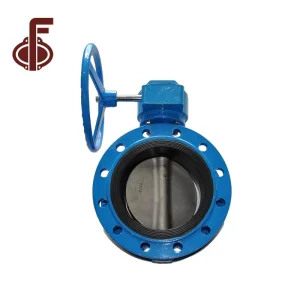
DI SS304 PN10/16 CL150 Double Flange Butterfly Valve
Product Specs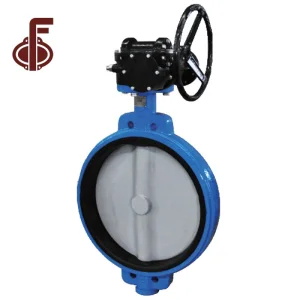
Gear Wafer Butterfly Valve with Nylon Covered Disc
Product Specs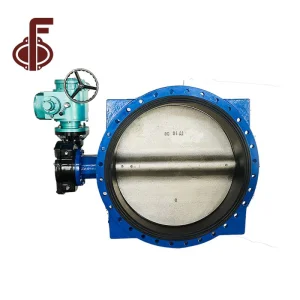
Large Diameter Electric Flange Butterfly Valve
Product Specs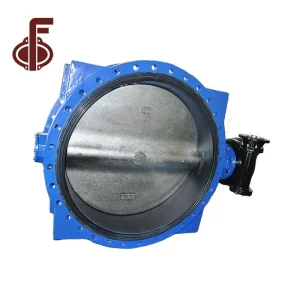
DN1200 Flanged Butterfly Valve with Supporting Legs
Product Specs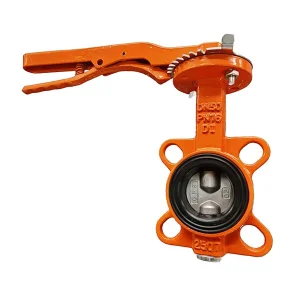
DN50 Dovetail Seat Double Shaft Wafer Valve PN16
Product Specs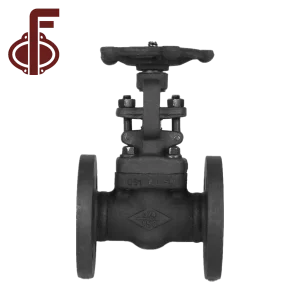
High-Pressure Forged Steel Gate Valve (Class 1200)
Product Specs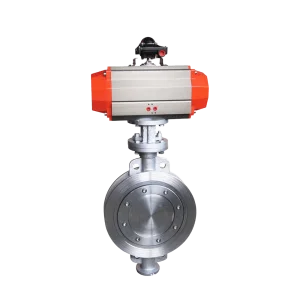
Pneumatic Wafer Triple Offset Butterfly Valve
Product Specs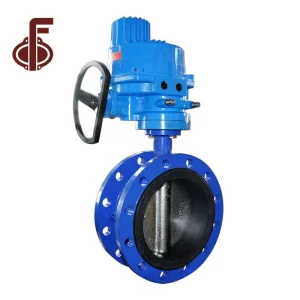
Intelligent Electric Actuator Flange Butterfly Valve
Product SpecsPressure Testing Protocols & Localized Compliance Guarantee
Quality is non-negotiable when dealing with pressurized fluid pipelines. All PN16 valves engineered for export undergo individual, multi-step non-destructive examination (NDE) and hydrostatic testing before packaging.
Hydrostatic Shell Integrity (2.4 MPa)
Each valve body is subjected to a hydrostatic shell pressure 1.5 times the rated cold working pressure (24 bar / 2.4 MPa) for a dwell duration established by ISO 5208. During this test, zero structural deformation, casing weepage, or porosity leakage through casting walls is tolerated.
High-Pressure Seat Tightness (1.76 MPa)
Conducted at 1.1 times nominal rating (17.6 bar / 1.76 MPa) with water, and low-pressure pneumatic seal testing at 0.6 MPa with dry air. Resilient seated butterfly valves must achieve Rate A (Zero Allowable Leakage) per EN 12266-1 with no visible bubbles or drops during bidirectional trials.
Export Packaging & Marine Logistics
International freight exposes valves to oceanic humidity and transit vibration. Valves feature heavy flange-face edge protectors, inner vapor corrosion inhibitor (VCI) desiccants, moisture-barrier shrink-wrapping, and heavy-duty ISPM-15 heat-treated plywood crates engineered for fork-pocket loading.
Frequently Asked Questions: Technical Engineering & Export Procurement
Key technical answers curated by senior fluid mechanics engineers to address common questions from piping designers, EPC contractors, and global procurement officers.
What is the exact working pressure and flange standard compliance of PN16?
PN16 denotes a nominal cold working pressure rating of 16 bar (approximately 1.6 MPa or 232.06 PSI) at reference temperatures between -10°C and +120°C (depending on seat elastomer). In Chinese export manufacturing, PN16 butterfly valves conform precisely to flange drilling standards EN 1092-2 PN16, DIN 2501 PN16, BS 4504 PN16, and ISO 7005-2, while frequently accommodating ASME B16.5 Class 150 pipe connections via universal multi-hole patterns.
Why choose Ductile Iron (GGG40/QT450) over Grey Cast Iron (GG25/HT200) for PN16 lines?
Grey Cast Iron possesses flake graphite microstructure, leading to low tensile strength (200-250 MPa) and high brittleness under water-hammer surges. Ductile Iron features nodular/spheroidal graphite, yielding a minimum tensile strength of 400-450 MPa and >10% elongation. For PN16 duty cycles subjected to hydraulic shock, thermal expansion, and mechanical vibration, Ductile Iron provides vital fracture resistance and meets modern EN/AWWA specifications.
What are the mechanical distinctions between Pinned and Pinless stem connections?
Pinned disc-to-stem joints utilize taper pins penetrating both the disc hub and shaft. While robust in basic manual operation, pins can become potential leak paths or shear under high cycle stress. Pinless designs employ a machined double-D, square, or splined drive internal to the disc hub. Pinless construction isolates the stem completely from the media, reduces operating torque by up to 20%, simplifies field liner replacement, and eliminates galvanic crevice corrosion.
How do Wafer, Lug, and Double Flanged body styles differ in installation?
Wafer valves are clamped between two companion flanges with long threaded studs; they are economical, compact, and lightweight, but cannot be used for dead-end pipe termination. Lug valves have individual threaded bolt holes surrounding the body, permitting independent flange bolt-up and allowing downstream pipe disassembly under line pressure. Double Flanged valves feature integral flanges on both faces, offering maximum rigid mechanical support for large diameters (DN600-DN1600) and preventing piping strain transfer to the disc seal.
How does liner vulcanization compare to replaceable cartridge seats?
Bonded vulcanized seats are directly cured onto the valve body casting, creating a monolithic seal that cannot shift or buckle under full line vacuum or high turbulent velocity (>4 m/s). Replaceable cartridge seats utilize a rigid phenolic or aluminum backup ring; while they allow economical maintenance re-sleeving in local workshops without purchasing a new valve body, they require strict pipeline velocity monitoring to prevent seat collapse.
What inspection documentation accompanies an export shipment of PN16 valves?
Every compliant shipment includes a comprehensive QA/QC dossier: EN 10204 Type 3.1 Inspection Certificates specifying spectral chemical analysis and physical tensile/hardness tests; hydrostatic test certificates (Shell 2.4 MPa, Seat 1.76 MPa); coating dry film thickness (DFT) magnetic gauge reports; and CE Declarations of Conformity under PED 2014/68/EU. Third-party inspection reports (BV, SGS, Lloyd's Register) are readily accommodated during pre-shipment FAT trials.
