
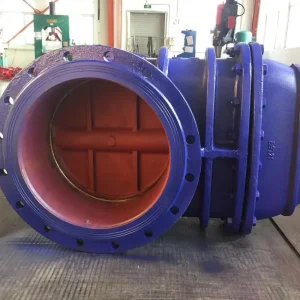
Direct OEM / ODM Portfolio (Series I)
Engineered Industrial Flow Solutions
Precision-machined resilient seated check, gate, butterfly, and customized isolation valves certified for mission-critical liquid and gas installations worldwide.
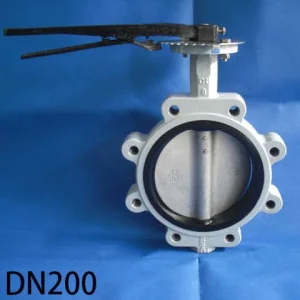
OEM Casting Iron Body CF8 Disc Lug Type Butterfly Valve Manufacturers, Factory
Explore Specifications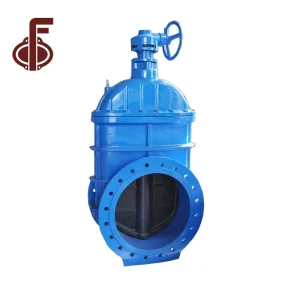
OEM DI PN10/16 class150 Soft Sealing Gate Valve Manufacturers, Exporter
Explore Specifications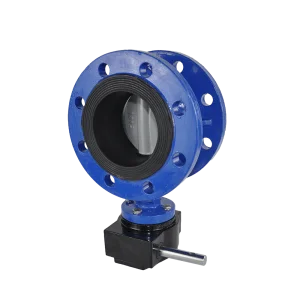
China AWWA C504 Centerline Butterfly Valve Factory, Exporter
Explore Specifications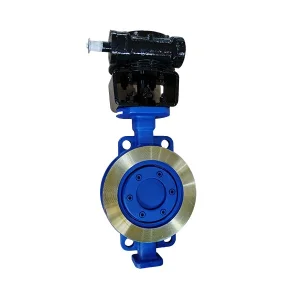
China DN200 WCB Wafer Triple Offset Butterfly Valve with Worm Gear Manufacturers, Exporter
Explore Specifications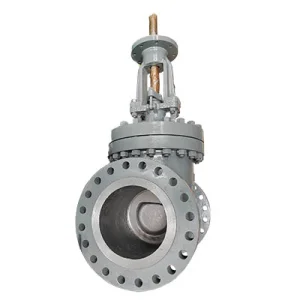
China DN600 WCB OS&Y Rising Stem Gate Valve Manufacturer, Exporter
Explore Specifications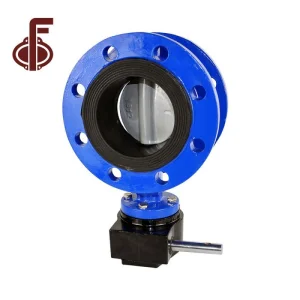
China Ductile Iron Body Worm Gear Flange Type Butterfly Valve Manufacturers, Exporters
Explore Specifications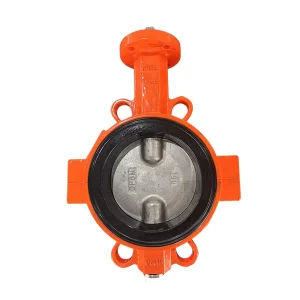
OEM 5" WCB Two PCS Split Body Wafer Butterfly Valve Exporter, Exporters
Explore Specifications
Metallurgical & Polymeric Engineering
The Mechanics of Soft Seated Check Valves
Evaluating hydrodynamic closure mechanisms, differential pressure dynamics, and polymer-to-metal contact mechanics for certified zero-leakage pipeline protection.
Zero-Leakage Sealing Architecture
Unlike metal-to-metal seating which allows allowable leakage under API 598 or ISO 5208 Rate D, soft seated check valves utilize vulcanized or mechanically retained elastomeric liners (EPDM, NBR, FKM, PTFE). This achieves absolute bubble-tight shutoff (ISO 5208 Rate A) even under minuscule differential backpressure.
- Elimination of reverse seepage in high-purity systems
- Self-compensating seat profiles under cyclic pressure swings
- Resilience against microscopic entrained particulates
Dynamic Anti-Slam Mitigation
Water hammer causes massive kinetic shockwaves when reverse flow velocities collide with an abruptly slamming disc. Modern China check valve factories integrate torsional dual-spring assist and tilted seat geometry (55° to 70° angles) to drastically shorten disc travel distance, achieving closure before flow velocity reverses across zero.
- Deceleration-responsive disc kinetics
- Torsional spring pre-loading (Inconel X-750 / SS316)
- Pressure surge suppression in critical pump headers
Seat Polymer Formulation Matrix
Elastomer selection determines operational life, chemical resistance, and continuous thermal rating. Leading manufacturers optimize curing accelerators and crosslinking density to mitigate compression set and fluid swelling across aggressive petrochemical and saline operating environments.
- EPDM: Potable water, HVAC, glycol solutions (-20°C to +120°C)
- NBR: Hydrocarbons, lubricants, compressed air (-10°C to +82°C)
- Viton (FKM): Aromatic solvents, acidic media (-10°C to +200°C)
Resilient Seat Material Performance Matrix
| Polymer Seat Type | Standard Compound Code | Continuous Temp Range | Kinematic Medium Compatibility | Standard Compliance | Leakage Class (ISO 5208) |
|---|---|---|---|---|---|
| EPDM (Food Grade) | EN-EPDM-70 | -20°C to +120°C | Municipal Potable Water, Treated Effluent, Low-Pressure Steam | WRAS / NSF/ANSI 61 / FDA CFR 177.2600 | Rate A (Zero Bubble) |
| Nitrile (NBR / Buna-N) | ISO-NBR-75 | -15°C to +85°C | Crude Oil, Refined Fuel, Sludge, Compressed Gases, Animal Fats | API 594 / EN 12334 / ISO 19921 | Rate A (Zero Bubble) |
| Fluoroelastomer (FKM / Viton®) | ASTM-FKM-80 | -10°C to +200°C | Aromatic Hydrocarbons, Concentrated Acids, Petrochemical Distillates | API 6A / NACE MR0175 / ISO 15156 | Rate A (Zero Bubble) |
| Polytetrafluoroethylene (PTFE) | Virgin PTFE / TFM | -40°C to +180°C | Chlorine gas, Aggressive Caustics, Ultra-Pure Process Water | FDA / USP Class VI / REACH | Rate A / Rate B |
Global Commercial & Macro-Engineering Landscape
Macro Solutions Across Critical Infrastructure
How Tier-1 Chinese check valve foundries resolve hydraulic transient spikes, reduce parasitic energy head loss, and secure water security across the globe.
Potable Water Mega-Networks
In cross-country municipal distribution lines, pump trip-outs create severe low-pressure rarefaction followed by high-pressure transient spikes. Soft seated rubber-flap swing check valves, designed with 45-degree angled seats, shorten travel by 50%, extinguishing surges before pump impeller damage occurs.
SWRO Desalination Plants
Seawater Reverse Osmosis operates at pressures reaching 70 to 85 bar with hypersaline brine. Chinese factories produce Super Duplex (2507) and Al-Bronze dual plate check valves equipped with vulcanized Viton seats to eliminate crevice corrosion and micro-leakage across membrane manifolds.
HVAC & District Cooling
Modern commercial skids and hyper-scale data center chillers require low-cracking pressure check valves to reduce recurring pumping power consumption. Precision wafer-style spring-loaded check valves reduce head loss ($C_v$ optimization) by over 18% compared to legacy swing valves.
Wastewater & Slurry Lift Stations
Fibrous suspended solids and grit cause traditional swing check discs to hang up. Soft seated ball check valves—featuring a self-cleaning vulcanized NBR ball that rotates freely during fluid transit—guarantee uninterrupted reverse flow closure without stringy accumulation.
99.98%
Hydrostatic First-Pass Yield
< 0.05s
Dynamic Anti-Slam Response Time
100,000+
Full Cycle Endurance Verified
100%
Zero Cavity Bubble Tightness
Supply Chain Advantage & Engineering E-E-A-T
Why Global EPCs Rely on China Check Valve Foundries
An unvarnished assessment of integrated metallurgical supply chains, advanced CNC machining tolerances, and stringent quality governance across Chinese industrial valve clusters.
Full Metallurgical Traceability
Established Chinese manufacturers like Tianjin Zhongfa Valve Co., Ltd. (ZFA)—operating continuously since 2006—maintain in-house spectrographic analysis. Each heat batch of Ductile Iron (QT450-10 / GGG40), WCB, or CF8M stainless steel receives an EN 10204 3.1 chemical and mechanical inspection certificate.
Precision Tooling & Vulcanization
Soft seats require micron-level mold precision to ensure consistent adhesion between the cast body recess and the elastomeric liner. Utilizing high-tonnage vacuum compression molding, China check valve factories achieve thermal vulcanization peel strengths exceeding 14 N/mm, eliminating liner collapse under high-velocity backflow.
Global Compliance & Multi-Standard Tooling
Chinese manufacturing facilities have eliminated re-tooling lead times by building multi-standard flange patterns (ASME Class 125/150, EN 1092-2 PN10/PN16/PN25, JIS 10K/16K, AS 2129 Table D/E) directly into production dies, empowering distributors to reduce inventory overhead.
Verified 5-Stage Factory Production Workflow
01
Spectrographic Melt Audit
Verification of C, Si, Mn, P, S and alloying elements to guarantee ductile elongation >10% and tensile strength >450 MPa.
02
CNC Coordinate Machining
Precision turning of body faces, hinge pin bores, and disc seat angles to within ±0.015 mm tolerances.
03
Elastomer Adhesion Molding
High-vacuum vulcanization of EPDM/NBR to the casting body or disc edge with post-cure testing.
04
Hydrostatic Proof Testing
1.5× PN shell test and 1.1× PN resilient seat backpressure test according to ISO 5208 and API 598 protocols.
05
Corrosion Barrier Coating
Automated electrostatic fluid-bed epoxy application (min 250 µm thickness) conforming to DIN 30677-2 / GSK.
Rigorous Field Verification
Compliance Framework & Installation Scenarios
Detailed guidance for piping design engineers navigating installation orientations, minimum straight-pipe runs, and international statutory certifications.
Vertical Upflow Installation
When installing check valves in vertical runs with upward fluid flow, dual plate wafer and silent nozzle check valves operate flawlessly due to balanced internal spring kinetics. Swing check valves must only be utilized in vertical pipes if specifically engineered with counterweight levers to counteract gravity upon flow cessation.
Upstream Flow Conditioning
Severe turbulence upstream from elbows, eccentric reducers, or throttling control valves causes high-frequency disc flutter and premature elastomer seat gouging. Always specify a minimum of 5 to 10 pipe diameters (5D - 10D) of uninterrupted straight pipe between pump discharges and soft seated check valves.
Statutory Project Approvals
ZFA products comply seamlessly with global engineering specifications. Full audit trails include CE marking under the Pressure Equipment Directive (PED 2014/68/EU), ISO 9001:2015 Quality Management certification, WRAS potability certification, and hydrostatic test certs to AWWA C508 and API 598.
| Check Valve Valve Architecture | Permissible Orientations | Head Loss Profile ($C_v$) | Water Hammer Risk | Maintenance Lifecycle |
|---|---|---|---|---|
| Dual Plate Wafer Check | Horizontal, Vertical Upflow | Medium-High ($C_v$ 45–60% of open bore) | Extremely Low (Spring assist shut) | Replaceable vulcanized seat insert (5-8 yrs) |
| Rubber Flap Swing Check | Horizontal Preferred | Very Low (Full waterway >90% open) | Low (Short 35° stroke flap) | Integrated encapsulated flap replacement (7-10 yrs) |
| Silent Axial Nozzle Check | Universal (Horizontal / Vertical) | Moderate (Streamlined center body) | Negligible (Fastest dynamic response) | Internal guide bushing overhaul (10+ yrs) |
| Resilient Ball Check | Horizontal, Vertical Upflow | Low (Self-clearing vortex chamber) | Moderate (Gravity/fluid return driven) | Rapid ball swap via top bonnet (3-5 yrs) |
Next-Generation Fluid Control
Technology Roadmap & Future Outlook
Pioneering AI-driven computational fluid modeling, nano-reinforced elastomers, and integrated acoustic telemetry for proactive lifecycle asset health.
Smart IoT Check Valves with Acoustic Sensors
Traditional non-return valves are passive components operating blindly inside closed pipes. Next-gen prototypes integrate non-intrusive piezo-electric acoustic emission sensors into the valve body to track seat contact velocity, detect impending spring fatigue, and instantly pinpoint cavitation inception.
Graphene-Enhanced Elastomer Formulations
R&D partnerships across Chinese universities have pioneered graphene-doped EPDM and hydrogenated nitrile (HNBR) seat rings. Graphene nanoplatelet reinforcement increases tear resistance by 40% and reduces chemical swelling from aggressive chloramines, extending service life in municipal networks beyond 15 years.
Carbon-Neutral Foundry Transition
Leading factories in Tianjin and Zhejiang valve manufacturing belts are replacing traditional coke-fired cupolas with automated medium-frequency induction electric furnaces. Combined with green sand recycling and zero-VOC waterborne epoxy coatings, Scope 1 and Scope 2 embodied carbon is reduced by 32%.
Procurement & Engineering Solutions
Frequently Asked Questions
Clarifying critical design trade-offs, testing standards, and operating limits with Tianjin Zhongfa Valve engineering specialists.
Soft seated check valves incorporate resilient elastomeric or fluoropolymer liners (such as EPDM, NBR, or Viton) directly vulcanized or precision-locked into the valve body or disc profile. This design achieves absolute zero-leakage closure conforming to ISO 5208 Rate A and API 598 standards, even under near-zero differential pressure. Metal-seated check valves rely on lapped bronze or stainless steel faces, which typically allow permissible leakage under Rate D or Rate C. Furthermore, resilient elastomer seats dampen disc closure impact, significantly dampening acoustic noise and mechanical fatigue.
Water hammer occurs when fluid reversal slams an open valve shut, converting kinetic momentum into massive pressure shockwaves. A dual plate wafer check valve eliminates this through two dynamic mechanisms: first, the hinged plates cover half the pipe diameter each, cutting travel distance by more than 50% compared to a conventional swing disc; second, independent torsional springs proactively push both plates toward the seat as flow slows, reaching complete closure milliseconds before forward flow reverses across the zero-velocity threshold.
Cracking pressure depends on orientation, disc mass, and spring pre-loading. For horizontal standard dual-plate wafer check valves, typical spring cracking pressure is engineered between 0.05 bar and 0.15 bar (0.7 to 2.2 psi). Rubber flap swing check valves without external counterweights crack at 0.02 bar under low-head conditions. When vertical upflow lines are involved, our engineers calibrate spring torque to guarantee rapid closure while keeping forward parasitic head loss under 0.25 bar at nominal flow velocities ($2.5 \text{ m/s}$).
Tianjin Zhongfa Valve Co., Ltd. maintains audited certifications including ISO 9001:2015 Quality Management Systems and CE marking under the European Union Pressure Equipment Directive (PED 2014/68/EU). All valves are built and tested in accordance with international valve standards including ASTM, ANSI, ISO, BS EN, DIN, GOST, JIS, and KS. Full inspection certificates conforming to EN 10204 Type 3.1 are provided with project documentation packages.
Yes, provided the proper valve architecture is specified. Dual-plate wafer check valves should be avoided in raw sewage or slurries containing long stringy fibers because particles can wrap around the central hinge pin. Instead, specify Resilient Ball Check Valves or Ductile Iron Rubber Flap Check Valves. Rubber flap valves feature an unhindered 100% full-bore flow area with a 45-degree angle seat, and ball check valves feature a self-cleaning elastomeric-coated steel ball that moves completely out of the flow stream during pumping.
Direct OEM / ODM Portfolio (Series II)
Specialty Check, Butterfly & Pipeline Protection Valves
Explore heavy-duty isolation and backflow prevention valves engineered with certified metallurgy and precision resilient seating technology.
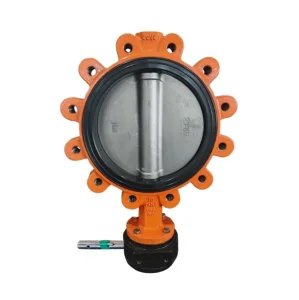
OEM Replaceable Seat CF8M Disc Lug Butterfly Valve DN250 PN10 10Inch Manufacturer, Factories
Explore Specifications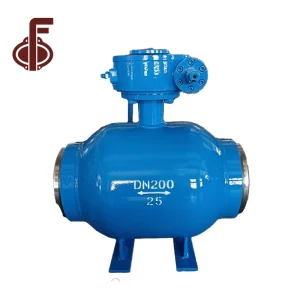
China Fully WELDED STEEL BALL VALVE Exporter, Exporters
Explore Specifications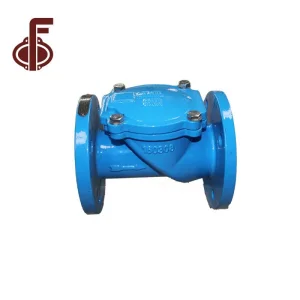
China Ductile Cast Iron Rubber Flap Check Valve Factories, Exporter
Explore Specifications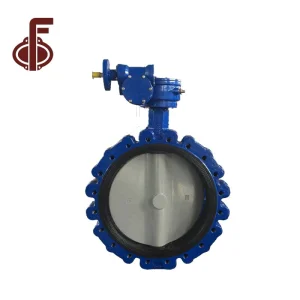
OEM Worm Gear DI Body Lug Type Butterfly Valve Manufacturers, Exporter
Explore Specifications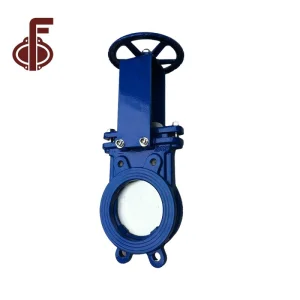
OEM Ductile iron PN10/16 wafer Support Knife Gate Valve Manufacturer, Factories
Explore Specifications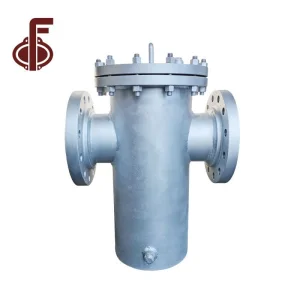
China PN10/16 150LB DN50-600 Basket Strainer Manufacturers, Exporters
Explore Specifications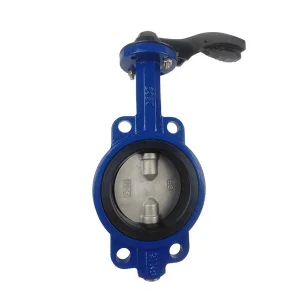
China DN100 4inch Hard Back Seat Wafer body Butterfly Valve Exporter, Exporters
Explore Specifications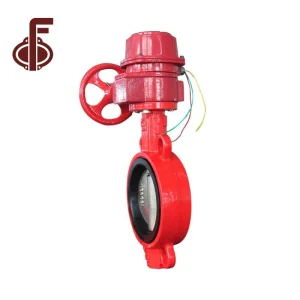
China Wafer Type Fire Signal Butterfly Valve Factory, Exporters
Explore Specifications
Direct Foundry Cooperation
Request Direct Factory Engineering Datasheets & CAD Files
Connect directly with Tianjin Zhongfa Valve Co., Ltd. (ZFA) technical sales engineers. Receive detailed torque curves, flow coefficients ($C_v$), 2D/3D STEP models, and commercial quotes within 24 hours.
