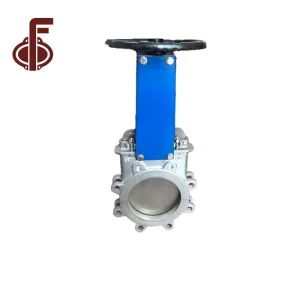
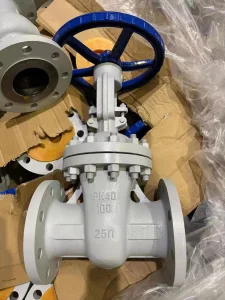
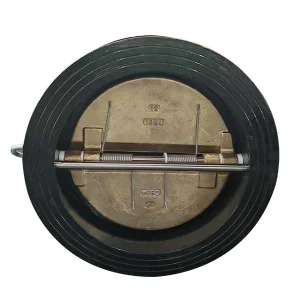
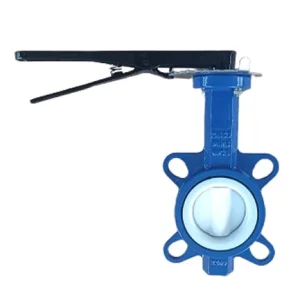
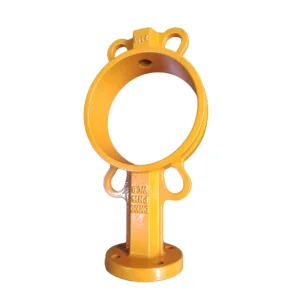
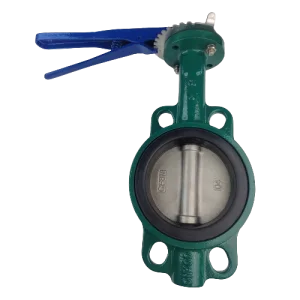
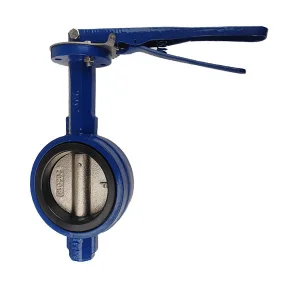
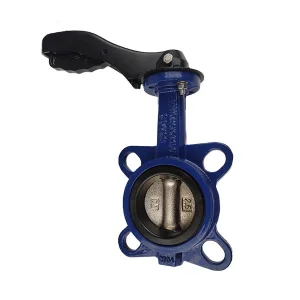
Featured Industrial Valve Portfolio
Direct supply of resilient-seated, metal-sealed, and automated valve solutions conforming to ASTM, ANSI, DIN, BS, and ISO specifications.
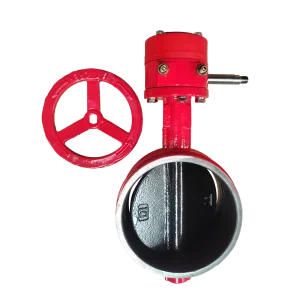
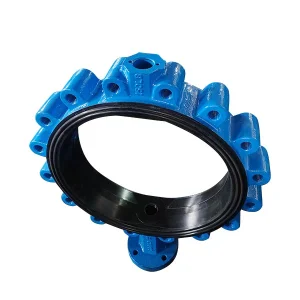
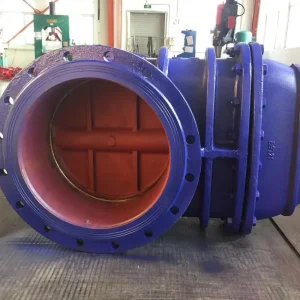
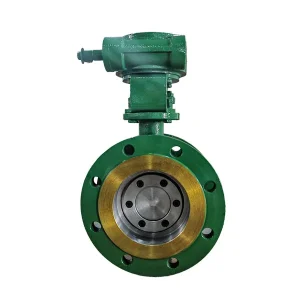
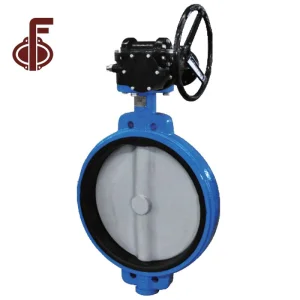
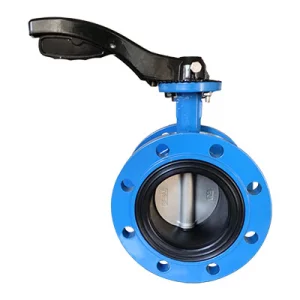
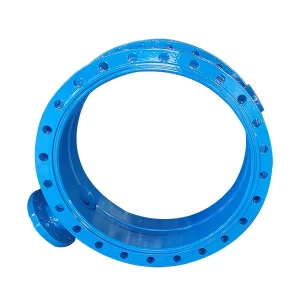
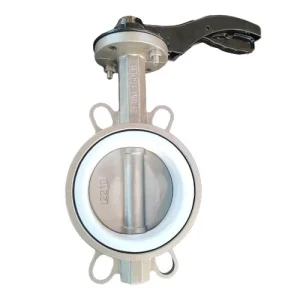
Industrial Footprint & Verification Metrics
Demonstrated manufacturing reliability, technical precision, and worldwide project integration since 2006.
Technical White Paper: SS 304 Material Science & Flow Dynamics
A comprehensive examination of austenitic alloy behavior, pressure retention characteristics, and precision engineering criteria.
Metallurgical Chemistry of CF8 / 304
SS 304 (cast equivalent ASTM A351 CF8) features a minimum of 18% Chromium and 8% Nickel. This stoichiometric formulation establishes a stable chromium oxide (Cr2O3) passivation surface film. This protective barrier offers superior resistance against oxidation, atmospheric pitting, and organic chemicals up to 400°C without risk of premature structural fatigue.
Hydrodynamic Torus Disc Dynamics
ZFA engineers employ high-performance hydrofoil profile geometry across all SS 304 disc castings. Computational Fluid Dynamics (CFD) optimizations reduce cavitation indices and drag coefficients ($C_d$). This aerodynamic architecture preserves high flow capacity coefficients ($K_v$ / $C_v$) and reduces head loss across high-velocity pipeline runs.
Stem Sealing & Anti-Blowout Security
Valves are engineered with heavy-duty blowout-proof stems conforming to EN ISO 5211 direct-actuation standards. Utilizing high-strength duplex or 410/416 stainless steel drive stems with precision dual O-ring secondary seals prevents atmospheric fugitive emissions in compliance with international environmental directives.
| Performance Criterion | Cast Iron / Ductile Iron (DI) | SS 304 (CF8 / 1.4301) | SS 316 (CF8M / 1.4408) |
|---|---|---|---|
| Chloride Resistance | Low (Rapid pitting without specialized lining) | Moderate (< 200 ppm Chlorides) | High (< 1000 ppm Chlorides, 2-3% Molybdenum) |
| Operating Temperature | -10°C to 120°C (Elastomer bound) | -40°C to 400°C (Extended with metal seating) | -60°C to 550°C (High-temperature offset models) |
| Sanitary Suitability | Unsuitable for pristine potable / hygienic lines | Standard for food, beverage & potable fluids | High-purity pharma & aggressive chemical refining |
| Capital Cost vs Life-Cycle | Lowest initial capex, higher replacement rate | Optimal lifecycle economy across non-marine apps | Higher initial capital investment |
Strategic Edge of Chinese Industrial Manufacturing Hubs
Combining world-class supply ecosystem synergy, digital machining infrastructure, and strict quality verification protocols.
Integrated Foundry & Silica-Sol Casting
By leveraging advanced automated investment casting (silica-sol processes) directly in Northern Chinese valve manufacturing clusters, our factories eliminate inner metallurgical voids, porosity, and surface irregularities. This delivers high surface smoothness, reducing elastomer seat friction and torque loads.
CNC Dimensional Repeatability
Every critical sealing face, stem journal, and flange alignment ear is machined via multiaxis computer numeric control (CNC) centers. Tolerances are held within micrometric levels, guaranteeing that replacement seats, discs, or shafts fit without field adaptation.
Scale Economics & Supply Chain Agility
China's comprehensive supply ecosystem offers raw austenitic alloys, polymer elastomers (EPDM, PTFE, Viton), precision actuators, and export logistics in close proximity. This ecosystem reduces procurement lead times by up to 45% compared to European or North American operations.
Global Industry Megatrends & Macro-Engineering Solutions
Adapting flow control hardware to smart industrial infrastructure, zero-emission objectives, and automated process pipelines.
Industrial Automation & Smart Actuation
Modern process plants are transitioning from manual hand-lever and gear controls toward IoT-connected smart actuators. Our SS 304 valves feature standardized ISO 5211 mounting flanges compatible with pneumatic single/double acting pistons and multi-voltage modulating electric actuators with 4-20mA feedback loops.
Municipal Water Treatment & Desalination RO
Growing global clean-water initiatives demand zero chemical leaching. SS 304 provides an inert boundary for raw, potable, and clarified greywater distribution, resisting chlorination and biological film formation far better than coated cast iron units.
Food, Beverage & Bioprocess Facilities
Strict hygiene directives require smooth interior finishes to eliminate bacteriological pocketing. Our mirror-polished SS 304 discs with FDA-compliant food-grade EPDM or PTFE seat liners operate reliably in CIP (Clean-in-Place) and SIP (Steam-in-Place) sanitization cycles.
HVAC Hydronics & District Cooling
Chilled water systems in hyper-scale commercial and data-center facilities operate continuously under condensation conditions. SS 304 eliminates exterior rust formation, valve-stem binding, and seal failure across decades of non-stop chilled loop cycling.
Fugitive Emission & Green Energy Transition
Global regulatory frameworks such as EPA Method 21, ISO 15848-1, and TA-Luft necessitate near-zero volatile organic chemical leakage. ZFA's precision CNC machining and dual-barrier stem seals guarantee reliable sealing against environmental emission loss.
Global EPC & Procurement Verification Protocol
Essential checklist standards for supply chain teams sourcing stainless flow equipment directly from Chinese manufacturers.
1. Material Test Reports (EN 10204 3.1)
Demanding certified chemical composition analysis (via optical emission spectrometers) guarantees genuine 18/8 Chrome-Nickel levels, guarding against common market downgrades to inferior non-standard scrap meltings.
2. Hydrostatic Shell & Seat Integrity
Valves must undergo 100% factory hydro-testing under API 598 or EN 12266-1 protocols: Shell testing at 1.5× PN rating and bi-directional closure seat leakage testing at 1.1× PN rating with zero acceptable bubble passage.
3. Dimension & Flange Compatibility
Verifying face-to-face dimensions against ISO 5752, EN 558, or API 609 allows bolt-hole patterns to seamlessly interchange between ANSI Class 150, DIN PN10/16, and JIS 10K flanges without project rework.
Technical FAQs & Engineering Selection
In-depth responses to frequent technical queries submitted to ZFA Valve application engineering teams.
What differentiates cast SS 304 (CF8) from forged SS 304 in butterfly valves?
CF8 is the cast alloy designation under ASTM A351 corresponding to wrought AISI 304. For butterfly valve bodies and large diameter disc profiles, precision investment casting (silica sol) offers superior geometric versatility for hydrodynamic flow profiles, internal reinforcing ribs, and uniform wall thicknesses. Forged SS 304 is typically reserved for stems, shafts, and small compact high-pressure ball valves where directional grain flow provides added torsional yield strength.
When should engineers specify a Wafer type vs. Lug type SS 304 butterfly valve?
Wafer body valves are designed for clamping between two pipe flanges with long through-studs. They represent the lightest, most economical option. However, Lug type butterfly valves feature individually threaded female bolt holes around the perimeter. This allows the valve to be installed for dead-end service or to enable downstream pipe disassembly while maintaining upstream pressure—crucial for maintenance operations in commercial HVAC, power plants, and chemical headers.
How does seat material selection alter the performance of an SS 304 valve?
While the SS 304 body and disc manage structural pressure and chemical attack, the resilient or rigid seat defines cycle life and sealing integrity. Resilient EPDM is ideal for clean, potable, and HVAC water circuits (-20°C to +120°C). NBR (Buna-N) provides excellent fuel and hydrocarbon stability. Virgin or glass-reinforced PTFE seats accommodate aggressive chemical processing and sanitary biopharma fluids (-20°C to +180°C). For applications beyond 200°C, triple-eccentric metal-to-metal seating configurations are recommended.
Can SS 304 butterfly valves handle sea water or marine coastal atmospheres?
SS 304 functions well in general ambient marine air, but is susceptible to crevice corrosion and pitting in stagnant or high-concentration chloride environments such as raw seawater. In continuous seawater exposure, ZFA recommends specifying SS 316 (CF8M with 2-3% Molybdenum), Super Duplex (2507), or Nickel Aluminum Bronze (C95800) to ensure reliable operational lifespans.
What quality verification documentation accompanies ZFA Valve shipments?
Standard quality documentation provided with factory dispatches includes EN 10204 Type 3.1 Material Test Reports (MTRs) detailing chemical spectrometry and mechanical tensile/elongation properties, hydrostatic shell and seat pressure test certificates (API 598/EN 12266), CE Declaration of Conformity, and ISO 9001 compliance sheets.
Comprehensive Pipeline Flow Control Models
Explore the complete range of complementary knife gate, check, and high-performance butterfly assemblies.