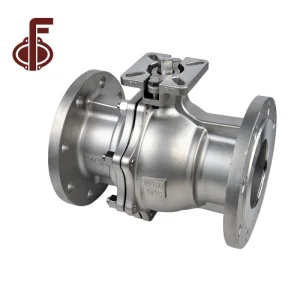
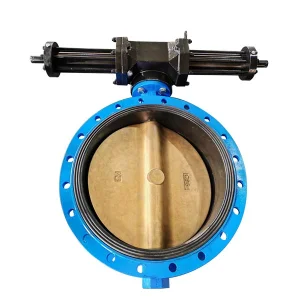
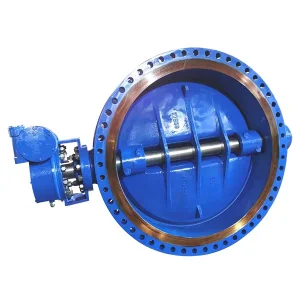
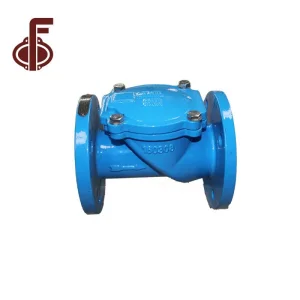
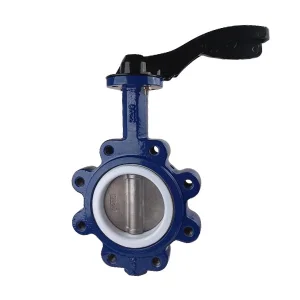
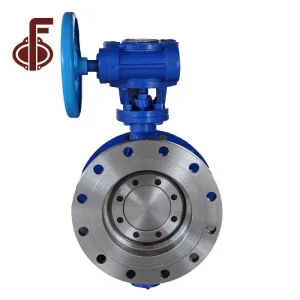
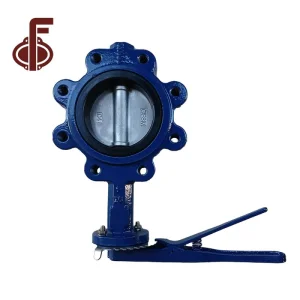
Engineered Flow Control Assemblies (Series I)
Direct supply from Tianjin Zhongfa Valve Co., Ltd. (ZFA Valve). Certified to ISO 9001, CE, and international pressure equipment directives with zero-leakage testing certification.
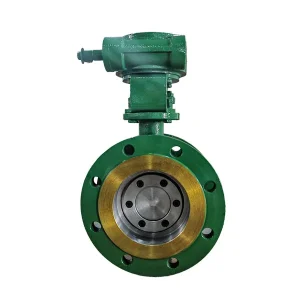
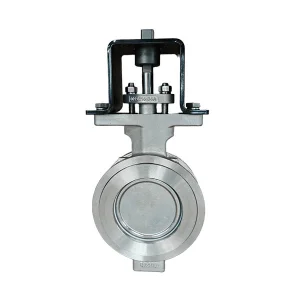
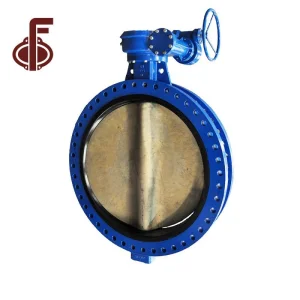
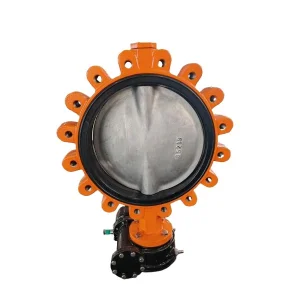
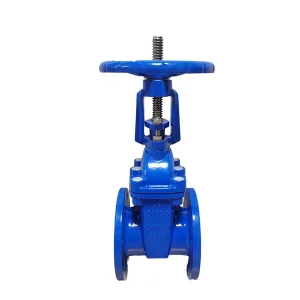
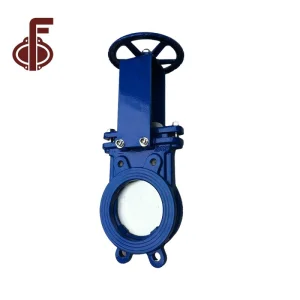
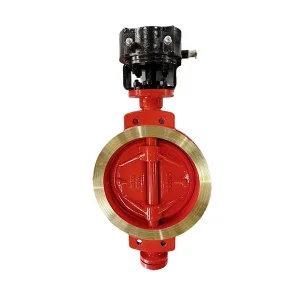
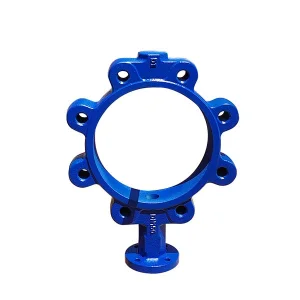
Engineering Cast & Forged Steel Gate Valves: Anatomy of Flow Isolation
A comprehensive treatise on fluid dynamics, metallurgy selection, bolted bonnet mechanics, and fugitive emission mitigation across petrochemical and power installations.
API 600 Wedge Dynamics
Cast steel gate valves engineered with flexible wedge geometries eliminate mechanical binding caused by extreme thermal expansion and pipeline bending stresses. Precision-ground dual guide ribs ensure full centering under high differential pressure.
- Cast carbon steel ASTM A216 WCB / WCC
- Low-alloy ASTM A217 WC6, WC9 for high temperatures
- Austenitic stainless ASTM A351 CF8, CF8M, CF3M
Fugitive Emissions Control
Meeting ISO 15848-1 and API 624 standards via die-formed flexible graphite packing rings with braided anti-extrusion end rings. Surface finish on the stem is cold-burnished to Ra 0.4 µm to guarantee longevity and micro-level sealing tightness.
- Live-loaded Belleville spring packing available
- Integral backseat bushing for in-line repacking
- Class A tightness compliance options
Stellite Overlay Hardfacing
Seat rings are seal-welded or pressed into the body to prevent crevice corrosion. Sealing surfaces are faced with Cobalt-base Alloy (Stellite No. 6 or equivalent) to provide exceptional resistance to galling, high-velocity wire-drawing, and abrasive erosion.
- API 600 Trim 1, 5, 8, 10, 12 available
- Hardness differential between wedge and seat
- Seamless lapping finish below Ra 0.2 µm
Pressure Seal & Bolted Bonnets
Configured with heavy-hex bolted bonnets for ASME Class 150 to 600, or pressure-seal bonnet architecture for ASME Class 900 to 2500 services where system pressure acts against the internal metallic sealing gasket to reinforce joint tightness.
- Spiral wound 316+graphite bonnet gaskets
- Ring Joint Facings (RTJ) Class 600 and above
- Full traceability heat codes on all pressure parts
Macro Industry Solutions & Global Commercial Status
Navigating global supply chain resilience, carbon capture mandates, cryogenic LNG infrastructure, and multi-national trade compliance from Chinese manufacturing centers.
Upstream & Midstream Hydrocarbons
Global demand requires reliable pipeline isolation valves operating under sour service conditions conforming strictly to NACE MR0175 / ISO 15156. Chinese manufacturers have modernized casting foundries with automated resin sand molding lines, ensuring zero internal porosity, high impact toughness at -46°C, and radiographic integrity compliant with ASME B16.34 Annex B.
Decarbonization, CCUS & Hydrogen
Carbon capture, utilization, and storage (CCUS) projects involve dense-phase CO2 transportation at pressures exceeding 150 bar, demanding specialized elastomeric decompression resistance and high-alloy valve trim metallurgy. Chinese exporters now provide specialized austenitics (317L, 904L, Inconel 625) engineered to prevent embrittlement and catastrophic stress-corrosion cracking.
Global Commercial Supply Dynamics
Procurement teams from North America, Europe, the Middle East, and APAC increasingly leverage Chinese manufacturing hubs for large-bore gate valves (DN600 to DN1800) due to unmatched forging capacity and optimized lead times. ZFA Valve bridges western QA/QC rigor with competitive cost structures, ensuring full MTR (EN 10204 3.1) transparency on every heat.
| Parameter / Specification | API 600 Cast Steel Gate Valve | API 602 Forged Steel Gate Valve | DIN 3352 Soft/Metal Seated Gate Valve |
|---|---|---|---|
| Nominal Size Range | NPS 2" – 48" (DN50 – DN1200) | NPS 1/2" – 2" (DN15 – DN50) | DN40 – DN1000 |
| Pressure Classes | ASME Class 150, 300, 600, 900, 1500, 2500 | ASME Class 150, 300, 800, 1500, 2500 | PN10, PN16, PN25, PN40 |
| Standard Bonnet Joint | Bolted Bonnet / Pressure Seal | Bolted, Welded, or Union Bonnet | Bolted Bonnet (F4 / F5 Face-to-Face) |
| Common Body Materials | WCB, LCB, WC6, C5, CF8, CF8M, CD4MCu | ASTM A105, A350 LF2, A182 F11, F22, F316 | Ductile Iron GGG50, Cast Steel GP240GH |
| Testing Standards | API 598, ISO 5208, MSS SP-61 | API 598 | EN 12266-1, ISO 5208 Rate A |
Localized Support, Auditable Compliance & QA Rigor
Strict third-party inspection, documentation transparency, and regional compliance frameworks that eliminate procurement barriers across international borders.
Third-Party TPI Audits
Seamless on-site witness testing and validation with global inspection agencies such as SGS, Bureau Veritas, DNV-GL, TÜV SÜD, and Lloyd's Register. Factory acceptance testing (FAT) strictly covers PMI, ultrasonic testing (UT), magnetic particle testing (MT), and radiographic testing (RT).
Document Packages & Traceability
Every shipment is backed by a full dossier including EN 10204 3.1 Material Test Reports, hydro-test charts, NDT maps, painting inspection records according to ISO 12944 (C3 to C5M marine environments), and declaration of conformity under PED 2014/68/EU.
Regional Engineering Hubs
Supporting EPC contractors with customized stem extensions for cryogenic pits or underground buried services, spur and bevel gear operator integrations, electric actuation protocols (Modbus, Profibus, Foundation Fieldbus), and localized emergency commissioning support.
Custom OEM / Skid Integration
Tailored manufacturing for OEM valve houses and package skid builders. We support customized face-to-face dimensions, specialized drilling patterns (JIS, GOST, EN, ANSI), bespoke epoxy and rilsan coating systems, and private labeling with registered brand stamps.
Global Real-World Industrial Application Scenarios
Demonstrated operational reliability across complex industrial processes, subsea cooling loops, thermal power networks, and extreme chemical environments.
Thermal & Nuclear Power Plants
Main steam header lines operating at 540°C and 160 bar require alloy steel gate valves (ASTM A217 WC9 / C12A) with pressure seal bonnets. Prevents creep deformation while ensuring immediate, absolute shutoff during turbine trip procedures.
Petroleum Refining Hydrotreaters
Hydrodesulfurization units handling high partial pressures of hydrogen at elevated temperatures require API 600 cast steel gate valves built with Trim 8 or Trim 5 hardfacing, guaranteeing zero internal leakage and immunity to hydrogen embrittlement.
Seawater Desalination (SWRO)
High-pressure brine discharge and seawater intake systems require Super Duplex 2507 (ASTM A890 5A) or Nickel Aluminum Bronze (C95400 / C95800) construction, completely eliminating pitting and crevice attack in high-chloride marine environments.
District Heating & Municipal Steam
Large-scale metropolitan central heating systems utilize bolted bonnet OS&Y cast steel gate valves with bypass valves to equalize upstream and downstream line pressures, protecting valve seats against water hammer and thermal shock.
Technology Roadmap: Smart Valves, Digital Twins & Metallurgy
Pioneering the transition from mechanical flow restriction to intelligent, sensor-integrated diagnostic valve ecosystems.
Integrated IoT Valve Health Monitoring
Next-generation gate valves feature embedded acoustic emission sensors and stem torque transducers. Continuous data telemetry monitors gland packing leakage, seat erosion, and thrust dynamics in real time, enabling predictive maintenance schedules before process disruption occurs.
Additive Manufacturing & Cladding
Laser Powder Bed Fusion (LPBF) and robotic PTA (Plasma Transferred Arc) cladding enable localized deposition of Hastelloy C276 and Inconel 625 only along sealing and seat contact zones. Reduces exotic metal consumption while delivering equivalent corrosion resistance at high cost-efficiency.
Cryogenic & LNG Advanced Sealing
For temperatures down to -196°C in LNG bunkering and cryogenic liquefaction, advanced extended bonnets isolate gland packing from boil-off gas. Internal vapor pockets allow cryogenic liquid to gasify, preventing packing freeze-up and keeping operating torques within design limits.
Frequently Asked Technical & Sourcing Questions
In-depth responses to critical engineering, quality validation, and supply chain inquiries from EPC buyers and project managers.
What is the engineering advantage of an API 600 flexible wedge over a solid wedge gate valve?
How do Chinese steel gate valve manufacturers ensure casting soundess without internal shrinkage?
Which API 600 Trim number should be selected for high-pressure boiler feedwater versus sour gas?
Why is an OS&Y (Outside Screw & Yoke) design preferred for industrial steel gate valves?
What quality documentation package is provided with custom OEM valve shipments?
Engineered Flow Control Assemblies (Series II)
Explore our complete export catalog comprising butterfly, check, gate, and floating ball valves engineered to withstand aggressive media, cyclic pressure fluctuations, and sub-zero temperatures.