
Featured Industrial Valve Portfolio
Explore high-performance concentric, eccentric, and custom-machined butterfly valves engineered for global applications.
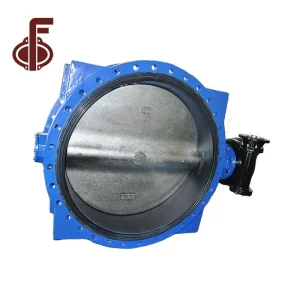
China DN1200 Flange Butterfly Valve with Supporting Legs
View Specifications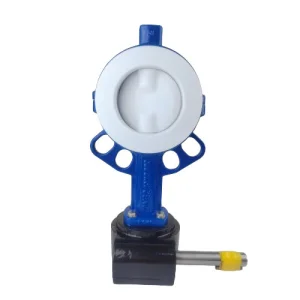
China DN80 Split Body PTFE Full Lined Wafer Butterfly Valve
View Specifications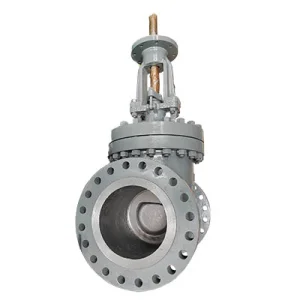
China DN600 WCB OS&Y Rising Stem Gate Valve
View Specifications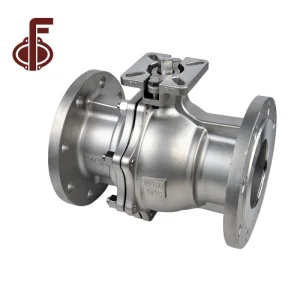
China Stainless Steel Flange Type Floating Ball Valve
View Specifications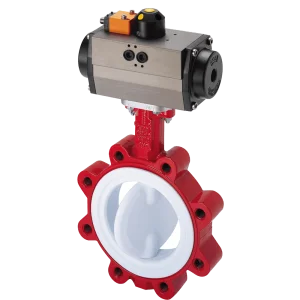
OEM PTFE Full Lined Lug Butterfly Valve
View Specifications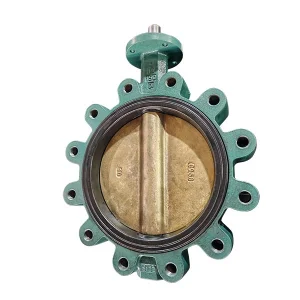
Class 150 C95800 Disc Lug Butterfly Valve DN250
View Specifications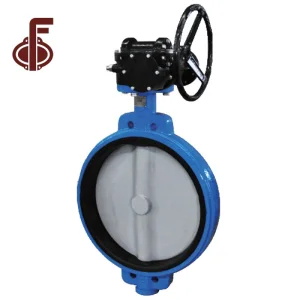
Worm Gear Wafer Butterfly Valve (Nylon Covered Disc)
View Specifications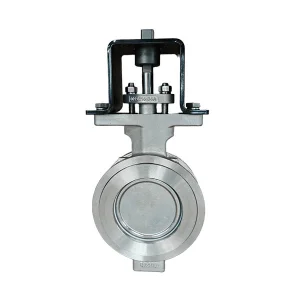
CF8 Wafer High Performance Butterfly Valve
View SpecificationsTechnical Whitepaper: Engineering Bronze Alloys in Flow Control
A comprehensive examination of Nickel Aluminum Bronze (NAB), Tin Bronze, and Phosphor Bronze alloys engineered for critical marine, offshore, and chemical services.
ASTM B148 Standard Nickel Aluminum Bronze Grade
Average Ultimate Tensile Strength in Quenched State
Micro-Biofouling Corrosion Rate in Marine Ambient
Pitting & Crevice Corrosion in 3.5% Saline Fluids
Corrosion Passivation Layer
Unlike carbon steels or duplex alloys prone to localized pitting, ASTM B148 C95800 generates a protective cuprous oxide film (Cu2O) doped with aluminum oxide (Al2O3). This layer self-repairs continuously in dynamic seawater velocity exceeding 3 m/s.
Inherent Biofouling Resistance
Continuous micro-leaching of cupric ions prevents the adhesion of marine macro-organisms (barnacles, mussels, tubeworms) and biological biofilms. This property significantly cuts pipeline drag and prevents premature elastomeric seat tearing across shipboard ballast systems.
Cavitation Erosion Damping
Bronze alloys feature substantial damping properties against hydrodynamic cavitation shockwaves. High-velocity throttled lines in cooling manifolds demonstrate up to three times the longevity compared with cast iron or 316 austenitic stainless steel discs.
Macro Industry Solutions & Procurement Drivers
How major international procurement houses, EPC contractors, and naval builders source bronze butterfly valves for demanding environments.
Marine Engineering & Shipbuilding
From commercial container vessels to defense combatants, valve bodies must conform to MIL-V-24624, DNV, and Lloyd’s Register specs. Our custom C95800 wafer and lug configurations withstand high mechanical shockwaves and bilge-well vibration profiles.
Seawater Desalination (RO Plants)
High-pressure brine discharge headers in Reverse Osmosis operations generate chloride attack profiles that break down standard stainless grades. Bronze disc assemblies integrated into ductile iron lined or full-bronze bodies preserve plant availability without unplanned shutdowns.
Offshore Fire Suppression Deluge
FPSO rigs and production platforms demand valves that guarantee zero-stiction actuation after years in stagnant ocean air. Bronze butterfly valves configured with gear operators and fire-signal limit switches maintain instantaneous closure or opening under UL/FM parameters.
Technical Metallurgy & Material Selection Guide
Compare standard casting grades to select the optimal body, disc, and trim configuration for your operating conditions.
| Material Grade | UNS / Norm | Yield Strength (MPa) | Tensile Strength (MPa) | Primary Industrial Field | Recommended Elastomer |
|---|---|---|---|---|---|
| Nickel Aluminum Bronze | C95800 / RG10 | 240 - 275 | 585 - 620 | Seawater, Ballast Systems, Offshore Firemains | EPDM / High-Grade NBR |
| Aluminum Bronze | C95400 / CuAl11Fe4 | 220 - 250 | 515 - 550 | Acidic Washers, Brackish Intake, Heat Exchangers | FKM (Viton) / PTFE |
| Tin Bronze (Gunmetal) | C83600 / LG2 | 120 - 150 | 240 - 280 | Potable Water, Commercial Marine Plumbing | Potable Certified EPDM |
| Silicon Bronze | C87200 / CuZn16Si4 | 170 - 200 | 380 - 420 | Chemical Processing, High Vibration Piping | PTFE / PFA Lined |
Technical Roadmap: The Next Generation of Bronze Flow Control
Addressing the shifting landscape of industrial valve manufacturing through metallurgy improvements and digital integration.
Digital Cavitation & Flow Modeling
By applying Computational Fluid Dynamics (CFD), ZFA engineers sculpt disc geometry to reduce flow coefficients (Cv) loss, optimizing hydrodynamic profiles to cut pumping energy demands across municipal and industrial intake installations.
IoT & Acoustic Sensor Integration
Our automation engineering team is designing top-flange configurations (ISO 5211) compatible with non-invasive acoustic emissions monitors. This telemetry permits predictive seat degradation tracking on subsea or remote piping without disassembly.
Low-Lead & Green Foundry Operations
In accordance with evolving EPA and European drinking water directives, our induction melting furnaces utilize certified low-lead and lead-free copper-base ingots, guaranteeing compliance with stringent environmental health standards worldwide.
OEM Certification & Compliance Verification
Stringent factory acceptance testing guaranteeing smooth technical audits for international project deliveries.
EN 10204 3.1 Traceability
Every casting batch undergoes optical emission spectrometry (OES) chemical analysis and tensile proof testing. We supply authentic 3.1 inspection documentation with each consignment.
API 598 Pressure Proofing
Valves are subjected to hydro shell tests at 1.5x nominal pressure and low/high-pressure gas seat tests to ensure complete bubble-tight shutoff (Zero Leakage, Rate A).
ISO 5211 Direct Mounting
Standardized actuator interfaces enable straightforward adaptation to pneumatic racks, scotch yokes, and electric multivolt actuators from world-renowned automation brands.
Export Seaworthy Packing
Fumigated wooden cases, desiccant sachets, and end-cap protections ensure machined faces, disc seals, and gear actuators arrive intact across international freight lanes.
Specialized Plant Pipeline & Processing Valves
Complementary OEM solutions including knife gates, high-performance double eccentrics, and automated fire valves.
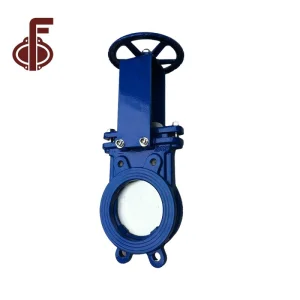
Ductile Iron PN10/16 Wafer Support Knife Gate Valve
View Specifications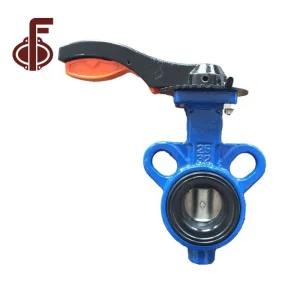
OEM Wafer Butterfly Valve with Aluminum Handle
View Specifications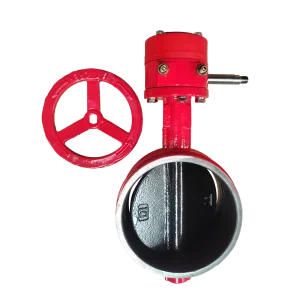
Grooved Butterfly Valve with Fire Signal Remote Control
View Specifications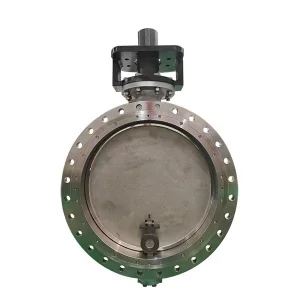
CF8 Double Flange High Performance Valve DN1000 PN16
View Specifications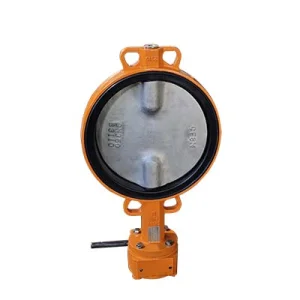
CF8 Disc Double Stem Wafer Butterfly Valve
View Specifications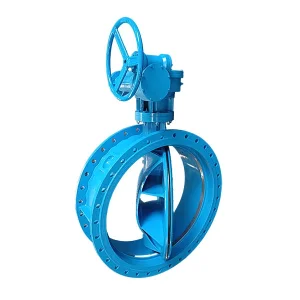
Flange Connection Double Eccentric Butterfly Valve
View Specifications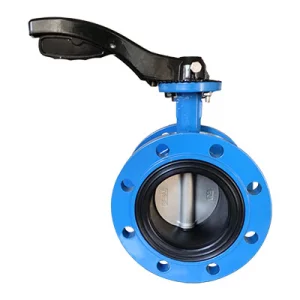
EN593 Replaceable EPDM Seat DI Flange Valve
View Specifications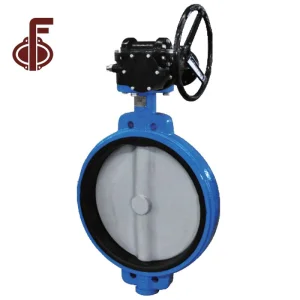
China Worm Gear Operated Wafer Type Butterfly Valves
View SpecificationsTechnical Clarifications & Engineering FAQ
In-depth responses to critical design, metallurgical, and manufacturing considerations for engineers and procurement teams.
Why choose C95800 Nickel Aluminum Bronze (NAB) over 316 Stainless Steel for seawater systems?
While 316 stainless steel forms a protective chromium oxide film, in stagnant or low-velocity seawater (under 1.5 m/s) this film breaks down beneath bio-slimes and in crevices, leading to catastrophic pitting corrosion. In contrast, C95800 Nickel Aluminum Bronze forms a resilient cuprous oxide/aluminum oxide surface layer that continuously re-oxidizes. Furthermore, bronze releases traces of copper ions which inhibit marine growth such as barnacles and mollusks, preventing the seal scoring frequently observed with austenitic stainless steels.
How does ZFA address casting porosity and dezincification in copper alloy castings?
Porosity is mitigated through precise electric induction melting using degasifying agents and computerized sand mold thermal flow simulations. For alloys containing zinc, our metallurgists control the zinc-to-copper ratio strictly below 15% and incorporate arsenic or phosphorus stabilizers (in accordance with BS EN 1982 standards), eliminating the beta-phase microstructures responsible for dezincification corrosion in brackish water.
What end connections are available for OEM bronze butterfly valves?
ZFA manufactures bronze butterfly valves in three primary body configurations: Wafer Type (for compact, lightweight installation between flanges), Lug Type (with fully threaded lugs to permit downstream line maintenance and dead-end isolation), and Double Flanged (for large nominal bores like DN600 through DN1200 requiring rigid, vibration-resistant pipe joints). All types can be drilled to ASME B16.5 Class 150, EN 1092-1 PN10/PN16, or JIS 10K/16K flange tables.
Which seat liner materials are recommended for bronze valve assemblies?
For standard marine, ballast, and cooling applications, peroxide-cured EPDM is typically selected due to its elasticity and resistance to aging up to 120°C. For fuel handling, oily water separators, or bilge drainage containing free hydrocarbons, NBR (Buna-N) is the preferred choice. For high-purity chemical processing, hot acids, or aggressive media, split-body designs with virgin or conductive PTFE liners provide chemical inertness up to 180°C.
What documentation is provided to support international procurement audits?
Every order can be accompanied by an inspection dossier including EN 10204 3.1 Material Test Reports (covering chemical spectrometry and mechanical tensile/hardness tests), Hydrostatic & Pneumatic Seat Test Certificates per API 598 or ISO 5208, Coating Thickness Verification Reports, and Certificate of Origin (CO). Third-party inspections (SGS, BV, DNV) are routinely coordinated at our Tianjin facility prior to dispatch.
