
High-Performance Concentric Flow Control Assemblies
Explore our export-grade resilient seated concentric and eccentric butterfly valves, dual plate check valves, and automation modules precision-cast for severe industrial conditions.
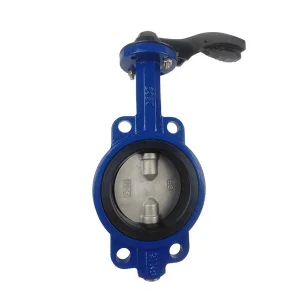
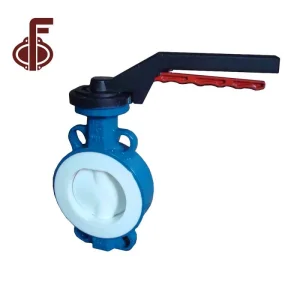
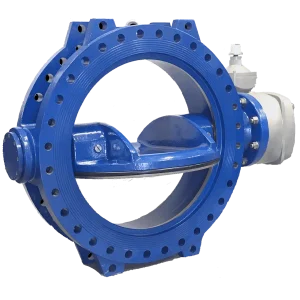
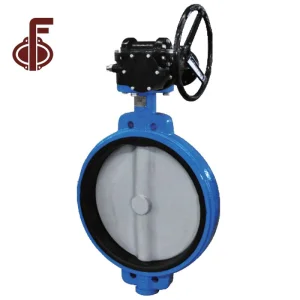
Concentric Butterfly Valve Kinematics, Seating Physics & Design Evolution
A comprehensive engineering appraisal of zero-offset resilient seated butterfly valves for international EPC project directors and original equipment manufacturers.
Concentric Architecture & Sealing Dynamics
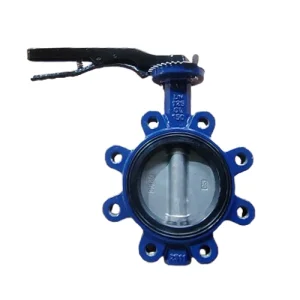
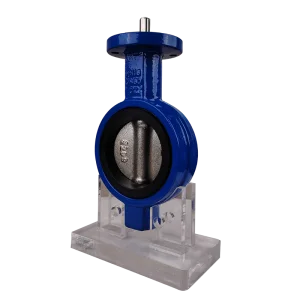
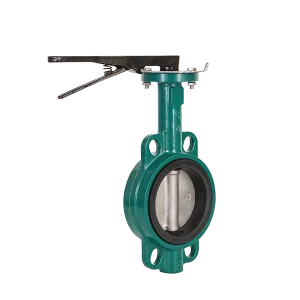
The concentric butterfly valve, also designated as a centerline or zero-offset valve, features a symmetrical mechanical geometry where the stem axis coincides precisely with both the centerline of the disc profile and the internal bore of the valve casing. Unlike eccentric configurations, the sealing mechanism relies on uniform continuous radial compression between the precision-contoured disc circumference and the vulcanized or cartridge elastomer liner.
- Symmetrical bi-directional zero-leakage sealing up to PN16/PN25
- 360-degree continuous elastomer peripheral displacement
- Complete media isolation preventing internal galvanic corrosion
Elastomer Vulcanization & Seat Chemistry
Polymer engineering governs the mechanical lifecycle and torque curve stability of the valve assembly. The elastomer lining serves simultaneously as the primary radial disc seal, the internal corrosion-resistant fluid barrier, and the integral flange gasket. At Tianjin Zhongfa Valve, elastomer formulations undergo computer-controlled post-curing and cross-linking to counteract compression set under cyclic pressures.
- EPDM (Ethylene Propylene Diene): -20°C to +120°C (Potable/HVAC)
- NBR (Nitrile Butadiene): -10°C to +82°C (Oils & Hydrocarbons)
- PTFE/FEP Lined: High-purity aggressive inorganic acid service
Hydrodynamic Disc Profiling & Stem Drives
Optimizing the flow coefficient (Cv/Kv) while moderating break-open dynamic torque is achieved via state-of-the-art computational fluid dynamics (CFD) modeling of disc profiles. Discs are polished to mirror micro-finishes (Ra < 0.4 µm) at seating touchpoints to eliminate shear fatigue and reduce dynamic wear. We engineer both through-shaft pinned couplings and modern pinless high-torque polygonal drive stems.
- Low hydrodynamic drag profiles maximizing piping flow volume
- Dual O-ring stem secondary seals preventing environmental escape
- Hard-backed phenolic or aluminum cartridges preventing seat collapse
Addressing Global Supply Chain Friction & OEM Procurement Dynamics
Strategic purchasing demands technical consistency, dimensional interchangeability, metallurgical verification, and predictable total cost of ownership (TCO).
Casting Wall Integrity & Pressure Containment
Global procurement teams encounter erratic casting thicknesses and micro-porosity in substandard cast iron (GG25) bodies. Our modern foundry processes implement nodular ductile iron (GGG40/GGG50 / ASTM A536 65-45-12) as standard baseline metallurgy. We enforce ultrasonic thickness gauging and optical emission spectrometry (OES) chemical analysis on every heat batch, validating complete pressure envelope security under surging water-hammer stresses.
Torque Uniformity & Direct Actuation Mounting
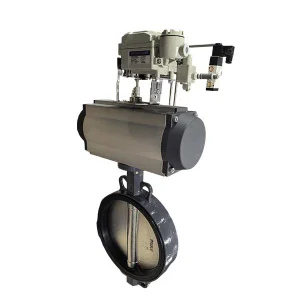
Fluctuating seating break-away torques can cause undersized electric and pneumatic actuators to stall in critical plant operations. We manufacture direct-mount top flanges adhering strictly to ISO 5211 (F05 to F16 patterns) with tight concentricity tolerances on stem drives. Torque testing is conducted at differential pressures up to 110% of rated limits to supply engineering clients with accurate safety margins for fail-safe automation packages.
Multi-Standard Universal Bolt Hole Geometry
Distributors maintaining international inventory struggle with regional flange drilling discrepancies. ZFA engineers specialized universal wafer body castings featuring scalloped and slotted bolt patterns engineered to seamlessly interface with ANSI Class 125/150, EN 1092-2 PN10/PN16, BS 4504, and JIS 10K. This minimizes distributor stock-keeping units (SKUs) while empowering immediate worldwide delivery.
Standardized Application Selection Matrix
Match your operational line medium, operating temperature range, and mechanical line velocity to optimal metallurgical and polymeric configurations.
| Target Sector | Typical Fluid Media | Recommended Body Metallurgy | Disc Alloy Specification | Resilient Seat Chemistry | Pressure Class | Compliance Spec |
|---|---|---|---|---|---|---|
| Municipal Potable Water | Treated drinking water, raw intake | Ductile Iron GGG50 / EN-GJS-500-7 | SS304 / CF8 or Nickel Plated DI | Potable EPDM (NSF/WRAS Grade) | PN10 / PN16 / Class 150 | BS EN 593 |
| Wastewater & Sludge | Aerated effluent, sewage, biosolid grit | Ductile Iron ASTM A536 | SS316 / CF8M or Nylon 11 Coated DI | Wear-Resistant NBR / Buna-N | PN10 / PN16 | ISO 5752 |
| Commercial HVAC Hydronics | Chilled water, condenser glycol mix | Cast Iron GG25 / Ductile Iron GGG40 | Stainless Steel CF8 (304) | High-Recovery EPDM Liner | PN16 / Class 125/150 | API 609 Cat A |
| Marine & Desalination | Brine, SWRO permeate, ballast water | Ductile Iron Epoxy Lined or Bronze | Aluminium Bronze C95400 / C95800 | Hard-Back Peroxide EPDM / FKM | PN16 / Class 150 | AWWA C504 |
| Chemical & Semiconductor | Dilute mineral acids, etching rinse, solvents | Carbon Steel WCB or SS316 | PTFE Encapsulated CF8M Disc | Virgin Isostatic Molded PTFE/PFA | PN10 / PN16 / Class 150 | EN 12266-1 |
Need Bespoke OEM Engineering or Private-Label Foundry Casting?
Our Tianjin design center provides full CAD 3D modeling, private-label brand body casting, bespoke face-to-face dimensions, and third-party inspection sign-offs within 24 hours.
Verified Quality, Pressure Rigor & Global Certifications
Complete traceability from molten iron charges to automated hydrostatic pressure testing, ensuring our OEM valves drop seamlessly into audited engineering projects.
Spectrometric Charge Analysis
Every furnace heat charge is sampled via multi-channel spark optical emission spectrometers to guarantee strict chemical composition (C, Si, Mn, P, S, Mg nodularity) in accordance with ASTM A536 and EN 1563 prior to mold pouring.
CNC Precision Machining
Valve body seat cavities, stem bores, and flange sealing serrations are processed on high-precision CNC horizontal machining centers, assuring sub-millimeter axial alignment and concentricity to prevent localized seat abrasion.
Dual-Phase Hydrostatic Testing
100% of manufactured valves are hydrostatically clamped and tested to ISO 5208 and API 598. Shell tests are sustained at 1.5× PN; seat leakage tests are evaluated at 1.1× PN with water and 0.6 MPa air for zero detectable bubbles.
FBE Electrostatic Coating
Automated shot-blasting brings castings to Sa 2.5 cleanliness, followed by fluidized electrostatic fusion bonded epoxy (FBE) powder coating at 250 µm minimum thickness, yielding superior dielectric corrosion insulation.
Technological Roadmap: The Next Generation of Concentric Flow Control
How Tianjin Zhongfa Valve is integrating digitalization, additive modeling, and advanced polymer synthesis to meet evolving global environmental standards.
IoT-Enabled Smart Positioning & Predictive Diagnostics
Modern process plants demand real-time feedback on valve travel, operating speed, and pneumatic pressure decay. We are expanding our integration of intelligent electro-pneumatic positioners (HART, Modbus, Profibus) with built-in vibration and continuous dynamic torque telemetry. This enables maintenance supervisors to detect elastomer wear or line scaling months before seal integrity is compromised, eliminating unplanned shutdowns.
PFAS-Free Advanced Elastomers & Bio-Liners
As international environmental regulators (REACH, US EPA) restrict polyfluoroalkyl substances (PFAS), our metallurgical and chemical engineering laboratory is accelerating trials on novel cross-linked synthetic elastomers. These deliver identical non-stick chemical inertness and extreme temperature cycling capabilities without persistent halogenated environmental contaminants, paving the way for green industrial certification.
Digital Twin & Additive Rapid Alloy Prototyping
Through our comprehensive library of 3D CAD/BIM models (Revit, STEP, IGES), EPC contractors can simulate hydraulic flow dynamics, pressure loss, and piping thermal displacement prior to ground-breaking. Furthermore, we leverage laser powder bed fusion (LPBF) additive manufacturing for rapid pilot testing of custom disc geometries in exotic alloys (Hastelloy C276, Super Duplex 2507) before launching full foundry tooling.
Secondary Engineered Assemblies & Specialized Gate/Check Valves
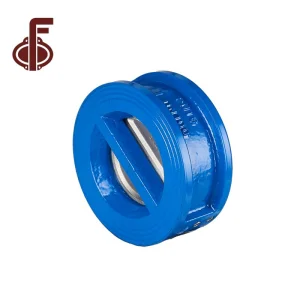
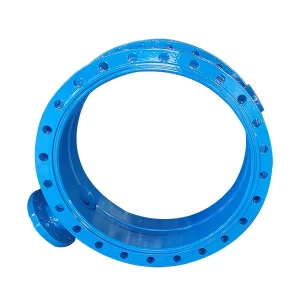
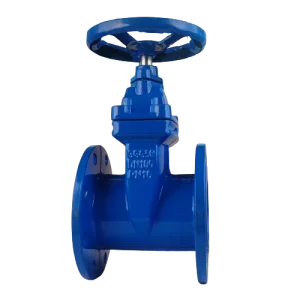
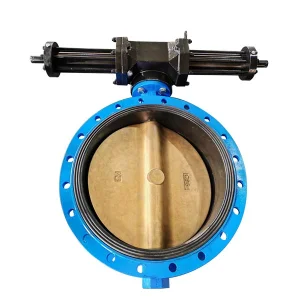
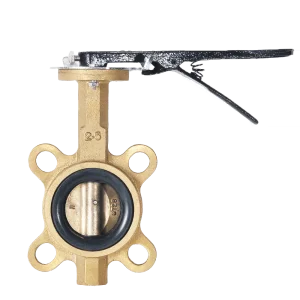
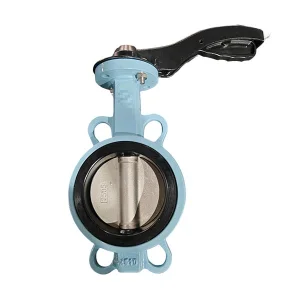
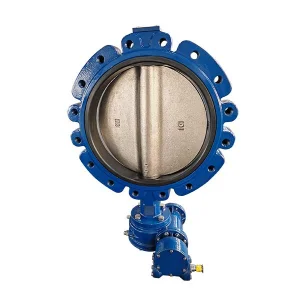
Review our extended flow-isolation line, encompassing dual plate check valves, resilient gate valves, and multi-flange concentric bodies engineered for global industrial service.
Frequently Asked Engineering & Sourcing Questions
In-depth technical answers addressing valve kinematics, material certifications, and installation engineering directly from our factory floor.
What distinguishes a concentric butterfly valve from double and triple eccentric configurations?
In a concentric (centerline) butterfly valve, the stem and disc centerlines are entirely coincident with the body bore. Sealing is accomplished through uniform interference compression against an elastomer liner along the full 360-degree perimeter. This provides cost-effective bi-directional zero-leakage shutoff at lower pressures (PN10/PN16/Class 150) and moderate temperatures (-20°C to +120°C).
In contrast, double eccentric (high performance) and triple eccentric (metal seated) valves offset the shaft from the sealing plane and pipe centerline to eliminate seat scuffing during rotation, enabling them to operate under severe high pressures (up to Class 600) and elevated temperatures (exceeding 450°C).
Why choose a hard-backed replaceable seat over a loose soft-backed boot seat?
A hard-backed seat features an elastomer liner permanently vulcanized or molded over a rigid phenolic or aluminum backup ring. This rigid cartridge prevents the elastomer from stretching, twisting, or collapsing under vacuum conditions or high-velocity turbulent flow (greater than 3 m/s). It maintains consistent operating torque and simplifies in-field replacement without disassembling the body halves.
Can wafer type concentric butterfly valves be employed for dead-end or tank drainage service?
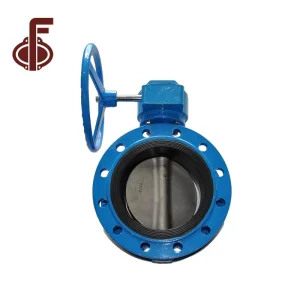
No. Standard wafer type butterfly valves are designed to be clamped between two opposing pipe flanges via through-bolts; removing downstream piping causes the wafer valve to lose flange compression, resulting in immediate seat extrusion and catastrophic line leakage. For dead-end or terminal line maintenance, full-lug butterfly valves with threaded bolt holes or double-flanged butterfly valves must be specified.
What are the metallurgical differences between Ductile Iron (GGG50) and Cast Iron (GG25) valve bodies?
Cast iron (grey iron, GG25 / ASTM A126 Class B) features graphite flakes within its microstructure, giving it good machinability and dampening capacity but low tensile strength (250 MPa) and almost zero elongation (brittle failure risk under water hammer). Ductile iron (nodular iron, GGG40/GGG50 / ASTM A536 65-45-12) treats molten iron with magnesium to spheroidize the graphite, yielding a tensile strength exceeding 500 MPa and 7–18% elongation. This imparts impact resistance, making ductile iron the superior engineering choice for pressurized industrial networks.
How does your factory handle custom OEM private branding and QA audit packages?
We provide comprehensive OEM foundry casting services. Custom customer logos, pressure ratings, and dimension markings can be cast directly onto the body molds. Furthermore, every production lot is supplied with complete EN 10204 Type 3.1 inspection certificates, including chemical heat certificates, mechanical tensile data, hydrostatic test charts, and third-party witness inspection reports (SGS, TÜV, Bureau Veritas) upon client request.
What sizing safety factor is recommended when automating concentric butterfly valves?
For clean lubricating liquids (water, treated fluids), a safety factor of 1.25 to 1.30 above maximum catalog break-away torque is standard. For viscous media, dry air, untreated river water, or slurries, a safety factor between 1.40 and 1.60 should be applied to account for increased dynamic friction, elastomer swelling, or static sticking following extended periods of inactivity.
