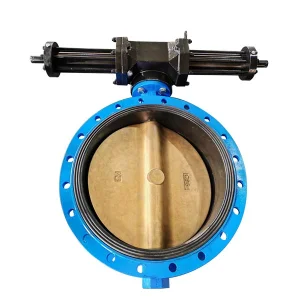
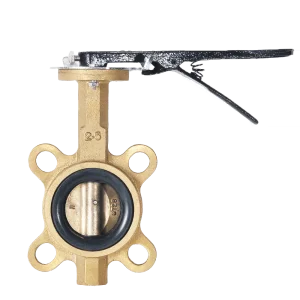
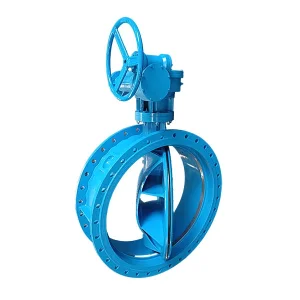
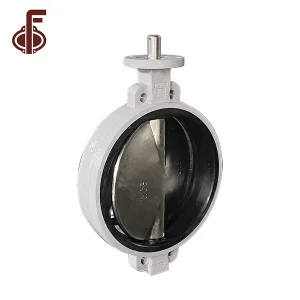
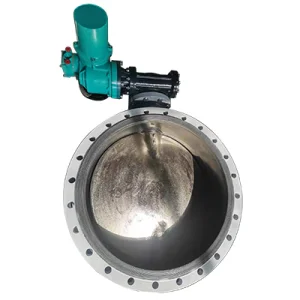
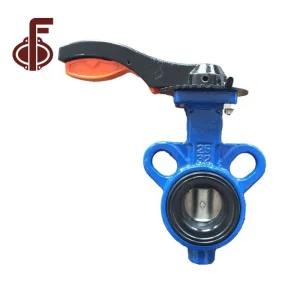
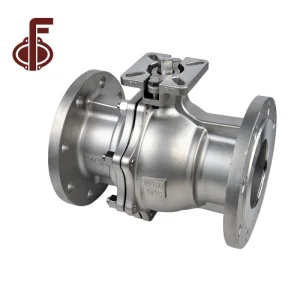
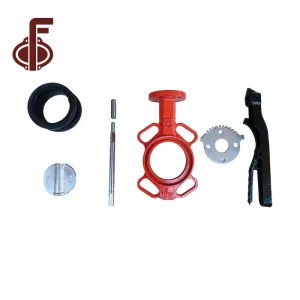
Standard & Heavy-Duty Flanged Butterfly Assemblies
Explore our foundational range of export-grade valves engineered for zero-leakage bidirectional isolation, high flow efficiency, and extended lifecycle endurance across global installations.
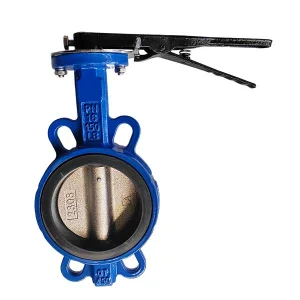
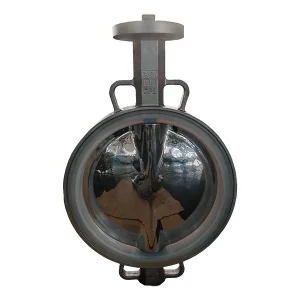
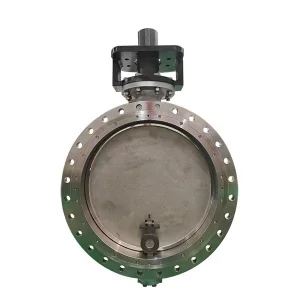
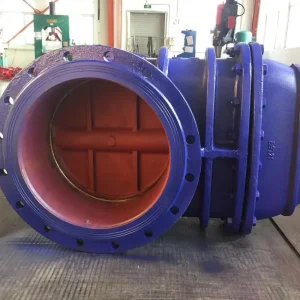
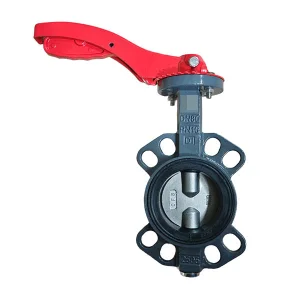
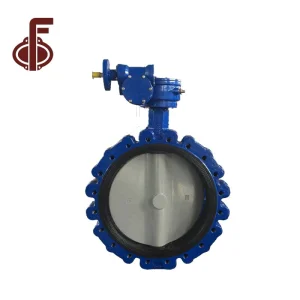
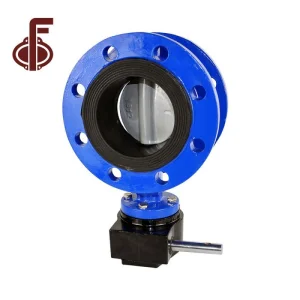
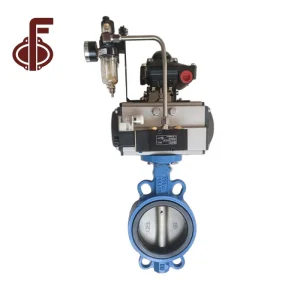
Global Industrial Landscape of Flanged End Butterfly Valves
A macroeconomic evaluation of structural pipeline isolation, addressing the operational transition from legacy gate valves to high-integrity double-flanged quarter-turn systems.
Compound Annual Growth Rate
Maximum Bore Scalability
Bidirectional Bubble-Tight Seal
Structural Weight Reduction
Civil Infrastructure & Desalination
Rapid urbanization and potable water reclamation demand large-bore isolation valves capable of handling high velocity without seat displacement. Flanged end configurations deliver the structural rigidity required in deep-well, culvert, and pumping station lines.
Thermal & Hydropower Generation
Modern power plants depend on double-flanged concentric and eccentric designs for cooling water intakes and condenser loops, preventing water-hammer shocks through engineered closing damping and minimizing parasitic pumping losses.
Offshore Marine & Shipbuilding
Strict safety norms mandate valves with independent bolting capabilities for dead-end and manifold isolation. Flanged butterfly valves provide certified fire-safe profiles, robust vulcanized elastomer liners, and corrosion-resistant disc alloy options.
Engineering Agility: The Chinese OEM Manufacturing Advantage
Combining complete vertical supply chain integration with advanced metallurgical control to reduce procurement lead times while exceeding stringent international safety margins.
In-House Casting Foundries
Direct ownership of ductile iron (QT450-10, GGG40/50), WCB, and duplex stainless foundries guarantees chemical composition accuracy, ultra-low porosity, and tight wall-thickness tolerances.
5-Axis CNC Precision
Spherical disc profiles and stem drive bores are machined in continuous cycles, eliminating runout, lowering breakout operating torque, and extending elastomer seat lifespans beyond 20,000 cycles.
Standardization Interoperability
Universal multi-standard flange facings seamlessly accommodate ISO PN10/PN16, ASME Class 150, and JIS 10K/16K without requiring custom field reaming or specialized flange adaptors.
Rapid Actuation Assembly
ISO 5211 top flange integration enables modular factory-fitting of manual worm gears, pneumatic double-acting cylinders, or intelligent bus-controlled electric actuators within 48-hour turnarounds.
Material Matrix & Operational Boundaries
Comprehensive engineering data cross-referencing body construction, trim alloys, and sealing compounds to optimize total cost of ownership in demanding flow conditions.
| Valve Type / Class | Body Material Options | Disc & Shaft Trim | Seat Compound | Temp Range | Compliance Standards |
|---|---|---|---|---|---|
| Concentric Flanged General Water |
Ductile Iron (GGG40/50), WCB | DI (Rilsan/Nickel plated), CF8, CF8M, C95400 | EPDM, NBR, Viton (FKM) | -20°C to +120°C | BS EN 593, ISO 5752 Series 13/14 |
| Double Eccentric Flanged High Velocity Pumping |
Ductile Iron, Cast Steel (WCB), LCC | CF8M, CF3M, Duplex 2205, Monel | Retained Resilient T-Ring / PTFE | -30°C to +180°C | AWWA C504, DIN 3202 F4, BS 5155 |
| Triple Eccentric (TOV) Severe Thermal & Gas |
A216 WCB, A351 CF8M, Duplex, Inconel | Laminated SS316 + Graphite, Stellite 21 | Solid Metal-to-Metal Hardfacing | -196°C to +550°C | API 609 Category B, ASME B16.34 |
| Vulcanized Flanged Line Corrosive Chemical |
Ductile Iron, WCB lined with PTFE/PFA | PFA Encapsulated Disc, Hastelloy C | Integrally Vulcanized Elastomer/PTFE | -25°C to +200°C | EN 12516, ASME B16.42, ISO 10631 |
Strategic Buyer Requirements & Industry Trends
Addressing supply chain risk mitigation, digital pipeline monitoring, and decarbonization mandates across tier-one EPC contractors and global distribution channels.
Fugitive Emission Suppression
Global petrochemical and gas transmission operators increasingly mandate ISO 15848-1 and TA-Luft compliance. Modern flanged designs integrate adjustable live-loaded stem seals with dual O-ring safety backstops to eliminate volatile gas leakage.
Smart Flow Digitalization (IIoT)
Valves are transitioning into diagnostic nodes. Engineering RFQs routinely specify factory bracket mounting for wireless position transmitters, cycle tracking counters, and torque load sensors to support predictive maintenance systems.
Total EN 10204 3.1 Traceability
Global procurement teams prioritize vendors offering comprehensive digital heat code stamping, non-destructive testing (PT, MT, RT), hydrostatic test logs, and EN 10204 3.1 material test certificates straight off the testing bench.
Frequently Asked Technical & Sourcing Questions
In-depth responses curated by our senior valve engineering group to clarify critical flange bolting, flow dynamics, and international standards verification.
What is the structural advantage of a flanged butterfly valve compared to wafer or lug styles?
Double-flanged butterfly valves feature dedicated, full-face bolt circles on both the upstream and downstream ends. Unlike wafer valves—which are sandwiched between flanges via long tie-rods prone to thermal expansion stretching—a flanged valve bolts directly to pipe flanges with standard studs. This design prevents line-pull stress transfer to the valve body, facilitates independent downstream pipe removal for servicing (dead-end service), and provides maximum structural resistance against pipe bending moments in large diameters (DN300 to DN3200).
How do you guarantee hydrostatic seal integrity during OEM production?
Every valve manufactured in our export facility undergoes rigorous shell and seat pressure testing conforming strictly to API 598 or ISO 5208 standards. Shell testing is executed at 1.5 times the nominal working pressure (PN) using water. Resilient soft-seated valves undergo dual-direction low- and high-pressure seat leakage tests at 1.1 times PN, ensuring Rate A (zero visible leakage) performance. Metal-seated triple eccentric valves are tested to ISO 5208 Rate B/C or ANSI/FCI 70-2 Class VI leak rates, with calibration certificates supplied per serialized batch.
Which body and seat combinations are recommended for abrasive seawater desalination?
For seawater intake, brine rejection, and RO desalter utilities, we recommend Ductile Iron or Carbon Steel bodies fully lined with vulcanized hard EPDM or high-grade Ebonite (hard rubber), paired with Aluminum Bronze (ASTM B148 C95400/C95800) or Super Duplex (2507) discs and Monel K500/Duplex shafts. This prevents galvanic attack and pitting from high chloride concentrations while sustaining hydrodynamic shear forces without liner separation.
Can your factory produce valves compliant with dual or multi-standard bolt patterns?
Yes. Our engineering drawings provide dual-drilling or slotted universal patterns across intermediate sizes (DN50 to DN600), permitting identical valve bodies to bolt onto ASME B16.5 Class 150, EN 1092-1 PN10/PN16, and JIS B2239 10K counter-flanges. For specialized large-diameter municipal contracts, we custom-machine face-to-face dimensions according to ISO 5752 series 13 (short) or series 14 (long), as well as BS EN 558-1 standards.
What documentation and certifications accompany OEM valve shipments?
Standard export deliveries include comprehensive project documentation packets: EN 10204 Type 3.1 Inspection Certificates specifying chemical analysis and mechanical pull-testing of bodies, discs, and stems; Hydrostatic & Pneumatic Test Reports; Coating Thickness & Spark Test Inspection Sheets (for epoxy coatings); ISO 9001 and CE Conformity Declarations; and detailed Operation & Maintenance (O&M) manuals in bilingual formats.
Specialized Flanged, Eccentric & Automated Valves
Explore our high-performance double-eccentric, hydraulic check, high-alloy bronze, and automated flanged butterfly lines built for mission-critical flow networks.