
Featured Industrial Gate & Engineered Process Valves
Explore our factory-direct selection of precision flanged gate assemblies, high-pressure butterfly units, and silent non-return check valves calibrated for arduous industrial networks.
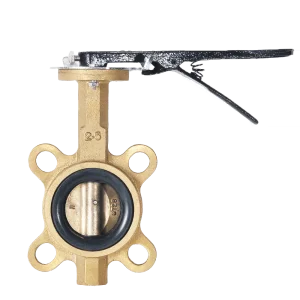
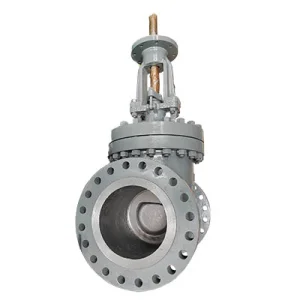
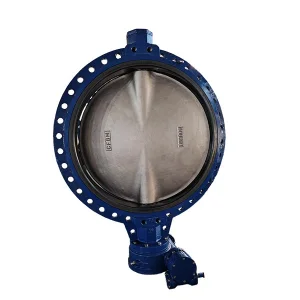
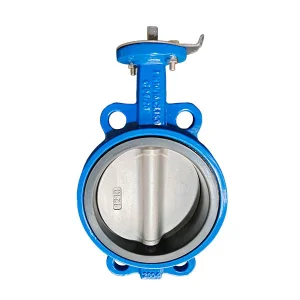
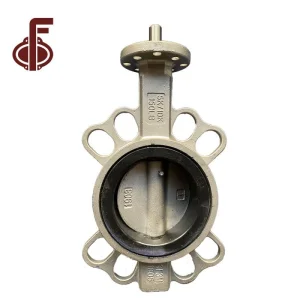
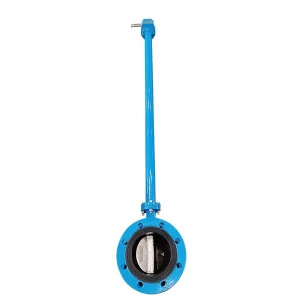
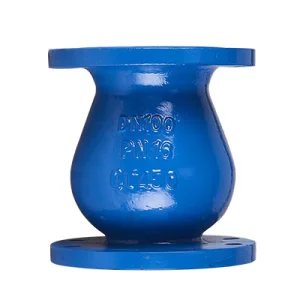
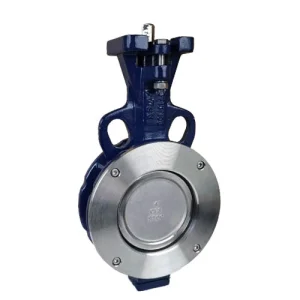
Structural Architecture of Industrial Flanged Gate Valves
Flanged gate valves represent the premier choice for bi-directional, full-bore, unrestricted isolation. Operating as an on/off mechanism with minimal friction losses, these valves deliver superior flow coefficients (Cv) and tight shutoff across aggressive chemical and high-pressure steam conduits.
OS&Y Rising Stem vs. NRS Construction
Outside Screw and Yoke (OS&Y) rising stem designs isolate the operating stem threads entirely from the process fluid, avoiding corrosion, scale deposits, and thermal decomposition. Non-Rising Stem (NRS) designs provide ultra-compact face-to-top dimensions suited for confined underground vaults, mining boreholes, and marine machinery compartments.
- Visual travel indication of open/closed status
- External lubrication zerks for smooth actuation torque
- Stellited backseat design allowing online repacking
Wedge Sealing Tribology & Configurations
Sealing stability under variable thermal cycles relies heavily on proper wedge geometry selection. We manufacture flexible wedges with precision machined center-grooves that flex under thermal piping deflection, solid wedges for high-velocity liquid bypass lines, and resilient vulcanized EPDM/NBR wedges for bubble-tight potable water isolation.
- Flexible wedge prevents thermal binding in steam lines
- Resilient seated EN 1171 gate valves provide Class A bubble-tightness
- Parallel slide gate options for high-differential differential pressures
Full Flange Bolting & Structural Stiffness
Unlike wafer or thin lugged bodies, integral dual flanged gate valves (conforming to ASME B16.5, ASME B16.47 Series A/B, or EN 1092-1 Type 21) provide superior resistance against pipeline bending moments, seismic tremors, and thermal expansion forces, preserving strict internal seat concentricity under maximum mechanical load.
- Flat Face (FF), Raised Face (RF), and Ring-Type Joint (RTJ) options
- Smooth machine spirally serrated gasket finish (Ra 3.2 - 6.3 μm)
- Heavy wall thickness meeting API 600 Minimum Shell Specifications
Enterprise Procurement Requirements for Flanged Gate Valves
Modern engineering procurement executives and plant asset managers face stringent challenges balancing capital expense against multi-decade operating safety. Below is how enterprise frameworks evaluate strategic valve sourcing partners.
Total Cost of Ownership (TCO)
Initial valve purchase cost accounts for only 15-20% of life-cycle expense. High-velocity gate valve cavitation, premature stem packing leakage, and gate seizing contribute directly to multimillion-dollar refinery turnarounds. Our valves leverage hardened cobalt-base Stellite overlays and mirror-burnished stems (Ra ≤ 0.2 μm) to achieve extended maintenance cycles in excess of 150,000 hours.
Rigid Metallurgical Traceability
Supply chain security mandates complete heat-number serialization. Every cast body, cover, and bonnet fabricated in our Tianjin foundries ships with EN 10204 Type 3.1 Material Test Reports (MTRs), optical emission spectrometer chemical breakdowns, Charpy V-notch impact test values at sub-zero temperatures, and hydrostatic pressure hold charts.
Anti-Corrosive Barrier Systems
External pipeline durability is guaranteed through electrostatic fusion-bonded epoxy (FBE) powder coating with dry-film thickness exceeding 250 μm (tested to DIN 30677-2), or multi-layer offshore marine polyurethane systems qualifying for ISO 12944 Category C5-M / CX extreme corrosive marine atmospheres.
Macro Industrial Solutions & Sector Applications
Our flanged gate valve systems are systematically optimized across five distinct global industrial sectors, ensuring fluid dynamics and metallurgical properties precisely match process media demands.
Water Infrastructure & Desalination
Resilient seated gate valves with NSF/WRAS-certified EPDM encapsulated wedges and Super Duplex 2507 trim for seawater reverse osmosis (SWRO) brine discharge and raw water transmission.
Refining & Hydrocarbon Processing
API 600 cast carbon steel (WCB/WC6) and austenitic stainless (CF8M) gate valves with flexible wedges and flexible graphite packing rated to 800°C for vacuum distillation and catalytic cracking units.
Power Generation & High-Pressure Steam
Pressure seal bonnet flanged gate valves designed to ASME Class 900 to Class 2500, handling superheated steam at 540°C with Stellite #6 hardfaced seats preventing wire-drawing erosion.
Slurry Extraction & Mineral Tailings
Wear-resistant flanged knife and wedge gate assemblies with high-chrome iron discs, replaceable polyurethane liners, and scrapers engineered to isolate abrasive copper, iron ore, and lithium slurries.
HVAC & Centralized Utility Networks
Full bore flanged gate valves in Ductile Iron GGG50 / EN-GJS-500-7 offering zero pressure drops in high-rise chilled water loops, boiler plants, and municipal thermal heating distribution.
Engineering Metallurgy & Technical Parameter Matrix
Standard parameters for custom OEM manufactured flanged gate valves. Engineered configurations can be calibrated based on project engineering datasheets.
| Valve Series | Body Material Options | Nominal Size | Pressure Ratings | Trim Metallurgy | Seating Interface | Governing Standards |
|---|---|---|---|---|---|---|
| Resilient Seated Water Gate Valve | Ductile Iron (EN-GJS-450-10, GGG50, ASTM A536 65-45-12) | DN40 – DN1200 (1.5" – 48") | PN10, PN16, PN25, Class 150 | SS420 / SS304 / SS316 Stem | Vulcanized EPDM / NBR Resilient Wedge (Zero Leakage) | EN 1171, DIN 3352 F4/F5, BS 5163, AWWA C509/C515 |
| Cast Carbon Steel Wedge Gate Valve | ASTM A216 WCB, WCC, LCB, LCC (Low Temp) | DN50 – DN1500 (2" – 60") | ASME Class 150, 300, 600, 900 | API Trim 1, Trim 5 (Full Stellite), Trim 8 (13Cr / HF) | Integral or Welded Hardfaced Stellite Gr.6 Rings | API 600, ASME B16.34, ISO 10434, BS 1414 |
| Corrosion-Proof Stainless Gate Valve | ASTM A351 CF8, CF8M, CF3, CF3M, CG8M | DN50 – DN900 (2" – 36") | Class 150 – 600 / PN16 – PN100 | AISI 304, 316, 316L, Duplex 2205 | Precision Micro-Lapped Metal-to-Metal CF8M Seats | API 603, ASME B16.34, ISO 10434 |
| High-Pressure Power Seal Gate Valve | ASTM A217 WC6, WC9, C12A, C5 (Alloy Steel) | DN50 – DN600 (2" – 24") | Class 900, 1500, 2500 / PN160 – PN420 | API Trim 5 (CoCr-A / Stellite #6), Inconel 625 | Wedge Wedge Hardfaced Stellite Metal Seating | ASME B16.34, API 600, IBR (Indian Boiler Regs) |
| Severe Service Duplex / Super Duplex | ASTM A995 4A (2205), 5A, 6A (2507), Hastelloy C276 | DN50 – DN800 (2" – 32") | Class 150 – 1500 / PN16 – PN250 | Duplex 2205 / 2507 Matching Body Trim | Solid / Flexible Wedge with Superalloy Facing | NACE MR0175 / ISO 15156, NORSOK M-650 |
Five-Stage Controlled OEM Manufacturing Lifecycle
Our Tianjin manufacturing facility enforces absolute consistency from preliminary casting mold simulation to final crating, eliminating defects at each metallurgical transition stage.
1. Specification & CAD/FEA Simulation
Every engineering order undergoes 3D finite element stress analysis (FEA) to confirm wall thicknesses against pressure surges and seismic bending moments before foundry patterns are produced.
2. In-House Smelting & NDT Examination
Castings undergo Radiographic Examination (RT), Ultrasonic Testing (UT) to ASME B16.34 Appendix I, and Magnetic Particle (MPI) testing on all critical stress junctions to prevent sub-surface porosity.
3. CNC Multi-Axis Precision Machining
Body flange facings, wedge guide grooves, and stuffing boxes are machined in a single clamping setup using precision CNC horizontal machining centers, assuring absolute perpendicularity and sealing contact.
4. 100% Hydrostatic & Low-Pressure Air Testing
Valves undergo shell proof testing at 1.5x nominal pressure and bi-directional seat testing at 1.1x pressure per API 598, accompanied by low-pressure air testing (0.6 MPa) to prove zero-bubble tightness.
5. Custom OEM Tagging & Marine Export Crating
Client tag stampings, stainless steel 316 nameplates, bespoke powder coats, end protector flange caps, and vacuum-sealed fumigated wooden crates ensure flawless ocean freight logistics worldwide.
Comprehensive Quality Dossier
Every dispatch contains complete inspection certificates: Raw Material MTR 3.1, Hydro Test Chart, Coating Thickness Certificate, Dimension Verification, and CE/Declaration of Conformity.
Technological Roadmap: The Future of Gate Valves
As industries shift toward decarbonization, remote asset oversight, and hydrogen-enriched gaseous transport, industrial gate valves are undergoing rapid technical evolution.
Digital Twin & Smart Actuation Integration
Integration of wireless LoRaWAN and Modbus torque-sensing actuators enables continuous stem travel speed tracking and thrust measurement. This diagnostic data predicts seat fouling and packing degradation months before physical failures manifest, enabling predictive maintenance schedules.
Hydrogen-Ready & Zero Fugitive Emissions
Hydrogen molecules penetrate traditional seals due to ultra-low atomic diameter. Our R&D team is standardizing live-loaded Inconel disc-spring stem packings, multi-layer graphite rings with braided carbon anti-extrusion caps, and helium leak testing down to 10-6 mbar·l/s.
Laser Cladding & Superalloy Additive Manufacturing
Replacing standard weld overlay with high-speed laser deposition of Stellite 21 and Hastelloy C ensures minimal heat-affected zones (HAZ), higher bond strength, and extended wear resilience in superheated supercritical thermal and geothermal extraction lines.
Global Compliance & Regional Engineering Alignment
To empower EPC contractors bidding across transcontinental pipeline and refinery projects, ZFA Valve maintains strict conformance with leading regional safety, environmental, and engineering codes.
American Petroleum Institute (API)
Full conformance to API 600 (bolted bonnet steel gate valves), API 602 (compact forged valves), API 603 (corrosion-resistant stainless), and API 6D (pipeline valves). Fire-tested certification in compliance with API 607 and API 6FA ensures full structural seal retention during plant blazes.
European Directives (CE-PED / ATEX)
Certified in compliance with the European Pressure Equipment Directive 2014/68/EU (CE-PED Module H Full Quality Assurance), allowing immediate customs release and legal plant installation across all 27 EU member states, complete with EN 1984 / EN 1171 dimensional harmonization.
Potable Water & Regional Approvals
Elastomer wedges and FBE coatings comply with British WRAS, North American NSF/ANSI 61 and 372 (lead-free drinking water), German DVGW W270 microbiological standards, and Middle Eastern GCC/SASO conformity declarations for major regional utility tenders.
Frequently Asked Engineering & Procurement Questions
Key design distinctions, operating tolerances, and ordering specifications answered directly by our senior valve engineering staff.
Why should an engineering project select a Flanged Gate Valve over a Butterfly Valve?
While butterfly valves offer lighter weight and lower upfront costs, flanged gate valves provide a completely unobstructed full bore when fully open. This eliminates internal pressure loss, preserves a high flow coefficient (Cv), enables mechanical pipeline pigging, and avoids disc flutter in turbulent high-velocity liquid lines.
What is the difference between a Resilient Seated and Metal Seated Gate Valve?
Resilient seated gate valves use a ductile iron wedge encapsulated in vulcanized EPDM or NBR rubber sealing against a smooth epoxy-coated body channel, delivering bubble-tight Class A shutoff ideal for water. Metal seated gate valves use hardfaced alloy rings (e.g. Stellite #6) to withstand temperatures above 120°C, abrasive particulates, and aggressive hydrocarbon streams.
How does an Outside Screw & Yoke (OS&Y) gate valve prevent stem corrosion?
In OS&Y gate valves, the drive threads of the stem are positioned outside the valve pressure boundary on the yoke mechanism above the packing box. They never come into contact with the line media, protecting threads from scale buildup, corrosive attack, and erosion while enabling visual stem rise verification.
Can flanged gate valves be installed in a horizontal piping orientation?
Yes. While vertical stem orientation is optimal to prevent uneven wedge wear and sediment settling in the bonnet, valves can be installed horizontally. For valves DN300 (12") and larger installed horizontally, we integrate customized internal wedge guide shoes and body tracks to eliminate guide friction and stem side-loading.
Why is a flexible wedge preferred over a solid wedge in high-temperature lines?
When pipelines carry hot steam or hydrocarbons, thermal expansion causes the valve body seats to expand or distort. A solid wedge cannot deflect and risks becoming permanently jammed (thermal binding). A flexible wedge incorporates a central flex groove that absorbs mechanical distortion, allowing effortless reopening.
What OEM customization options are provided for export distributors?
We provide complete OEM engineering services: customized body casting patterns with your private brand name, custom flange drilling (EN, ASME, JIS, AS 4087), bespoke epoxy pantone colors, automated electric/pneumatic actuator brackets (ISO 5211), stainless steel serial tags, and tailored project crating.
Complementary High-Performance Valve Series
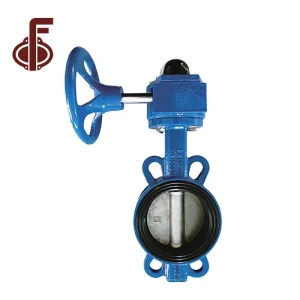
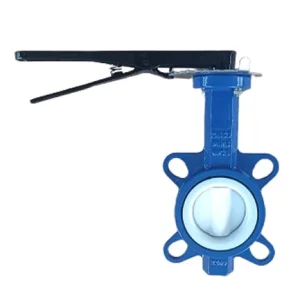
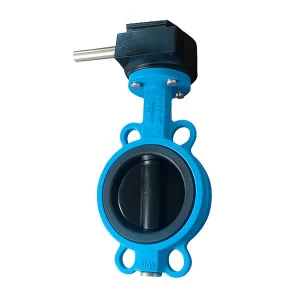
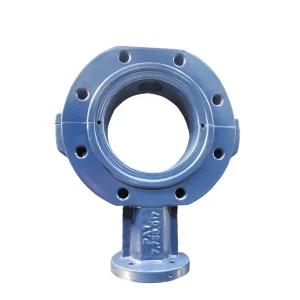
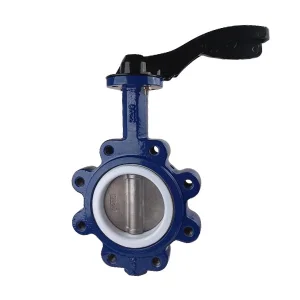
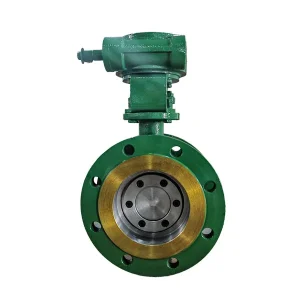
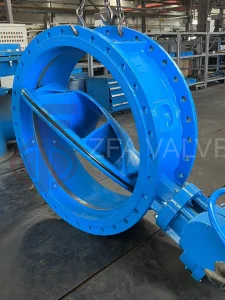
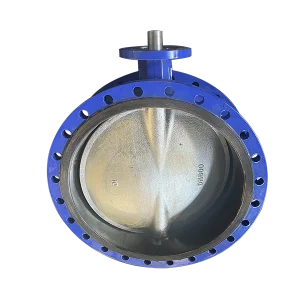
Our industrial facility manufactures an extensive lineup of butterfly valves, wafer configurations, and specialized flow components designed for turnkey international project specifications.
Empower Your Pipelines with Certified Valve Engineering
Submit your fluid media datasheets, required flange standards, and pressure classes. Our application engineering team returns detailed CAD drawings, torque calculations, and comprehensive quotations within 24 hours.
