
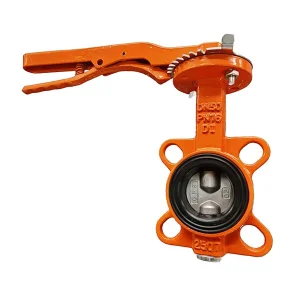
Featured Industrial Valve Portfolio: Primary Deployment Series
Explore heavy-duty isolation systems engineered to ASTM, ANSI, DIN, and ISO standards for municipal water, energy processing, and heavy industrial fluids.
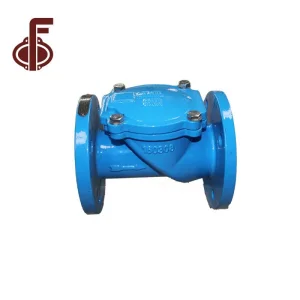
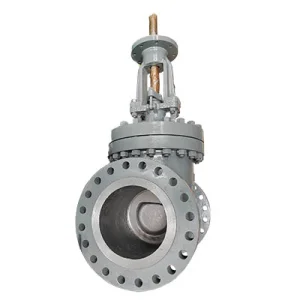
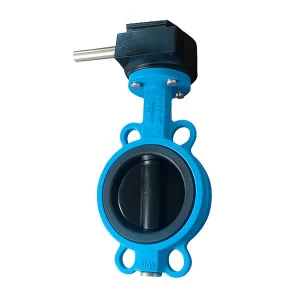
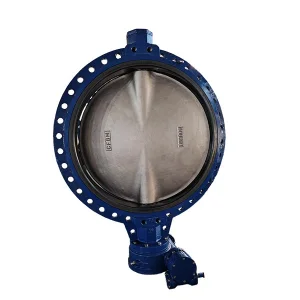
Kinematic Blueprint: How Does A Triple Offset Butterfly Valve Work?
A comprehensive engineering review of triple eccentric geometry eliminating mechanical binding, rotational galling, and leakage under bi-directional pressure differentials.
Offset 1: Shaft Axis Displacement
The shaft center is positioned behind the plane of the sealing surface. This structural displacement transitions the rotation from a pure concentric circular path to a sweeping movement, ensuring the disc seal clears the body seal profile instantly across 90° of motion.
Offset 2: Eccentric Centerline Shift
The shaft is machined eccentric to the pipe center and disc bore. This lateral offset transforms disc rotation into an eccentric cam trajectory. During initial opening, the seal immediately separates cleanly from the body seat without rubbing, completely ending seat galling.
Offset 3: Inclined Conical Geometry
The sealing cone axis is angled relative to the pipe axis. This geometric innovation produces a wedging effect rather than interference fit. Sealing occurs only at the final degree of closure, converting mechanical rotational torque directly into tight compressive force.
Macro Industry Trends & Engineering Advancements
The modern energy and chemical landscape demands critical upgrades from legacy soft-seated butterfly and wedge gate valves to advanced triple eccentric metal-seated architectures.
Zero-Fugitive Emission Standards
With aggressive global initiatives like ISO 15848-1 Class AH and TA-Luft, triple offset valves now utilize precision live-loaded dynamic graphite packing glands and blowout-proof one-piece stem assemblies to eliminate fugitive greenhouse leaks.
Laminated vs. Solid Stellite Trim
Modern applications specify field-replaceable composite laminated seals (SS316/Graphite multi-layer) for temperatures up to 450°C, alongside solid monolithic Stellite hard-faced seats for superheated steam, catalyst slurry, and high-frequency throttling.
Weight Optimization & Space Footprint
EPC megaprojects favor triple eccentric valves over cumbersome gate and ball valves because wafer and lug TOVs reduce pipeline structural weight by up to 70% while offering superior flow coefficient (Cv) values and direct quarter-turn automation.
Global Procurement Specifications: Triple Offset vs Conventional Valves
Evaluating total lifecycle costs, mechanical maintenance requirements, and pressure limits for project engineers selecting critical isolation equipment.
| Performance Characteristic | Triple Offset Butterfly Valve (TOV) | Concentric Resilient Valve | Rising Stem Gate Valve | Industrial Trunnion Ball Valve |
|---|---|---|---|---|
| Sealing Principle | Torque-seated mechanical wedging (zero rub) | Interference displacement fit | Sliding vertical wedge friction | Floating seat spring compression |
| Seat Materials | SS316 + Graphite Laminated / Solid Stellite | EPDM, NBR, PTFE, Viton | Stellite / Stainless Hardface | PTFE, PEEK, or Metal Hardfaced |
| Leakage Rating | API 598, ISO 5208 Rate A (Bubble Tight) | API 598 (Limited to clean media) | API 598 (Liquid drops allowable) | API 6D Class VI Rate A |
| Temperature Range | -196°C (Cryogenic) to +600°C | -20°C to +120°C | -29°C to +425°C | -46°C to +200°C (Soft) / +450°C (Metal) |
| Space & Weight Impact | Ultra-compact wafer / short flanged (1x) | Ultra-compact wafer (0.8x) | Heavy casting, high headroom (4x - 6x) | High weight, large envelope (3x - 4x) |
| Actuator Torque Profile | Linear torque demand, instant break-away | High friction breakaway torque | Multi-turn high energy requirement | High seat-break friction torque |
Engineered OEM Flow Solutions Across Critical Industrial Sectors
Custom metallurgies, tailored trim geometries, and strict automated test procedures built to satisfy severe operational criteria across world markets.
Cryogenic LNG Services
Extended bonnet configurations (per BS 6364) protect stem packing from cryogenic thermal embrittlement during -196°C LNG transport, bunkering, and regasification terminals.
Refining & Petrochemical
API 607 and ISO 10497 fire-safe qualified assemblies withstand hydrocarbon fires, catalyst slurry erosion, and high-frequency steam reforming cycles with zero loss of shell containment.
District Energy & Steam
Eliminate condensate corrosion and thermal shock common in legacy steam lines. Laminated seats provide complete seal tightness even under violent thermal gradients.
Desalination & Marine
Special alloy manufacturing: Duplex 2205, Super Duplex 2507, and Nickel Aluminum Bronze castings resist seawater pitting corrosion and high-velocity brine cavitation.
Localized Engineering Support & Rigorous Quality Control
Tianjin Zhongfa Valve Co., Ltd. (ZFA Valve) operates verified quality systems, complete tracing documentation, and custom OEM manufacturing compliance.
100% Hydrostatic & Pneumatic Testing
Every single valve undergoes shell pressure testing at 1.5x nominal rating and bi-directional seat testing at 1.1x nominal rating in accordance with API 598 and EN 12266 standards prior to packaging.
Material Traceability (EN 10204 3.1)
Chemical composition analysis, mechanical tensile checks, Charpy impact testing, and Non-Destructive Testing (RT/UT/PT/MT) records are preserved for complete batch traceability from raw ingot to finished assembly.
Global Engineering Documentation
We supply full engineering dossiers including general assembly (GA) drawings, Finite Element Analysis (FEA) reports, flow coefficient data sheets, actuation sizing sheets, and certified installation manuals.
Technical Roadmap: Next-Generation Triple Offset Valve Design
Advancing flow assurance through computational fluid dynamics, smart automated actuation, and additive metallurgy.
Additive Laser Cladding
Transitioning from traditional Stellite hand welding to automated CNC robotic laser cladding, ensuring high bonding density, minimal dilution, and extended seat life under abrasive particulate slurry.
IoT Predictive Torque Monitoring
Integrating wireless acoustic emission and torque-signature transmitters into the ISO 5211 actuator mounting flange to monitor seat wear, cavitation damage, and packing stress in real time.
Hydrogen & Harsh Media Optimization
Advanced development of specialized polymer-metal composite blends to prevent atomic hydrogen embrittlement and high-pressure supercritical CO2 decompression failures in CCUS processes.
Complete Flow Control Solutions: Specialized Industrial Valves
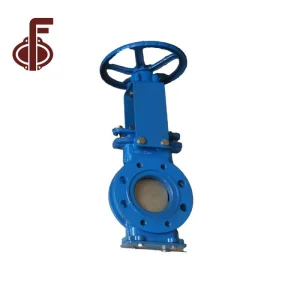
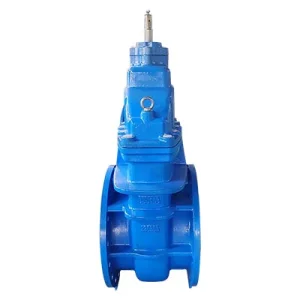
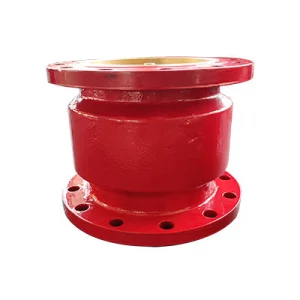
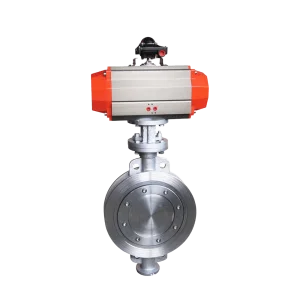
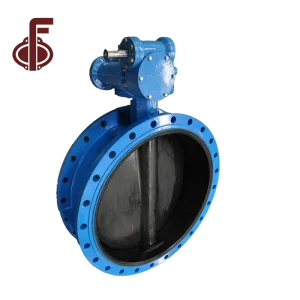
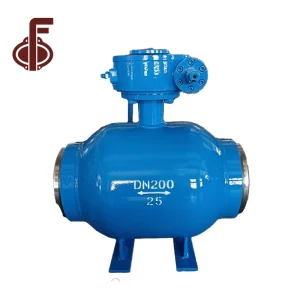
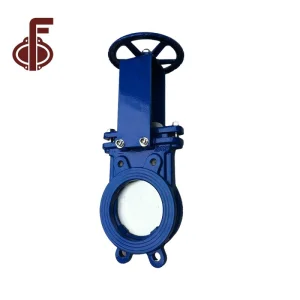
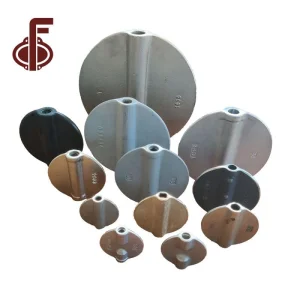
Examine our full engineering portfolio, spanning knife gate valves, silencing check systems, multi-standard bodies, and heavy forged steel isolation products.
Technical Clarifications & Buyer FAQs
Frequently evaluated technical, structural, and procurement questions regarding triple offset butterfly valve design and OEM deployment.
What is the fundamental functional difference between double and triple offset butterfly valves?
Double offset valves use two eccentric shaft offsets to relieve seat contact during rotation, yet they rely on an elastomeric or polymeric (PTFE/RTFE) interference seat that degrades at elevated temperatures. The triple offset valve incorporates a third geometric angle (conical axis tilt) that replaces interference with torque wedging, enabling an all-metal bi-directional seal capable of operating from -196°C to +600°C without mechanical friction.
Why is a triple offset valve classified as "torque-seated" rather than "position-seated"?
Concentric and double offset valves close when the disc reaches a specific mechanical stop angle (position-seated). In contrast, a triple offset valve seals by driving the tapered metal disc into a mating conical seat with calculated actuator torque (torque-seated). This mechanical compression produces uniform sealing pressure around the complete perimeter, achieving zero leakage even during dynamic thermal line expansion.
Can triple offset butterfly valves handle bi-directional isolation with equal shut-off capability?
Yes. High-performance triple offset valves engineered by ZFA Valve deliver true bi-directional Class VI / ISO 5208 Rate A bubble-tight shut-off. While torque required in the reverse direction differs slightly due to line pressure working with or against the cone angle, modern actuator sizing calculations ensure positive shut-off in both flow directions.
How does ZFA Valve guarantee dimensional compatibility for OEM valve clients?
As a seasoned Chinese manufacturer since 2006, ZFA Valve adheres strictly to API 609, ISO 5752, and EN 558 face-to-face standards. Our engineering team reviews CAD/SolidWorks models with client teams, executing custom casting, CNC machining, ISO 5211 top flange dimensions, and localized tagging to integrate seamlessly into existing client valve brands.
