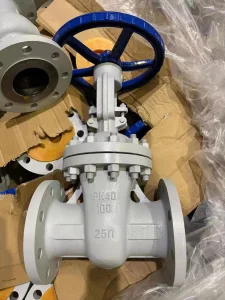
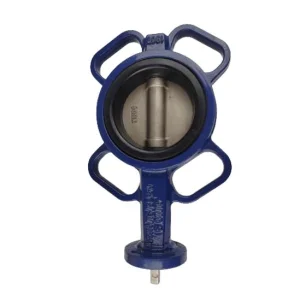
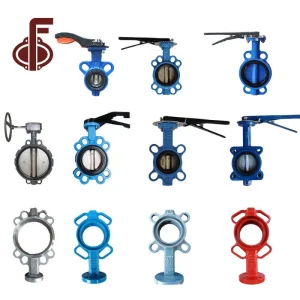
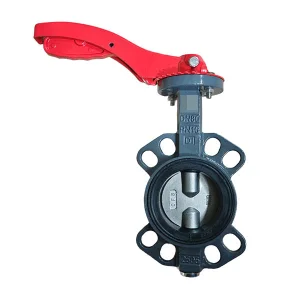
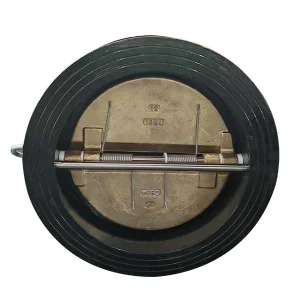
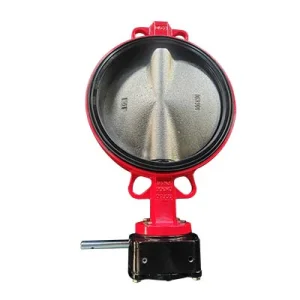
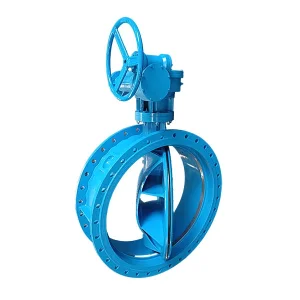
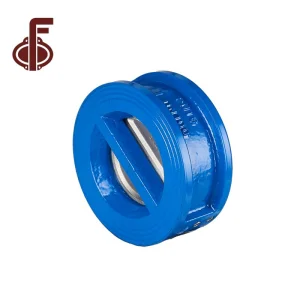
Featured High-Performance Valve Assemblies
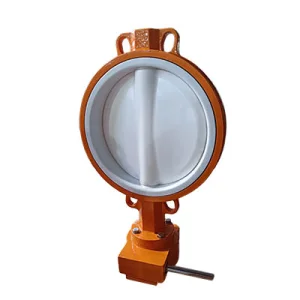
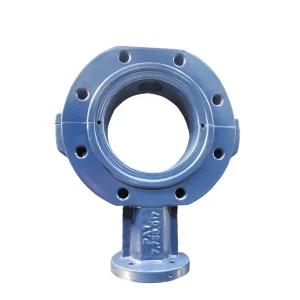
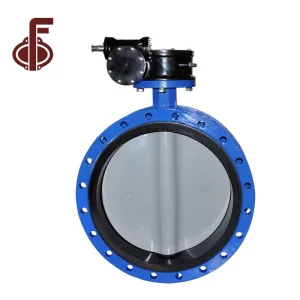
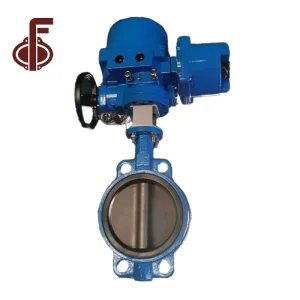
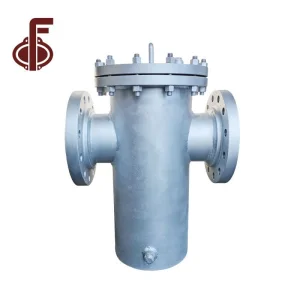
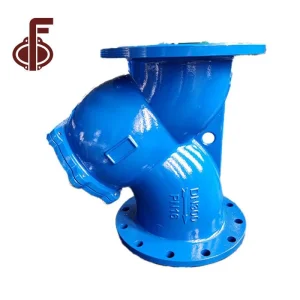
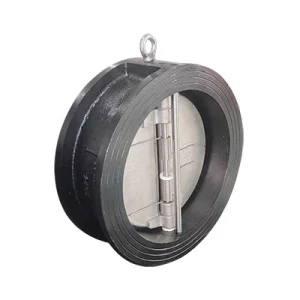
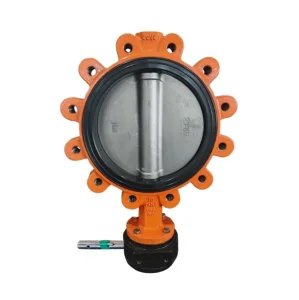
Comprehensive portfolio of precision-cast butterfly valves, flexible wedge gate valves, and strainers built to endure extreme temperatures and corrosive industrial media.
Global Industry Evolution: The Stainless Steel Advantage
Analyzing key structural shifts in industrial flow mechanics, material specifications, and regulatory frameworks driving the adoption of austenitic and duplex stainless steel gate valves.
Severe Environment Resilience
Modern petrochemical, LNG, and offshore extraction networks operate under aggressive chloride concentrations and volatile sour gas (H2S). CF8, CF8M, and Duplex SS (2205/2507) gate valves prevent pitting, stress corrosion cracking, and crevice failures where traditional carbon steels degrade prematurely.
Fugitive Emission Abatement
Global net-zero mandates have placed valve packing systems under rigorous scrutiny. Precision-machined stainless steel stems with micro-inch finishes, combined with multi-ring live-loaded PTFE or graphite packing rings, ensure total compliance with ISO 15848-1 and TA-Luft Class A standards.
Total Lifecycle Cost (TCO) Prioritization
While austenitic alloys demand higher upfront procurement capital compared to iron, forward-thinking operators factor in decades-long operational resilience, drastically reduced unplanned shutdowns, and zero interior lining delamination risks, driving down cumulative plant lifecycle expenses.
Global Procurement Demands: Engineering Matrix
Technical teams and EPC procurement officers must evaluate valve parameters against specific thermodynamic behaviors and corrosive mechanics. Below is our engineering selection criterion for stainless gate valves.
| Material Grade | Equivalent Standards | Operating Temperature | Ideal Industrial Applications | Corrosion & Yield Strengths |
|---|---|---|---|---|
| CF8 (SS304) | ASTM A351 / 1.4308 / SUS304 | -196°C to +425°C | Municipal water, food & beverage, cryogenic lines, light chemicals | Good general oxidation resistance; 205 MPa minimum yield strength. |
| CF8M (SS316) | ASTM A351 / 1.4408 / SUS316 | -196°C to +550°C | Chemical processing, marine terminals, sulfuric/acetic acid systems | Added 2-3% Molybdenum counters chloride pitting; high tensile integrity. |
| CF3M (SS316L) | ASTM A351 / 1.4404 / SUS316L | -196°C to +400°C | Pharmaceutical skids, semiconductor wash lines, welded pipework | Ultra-low carbon (≤0.03%) prevents intergranular carbide precipitation. |
| Duplex 2205 | ASTM A890 4A / 1.4462 / S31803 | -50°C to +280°C | Offshore oil platforms, desalination, flue gas desulfurization (FGD) | PREN ≥34; superior mechanical yield (≥450 MPa) and stress-cracking immunity. |
| Super Duplex 2507 | ASTM A890 5A / 1.4410 / S32750 | -50°C to +300°C | Deep-sea subsea injection, mining autoclaves, hot brine concentration | PREN ≥42; exceptional resistance to localized erosion-corrosion phenomena. |
Macro Industry Solutions & System Integration
Deploying application-tailored stainless steel isolation valves across mission-critical utility, process, and thermal circuits worldwide.
Refining & Petrochemical
Full-port OS&Y (Outside Screw and Yoke) bolted bonnet configurations constructed in CF8M ensure laminar stream flow with negligible delta-P, stopping coke accumulation and internal seat erosion.
LNG & Cryogenic Terminals
Extended bonnet configurations isolate stem seals from cryogenic liquids down to -196°C. Gas-relief holes drilled into the upstream wedge face prevent catastrophic thermal liquid trapped overpressurization.
Pharma & Pure Water (WFI)
Castings cleaned via advanced solvent degreasing and ultrasonic electropolishing down to Ra ≤ 0.4 µm. Ensures complete sanitary compliance and zero dead-leg particulate contamination during CIP/SIP cycles.
Desalination & Brine
Employing Super Duplex alloys combined with ceramic-coated or Stellite No. 6 hardfaced trim sets to resist the violent combined effects of continuous cavitation, suspended silica, and hyper-saline fluid.
Localized Support, Verification & Global Compliance
Ensuring frictionless international trade through cross-border standard mapping, rigorous third-party auditing, and comprehensive non-destructive examination (NDE).
International Valve Harmonization
Valves are engineered to cross-comply with API 600, API 603, ASME B16.34, DIN EN 1984, and GOST 5762. Flange drillings are precisely calibrated to ASME B16.5, EN 1092-1, or JIS B2220 to integrate smoothly with global pipe specs.
Complete NDT & Hydrostatic Assurance
Each unit undergoes high-pressure hydrostatic shell testing at 1.5x design pressure and low-pressure air seat tightness testing per API 598. Non-Destructive Testing (RT, UT, PT, MT) and PMI (Positive Material Identification) spectroscopic confirmation come standard.
Project EPC Tender Documentation
ZFA Valve delivers end-to-end documentary traceability packs including EN 10204 Type 3.1 Mill Test Reports, CE-PED Module H conformity, fire-safe test certifications (API 607 / ISO 10497), and fully legalized customs clearances.
R&D Roadmap: Intelligent Flow Control Architecture
Our ongoing manufacturing breakthroughs in additive alloy optimization, predictive IoT telemetry, and friction-minimizing stem tribology.
Stellite & Hardfacing R&D
Plasma Transferred Arc (PTA) automation depositing tungsten carbide and cobalt-base hardfacing overlays onto gate seats, boosting cycle life beyond 20,000 continuous shutoffs.
Smart IoT Valve Top-Units
Integrated wireless vibration and acoustic leakage sensors deployed directly within the packing gland, alerting maintenance control desks before minor emissions escalate.
Sub-Zero Cryo Heat Cycles
Enhanced deep-cryogenic liquid nitrogen immersion treating CF8M castings to eliminate retained austenite, ensuring micron-level dimensional stability at -196°C.
Zero-Fugitive Live-Loading
Standardizing spring-loaded Belleville washer packing systems on all gate valves, permanently eliminating manual packing gland adjustments during thermal swings.
Frequently Asked Questions (FAQ)
In-depth engineering answers addressing stainless steel gate valve manufacturing, structural variations, and application suitability.
What makes API 603 stainless valves different from API 600?
API 600 governs heavy-duty steel gate valves with heavy wall thicknesses originally designed for high-stress carbon steel lines. API 603 specifies light-walled, corrosion-resistant austenitic valves that maximize corrosion performance while cutting unnecessary weight and alloy raw material costs.
Why choose a flexible wedge over a solid wedge design?
Flexible wedges have an annular groove around their perimeter, allowing the seating faces to flex slightly under pipe stresses and thermal shifts. This minimizes thermal binding (jamming closed when heated) and lowers the torque required for unseating.
Can stainless steel gate valves be throttled safely?
No. Gate valves are designed exclusively for full shutoff or full unrestricted line-bore flow. Throttling creates high-velocity fluid jets against the partially open gate, inducing severe mechanical chattering, localized erosion, and irreversible seat damage.
How is stem galling prevented in high-pressure stainless valves?
Stainless steel surfaces sliding against each other can suffer from severe adhesive wear (galling). ZFA Valve prevents this by using hard chrome-plated stems, nitriding treatments, Stellite weld overlays on seats, and precision-machined aluminum-bronze yoke nuts (ASTM B148).
Industrial Gate, Butterfly & Check Valve Offerings
Explore our certified flow-control catalog built for high-demand processing plants, marine installations, and utility infrastructure networks.