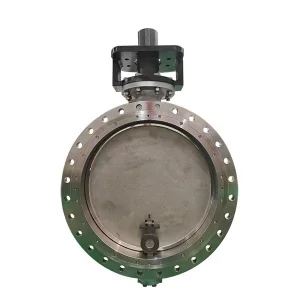
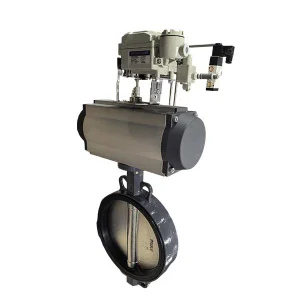
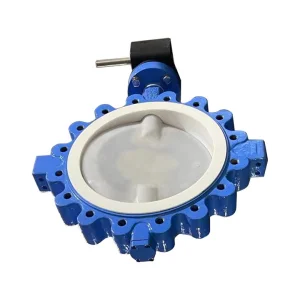
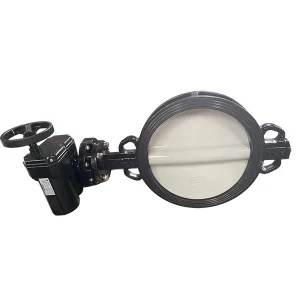
Standard & High-Performance OEM Valves
Explore engineering-grade resilient-seated and high-pressure butterfly valves manufactured to ASTM, ANSI, ISO, DIN, and JIS standards.
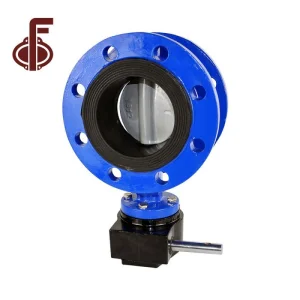
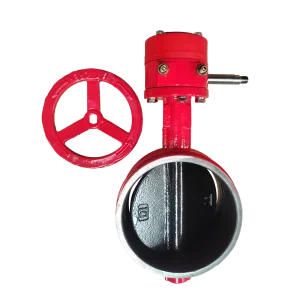
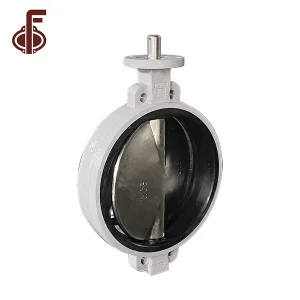
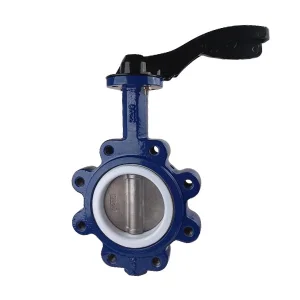
Anatomy of the Triple Offset Geometry (TOV)
Eliminating rotational friction through non-rubbing, camming mechanical action for bi-directional API 598 zero leakage.
Offset 1: Shaft Axis Displacement
The shaft center is positioned behind the plane of the sealing surface. This fundamental offset converts linear interference into a continuous, unbroken sealing plane across the entire circumference of the valve bore, avoiding stem-through-disc boundary leaks.
Offset 2: Pipe Centerline Deviation
The center of the shaft is shifted laterally away from the center of the pipe and valve body. During opening stroke, this offset generates a natural camming motion that pulls the disc cleanly away from the seat within the first few degrees of angular travel.
Offset 3: Oblique Conical Seat Profile
The sealing cone axis is tilted relative to the pipe centerline. This geometry completely eliminates friction between the disc laminated ring and body seat ring throughout the 90° stroke. Seating occurs strictly at the final shut-off point via mechanical torque compression.
Macro Dynamics & Global Procurement Trends
Why modern engineering, procurement, and construction (EPC) conglomerates are transitioning from gate and ball valves to triple offset butterfly valves.
Weight & Footprint Optimization
Traditional rising-stem gate valves and trunnion ball valves in 12" to 48" sizes pose severe structural burdens on offshore platforms and refinery piperacks. TOVs offer up to a 70% weight reduction and a compact face-to-face profile that drastically cuts structural fabrication and transport costs.
CAPEX & OPEX Lifecycle Economics
A single quarter-turn TOV reduces both actuation energy requirements and physical footprint. The complete lack of elastomeric or polymeric liners ensures service life measured in decades rather than operational quarters, mitigating unplanned shutdown expenditures in high-throughput lines.
Fugitive Emissions & Decarbonization
Under tightening environmental regulations including EPA Method 21, ISO 15848-1, and TA-Luft, fugitive emissions from multi-turn valve stems represent significant compliance risks. Rotary quarter-turn TOVs offer uniform stem packing stress, lowering leakage risks across harsh operating conditions.
Inherently Fire-Safe Design
Soft-seated valves rely on secondary metal lips once rubbers or PTFE degrade under direct flame. Triple offset valves feature native, full-metal or graphite-laminated sealing surfaces, retaining tight shut-off integrity during and after fire emergencies per API 607 / ISO 10497 standards.
China Industry 4.0: Supply Chain Resilience & OEM Scalability
Combining metallurgical traceability, digital multi-axis machining, and rigorous quality governance to satisfy tier-1 engineering standards.
Metallurgical Chemistry & Foundry Control
Reliable valve sealing begins with grain-level homogeneity. Our in-house and partner foundries run optical emission spectroscopy (OES) alongside digital radiographic testing (RT) and magnetic particle inspection (MPI). We guarantee strict adherence to ASTM A216 WCB, ASTM A351 CF8M, Duplex 2205, and Monel alloys with complete 3.1 EN 10204 inspection certification.
5-Axis Simultaneous CNC Machining
The inclined elliptical cone geometry of the triple offset profile cannot be formed with conventional machinery. Our modern production lines deploy simultaneous 5-axis machining centers programmed with CAD/CAM toolpaths to achieve micrometer-level dimensional tolerances on both the body seat angle and disc sealing laminate.
Automated Testing & Serialization
Every triple offset butterfly valve undergoes high-pressure hydrostatic shell testing at 1.5x design pressure and bi-directional resilient/metal seat air tests per API 598. Each unit is laser-marked with a unique QR code allowing field engineers to retrieve foundry heats, hydrostatic charts, and assembly torque logs on site.
Technology Benchmark: Concentric vs. Double vs. Triple Offset
A comprehensive engineering comparison to guide proper specification for EPC piping design teams.
| Performance Parameter | Concentric (Rubber Lined) | Double Offset (High Performance) | Triple Offset (Severe Service) |
|---|---|---|---|
| Sealing Principle | Interference squeeze fit on elastomer/PTFE | Camming action with soft or pressure-assisted seal | Torque-seated non-rubbing mechanical metal wedge |
| Seat Materials | EPDM, NBR, Viton, PTFE | PTFE, RTFE, PEEK, 316 Stainless | Stellite Hardfaced + SS316/Graphite Laminate |
| Pressure Boundaries | PN6 to PN16 (Class 150 limit) | Up to PN50 (Class 300) | Up to PN160 (Class 150, 300, 600, 900) |
| Operating Temperature | -20°C to +120°C | -50°C to +200°C | -196°C (Cryogenic) to +650°C (Thermal Fluid) |
| Friction & Seat Wear | Continuous scraping during 90° rotation | Friction relieved after 15°-20° opening | Zero rubbing; contact made only at 0° closure |
| API 598 Tightness | Resilient Zero Leakage | Class VI or Bubble Tight (Soft Seat) | Rate A Bi-Directional Metal-to-Metal Zero Leakage |
| Primary Media | Raw water, municipal HVAC, air | Hydrocarbons, utility steam, chemicals | Superheated steam, LNG, refining feeds, hydrogen |
Mission-Critical Installation Environments
Field-proven performance across extreme operating envelopes globally.
Refining, Petrochemical & Flare Lines
Hydrocracking, catalytic cracking (FCC), and hydrotreater processing units operate under thermal stress where thermal expansion causes traditional valves to gall. Triple offset valves with torque-dependent seating compensate naturally for thermal expansion differentials, maintaining tight shutoff.
Cryogenic Liquefied Natural Gas (LNG)
For temperatures down to -196°C, extended bonnets per BS 6364 isolate the stem packing from cryogenic liquified gas. The torque seating action prevents disc sticking, delivering low breakout torques during emergency isolation on carrier loading arms and regasification units.
District Energy & High-Pressure Steam
Combined cycle gas turbine (CCGT) plants and urban district heating infrastructures require continuous isolation of saturated and superheated steam. Our hardfaced Stellite Grade 6 seats withstand particulate erosion, cavitation, and water hammer without wire-drawing damage.
Frequently Asked Technical & Commercial Questions
Direct technical answers addressing the concerns of EPC engineers and industrial procurement managers.
While high-performance valves utilize a double offset shaft to clear the seat after initial rotation, they often still rely on polymeric inserts (PTFE/RTFE) or flexible metal rings prone to friction. A triple offset valve integrates a third geometric offset—an oblique conical seating axis—which eliminates sliding friction across the full stroke and enables an all-metal, torque-seated mechanical seal.
Yes. Our precision-engineered TOVs are designed, machined, and verified to achieve bi-directional zero leakage under API 598 and ISO 5208 Rate A standards. While line pressure in the preferred flow direction reinforces the mechanical seating force, the heavy-duty shaft and disc geometry maintain seal tightness in the reverse flow direction up to the full ASME rating.
Standard configurations employ ASTM A216 WCB or A351 CF8M bodies paired with Stellite hardfaced integral or weld-overlaid seats. The disc laminate consists of interleaved 316 stainless steel and graphite rings. For sour service (NACE MR0175/ISO 15156), Super Duplex 2507, Hastelloy C276, and Inconel 625 internal trims are machined to spec.
Yes. We supply complete turnkey flow-control assemblies configured with ISO 5211 top flanges. We assemble and calibrate pneumatic scotch-yoke actuators, smart electro-pneumatic positioners (4-20mA HART / Foundation Fieldbus), electric quarter-turn actuators, and hydraulic emergency shutdown systems (ESD) in-house.
Engineered Butterfly, Gate & Control Valves
Explore our export-ready range of engineered valves, custom components, and specialized fluid systems.