High-Performance Isolation & Flow Control Inventory
Explore our export-ready industrial valves, manufactured with tight geometric tolerances, traceable metallurgy, and universal flange drillings across ASTM, DIN, and JIS protocols.
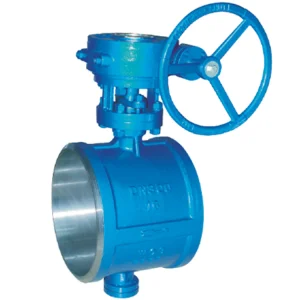
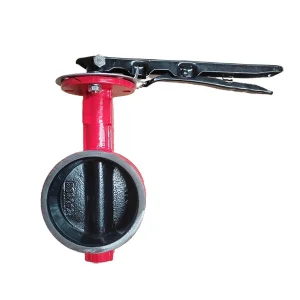
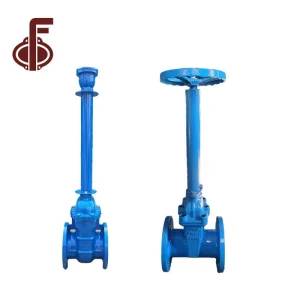
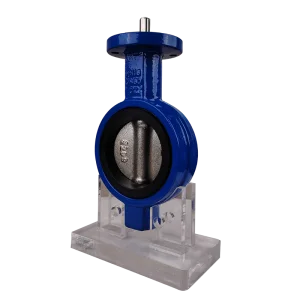
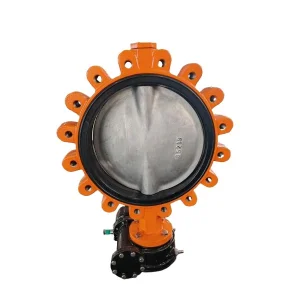
Kinematic Principles of Triple Offset (TOV) Geometries
Unlike resilient concentric or high-performance double eccentric butterfly valves, the Triple Offset Butterfly Valve (TOV / TEBV) uses non-rubbing cone-in-cone geometry to eliminate mechanical wear and galling during operation.
First Offset: Shaft Behind Sealing Plane
The shaft center is located downstream of the seal plane. This arrangement converts pure rotary motion into a sweeping action, allowing uninterrupted 360-degree contact across the complete seating face without split-body leak paths.
Second Offset: Shaft Off Pipe Centerline
The stem is offset from the longitudinal center of the pipeline. Upon the first degrees of opening, the disc quickly separates from the valve seat, eliminating rotational friction, rubbing wear, and seat deformation.
Third Offset: Inclined Conical Geometry
The sealing cone axis is angled relative to the valve bore centerline. This geometric profile creates a camming action: contact occurs solely at the final point of mechanical shutoff, delivering true torque-seated, zero-friction closure.
OEM Manufacturing Capabilities in Tianjin, China
Combining heavy casting supply chains with precision machining and automated testing, ZFA Valve delivers certified industrial valves with optimized lead times and stable project costs.
Full Metallurgical Control
Dedicated casting foundry partners provide WCB, LCC, WC6, CF8M, and Hastelloy materials. Each batch undergoes optical emission spectrometry (OES) to verify chemistry before machining begins.
5-Axis CNC Conical Profiling
Seat and disc sealing cones are generated on 5-axis CNC horizontal boring mills. This maintains surface finishes below Ra 0.4 µm, ensuring bubble-tight shutoff under API 598 standards.
NDT & Hydrostatic Validation
Valves are subjected to high-pressure hydrostatic shell, back-seat, and bi-directional air testing. Non-destructive examination (RT, UT, MT, PT) is documented with EN 10204 3.1 material test reports.
Integrated Actuation Integration
Equipped with standardized ISO 5211 direct-mount top flanges, our factory configures double-acting or spring-return pneumatic, electric, and electro-hydraulic actuators with short commissioning lead times.
Global Industry Trends Reshaping TOV Procurement
Global industrial engineering is moving toward lighter valve assemblies, lower fugitive emissions, and materials that withstand higher temperatures and pressure ratings.
Gate & Ball Valve Replacement
Engineers are increasingly replacing heavy gate and ball valves with triple offset valves. TOVs provide equivalent bi-directional zero-leakage shutoff with up to 70% less weight, reducing pipe support costs and footprint on offshore platforms and process skids.
Fugitive Emission Compliance (ISO 15848-1)
Environmental standards require minimal stem packing leakage. Modern TOV packing designs use die-formed flexible graphite rings and live-loaded Belleville disc springs to maintain a tight seal during thermal cycles.
LNG, Hydrogen & Cryogenic Expansion
Expanding clean gas infrastructure drives demand for extended-bonnet cryogenic TOVs operating at -196°C. Solid Stellite 21 hardfaced seats prevent embrittlement and seat damage during low-temperature cycling.
Engineered Solutions for Critical Industrial Systems
From district heating lines to offshore processing decks, TOV assemblies are configured to meet varied service conditions and safety standards.
Refining & Petrochemicals
For catalytic cracking, hydrotreating, and flare gas systems where temperatures exceed 450°C and hydrocarbon streams require API 607 fire-safe isolation.
District Energy & Steam
Engineered for high-pressure superheated steam distribution, cogenerated hot water, and condensate return lines prone to severe thermal cycling.
Cryogenics & LNG Regas
Equipped with extended ISO 28921 bonnets to insulate stem packing from boiling cryogenic gases, preserving packing elasticity during continuous operation.
Thermal Power Generation
Suited for boiler feed water, turbine bypass isolation, flue gas desulfurization (FGD), and cooling tower water circuits requiring dependable torque seated closure.
Desalination & Mining
Built with nickel aluminum bronze and duplex stainless steel (2205/2507) trims to resist pitting and crevice corrosion in chloride-heavy brine slurries.
Triple Offset vs. Alternative Valve Configurations
A technical comparison highlighting key operational differences between major quarter-turn and multi-turn isolation valves.
| Evaluation Parameter | Triple Offset Butterfly Valve | Concentric Resilient Seated | High Performance Double Offset | Solid Wedge Gate Valve |
|---|---|---|---|---|
| Sealing Principle | Torque-seated, cone-in-cone geometry | Position-seated interference fit | Position-seated camming action | Position-driven wedge wedging |
| Seat / Seal Construction | Laminated SS316/Graphite or Solid Stellite | Vulcanized EPDM, NBR, or Viton elastomer | PTFE, RTFE, or flexible metal seal ring | Integral or welded Stellite facing |
| Shutoff Tightness | API 598 zero leakage / ISO 5208 Rate A | Bubble-tight (limited temperature) | Class VI (soft) / Class IV (metal) | API 598 Class IV or V metal-to-metal |
| Temperature Limits | -196°C to +600°C | -20°C to +120°C | -50°C to +230°C (PTFE seat) | -29°C to +450°C |
| Installed Weight & Space | Very low (quarter-turn slim profile) | Ultra-compact wafer design | Compact wafer / lug footprint | Heavy casting with tall rising stem |
| Seat Rubbing & Galling | Zero rubbing during 90° rotation | Continuous scraping during travel | Reduced rubbing until final degrees | Sliding face-to-face friction wear |
Engineering Checklist for International Tenders
Review these critical technical parameters when preparing procurement specifications for large-scale energy, industrial, and municipal projects.
1. Body Construction & Ratings
Specify Wafer, Lugged, or Double Flanged (short/long pattern) bodies matching ASME B16.34 or EN 12516 pressure classes (Class 150 to Class 900; PN10 to PN100). Check wall thicknesses against API 609 Table 3.
2. Seat Ring Metallurgy & Trim
Select laminated stainless steel and graphite seat rings for resilient bubble-tight seal life up to 400°C. Choose hard-faced solid Stellite 21 metal seats for abrasive catalyst handling, steam throttling, or cryogenic use.
3. Shaft Retention & Safety
Verify internal blow-out proof stems per API 609 requirements. For corrosive lines, evaluate duplex 2205 or 17-4PH one-piece stems to withstand dynamic fluid torque without stem-to-disc pin shear.
Frequently Asked Questions on Triple Offset Valves
Direct technical answers to common questions about TOV specification, testing, and field maintenance.
What makes a Triple Offset Valve truly bi-directional?
Bi-directional sealing in a TOV requires balanced disc cone angles and uniform seat ring elasticity. This allows the valve to maintain torque-seated shutoff regardless of whether pressure is applied from the shaft side or the disc side, meeting API 598 zero-leakage standards in both directions.
How does a TOV handle thermal expansion without binding?
Conventional metal-seated ball and gate valves can experience thermal binding or seat seizure in high-temperature lines. Because a TOV relies on torque rather than mechanical position, thermal expansion simply maintains contact along the conical sealing faces without jamming the disc into the body.
Can laminated seat rings be serviced or replaced on site?
Yes. Our laminated seat rings are secured to the disc perimeter or valve body with a bolted retaining ring. The seal assembly can be inspected, re-torqued, or replaced using standard hand tools without discarding the valve casting or replacing the entire disc.
What documentation accompanies ZFA export consignments?
Each shipment includes an EN 10204 3.1 inspection certificate covering raw material chemical analyses, mechanical tensile tests, Charpy impact tests, hydrostatic shell and seat pressure test charts, and non-destructive examination (NDE) inspection logs.
Explore Additional Flow Isolation & Utility Valves
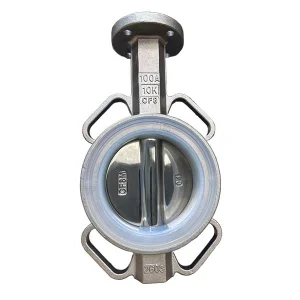
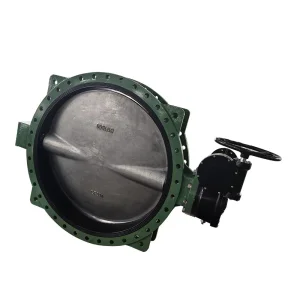
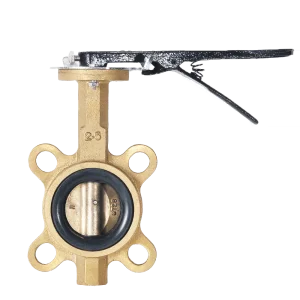
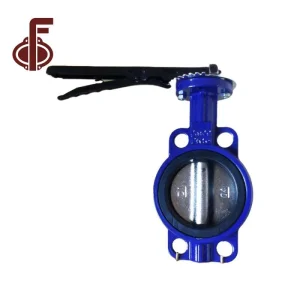
Complete your procurement package with our resilient seated butterfly valves, large diameter flange valves, and fully lined chemical process equipment.