
Featured Flow Control Assemblies (Series A)
Engineered quarter-turn solutions compliant with ASME B16.34, EN 593, and API 609 inspection metrics.
-
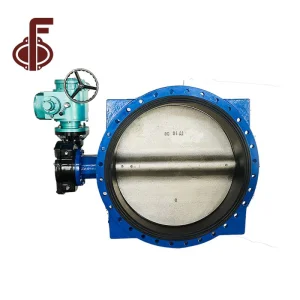
China Large Diameter Electric Flange Butterfly Valves Factories, Exporters
-
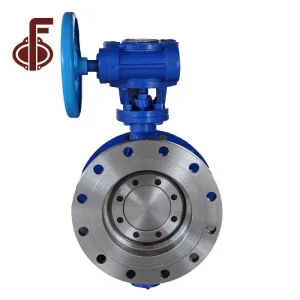
China Double Flanged Triple Offset Butterfly Valve Manufacturer, Factories
-
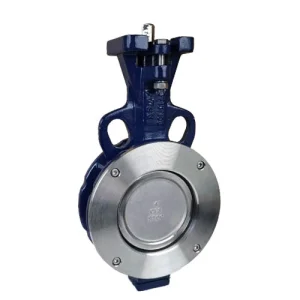
OEM Double Eccentric Wafer High Performance Butterfly Valve Factories, Exporters
-
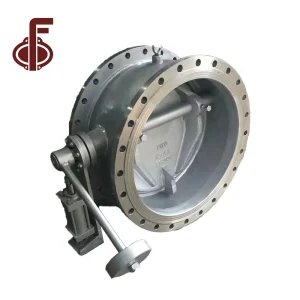
OEM Butterfly Check Valve with Heavy Hammer Manufacturers, Factory
-
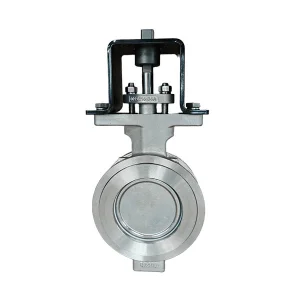
China CF8 Wafer High Performance Butterfly Valve with Support Manufacturers, Factories
-
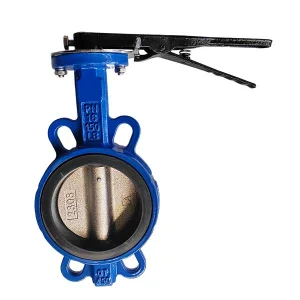
OEM PN16 5K 10K 150LB Hard Back Seat Wafer 4 Butterfly Valve Manufacturer, Factories
-
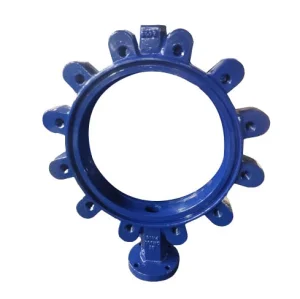
-
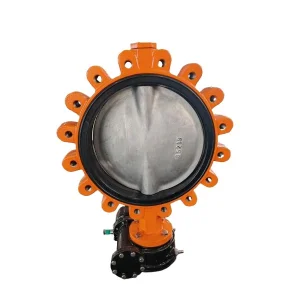
China Two Shaft Replaceable Seat Lug Butterfly Valve DN400 PN10 Manufacturers, Exporters
Executive Summary: Wafer vs Lug Butterfly Valve Mechanics
A rigorous structural assessment clarifying load transmission, thermal bolt expansion, and isolation topology.
Wafer Design: Compact Clamping
Wafer body valves lack female threaded lugs. They are sandwiched directly between line flanges using continuous all-thread rods. This creates the lowest structural weight and minimum face-to-face dimension (API 609 Category A).
Ideal for cost-sensitive distribution headers where physical footprint and dynamic weight directly dictate structural pipe hanger loads.
Lug Design: Independent Anchor
Lug body valves feature perimeter protrusions drilled and tapped with UNC or metric machine threads matching project class specifications. Bolts insert from both upstream and downstream sides independently.
Eliminates thermal cross-talk across bolt shanks and allows maintenance teams to detach one pipe section while preserving full static pressure on the opposing face.
Dead-End Service Capability
A mission-critical operational delta: Wafer valves can never be deployed safely for end-of-line isolation. Removing the downstream flange releases all bolt preload, instantly causing seat blowout.
Full-lug valves engineered by ZFA are certified to sustain full rated bi-directional or dead-end differential pressure (often rated at 90%–100% of nominal PN10/PN16 or Class 150).
Parametric Comparison: Engineering & Operational Metrics
Direct technical differentiation designed for plant EPC managers and piping stress analysis teams.
| Evaluation Parameter | Wafer Butterfly Valve | Lugged Butterfly Valve | Technical Impact & Engineering Gain |
|---|---|---|---|
| Dead-End Service | Unsafe / Non-compliant | Fully Capable (Up to Class Rating) | Lug allows pump/tank isolation and downstream overhaul without pipeline draining. |
| Face-to-Face Standards | ISO 5752 Series 20 / API 609 Cat A | ISO 5752 Series 20 / API 609 Cat A/B | Identical laying lengths ensure interchangeable drop-in replacement across systems. |
| Thermal Bolt Expansion | Higher risk (long through-studs) | Low risk (short independent bolts) | Long wafer studs expand under process thermal cycles, compromising gasket loading. |
| Structural Unit Weight | 20%–35% Lighter | Heavier due to threaded ear bosses | Wafer simplifies seismic pipe calculations and reduces shipping freight costs. |
| Flange Compatibility | Multi-standard alignment holes | Machined to exact EN/ASME/JIS drillings | Universal wafer slots fit PN10/16/Class 150; lug requires exact thread specification. |
| Procurement Capital Cost | Economical Baseline | 15%–30% Engineering Premium | Lug balances capital cost with lifecycle maintenance savings and system uptime. |
Industry 4.0 Foundry: Supply Chain Resilience & Casting Precision
Tianjin Zhongfa Valve Co., Ltd. (ZFA) integrates advanced cyber-physical casting systems to resolve global metallurgical bottlenecks.
Automated Shell Moulding
By implementing robotic moulding lines and computer-monitored sand casting, ZFA achieves consistent metallurgical nodularity (>85%) on all Ductile Iron QT450-10 and ASTM A536 65-45-12 bodies.
Internal wall thickness variance is held within +/-0.5mm, completely preventing stress micro-fissures during high-pressure water-hammer events.
CNC Multi-Axis Machining Centers
Lug body threaded blind holes and through-drilled connections are processed in a single clamping setup via high-precision CNC multi-axis milling heads.
This guarantees absolute perpendicularity of threaded bosses to the flange face, eliminating sheared studs caused by off-axis bolt alignment during field torquing.
Direct Full-Batch Traceability
Every casting heat charge undergoes real-time optical emission spectrometry. Chemical balances of C, Si, Mn, S, and P are logged alongside mechanical elongation metrics.
Mill Test Certificates (MTC) matching EN 10204 3.1 are automatically archived, giving EPC contractors clean documentation for global qualification audits.
Global Procurement Demands & Localization Scenarios
How international EPC contractors select wafer vs lug assemblies across varying municipal and plant environments.
Municipal Desalination
Seawater reverse osmosis demands Super Duplex or Nickel Aluminum Bronze discs with vulcanized high-grade EPDM or bonded rubber liners.
Lug configurations are prioritized at high-pressure booster pump stations to allow maintenance without depressurizing central manifold rings.
HVAC District Cooling
Chilled water distribution lines in commercial high-rises utilize wafer concentric valves with ductile iron bodies and aluminum-bronze trim.
Weight optimization reduces dynamic floor loads, while modular mounting brackets allow direct integration with quarter-turn electric modulating actuators.
Petrochemical & Tank Terminals
Hydrocarbon isolation requires NBR or PTFE seats with fire-safe certified designs. Flanged or lugged triple-eccentric metal-seated configurations dominate here.
Lug valves allow downstream piping disconnection during routine tanker pump-out overhauls while upholding full zero-leakage shutoff.
Thermal Power Circulation
Secondary cooling loops and flue gas treatment demand double eccentric high-performance valves capable of handling continuous cycling.
Custom actuator mountings complying with ISO 5211 ensure seamless interfacing with pneumatic double-acting or spring-return failsafe systems.
Technical Clarifications & Engineering FAQ
Direct responses to critical questions submitted to our engineering review desk.
Why is the wafer butterfly valve unsuitable for end-of-line dead-end service?
A wafer valve relies entirely on the mechanical compression generated by through-bolts spanning between two opposing pipe flanges. If the downstream pipe is removed, the clamping force across the elastomer liner is lost. Upstream system pressure will blow the resilient seat out of the body cavity, causing catastrophic leakage. For terminal points, a tapped lug or double-flanged body is strictly required.
What prevents differential thermal expansion failures on long wafer through-bolts?
On high-temperature steam or thermal fluid lines, long through-studs expand longitudinally at a faster total rate than the valve and pipe flange hubs. This relaxation reduces gasket seating stress and causes external line leaks. Lug valves resolve this because each set of bolts is significantly shorter, minimizing total thermal strain.
How does ZFA Valve guarantee zero porosity in Ductile Iron castings?
ZFA utilizes automated resin sand casting along with strict thermal analysis before pouring. Spectrographic analysis verifies magnesium inoculation for true spheroidal graphite structure. Every body undergoes hydro testing at 1.5 times the nominal working pressure and seat pneumatic testing at 1.1 times nominal pressure per API 598/EN 12266 standards before release.
Can ZFA supply custom OEM drillings for mixed-standard installations?
Yes. Our CNC operations can machine lug bodies to match ANSI Class 125/150, EN 1092-2 PN10/PN16, JIS B2239 10K, or AS 2129 Table E specifications on the same production line. We also provide full custom labelling, stainless steel nameplates, epoxy coating RAL colors, and dedicated actuator adaptation per ISO 5211.
Engineered OEM Valve Inventory (Series B)
High-integrity industrial configurations engineered for municipal, chemical, and heavy industrial plant duty.
-
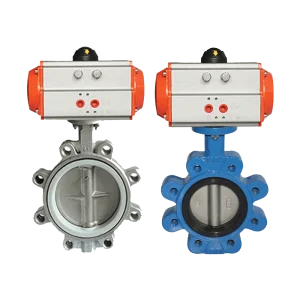
China Pneumatic Soft Seal Lug Butterfly Valve OEM Factory, Factories
-
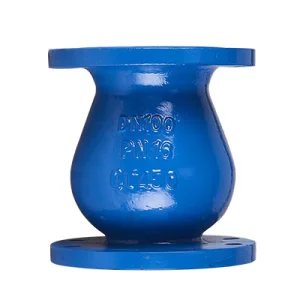
OEM Axial Flow Silent Check Valve One Way Flow Non Return Valve Manufacturer, Exporter
-
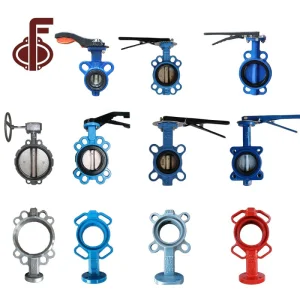
OEM DI CI SS304 SS316 Butterfly Valve Body Manufacturers, Factory
-
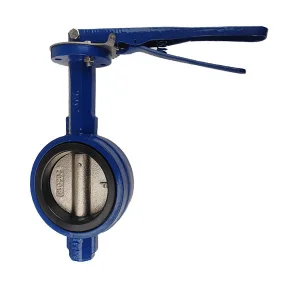
China Hard Back Seat Earless Wafer Butterfly Valve with Handlever Factories, Exporters
-
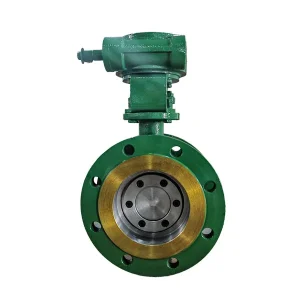
OEM WCB Double Flanged Triple Offset Triple Eccentric Butterfly Valve Exporter, Exporters
-
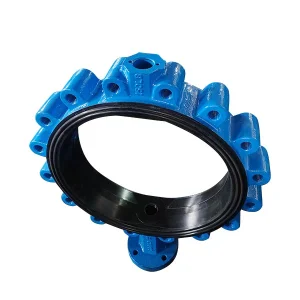
China EPDM Replaceable Seat Ductile Iron Lug Type Butterfly Valve Body Manufacturer, Exporter
-
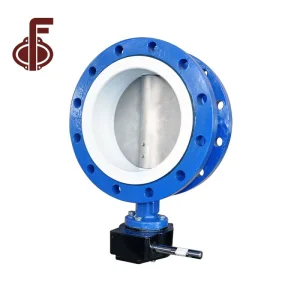
OEM PTFE Seat Flange Type Butterfly Valve Manufacturers, Factory
-
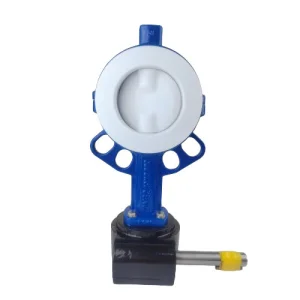
China DN80 Split Body PTFE Full Lined Wafer Butterfly Valve Manufacturers, Factory
