
Engineered Flow-Control & Filtration Portfolio
Explore our heavy-duty valve series engineered in tandem with Y-strainer filtration nodes to secure plant integrity across municipal, petrochemical, and high-pressure steam utility circuits.
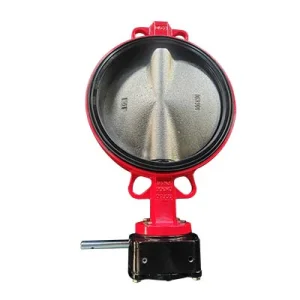
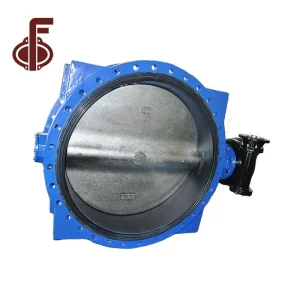
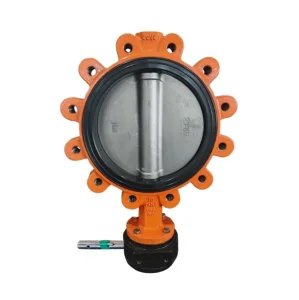
OEM Replaceable Seat CF8M Disc Lug Butterfly Valve DN250 PN10 10Inch Manufacturer, Factories
View Specifications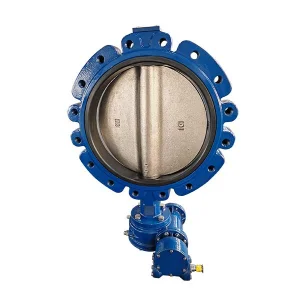
OEM 18" Hard Back Seat Lug Butterfly Valve with Pin DN450 PN10 Manufacturer, Exporters
View Specifications
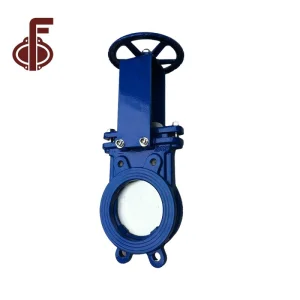
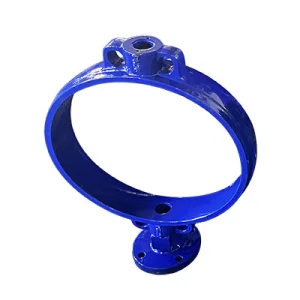
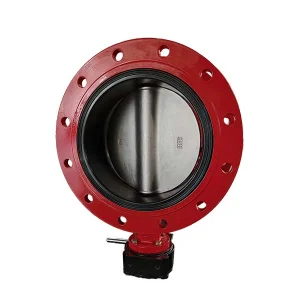
OEM Two Shaft Replaceable Seat Double Flange Butterfly Valve Manufacturers, Exporter
View SpecificationsHydrodynamic Design & Fluid Separation Mechanics
A rigorous examination of fluid dynamics, internal open area ratios (OAR), and non-turbulent particle deflection in industrial Y-pattern strainers.
Optimized Flow Coefficient (Cv)
The standard Y-strainer body relies on an angular branch designed at an angle between 45° and 60° to the primary pipe axis. Our hydrodynamic computer simulations (CFD) optimize the internal core curvature, mitigating boundary-layer separation and minimizing parasitic head loss across wide velocity bands.
By engineering generous transition radii within the inlet throat, fluid vortices are reduced by up to 28% compared to conventional orthogonal sand castings, ensuring that sensitive downstream machinery—including control valves and positive displacement pumps—receives continuous, uninterrupted volumetric flow.
Open Area Ratio (OAR) Integrity
A fundamental parameter of any strainer’s service lifespan between cleaning intervals is the Open Area Ratio (OAR). The OAR represents the net free internal filtering area of the perforated basket relative to the nominal cross-sectional area of the upstream pipe.
Our OEM manufacturing standard demands an OAR of no less than 3:1 to 4:1 under nominal pipe diameters. An OAR of 4:1 ensures that the strainer can operate until the screen is 70% occluded by scale, debris, or weld slag before the localized differential pressure ($\Delta P$) surpasses normal system tolerances.
Blow-Off Port & Self-Purging
Positioned at the apex of the strainer cover flange is the blow-down or blow-off tapped port (conforming to NPT or BSPT threading per ANSI B1.20.1 / ISO 7-1). This port allows for manual or automated blow-down valves to flush entrapped debris while the line remains fully pressurized.
Our precision-aligned guide seats ensure the stainless-steel screen remains firmly anchored during violent blow-down transients, preventing screen displacement, basket collapse, or fluid bypass through unmachined cover cavities.
China Factory Advantages in Industrial Valve & Strainer Fabrication
How our vertically integrated foundry cluster in Tianjin, China delivers unmatched metallurgy, dimensional precision, and cost elasticity to international brands.
Direct Foundry Integration & Metallurgy
Unlike aggregators, our factory model controls the casting process from virgin pig iron, scrap selection, and spectral metallurgy to finished pouring. Utilizing automated resin-sand molding and lost-wax investment casting lines, we eliminate common foundry defects such as pinholes, cold shuts, and sand inclusions.
Every melt batch undergoes spectrometer analysis verifying chemical compositions for carbon steel (WCB/WCC), ductile iron (QT450-10 / EN-GJS-450-10 / GGG50), and austenitic stainless steels (CF8, CF8M, CF3M), generating EN 10204 3.1 certifiable chemistry before the metal ever hits the ladle.
Advanced CNC Machining Clusters
The internal basket stop ledge and external flange sealing faces require micro-inch dimensional tolerance. Our workshops are powered by multi-axis horizontal CNC machining centers that bore the seat pocket, face the flanges, and tap the bolt holes in a single fixture clamp.
This automated synchronization guarantees absolute concentricity, preventing flange face misalignment and ensuring uniform gasket compression in compliance with ASME B16.5, DIN EN 1092-1, and GOST 12820 standards, which dramatically reduces field installation labor for EPC contractors.
Tianjin Port Logistics & Supply Chain Resilience
Situated within the heavy industrial heartland of North China and merely 45 kilometers from Tianjin Xingang Port, our logistics operations bypass complex inland transshipments. This location enables rapid ocean-freight container packing and express customs clearance for international clients.
We leverage localized clustering of rubber molding, stainless steel screen perforating, and electrostatic epoxy coating services to achieve compressed manufacturing lead times—slashing procurement cycles by 30% relative to Western or Indian valve foundries.
Comprehensive Metallurgical & Screen Selection Matrix
A reference architecture for specifying body metallurgy, cover gasket mechanics, and screen micron-to-mesh ratings according to process fluid parameters.
| Material Grade | Standard Designation | Design Pressure Range | Thermal Boundary | Recommended Process Media | Screen Alloy Compatibility |
|---|---|---|---|---|---|
| Ductile Iron | GGG40 / GGG50 / A536 | PN10 / PN16 / Class 150 | -10°C to +180°C | Potable water, raw sewage, HVAC hydronics | SS304 / SS316 |
| Cast Carbon Steel | ASTM A216 WCB / WCC | PN16 to PN100 / Class 150–600 | -29°C to +425°C | Superheated steam, boiler feed, non-sour hydrocarbons | SS304 / SS316 / Monel |
| Austenitic Stainless | ASTM A351 CF8M / 1.4408 | PN16 to PN63 / Class 150–300 | -196°C to +550°C | Chemical process lines, corrosive acids, marine brine | SS316L / Hastelloy C |
| Low Temp Carbon Steel | ASTM A352 LCB / LCC | Class 150 / Class 300 | -46°C to +345°C | Cryogenic fluids, Arctic petrochemical extraction | SS316 / SS316L |
| Duplex Stainless Steel | ASTM A890 4A (2205) / 5A | PN25 to PN100 / Class 150–600 | -40°C to +300°C | Seawater RO desalination, high-chloride environments | 2205 Duplex / 2507 Super Duplex |
Perforated Plate
Aperture: 1.0mm to 6.0mm
Standard baseline for primary pump suction headers, large-diameter cooling towers, and intake flumes handling coarse stones, gravel, and weld spatters.
20 to 60 Mesh
Particle Retention: 840μm to 250μm
Ideal for steam distribution lines, commercial hot water circuits, heat exchangers, and secondary HVAC loops safeguarding plate-and-frame units.
80 to 200 Mesh
Particle Retention: 177μm to 74μm
Wire mesh reinforced by a heavier backing perforated cylinder. Essential for fuel injection burners, hydraulic control valves, and metering stations.
300 to 400 Mesh
Particle Retention: 48μm to 37μm
Specially engineered for high-purity chemical processes, micro-sprinkler nozzles, electronic cooling loops, and ultrafiltration pre-treatment stages.
Macro Industry Solutions & Localized Application Engineering
Engineered filtration systems designed to protect mission-critical equipment, eliminate unscheduled downtime, and streamline plant efficiency across extreme operational regimes.
HVAC Hydronics & District Energy
In large-scale commercial chillers and district heating substations, particulate debris such as magnetite scale and pipe rust accumulates rapidly. Unchecked debris deposits onto condenser tubes, reducing heat transfer coefficients and causing premature mechanical seal failure.
Our cast ductile iron Y-strainers with epoxy fusion coatings prevent galvanic corrosion and ensure that chilled/hot water circulation operates with minimal differential pressure drops, protecting multistage centrifugal pumps and balancing valves.
Steam Distribution & Condensate
Steam lines present extreme thermal shocks and violent velocities exceeding 30 m/s. Water hammer, carryover boiler scale, and condensation slugs can fracture fragile components inside downstream thermodynamic or inverted bucket steam traps.
Our cast steel WCB and forged A105 Y-strainers feature precision-machined bolted bonnets and spiral-wound SS316/Graphite gaskets engineered to withstand rapid thermodynamic transients without weeping, protecting pressure reducing valves (PRVs) and steam turbine inlet headers.
Desalination & Seawater Intake
Seawater reverse osmosis (SWRO) facilities operate in hyper-saline, aggressively corrosive environments where standard cast irons and 304 steels experience rapid pitting and crevice corrosion under stagnant fluid deposits.
We supply specialized duplex stainless steel (2205 / 2507) and nickel aluminum bronze (C95800) Y-strainers fitted with Monel screens. These units serve as critical primary defenses upstream of energy recovery devices (ERDs) and high-pressure ceramic plunger pumps.
Refining & Hydrocarbon Processing
Hydrocarbon refining processes demand strict fugitive emission prevention, API fire-safe designs, and compliance with NACE MR0175/ISO 15156 sour gas criteria. Trace hydrogen sulfide ($H_2S$) requires precise post-weld heat treatment and controlled carbon equivalent limits.
Our heavy-wall Class 300 and Class 600 cast steel Y-strainers undergo 100% radiographic, magnetic particle, and dye-penetrant testing of all high-stress casting junctions, eliminating the risk of catastrophic pipe ruptures within refinery crude cracking and distillation towers.
Municipal Water Treatment & Sewage
Public water works utilities operate continuous-duty lines requiring drinking-water certifications (NSF/ANSI 61, WRAS) alongside robust abrasion resistance against quartz sand and organic solids present in raw river intake water.
We deliver large-diameter (DN300 to DN1200) flanged ductile iron Y-strainers coated internally and externally with electrostatically applied non-toxic epoxy (minimum 250 microns thickness), guaranteeing zero rust bleeding and decades of maintenance-free service.
Mining Slurry & Pulp Fluid Transport
Transporting mineral slurries, lime milk, or cellulose wood pulp generates intense physical erosion that rapidly scours through standard thin-gauge strainer elements and localized pipe bends.
Our OEM engineers specify extra-thick sacrificial casting walls paired with heavy-gauge punched perforated baskets lined with abrasion-resistant wear plates or specialized polyurethane liners, extending service life in demanding extractive metallurgy operations.
Emerging Technologies & Future Development Trends
Discover how digitization, predictive artificial intelligence, and decarbonization pressures are transforming the engineering design of classic pipeline Y-strainers.
Smart Strainers with Telemetric DP Transmitters
Manual monitoring of pressure gauges is rapidly being replaced by factory-integrated differential pressure ($\Delta P$) smart transmitters. Using integrated industrial IoT micro-sensors connected via wireless protocols (Modbus, WirelessHART, LoRaWAN), the modern Y-strainer continuously streams differential pressure telemetry back to SCADA systems.
Predictive AI maintenance models detect the precise moment clogging reaches critical inflection points, triggering automatic blow-off cycle actuators without requiring manual technician patrol routes, thus preventing costly pump cavitation incidents.
CFD Flow Optimization & Carbon Footprint
Industrial pumping stations consume roughly 20% of global electrical motor energy. Every fraction of a bar in pressure loss caused by inefficient internal valve contours directly inflates ongoing kilowatt-hour consumption over decades of plant operation.
By employing computational multi-phase flow modeling, we refine internal core curvatures to streamline fluid velocity profiles. The resulting reduction in internal drag saves thousands of megawatt-hours annually across major pipeline networks, aligning industrial infrastructure with international Net-Zero targets.
Quick-Opening Closures & Fugitive Emission Control
Traditional bolted bonnet removal requires extensive wrench torqueing, gasket scrapers, and substantial labor during routine turnarounds. We are actively expanding production of clamp-ring and bayonet-style Quick-Opening Closures (QOC).
Paired with live-loaded fluoropolymer or flexible graphite sealing arrangements conforming to ISO 15848-1 standards, these modern designs allow one technician to service a DN300 strainer basket in under three minutes with zero volatile fugitive emissions.
Global Sourcing Criteria, QA/QC Protocols & EPC Compliance
A comprehensive overview of international quality verification procedures, non-destructive examinations (NDE), and export packaging protocols demanded by global engineering contractors.
Factory Acceptance Testing (FAT) & Proof Testing
Every single Y-strainer casting leaving our factory undergoes hydrostatic and pneumatic pressure testing following API 598, EN 12266-1, or ISO 5208 specifications. Shell test pressure is maintained at a minimum of 1.5 times the cold working pressure (CWP) rating to confirm metallurgical soundness and the absence of micro-porosity.
Wall thickness verifications via ultrasonic testing (UT), accompanied by Positive Material Identification (PMI) using handheld X-ray fluorescence (XRF) analyzers, ensure that specified alloy levels (such as Cr, Ni, and Mo) match customer datasheets exactly.
EN 10204 3.1 Certification & Traceability
Global engineering procurement companies require complete document packages for technical audits. Every shipment includes certified mill test reports (MTR) according to EN 10204 Type 3.1, detailing mechanical tensile tests, Charpy V-notch impact values at sub-zero temperatures, and heat-treatment logs.
Castings feature cast-on or permanently laser-etched heat numbers providing direct traceability back to the raw pouring ladle, providing full accountability for safety-critical nuclear, offshore, and petrochemical projects.
Export Seaworthy Preservation & Logistics
Transoceanic freight exposes precision-machined flange faces to saline air, humidity, and mechanical impact. Our packaging protocol involves cleaning, drying, and applying vapor-phase corrosion inhibitors (VCI), followed by heavy rust-preventative oil coating on all unpainted metal faces.
Flange faces are shielded with heavy-duty polyethylene protectors and secured in fumigated solid-plywood cases compliant with ISPM-15 export regulations, preventing physical transit damage and moisture damage during prolonged ocean journeys.
Frequently Asked Questions on Y-Strainer Engineering
In-depth technical answers addressing installation geometry, sizing equations, maintenance blow-down procedures, and screen performance.
Can a Y-strainer be installed in both horizontal and vertical piping alignments?
How do engineers convert between filter screen mesh count and micron rating?
What causes strainer basket screen collapse, and how is it prevented?
What is the allowable differential pressure limit before a strainer requires cleaning?
What is the technical difference between a Y-Strainer and a Basket (T-type) Strainer?
How does our OEM customization accommodate international project requirements?
What are the best practices for sizing the blow-off valve on the strainer cover?
Which cover gasket material provides the best reliability in high-temperature steam lines?
Severe-Service Valves & Pipeline Accessories
Direct factory supply of high-performance butterfly valves, soft-sealing gate valves, and triple-eccentric isolation mechanisms ready for worldwide deployment.
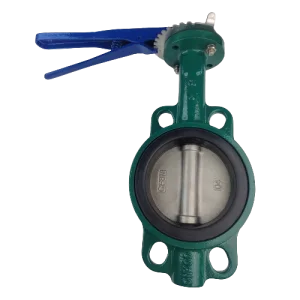
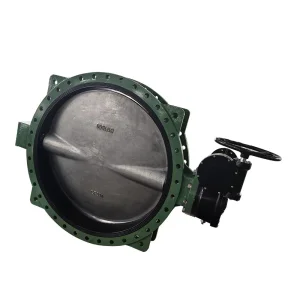
OEM DN1500 Vulcanized EPDM Seat Large Flange Butterfly Valve Exporter, Exporters
View Specifications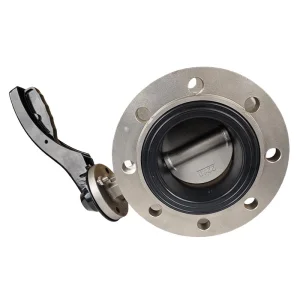
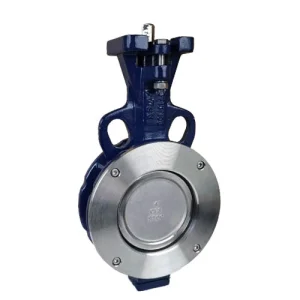
OEM Double Eccentric Wafer High Performance Butterfly Valve Factories, Exporters
View Specifications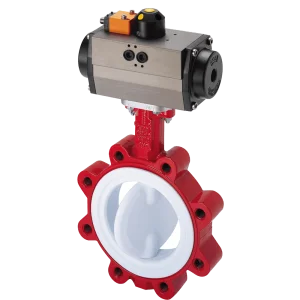
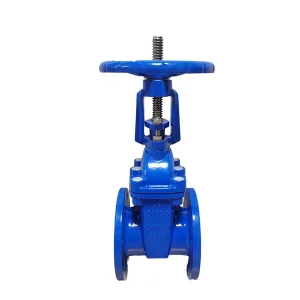
China F4 Bolted Bonnet Soft Sealing Rising Stem OSY Gate Valve Factory, Exporters
View Specifications
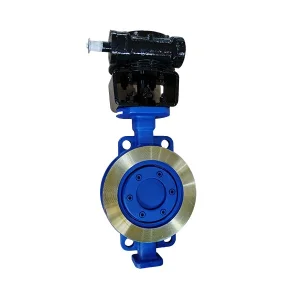
China DN200 WCB Wafer Triple Offset Butterfly Valve with Worm Gear Manufacturers, Exporter
View SpecificationsRequest an Engineering RFP & Custom Drawing Review
Connect directly with our senior valve engineering desk in Tianjin. Whether you require custom casting patterns, specialized NACE MR0175 sour service metallurgy, non-standard face-to-face dimensions, or large-volume brand contract manufacturing, our team delivers complete CAD/SolidWorks models, material test reports, and formal project quotations within 24 hours.
