
High-Integrity Gate Solutions for the Belgian Industrial Market
Direct factory-engineered configurations matching standard European and International DIN/ASME specifications for high-viscosity, high-temperature operations.
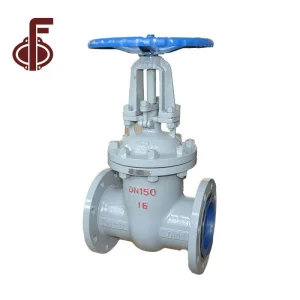
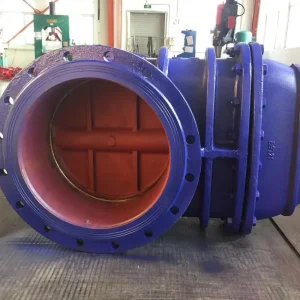
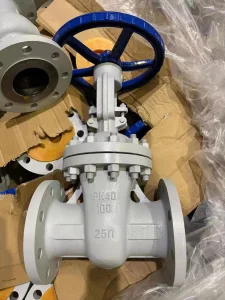
The Industrial Landscape of Belgium & Global Fluid Dynamics
Belgium holds a distinctive status in Western Europe's industrial framework. Centered around the Port of Antwerp-Bruges—the second largest petrochemical complex in the world after Houston—the regional demand for robust, zero-fail isolation components is subject to rigorous European safety and emission benchmarks. The continuous exposure of processing infrastructure to volatile hydrocarbons, cryogenic cracking agents, high-temperature steam lines, and aggressive marine air creates an operating environment that rapidly deteriorates standard elastomeric seals. For Belgian EPC contractors, refinery maintenance engineers, and municipal utility managers, metal-to-metal seal gate valves represent the mandatory benchmark for non-negotiable process safety.
On a macro scale, the transition toward hydrogen blends, closed-loop circular chemical processing, and localized biomass heat recovery across Flanders and Wallonia has fundamentally altered valve qualification metrics. Industrial operators are progressively decommissioning soft-seated gate valves in critical thermal and chemical nodes due to thermal creep, rapid polymer degradation, and catastrophic fire vulnerability. ZFA Valve bridges this mission-critical gap by engineering high-performance API 600, EN 1984, and ISO 10434 compliant cast and forged metal seal gate valves that integrate hard-facing overlays such as Stellite Gr. 6 and Tungsten Carbide to provide uninterrupted duty under cycle fatigue.
Comprehensive Solutions for Complex Thermal and Mechanical Stresses
In high-velocity fluid circuits, conventional parallel slice or wedge gate valves frequently experience galling and micro-welding across seat faces when subjected to high differential pressures. ZFA Valve tackles this by executing precision grinding and lapping procedures on wedge guide ribs and seating surfaces. Our automated plasma transferred arc (PTA) welding applies continuous high-integrity cobalt-based Stellite layers onto seat rings and wedge bodies, preventing seat lifting, deformation under extreme thermal shock, and high-frequency cavitation common in Antwerp's distillation towers and steam distribution manifolds.
Metallurgical Superiority
Body and bonnet materials sourced exclusively from certified induction foundries in grades WCB, LCB, CF8M, WC6, and 4A Duplex, fully adhering to European Pressure Equipment Directive (PED 2014/68/EU).
Fugitive Emission Prevention
Engineered stuffing boxes configured with die-formed flexible graphite rings and braided carbon yarn anti-extrusion caps, passing tight TA-Luft and ISO 15848-1 tightness thresholds.
Bi-Directional Sealing Wedge
Flexible solid wedge geometries engineered with calculated deflection matrices allow reliable sealing across fluctuating thermal gradients, preventing thermal binding during system cool-down.
Tailored Implementation Across Belgian Industrial Hubs
Direct compatibility engineering matching specialized environmental challenges across key industrial zones in Belgium.
Refineries operating fluid catalytic cracking (FCC) units and ethylene cracking furnaces require robust API 600 cast steel gate valves fitted with trim 5 (full Stellite) to resist sulfur corrosion, heavy aromatic hydrocarbons, and coke particulate erosion at temps up to 550°C.
Extended bonnet configurations specifically manufactured for sub-zero liquid gas service down to -196°C. Gas-relief holes drilled into the wedge upstream face relieve trapped liquefaction overpressures within the valve body cavity, safeguarding operational integrity.
High-pressure Class 600/900/1500 forged pressure-seal gate valves tailored for secondary steam distribution and high-pressure feedwater headers, utilizing hardened 13Cr stainless trims and mechanical anti-blowout stem seating systems.
Belgian Regulatory Compliance & Factory Verification Roadmap
To guarantee seamless site integration without customs delays or plant commissioning holds, ZFA Valve coordinates full technical documentation matching Belgian federal and EU workplace directives:
1. PED 2014/68/EU Module H
Full CE certification coverage confirming pressure containment, materials safety, and third-party notified body design review.
2. ATEX 2014/34/EU Verification
Certified electrical grounding straps between stem and body preventing electrostatic discharges in flammable chemical atmospheres.
3. EN 10204 3.1 Traceability
Chemical composition, Charpy V-notch impact tests at -29°C/-46°C, and mechanical yield testing verified per mill melt heat.
4. Non-Destructive Testing
100% shell hydrostatic test per EN 12266-1/API 598 plus optional Radiographic (RT), Ultrasonic (UT), and Dye Penetrant (PT) inspections.
Technological Roadmap: The Evolution of Smart Metal-Seated Valves
Continuous R&D optimizing valve life cycles, carbon emissions monitoring, and predictive lifecycle analytics.
Hydrogen Embrittlement Resistance
Investments in ultra-low sulfur raw steel melts, specialized vacuum degassed castings, and specialized micro-alloying to withstand high-pressure gaseous hydrogen service per ISO/TR 15916 standards.
Digital Twin Cavity Monitoring
Integration of wireless piezoresistive acoustic emission and thermal pressure sensors embedded in the bonnet chamber to communicate seat wear parameters directly to refinery SCADA networks.
Superalloy Deposition Technology
Transition from conventional arc cladding to High-Velocity Oxygen-Fuel (HVOF) nanostructured ceramic-metallic composites, multiplying abrasive cycle longevity by up to 300% in slurry-heavy processes.
Looking for Custom Metal Seal Gate Valves for Belgian Projects?
Our sales engineering team provides full drawing cross-sections, 3D CAD modeling, custom trims, and factory acceptance test (FAT) support within 24 hours.
Send Inquiry NowFrequently Asked Questions on Metal Seal Gate Valves
In-depth engineering answers addressing installation, metallurgy, and procurement requirements in Belgium and the broader EU.
What differentiates a metal seal gate valve from a resilient/soft seal gate valve in process plants?
Metal seal gate valves rely on ground, polished, and hardfaced metal-to-metal contact (such as Stellite on stainless steel) between the wedge disc and the body seat rings. Soft seal gate valves utilize vulcanized elastomers (EPDM/NBR) bonded to the wedge. Metal seal gate valves are strictly mandatory when handling fluids exceeding 80°C–120°C, high steam ratings, volatile hydrocarbons, abrasive slurry suspensions, or cryogenic temperatures where elastomer matrices harden, burn, or fail mechanically.
Can ZFA Valve provide dual-certified ASME and DIN flange dimensions for Belgian retrofits?
Yes. Belgian manufacturing facilities frequently possess a mixture of legacy German DIN standard piping, French standard lines, and American ASME B16.5 petrochem piping. ZFA Valve can provide customized face-to-face cast lengths (EN 558 series 14/15 or ASME B16.10) with multi-drilling or tailored flange dimensions matching PN16, PN25, PN40, or Class 150/300/600 tolerances without modifying downstream plant flanges.
How does ZFA Valve guarantee zero leakage across high-pressure metal seating?
All gate valves undergo hydrostatic shell testing at 1.5 times the nominal working pressure and high-pressure seat testing at 1.1 times nominal rating according to API 598, EN 12266-1, or ISO 5208. By utilizing robotic automated cladding, sub-micron CNC horizontal seat boring, and high-precision abrasive diamond compound lapping, our seat and wedge surfaces attain Rate A (bubble-tight) or API 598 maximum allowable leakage limits without binding.
What anti-corrosive paint and packaging standards are applied for Belgian maritime shipping?
All finished valves destined for export to the Port of Antwerp or Zeebrugge receive shot-blasting to Sa 2.5 profile followed by high-solid epoxy primer and two-pack polyurethane topcoats (C3 to C5-M marine exposure class according to ISO 12944). Internal metallic machined areas are coated with rust-inhibiting cosmoline oils, fitted with heavy-duty polyethylene flange covers, and vacuum-sealed in moisture-barrier desiccated heat-treated wooden crates conforming to ISPM 15 standards.
What documentation is bundled with orders shipped directly to Belgium?
Every dispatch contains a complete documentation dossier consisting of: EN 10204 3.1 Material Test Reports (MTR) covering raw material ladle chemical analyses and tensile/impact tests; Hydrostatic and Pneumatic Factory Acceptance Test (FAT) certificates; Certificate of Conformity to PED 2014/68/EU; ATEX declaration (where requested); Installation, Operation and Maintenance (IOM) Manuals; and a full packing list complete with customs HS code designations.
High Performance Heavy Duty Gate & Process Valves
Explore our complete export catalog engineered to fulfill critical isolation specifications for industrial operations in Belgium and worldwide.
-
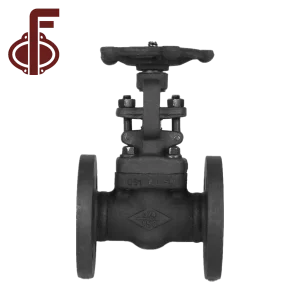
OEM Class 1200 High-Pressure Forged Gate Valve for Steam Systems
-
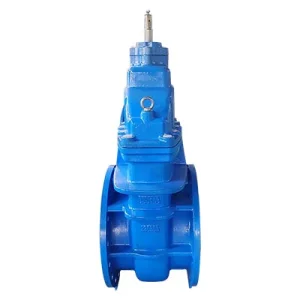
Stainless Steel Metal Seated Non-Rising Stem Underground Valve
-
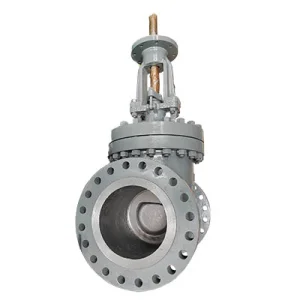
Heavy-Bore DN600 WCB OS&Y Rising Stem Gate Valve for Pipelines
-
-
-
-
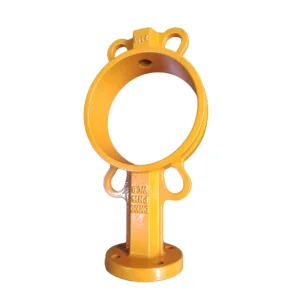
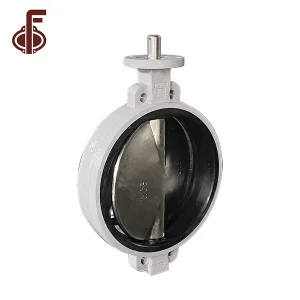
DN100 PN16 WCB Cast Body Wafer Butterfly Valve for Process Lines
-
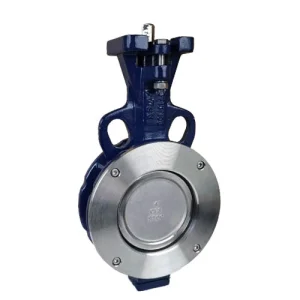
High Performance Double Eccentric Wafer Valve for Belgian Chemical Units
