
Featured Industrial Butterfly & Flow Control Assemblies
Explore high-performance flange-mounted and wafer flow solutions designed for municipal waterworks, petrochemical treatment, desalination, and critical process plants.
-
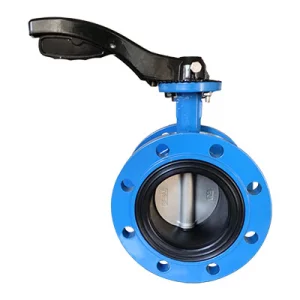 OEM EN593 Replaceable EPDM Seat DI Flange Butterfly Valve
-
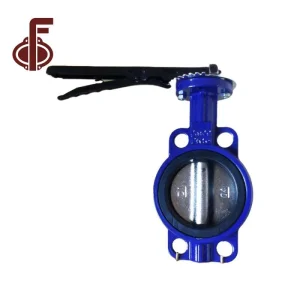 OEM Handle Actuated Ductile Iron Wafer Type Butterfly Valve
-
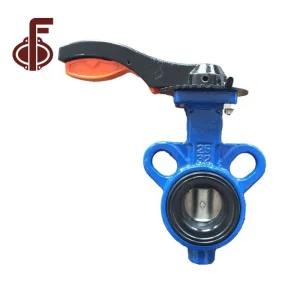 OEM Wafer Type Butterfly Valve with Aluminum Handle
-
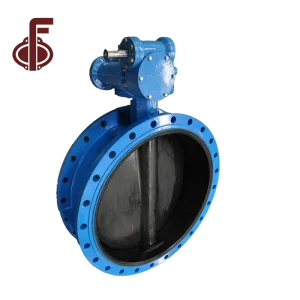 China PN16 CL150 Pressure Flange Type Butterfly Valves
-
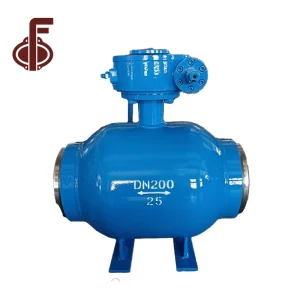 China Fully WELDED STEEL BALL VALVE Exporter, Exporters
-
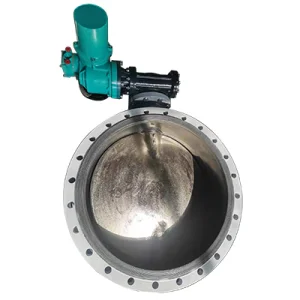 China Electric WCB Vulcanized Seat Flanged Butterfly Valve
-
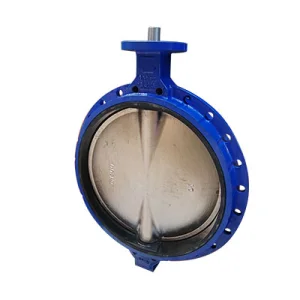 OEM DN800 DI Single Flange Type Wafer Butterfly Valve
-
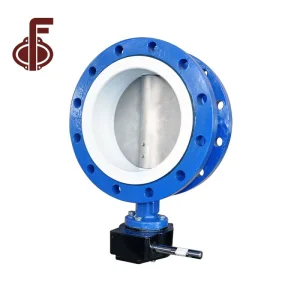 OEM PTFE Seat Flange Type Butterfly Valve Factory
Technical Whitepaper: Evolution of Butterfly Valve Flange Manufacturing in China
A comprehensive engineering review of casting metallurgy, mechanical sealing physics, and precision machining across global industrial infrastructures.
Concentric vs. High-Performance Offsets
Concentric butterfly valves with resilient elastomeric seats (EPDM, NBR) remain the cost-effective benchmark for low-pressure municipal water lines and HVAC systems. However, industrial demands have shifted significantly toward Double Eccentric and Triple Offset (TOV) architectures.
Double eccentric geometry lifts the disc from the seat within the first few degrees of rotation, drastically eliminating localized friction, extending seat lifespan, and reducing operational torque by up to 35% compared to baseline concentric models.
Triple Offset Metal-to-Metal Geometries
For high-temperature hydrocarbon transport, superheated steam, and severe corrosive handling, Triple Offset Butterfly Valves eliminate mechanical scrubbing entirely. The third offset creates an angled cone profile that ensures sealing contact only occurs at the absolute final shutoff point.
Engineered with Stellite hard-faced body seats and laminated stainless steel/graphite disc seals, our triple eccentric valves provide bidirectionally qualified bubble-tight shutoff (API 598 zero leakage) across temperatures ranging from -196°C to +550°C.
Flanged Rigidity vs. Wafer Stress Resistance
While wafer butterfly valves provide compact installations, flanged butterfly valves deliver superior structural rigidity in pipelines subject to thermal expansion, ground movement, and hydraulic water hammer. Integral double-flanged bodies eliminate pipeline stress transmission directly onto the valve body.
This design allows uncompromised dead-end isolation, enabling downstream pipe decoupling for maintenance while preserving absolute line pressure upstream.
| Valve Category | Seat Configuration | Nominal Diameter | Pressure Class | Primary Industrial Application |
|---|---|---|---|---|
| Concentric Flanged | EPDM, NBR, Viton, Hypalon | DN50 – DN2400 (2" to 96") | PN10 / PN16 / Class 150 | Potable Water, District HVAC, Municipal Wastewater |
| Double Eccentric High-Performance | PTFE, RPTFE, PEEK | DN80 – DN1600 (3" to 64") | PN16 / PN25 / Class 150-300 | Seawater Desalination, Pulp & Paper, Industrial Chemical |
| Triple Eccentric Heavy Industrial | Laminated SS316 + Graphite, Stellite | DN100 – DN2000 (4" to 80") | Class 150 to Class 600 / PN40-PN100 | Refining, Petrochemical, Power Generation, District Steam |
| PTFE/PFA Fully Lined | PTFE / Virgin PFA Encapsulated | DN50 – DN600 (2" to 24") | PN10 / PN16 / Class 150 | Chlor-Alkali, Highly Acidic Streams, Pharmaceutical Slurry |
Global EPC Procurement Trends & Macro Pipeline Solutions
Addressing the shifting landscape of international infrastructure projects, total cost of ownership (TCO), and automated fluid handling networks.
Supply Chain Resilience & Material Traceability
Global EPC contractors managing multimillion-dollar projects require uninterrupted supply chains backed by complete transparency. Procurement risks such as casting porosity, inaccurate wall thickness, and sub-tier material fraud are mitigated through EN 10204 3.1 Certified Material Test Reports (MTRs).
Tianjin Zhongfa Valve verifies every heat number via optical emission spectrometry (OES) alongside documented non-destructive testing (NDT), including ultrasonic (UT) and magnetic particle examination (MT).
Lifecycle TCO Optimization
Procurement metrics have transitioned from initial capital expenditure (CapEx) to total life-cycle expense (OpEx). Frequent valve seat failure in continuous-operation plants causes severe downtime and high replacement labor.
Our replaceable-seat flange butterfly valves allow in-line liner replacement without detaching the entire valve assembly from pipeline flanges. High-density fusion bonded epoxy (FBE) coatings (minimum 250 microns) ensure that bodies withstand aggressive soil burial and marine splash zones for over 30 years.
Automation & Actuator Integration
Modern process control centers require high-speed, intelligent automation. All ZFA flanged and wafer butterfly valves are designed with standardized ISO 5211 direct-mount top flanges.
This allows rapid pairing with electric actuators (Modbus, Profibus, HART protocol) or scotch-yoke pneumatic actuators without requiring costly custom brackets or drive extensions, ensuring precise throttled modulation and fail-safe safety compliance.
Rigorous Manufacturing Standards & Quality Management
From metallurgical chemistry control to pressure boundary hydrostatic verification, our manufacturing processes adhere strictly to global auditing benchmarks.
Every single valve undergoes shell testing at 1.5x PN and seat testing at 1.1x PN before release.
Complete traceability system from raw molten iron melt to finished packaging crating.
Complies with Pressure Equipment Directive 2014/68/EU Module H full conformity.
Engineered flange drillings for ASME/ANSI, EN/DIN, BS, JIS, KS, and GOST pipeline interfaces.
Technical Roadmap & Metallurgy Selection Matrix
Optimize plant efficiency and prevent early pipeline degradation by pairing specific media conditions with validated metallurgical alloys and elastomer seals.
Ductile Iron (GGG40 / GGG50 / QT450)
Tensile Strength: ≥ 400–450 MPa | Yield: ≥ 250 MPa
Engineered for high mechanical shock resistance without brittle fracturing. The standard casting material for potable water supply, wastewater handling, fire protection networks, and chilled-water circulation.
Cast Carbon Steel (WCB / A216)
Tensile Strength: 485–655 MPa | Max Temp: 425°C
Essential for high-pressure industrial process piping, boiler feedwater lines, and petrochemical refining. Provides superior ductility and yield strength under dynamic mechanical pipe loads and high fluid velocity.
Stainless & Duplex Alloys (CF8M / 2205 / 2507)
PREN Index: Up to ≥ 42 (Super Duplex)
Configured for highly aggressive chloride media, marine RO desalination trains, paper bleaching systems, and corrosive chemical delivery where pitting and crevice corrosion must be comprehensively eliminated.
Procurement & Engineering FAQ (Search Intent Mining)
Authoritative technical answers to common questions asked by pipeline project leaders, mechanical engineers, and international procurement heads.
A wafer butterfly valve is clamped directly between pipe flanges using long stud bolts that span across the valve body. A double flanged butterfly valve features dedicated full-face flanges on both ends that bolt directly to opposing pipeline flanges. Double flanged designs eliminate uneven torque stress, prevent gasket pinch, and allow safe dead-end pipeline maintenance where downstream piping can be removed while upstream stays under full operating pressure.
Tianjin Zhongfa Valve utilizes automatic resin-sand molding lines to eliminate casting slag and porosity defects. Precision CNC boring machines mill valve seat faces and stem journals within tight tolerances of ±0.01mm. Furthermore, high-tensile spherical discs combined with spherical ground profiles significantly reduce friction torque against resilient EPDM, NBR, and PTFE seats, securing bi-directional Bubble Tight Shut-Off (Class VI / API 598 zero leakage).
Every production batch includes full compliance documentation: EN 10204 Type 3.1 Material Test Reports (MTR) covering chemical composition and mechanical properties, hydrostatic and pneumatic test certificates (ISO 5208 / API 598), paint coating thickness dry-film inspection reports, and CE/PED compliance declarations. Third-party inspection agencies such as SGS, BV, and DNV are routinely hosted at our factory.
EPDM (-20°C to +120°C) is ideal for potable water, municipal sewage, cooling towers, and HVAC lines, but must not be exposed to hydrocarbon oils. NBR (-10°C to +82°C) is the industry standard for petroleum derivatives, diesel fuel, lubricating oils, and compressed air. PTFE (-20°C to +180°C) offers near-universal chemical inertness, making it indispensable for aggressive acids, caustic alkalis, solvents, and sanitary food-grade media.
Complete Pipeline Series: Valves, Actuators & High-Duty Hardware
Complete project requirements with metal-seated gate valves, high-pressure triple eccentric butterfly valves, and resilient lug-flange configurations engineered for lasting endurance.
-
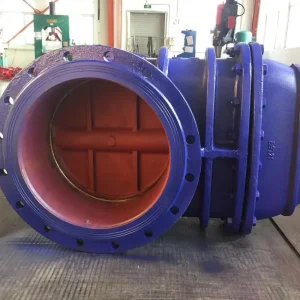 China Brass CF8 Metal Seal Gate Valve Exporter, Exporters
-
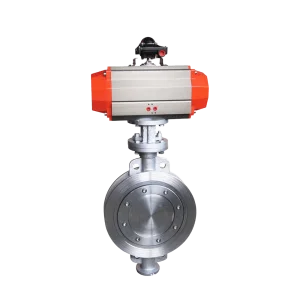 China Pneumatic Wafer Type Triple Offset Butterfly Valve
-
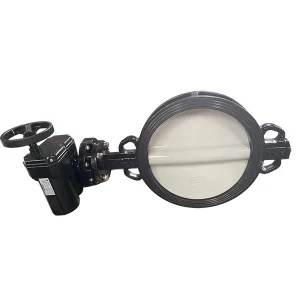 OEM Nylon Disc Wafer Type Honeywell Electric Butterfly Valve
-
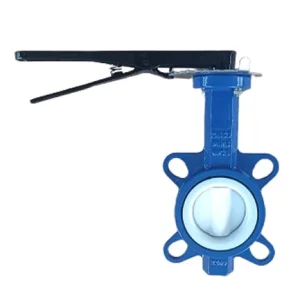 OEM PTFE Seat & Disc Wafer Centerline Butterfly Valve
-
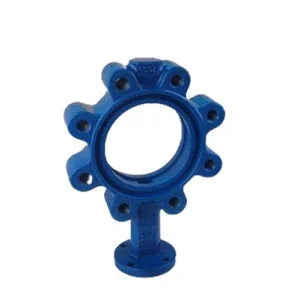 China DN100 PN16 Butterfly Valve Lug Body Factory
-
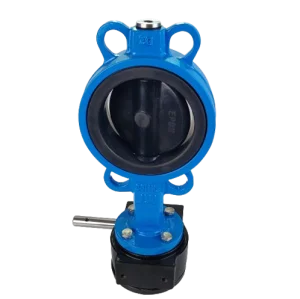 OEM EPDM Fully Lined Seat Disc Wafer Butterfly Valve
-
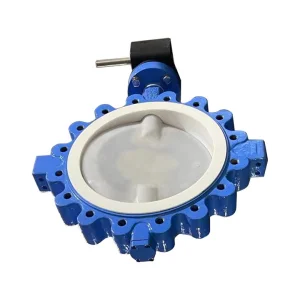 China Silicon Rubber Disc PTFE Lug & Flange Butterfly Valve
-
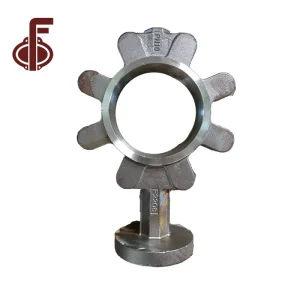 OEM Lug Type Butterfly Valve with Body Factory, Exporter
