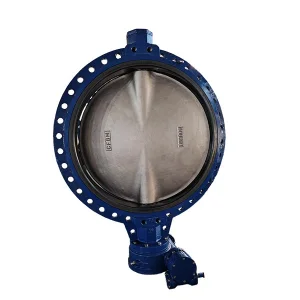
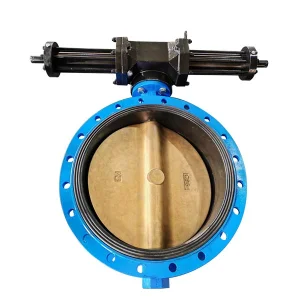
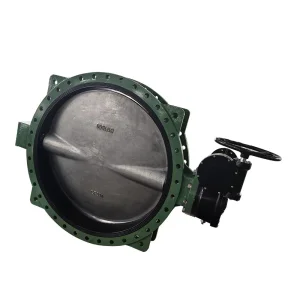
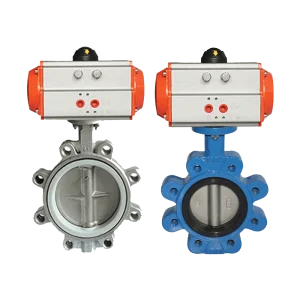
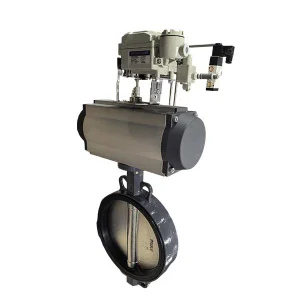
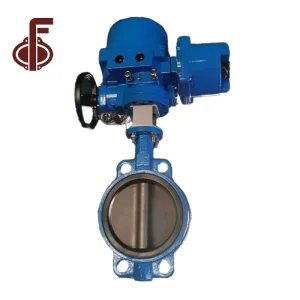
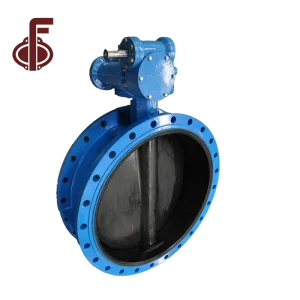
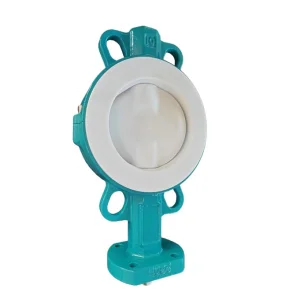
Featured Butterfly Valve Portfolio: Batch A
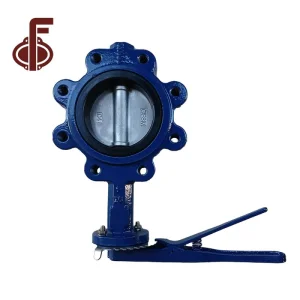
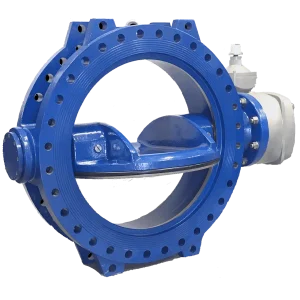
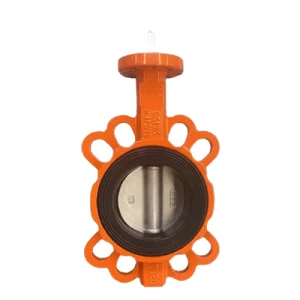
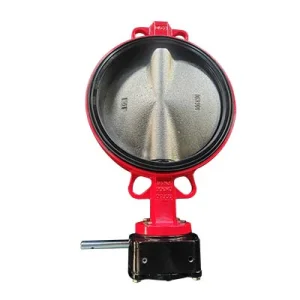
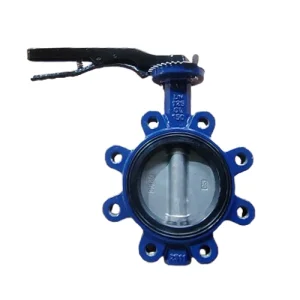
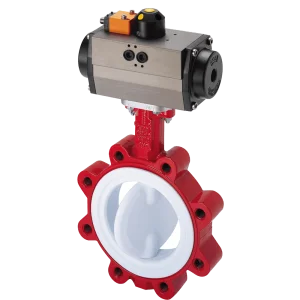
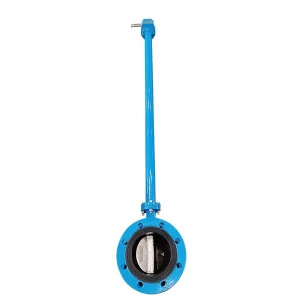
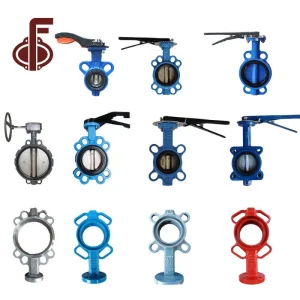
Standard and supervisory valve configurations manufactured to ASTM, ANSI, DIN, BS, and JIS international standards for immediate export delivery.
Global Industry Landscape & Supervisory Valve Dynamics
An in-depth white paper evaluation on why modern building codes (NFPA 13, EN 12845) enforce continuous electronic supervision over manual isolation points.
Supervisory Feedback Accuracy
Permissible Seat Leakage Rate
Switch Ingress Protection
Standard Shell Hydrostatic Test
Life Safety & Fire Suppression
In wet and dry automatic sprinkler setups, inadvertent closure of a main riser valve represents the single most frequent point of system failure during catastrophic fire occurrences. A butterfly valve with tamper switch provides constant electro-mechanical supervision. Equipped with internal micro-switches, it transmits instant electrical telemetry to the fire alarm control panel (FACP) if the handwheel rotates by even two turns or past an angular travel threshold of 20%.
SCADA & BAS Industrial Integration
Beyond municipal fire suppression, modern industrial processing skids and water treatment plants demand verified component status. Integrated tamper-proof limit microswitches enable remote telemetry confirmation directly inside programmable logic controllers (PLCs). This eliminates blind valve errors, guarantees line isolation before hazardous maintenance, and satisfies OSHA, ISO 45001, and hazardous material distribution codes globally.
Tamper Resistance & Weatherproofing
Export-grade supervisory butterfly valves feature weatherproof housing rated at IP65 to IP67 / NEMA 4X. Engineered with high-integrity zinc or stainless internal gears, they utilize double SPDT (Single Pole Double Throw) switch architecture to separate the signaling circuits for alarm notifications from supervisory secondary monitors. Mechanical lock-out and specialized hex key assemblies prevent deliberate unauthorized signal bypass.
Why Global Procurement Rallies Behind China Exporters
How Tianjin Zhongfa Valve Co., Ltd. (ZFA) balances cutting-edge foundry robotics, precision tooling, and strict quality verification to streamline tier-one supply chains.
Integrated Foundry Hubs
By leveraging northern China’s integrated metallurgical cluster in Tianjin, ZFA maintains tightly managed melt chemistry for Ductile Iron (QT450-10 / ASTM A536 65-45-12) and WCB steel, decreasing raw material porosity and achieving defect rates below 0.03% across production lines.
Strict Quality Verification
Every single valve undergoes bi-directional hydrostatic shell and seat leak testing according to API 598 and ISO 5208 before dispatch. Switches are cycle-tested over 10,000 actuations under continuous electrical load to eliminate premature switch bouncing or field contact resistance failures.
Tier-1 Cost Optimization
Streamlined automated machining centers paired with proprietary molding processes provide international EPC contractors with an average 25% to 35% total expenditure savings compared to North American or Western European assembled counterparts, while retaining full spec compliance.
Expedited Global Logistics
Direct proximity to Tianjin Xingang Port allows rapid sea container loading and custom crating for maritime transport. Standard wafer and lug components ship with reduced lead times, backing urgent construction schedules across the Americas, the Middle East, Southeast Asia, and Europe.
Engineering Material Compatibility & Pressure Ratings
Refer to this verified metallurgical and polymer matrix to ensure optimal life-cycle reliability under varying thermal and chemical media stresses.
| Component | Material Standard | Operational Characteristics | Typical Pipeline Medium |
|---|---|---|---|
| Valve Body | Ductile Iron GGG40 / GGG50 / ASTM A536 | Superior impact resistance, tensile strength >450 MPa, withstands thermal expansion shocks. | Chilled water, fire sprinkler mains, municipal potable lines, wastewater. |
| Disc Profiles | Ductile Iron with Nylon Coating, CF8 (304), CF8M (316), Aluminum Bronze C95400 | Hydrodynamically profiled edges for minimal flow turbulences and optimal Kv/Cv coefficient delivery. | Demineralized water, seawater applications, slightly corrosive chemicals, sanitary fluids. |
| Resilient Seats | EPDM, NBR, Viton (FKM), PTFE Pure/Lined | Vulcanized or replaceable dovetail profiles achieving bubble-tight zero-leakage shutoff. | Potable water (EPDM), Petroleum hydrocarbons (NBR), Concentrated acids/bases (PTFE). |
| Stem / Shaft | SS416, SS420, SS431, SS316, 17-4PH | Two-piece stub shaft or through-shaft pinless drive designed for high torsional strength and safety margins. | Compatible with dry service, fire suppression fluids, and severe cyclical stresses. |
| Tamper Enclosure | Die-cast Aluminum / Stainless Steel, IP67 | Built-in twin microswitches (SPDT/DPDT), high-visibility position pointer, tamper-resistant screws. | Indoor industrial spaces, coastal marine atmospheres, high-humidity pump rooms. |
Localized Applications & Next-Gen Smart Trends
From cloud-connected building automation to hyper-scale cloud server facilities, explore how supervisory valve technology is developing globally.
Hyperscale Data Center Cooling
Mission-critical colocation and enterprise AI server campuses leverage double-eccentric and wafer butterfly valves fitted with tamper switches across secondary chilled water loop distribution. Unplanned line closures induce localized thermal thermal runaway in server racks within minutes; automated supervisory switches feed alarm inputs straight into DCIM (Data Center Infrastructure Management) hubs.
Smart IoT & LoRaWAN Connectivity
The flow control sector is moving toward wireless supervisory nodes. Next-generation tamper switch gearboxes produced by advanced Chinese manufacturers integrate low-power NB-IoT and LoRaWAN transceivers alongside traditional dry-contact loops. This delivers real-time percent-of-opening metrics and predictive maintenance diagnostic alerts directly to mobile maintenance software suites without field cabling runs.
High-Density Commercial Complexes
Super-tall commercial mixed-use skyscrapers and sprawling international airport terminals require zone-by-zone isolation capability on floor-level fire suppression risers. Modern butterfly valves with slow-closing worm-gear actuators eliminate hydrodynamic water hammer events, protecting delicate welded branches, thin-wall grooved piping networks, and sprinkler spray arrays.
Technical & Procurement FAQ: Tamper Switch Valves
Essential clarity on engineering specifications, electrical schematics, compliance standards, and factory direct ordering protocols.
What is the primary function of a tamper switch on an industrial butterfly valve?
A tamper switch is a specialized supervisory sensor housing micro-switches linked directly to the valve's gear operator or handwheel. When the valve is moved from its fully open (or normal operating) position, the cam trips the microswitch, breaking or closing an electrical loop. This triggers an instant alarm at the Fire Alarm Control Panel (FACP) or Building Management System (BMS), preventing unauthorized closure that could starve fire sprinkler systems or upset industrial processing loops.
Why choose a slow-close gear operated butterfly valve over an OS&Y gate valve?
While Outside Screw and Yoke (OS&Y) gate valves have long served fire systems, butterfly valves with built-in gearboxes and tamper switches offer up to 70% reduction in weight, compact face-to-face dimensions, and drastically lower structural installation costs. Furthermore, worm gear actuation is deliberately geared to take a minimum of 16 to 20 seconds to fully close, preventing destructive water hammer shocks that can burst piping joints.
How are the switch wiring contacts configured for dual-circuit reporting?
ZFA supervisory butterfly valves incorporate two internal sets of SPDT (Single Pole Double Throw) switches. One set is traditionally wired directly to the main fire alarm panel loop (signaling alarm conditions upon two complete turns of the handwheel), while the secondary set is used to drive optional local annunciators, auxiliary relays, BMS inputs, or digital telemetry transmitters.
Which international certificates and flange standards can ZFA supply?
Tianjin Zhongfa Valve Co., Ltd. operates under an ISO 9001 certified quality system and holds CE conformity certificates. Valve bodies are cast, machined, and drilled to meet ASME B16.1 Class 125/150, EN 1092-2 PN10/PN16, BS 4504, AS 2129, and JIS B2238/B2239 standards. Custom drill patterns and grooved (AWWA C606) end profiles are also routinely manufactured for global project tenders.
Featured Butterfly Valve Portfolio: Batch B
Heavy-duty motorized, pneumatic, hydraulic, and large-diameter wafer/flanged valve assemblies ready for global plant implementation.