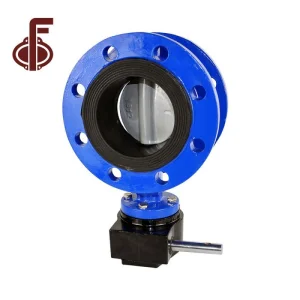
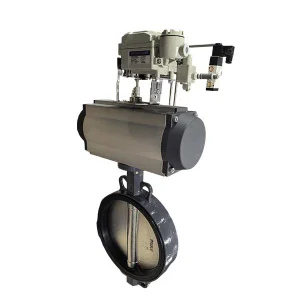
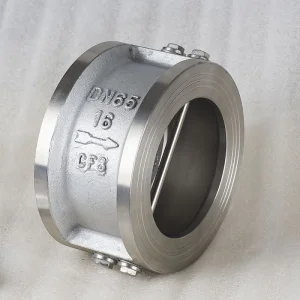
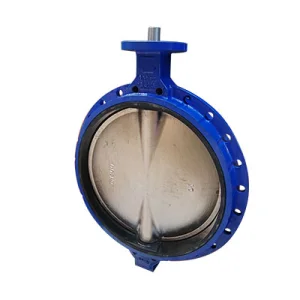
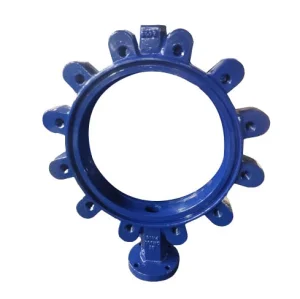
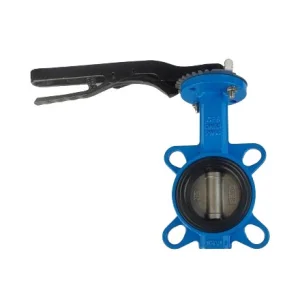
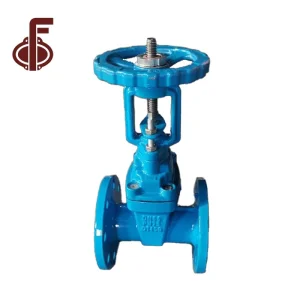
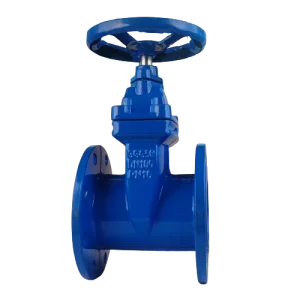
Featured Cast & Ductile Iron Valve Solutions
Explore our top-tier export configurations, engineered for resilient shut-off, high cycle life, and low torque under international pressure ratings.
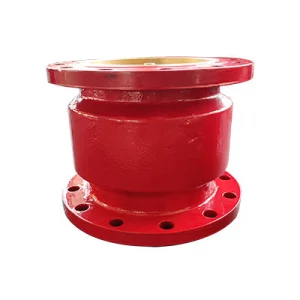
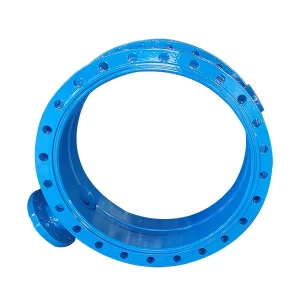
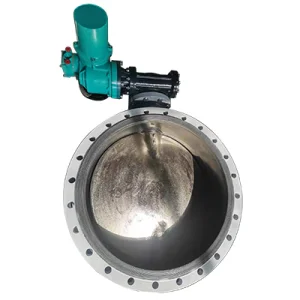
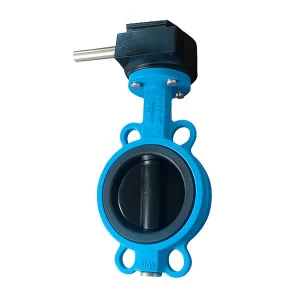
Evolutionary Trajectory of Cast Iron Butterfly Valves
From conventional grey cast iron (GG25) to high-ductility spheroidal graphite ductile iron (GGG40/GGG50), modern metallurgy and precision tooling have redefined fluid boundary reliability across critical sectors.
Metallurgical Refinement
Grey cast iron (ASTM A126 Class B) delivers exceptional damping capacity and cost efficiency in steady-state operations. However, contemporary manufacturing emphasizes Ductile Iron (ASTM A536 65-45-12 / GGG50), delivering impact resistance up to 18 Joules, high tensile strength (≥450 MPa), and anti-water-hammer resilience.
Advanced Elastomer Vulcanization
Transitioning from loosely bonded seat liners to fully bonded, vulcanized elastomer seating. Molded under high pressure directly into the cast iron casting, our vulcanized EPDM and NBR seats prevent longitudinal displacement, seat collapse under high vacuum, and excessive operational torque across continuous cycling.
Hydrodynamic Disc Geometry
Using CFD analysis, our streamlined disc profiles minimize flow turbulence, drastically lowering Cv resistance by up to 22% compared to traditional flat disc profiles. This engineering focus eliminates localized cavitation and saves energy in high-throughput pumping networks.
| Mechanical Characteristic | Grey Cast Iron (HT200 / GG25 / Class B) | Ductile Iron (QT450-10 / GGG40 / GGG50) | Impact on Pipeline Longevity |
|---|---|---|---|
| Tensile Strength (MPa) | 200 – 250 MPa | 400 – 500 MPa | Prevents body cracking under sudden pressure spikes or mechanical pipe deflection. |
| Elongation Rate (%) | < 0.8% (Brittle) | 10% – 18% (Ductile) | Absorbs thermal expansion stresses and pipe foundation settlements without rupture. |
| Impact Toughness (Charpy V-Notch) | Low | High (≥ 15-18 J at 20°C) | Crucial for subterranean municipal water systems exposed to water hammer dynamics. |
| Corrosion Resistance & Coating | FBE Epoxy Coating ≥ 250μm | FBE Epoxy or Rilsan Polymeric ≥ 300μm | Zero holiday electrostatic spray eliminates galvanic degradation in buried service. |
China Factory 4.0: Supply Chain Resilience & Process Precision
Modern Chinese valve manufacturing balances raw material scalability with automated casting, computerized spectrographic validation, and rigorous ISO 9001:2015 quality assurance.
Disamatic Molding
High-speed automated green sand molding lines yield tight casting tolerances (CT6 to CT8), eliminating internal sand pockets, blowholes, and uneven wall thicknesses across large runs.
Multi-Axis CNC Machining
Fully integrated CNC machining centers process shaft bores and flange facings in single setups, keeping stem-to-disc concentricity tolerances within ±0.015mm for low seat wear.
Traceability & Testing
Direct spectrographic optical chemistry testing for every melt batch. EN 10204 3.1 certification accompanies all shipments alongside hydrostatic API 598 zero-leakage test data.
Supply Chain Control
Integrated foundries and in-house rubber compounding provide rapid turnaround, protecting global distributors from multi-month stockout risks during seasonal demand peaks.
Global Procurement Needs & Localized Scenarios
EPC engineering contractors, regional distributors, and utility operators require dependable cast iron butterfly valves matched to distinct climatic, chemical, and pressure conditions.
Desalination & Seawater
Challenge: Severe chloride attack on internal wetted metals.
ZFA Solution: Ductile iron valve bodies matched with high-nickel aluminum bronze (C95800) or Duplex SS (2205/2507) discs, vulcanized with virgin EPDM liner, providing dependable barrier protection up to PN16/Class 150.
District Energy & Large HVAC
Challenge: Constant low-torque cycling and micro-leak prevention in chilled and low-pressure steam balance loops.
ZFA Solution: ISO 5211 direct-mount automation pads paired with pinless stem designs, eliminating external leak pathways and ensuring seamless integration with electric/pneumatic actuators.
Municipal Potable & Wastewater
Challenge: Strict hygienic standards (WRAS/NSF-61) and solids-bearing fluid abrasion.
ZFA Solution: Lead-free ductile iron bodies with certified non-toxic coatings (≥300μm) and heavy-wall rubber sleeves that provide tight mechanical closure around entrained solids.
Procurement & Engineering Questions
Direct technical answers to common queries from pipeline designers, sourcing directors, and valve engineers.
When should an engineer specify Cast Iron (CI) vs. Ductile Iron (DI) for butterfly valves?
Grey Cast Iron (e.g., GG25 / ASTM A126 Class B) is suited for low-pressure, static operations such as non-critical HVAC circulation, low-head drainage, and light agricultural irrigation where water hammer and thermal shock risks are minimal. Ductile Iron (e.g., GGG40, GGG50 / ASTM A536) must be specified for dynamic municipal mainlines, fire-protection skids, pump discharge setups, and subterranean pipelines. Ductile Iron's graphite structure provides the elongation (up to 18%) and impact resistance required to absorb dynamic hydraulic shock without body fracturing.
How do pinned and pinless stem-to-disc designs compare in Cast Iron butterfly valves?
Pinned discs utilize taper pins driven through the disc hub and shaft, providing high torsional strength but introducing potential internal leak paths around the pins if galvanic corrosion or elastomer wear occurs. Pinless shafts use machined square drives, double-D flats, or internal spline mechanisms to transfer torque. This design keeps the stem isolated from line fluids, reducing the risk of shaft erosion and simplifying seat replacements during plant turnarounds.
What testing standards are executed prior to international export?
Every production run undergoes hydrostatic and pneumatic pressure testing in full accordance with ISO 5208 and API 598. Shell tests are carried out at 1.5 times the rated cold working pressure (PN10/PN16/PN25), while high-pressure seat tightness tests are executed at 1.1 times nominal pressure. Elastomer-lined butterfly valves must pass Rate A zero-leakage standards (no visible drop or bubble across holding durations). Certified inspection reports (EN 10204 Type 3.1) are supplied alongside physical mill test certificates.
How does ZFA support private label OEM manufacturing and multi-standard piping?
ZFA offers full-scale OEM/ODM services, including customized pattern casting with client logos, unique brand-specific epoxy coating colors (RAL coding), specialized tags, and export-compliant treated wood packaging. Our universal body castings feature dual/multi-standard drilling patterns compatible with ANSI Class 125/150, DIN PN10/PN16, BS4504, and JIS 10K, allowing international distributors to optimize stockholding using single-body designs across multiple markets.
Industrial Valves for Diverse Fluid Controls
Browse our comprehensive selection of gate, check, and high-performance butterfly valves manufactured to ASTM, DIN, and ISO standards.