Featured Industrial Valve Solutions
Explore our factory-engineered configurations, spanning wafer, lug, flanged, and high-performance industrial valves tested to rigorous international pressure benchmarks.
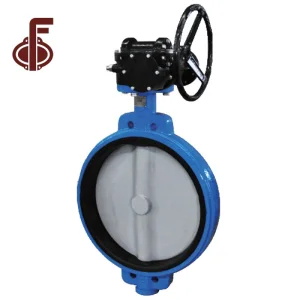
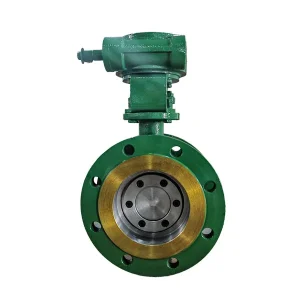
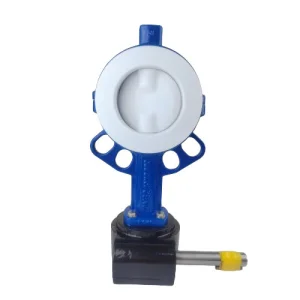
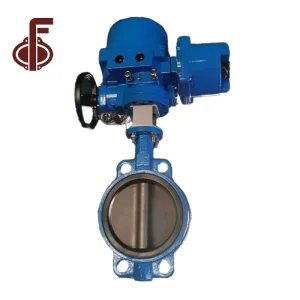
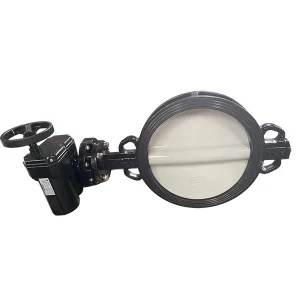
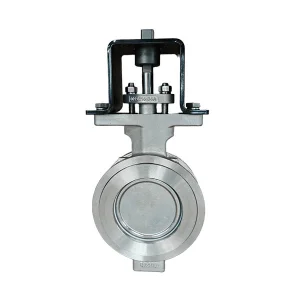
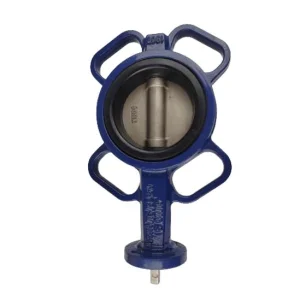
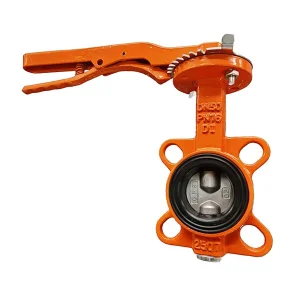
Cast Iron Non-Return Valves: Engineering Depth & Backflow Dynamics
Cast iron check valves (non-return valves) provide automatic directional control, safeguarding industrial piping arrays against sudden backflow surges, reverse pressure differentials, and damaging hydraulic transients.
Metallurgical Formulations
We melt and pour premium gray cast iron (GG25 / ASTM A126 Class B) and spheroidal ductile iron (GGG40 / GGG50 / ASTM A536). Gray iron provides supreme acoustic and vibration dampening during flow deceleration, while ductile iron ensures tensile resilience across severe cyclic mechanical stresses.
Water Hammer Mitigation
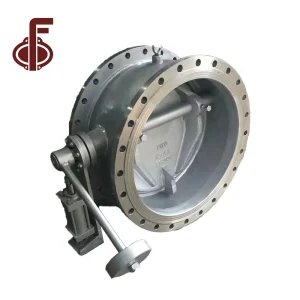
Uncontrolled kinetic reversal creates destructive hydraulic shock waves. Our non-slam dual plate wafer valves and counterweighted lever swing configurations achieve positive closure fractions of a second before zero-velocity reversal, eliminating valve slam and protecting upstream centrifugal pumps.
Seating Tribology
Engineered sealing faces incorporate bronze (BS1400 LG2), stainless steel (AISI 304/316), or vulcanized resilient elastomers (EPDM, NBR, FKM). This guarantees drip-tight sealing across raw water, municipal wastewater, light hydrocarbons, and high-velocity cooling water.
Low Head-Loss Hydraulics
Using internal computational fluid dynamics (CFD), the internal profiles of our cast iron bodies are hydro-dynamically contoured. This minimizes boundary layer turbulence, reduces localized cavitation, and lowers parasitic pumping energy costs throughout plant lifecycle.
China Factory & Supply Chain Advantages
From Tianjin Zhongfa Valve's automated pouring floors to multi-axis CNC cells, our manufacturing infrastructure delivers world-class precision at competitive industrial economies of scale.
Vertically Integrated Foundry Control
Operating direct sand-casting lines, electric induction furnaces, and computerized spectrographic analysis, we verify chemical composition prior to every pour. Full traceability spans melt number to heat-treatment furnace log.
- Zero subcontract porosity risks
- Direct EN 10204 3.1 chemical & physical logs
- High-volume raw ingot procurement leverage
Tianjin Maritime Hub Logistics
Located in Tianjin's industrial corridor, our manufacturing base connects directly to Tianjin Port—Northern China’s premier maritime gateway. This provides rapid container consolidation, minimized drayage costs, and expedited sea freight routing.
- Short transit from shop floor to vessel loading
- Consolidated mixed-container packing options
- Custom export crating per ISPM 15 standards
Comprehensive Quality Assurance
Every check valve undergoes hydrostatic shell testing at 1.5× PN and low/high pressure resilient seat closure testing to EN 12266-1 and API 598. Non-destructive examination (NDE) including magnetic particle and ultrasonic testing is available on demand.
- ISO 9001:2015 audited process loops
- CE / PED Directive 2014/68/EU conformity
- Full third-party inspection readiness (SGS, TUV, BV)
Cast Iron Non-Return Valve Technical Configurations
Compare body styles, pressure ratings, and functional mechanisms engineered for worldwide industrial distribution.
| Valve Style | Normative Standards | Nominal Diameters | Pressure Classes | Seat Configurations | Primary Dynamics |
|---|---|---|---|---|---|
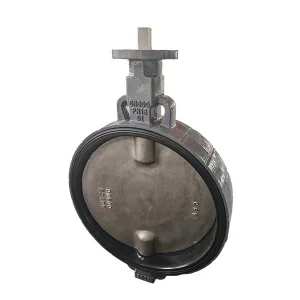
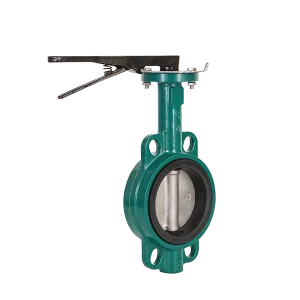
| Dual Plate Wafer Check | API 594, EN 1092-2 | DN40 – DN1200 (1.5"–48") | PN10, PN16, Class 125/150 | EPDM, NBR, Viton, SS304 | Spring-assisted fast closure, ultra-compact wafer profile |
| Flanged Swing Check | BS 5153, MSS SP-71, DIN 3202 | DN50 – DN900 (2"–36") | PN6, PN10, PN16, Class 125 | Bronze, Stainless Steel, EPDM | Full waterway, lowest pressure drop, exterior lever & weight options |
| Silent / Globe Non-Slam | MSS SP-125, EN 12334 | DN50 – DN600 (2"–24") | PN16, PN25, Class 150/250 | Metal-to-Metal, Bronze Trim | Axial guide path, spring pre-load for severe surge elimination |
| Resilient Ball Check | EN 12050-4, EN 1092-2 | DN50 – DN400 (2"–16") | PN10, PN16 | NBR/EPDM Encapsulated Ball | Self-cleaning, unhindered solid passage for slurry and sewage |
Global Procurement Needs & Local Application Matrix
Meeting the stringent documentation, testing, and lifecycle reliability criteria demanded by international EPC contractors and plant owners.
Municipal Water & Desalination
Used in high-capacity booster pump discharge lines. Epoxy powder-coated (WRAS/NSF compliant) bodies resist corrosion from potable water and chlorinated transmission networks, maintaining sterile fluid integrity.
Wastewater & Industrial Effluent
Installed across sewage treatment skids and lift stations. Smooth, unobstructed geometries and resilient-seated ball check mechanisms ensure strings and suspended solids pass freely without disc hanging.
HVAC, District Cooling & Heat Networks
In district cooling central plants and chiller circuits, dual plate wafer check valves conserve space, maintain precise fluid directionality, and limit mechanical pumping energy waste under variable flow regimes.
Industry Trends & Digital Foundry Advancements
The industrial valve sector is evolving toward smart hydraulic monitoring, environmentally resilient polymers, and advanced manufacturing efficiency.
Finite Element Dynamics
Integration of FEA and CFD simulations eliminates structural stress points across valve disc hinge pins and spring seats, ensuring extended cycle life even during severe turbulence.
Fusion Bonded Epoxy Tech
Modern cast iron valves now employ electrostatically applied FBE coatings (minimum 250 µm thickness) with zero pinhole tolerances, bridging the gap between cast iron affordability and stainless durability.
Smart Condition Monitoring
Leverage sensors and mechanical position transmitters installed on external counterweighted swing check valves, transmitting live disc stroke and seating status to plant SCADA frameworks.
Sustainable Foundry Practices
Closed-loop sand reclamation systems and high-efficiency induction melting cut carbon emissions across cast iron production, assisting global clients with Scope 3 supply chain compliance.
Frequently Asked Engineering & Procurement Questions
Clear, authoritative insights to streamline check valve selection, compliance verification, and international sourcing.
When should Gray Iron (GG25) be selected over Ductile Iron (GGG50)?
Gray Cast Iron (GG25 / Class 126B) is cost-effective and provides high mechanical dampening capacity, making it suitable for low-to-medium pressure municipal water systems. Ductile Iron (GGG40/50 / ASTM A536) possesses higher elongation (12-18%) and impact resistance, making it essential for systems exposed to hydraulic water hammer, thermal shock, or subterranean ground settling.
What is the maximum allowable flow velocity for dual plate check valves?
For dual plate wafer check valves, maximum continuous liquid flow velocities should typically remain below 3 m/s (10 ft/s) to prevent disc flutter, premature spring fatigue, and hinge pin fretting. For gases, velocities should not exceed 20-25 m/s. Maintaining adequate differential pressure across the plates is necessary to ensure stable full-open seating.
Can cast iron check valves be mounted in vertical piping?
Yes, provided the flow orientation is vertically upward. In vertical-up orientations, gravity and fluid movement open the valve, while reverse flow and gravity drive closure. Vertical-down flows are prohibited because gravity prevents proper disc reseating. Spring-assisted dual plate and ball check valves are the most reliable designs for vertical installations.
How does ZFA Valve guarantee zero porosity in cast iron valve bodies?
We employ controlled resin-bonded sand casting processes and computer-monitored inoculation during pouring. After precision rough machining, every valve body undergoes hydrostatic shell pressure tests at 1.5 times the nominal working pressure (1.5x PN) per EN 12266-1 and API 598 standards before paint application, guaranteeing structurally sound castings.
More Heavy-Duty Industrial Valves from Our Tianjin Factory
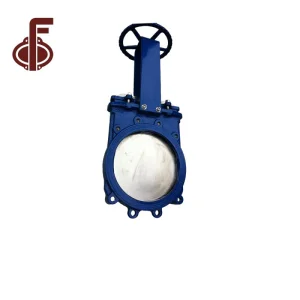
Explore high-performance check valves, knife gate units, and wafer valves built for process engineering across five continents.