Precision Concentric & High-Performance Butterfly Valves
Engineered for mission-critical liquid, gas, and slurry line isolation with rigorous QA traceability.
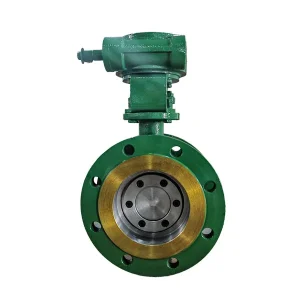
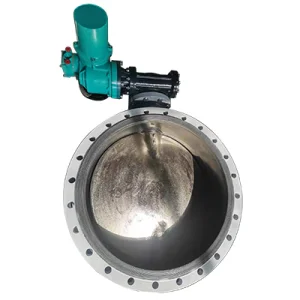
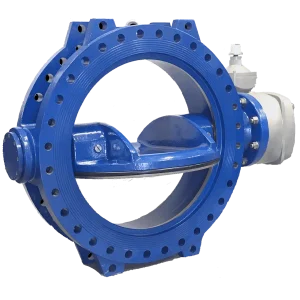
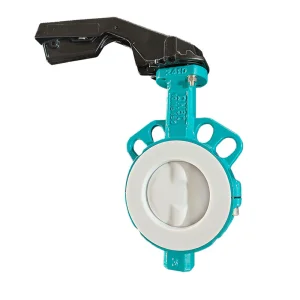
The Evolution of Centric (Concentric) Butterfly Valves
From fundamental fluid isolation to smart automated network control: meeting global demands for reliability, zero fugitives, and extended duty cycles.
Advanced Resilient Polymer Formulations
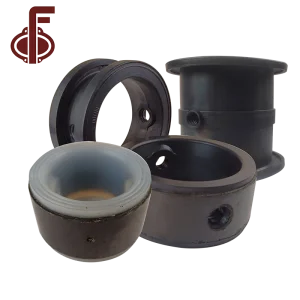
Concentric butterfly valves (centric rubber-lined) rely directly on the elastic recovery and chemical resilience of their seating elastomers.
- High-density synthetic EPDM compounded for chloramine-treated municipal water systems.
- Vulcanized hard-backed bonding eliminating liner slippage during high-velocity line transients.
- Peroxide-cured formulations lowering VOC migration in clean water infrastructure.
Optimized Fluid Hydrodynamics & Cv Values
Discs engineered with hydrodynamic curvature minimize downstream turbulence, dynamic head loss, and cavitation wear.
- Streamlined spherical disc profile engineered with computational fluid dynamics (CFD).
- Significant reduction in dynamic torque requirements, reducing actuator frame sizing.
- Maximized flow discharge coefficient (Cv/Kv) for operational energy efficiency.
Stem Sealing Integrity & Fugitive Emission Control
Multi-barrier shaft sealing prevents internal medium infiltration into ambient plant environments and drive tops.
- Dual O-ring secondary atmospheric seals integrated into primary liner journal bores.
- Precision blow-out proof stems compliant with EN 593 and API 609 safety thresholds.
- Splined or pinless disc-to-stem connections eliminating high-stress galvanic leak points.
Engineering Selection Criteria for Global EPCs & Brand Owners
A technical guide to matching body geometry, seat polymers, and mechanical ratings to demanding fluid environments.
| Seat Formulation | Operational Temperature | Recommended Working Media | Material Incompatibilities |
|---|---|---|---|
| EPDM (Food Grade / WRAS) | -20°C to +120°C | Potable water, wastewater, low-pressure steam, HVAC chill/hot loop | Hydrocarbons, mineral oils, concentrated acids, aromatics |
| NBR (Nitrile / Buna-N) | -10°C to +85°C | Petroleum derivatives, fuel lines, compressed air, oily industrial water | Ozone degradation, ketones, chlorinated hydrocarbons, hot steam |
| PTFE / PFA Encapsulated | -20°C to +180°C | Aggressive inorganic acids, corrosive alkalis, pure pharmaceutical streams | High-velocity mechanical slurries, micro-abrasive media |
| Fluoroelastomer (FKM / Viton) | -15°C to +200°C | High-temperature hydrocarbons, corrosive exhaust gas scrubbing, chemicals | Low-temperature cryogenics, polar solvents, low-molecular organic acids |
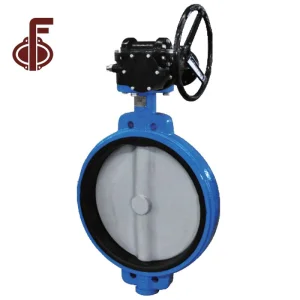
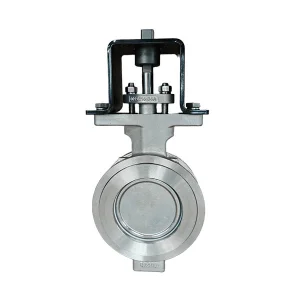
Wafer Body Type
Compact, ultralight configuration clamped via through-bolts between ANSI, DIN, or JIS matching flanges. Ideal for space-constrained plants.
- Lowest tare weight reducing pipe stress
- Economic cost-to-performance profile
- Not rated for standalone dead-end service
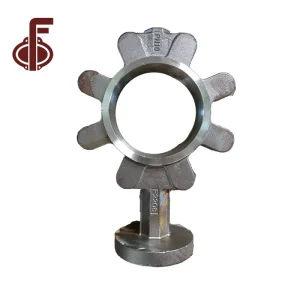
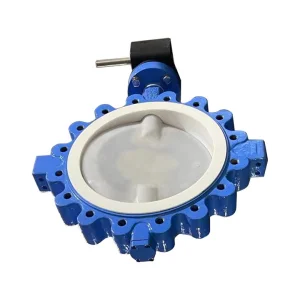
Lug Body Type
Precision threaded radial ears allow direct bolting from either side of the pipe network, enabling line modifications and pump isolate loops.
- Certified for downstream dead-end isolation
- Maintains pressure barrier during equipment teardown
- Compatible with ASME B16.5 & EN 1092 drillings
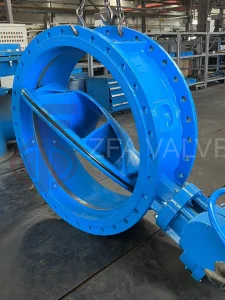
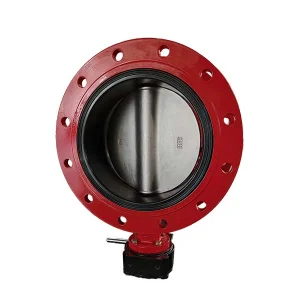
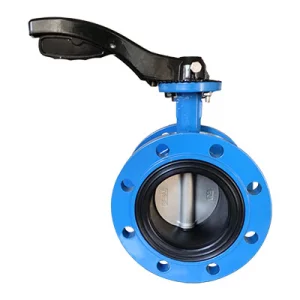
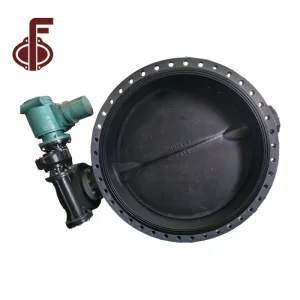
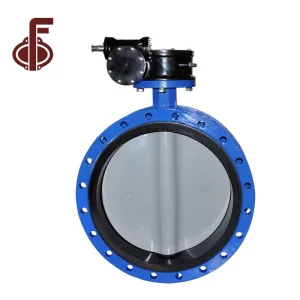
Double Flanged Body Type
Integral pipeline flanges providing maximum structural rigidity and joint integrity under bending moments or high thermal contraction forces.
- Engineered for high-diameter buried or plant service
- Prevents bolt deflection over wide temperature shifts
- Preferred standard in AWWA water networks
China Industry 4.0: Supply Chain Resilience & QA Integrity
Combining automated foundry operations, CNC production arrays, and digitized pressure-testing documentation to serve international OEM brands.
Automated Shell Moulding
Disa moulding and automated resin sand systems ensure ductile iron (QT450-10, GGG40/50) castings have high tensile stability and no internal porosity.
Robotic Machining Cells
Multi-axis CNC horizontal machining centers guarantee concentricity tolerance on stem bores and sealing faces within ±0.015mm limits.
Traceable Metallurgy (PMI)
Spectral analysis and Positive Material Identification verify heat-by-heat composition of CF8, CF8M, WCB, and duplex alloy cast components.
100% Hydrostatic QA
Every valve undergoes bi-directional hydraulic body shell and low-pressure pneumatic seat testing per EN 12266-1 and API 598 standard protocols.
Localized Engineering Use Cases & Operating Performance
Demonstrated valve durability across diverse climatic and operating operational environments.
Municipal Desalination & Potable Networks
Deployment: Middle East & North Africa RO Water Plants.
Challenge: Brackish seawater corrosion and high ambient temperatures up to 50°C.
Configured Solution: Ductile iron bodies with Rilsan/fusion-bonded epoxy (250μm min) coatings, aluminum-bronze (C95800) discs, and peroxide-cured EPDM liners.
District HVAC & Building Services
Deployment: European Green Building Commercial Skids.
Challenge: Continuous throttling control and low torque demand over 100,000 thermal shifts.
Configured Solution: Wafer centric valves fitted with ISO 5211 direct-mount high-cycle quarter-turn electric actuators with 4-20mA positioner feedback.
Chemical Processing & Corrosive Washdown
Deployment: Southeast Asian Wet Metallurgy & Agrochemical Refining.
Challenge: Concentrated alkaline solutions and volatile acid exhaust streams.
Configured Solution: Split-body centric valves lined with high-purity virgin PTFE backed by resilient silicone or FKM energizing cushions.
Frequently Asked Questions on Concentric Butterfly Valves
Direct answers for valve design engineers, supply chain leads, and EPC procurement managers.
What differentiates a concentric (centric) butterfly valve from eccentric designs?
In a centric butterfly valve, the stem and disc centerlines are completely aligned with the valve body bore and the center of the pipe. Sealing relies on radial mechanical interference between the disc edge and the resilient elastomeric or fluoropolymer liner. In double or triple eccentric (offset) valves, the stem axis is displaced to allow the disc to cam into the seat with minimal friction, making eccentric designs suited for extreme temperatures, steam, or high-pressure classes exceeding PN25/Class 300.
Which test standards are applied prior to factory export clearance?
ZFA valve production lines test every valve in accordance with EN 12266-1 (Rate A - zero bubble leakage) and API 598. Shell tests are held at 1.5 times the cold rated working pressure (CWP), while low-pressure pneumatic seat testing is carried out at 6 bar gauge to confirm resilient seal continuity. Full mill test certificates (MTRs) to EN 10204 3.1 are supplied with every production batch.
What are the operational differences between boot seats and bonded/vulcanized seats?
A boot (slip-in) seat is replaceable in the field, allowing maintenance teams to rebuild worn valves. However, under high vacuum or line velocities exceeding 4 m/s, unbonded boot seats may deform or dislodge. A vulcanized (hard-backed or bonded) seat is chemically bonded directly to the iron body or a rigid phenolic/aluminum insert ring, resisting vacuum collapse and high dynamic turbulence.
Can centric valves be retrofitted with third-party actuators?
Yes. All centric butterfly valves manufactured for export feature top mounting flanges conforming to ISO 5211 (such as F05, F07, F10, F12) alongside standardized double-D, keyed, or diagonal square stem drives. This allows straightforward mounting of pneumatic scotch-yoke actuators, electric intelligent quarter-turn motors, or manual worm gear units without custom machining.
What documentation is provided for international shipping and project submittals?
Standard export consignments include the Commercial Invoice, Packing List, Certificate of Origin (CO/Form E/Form A), EN 10204 3.1 Inspection Certificates, hydrotest logs, coating thickness verification reports, and CE/ISO declarations of conformity. Complete submittal binders can be prepared for pre-award engineering approval.
Complementary Industrial Valves & Pipeline Accessories
Comprehensive fluid management equipment manufactured to international dimensions and flange configurations.