
High-Integrity Valve Lines Engineered in Tianjin, China
Explore our premium factory-direct flow control units, compliant with ASTM, ANSI Class 150/300, ISO 5752, DIN PN10/PN16, BS, and JIS standards for mission-critical industrial installations.
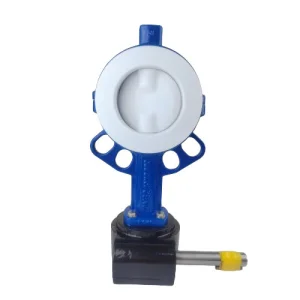
China DN80 Split Body PTFE Full Lined Wafer Butterfly Valve Manufacturers, Factory
View Specifications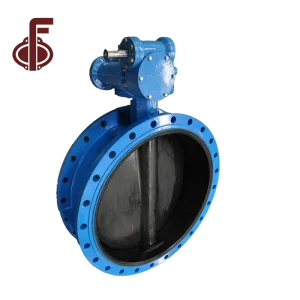
China PN16 CL150 Pressure Flange Type Butterfly Valves Manufacturers, Exporters
View Specifications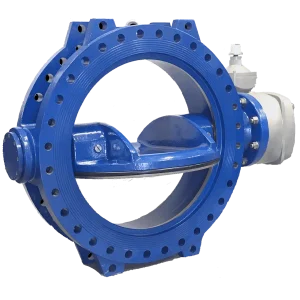
OEM AWWA C504 Double Eccentric Butterfly Valve Factories, Exporter
View Specifications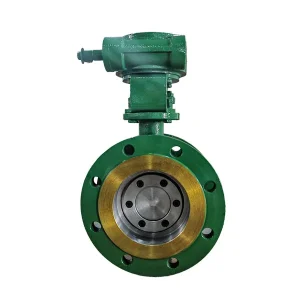
OEM WCB Double Flanged Triple Offset Triple Eccentric Butterfly Valve Exporter, Exporters
View Specifications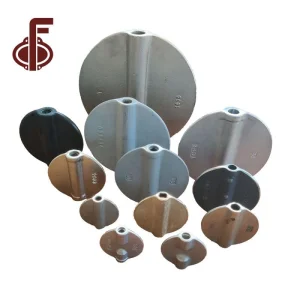
OEM Ductile Cast Iron Butterfly Valve Disc Factories, Exporter
View Specifications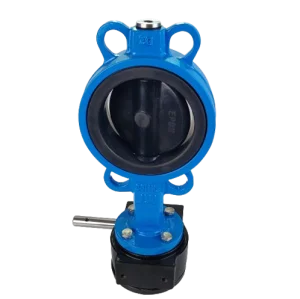
OEM EPDM Fully Lined Seat Disc Wafer Butterfly Valve Exporter, Exporters
View Specifications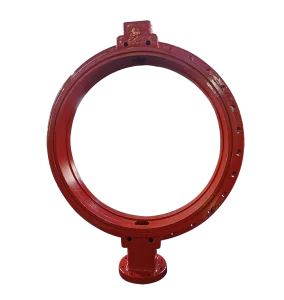
China Ductile Iron Single Flanged Wafer Type Butterfly Valve Body Factory, Exporter
View Specifications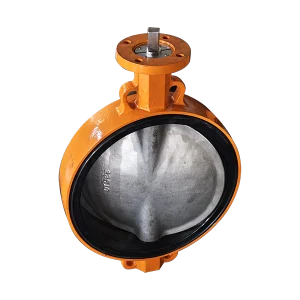
China CF8M Disc Two Shaft Wafer Type Butterfly Valve Factory, Factories
View SpecificationsGlobal Status: The Hydraulic Evolution Toward Dual Plate Geometries
In modern process architecture, reverse flow prevention is the primary safeguard against catastrophic water hammer, pump impeller destruction, and piping system over-pressurization. Across mega-scale desalination plants, municipal transmission mains, and hydrocarbon fractionation units, traditional swing check valves are systematically being phased out in favor of Double Door (Dual Plate) Wafer Check Valves.
Dynamic Water Hammer Mitigation
Conventional single-disc swing check valves rely heavily on gravity and reverse fluid velocity to seat. This mechanism invariably induces slamming during abrupt pump deceleration, driving transient acoustic shock waves that exceed pipe hoop stress tolerances. Double door check valves integrate torsion springs that drive the twin semi-circular plates closed milliseconds before reverse velocity reaches peak amplitude, virtually eliminating fluid hammer.
- Dynamic closure within 0.15 to 0.25 seconds
- Minimization of surge over-pressure by up to 78%
- Substantial acoustic noise mitigation across pump discharge headers
Compact Footprint & Structural Economics
Standard swing check valves require sprawling face-to-face dimensions and hefty flanged connections that place tremendous bending moments on adjacent piping spools. A dual plate wafer check valve reduces physical envelope length by up to 80% and total mass by 70% to 85% compared to flanged alternatives, slashing freight logistics overhead and eliminating complex support hangers in tight pipe racks.
- Short pattern face-to-face conforming to API 594 & ISO 5752
- Significant structural dead-load reduction on high-altitude offshore modules
- Rapid installation between companion flanges (EN 1092-1 / ASME B16.5)
Optimized Cv & Pressure Drop Balance
By dividing the disc into two symmetrical hinged plates supported by a central stop pin and hinge pin, the moment of inertia is dramatically diminished. The fluid path splits cleanly over streamlined disc edges, minimizing boundary layer separation, vortices, and hydraulic turbulence. This translates to an exceptional flow coefficient (Cv/Kv) and substantial energy conservation over lifecycle operating hours.
- Low cracking pressure (standard springs: 0.05 to 0.15 bar)
- Balanced hydrodynamic lift preventing disc chattering
- Reduced lifecycle electrical power draw across primary pumping skids
Comparative Matrix: Check Valve Mechanical Architectures
| Engineering Attribute | Double Door / Dual Plate Wafer | Conventional Swing Check | Nozzle / Axial Flow Check | Tilting Disc Check |
|---|---|---|---|---|
| Dynamic Response Speed | Ultra-Fast (Spring Assisted: < 0.25 s) | Slow (Gravity / Reverse Flow Dependent) | Extremely Fast (Internal Spring Axial) | Moderate (Pivoted Pivot Offset) |
| Water Hammer Propensity | Extremely Low (Near-Zero Slam) | High (Severe slamming risks on pump trip) | Negligible (Optimized for surge) | Low to Moderate |
| Structural Weight / Envelope | Minimal (Wafer Short Pattern, ~15% weight) | Heavy (Bulky flanged cast body) | Moderate to Heavy (Long face-to-face) | Heavy (Extended body cavity) |
| Installation Versatility | Horizontal & Vertical Upward Flow | Primarily Horizontal Only | Universal (Horizontal & Vertical) | Horizontal & Upward (Spring required) |
| Capital Expenditure (CAPEX) | Highly Competitive / Cost-Effective | High (Substantial cast metal consumption) | Very High (Complex internal geometries) | High (Precision offset machining) |
| Maintenance Accessibility | Single central pin extraction, fast seal swap | Top-cover gasket disassembly required | Difficult inline teardown | Moderate bonnet teardown required |
China Factory Efficiency Advantages: The ZFA Valve Integrated Model
Tianjin Zhongfa Valve Co., Ltd. (ZFA Valve), established in 2006, operates at the core of China’s most advanced industrial casting and valve fabrication belt in Tianjin. Our vertical manufacturing paradigm resolves the classic engineering trilemma: unyielding metallurgical quality, hyper-competitive unit economics, and condensed delivery schedules.
Year Established in Tianjin, China
Pressure Hydro-Tested (API 598 / ISO 5208)
Global Standards Built (ASTM, DIN, JIS, etc.)
Dedicated EPC Engineering Technical Response
Full-Chain Foundry & Spectrometry Control
Unlike trading entities that outsource raw castings, ZFA Valve maintains strict metallurgical hegemony. We utilize sand casting and investment precision casting paired with on-site direct-reading optical emission spectrometers (OES). Every heat batch of Ductile Iron (QT450-10 / GGG40 / ASTM A536), Cast Steel (WCB / 1.0619), and Stainless Steel (CF8, CF8M, Duplex 2205) receives documented chemical and tensile validation.
Cost Curve Scaling & Tooling Amortization
Through highly automated multi-axis CNC horizontal machining centers, customized boring rigs, and robotic weld overlay cells, our Tianjin facility achieves micron-precision dimensional tolerance on hinge pin retainers, plate stops, and body recesses. Tooling costs are amortized over high-volume production runs, yielding an immediate 25% to 40% commercial advantage over North American and Western European valve manufacturers.
Quality Management & CE/ISO Framework
ZFA Valve enforces an uncompromising ISO 9001:2015 quality assurance system with valid CE certification for the European single market. Pressure testing is performed on every production run: 1.5x nominal pressure for body shell hydro-tests and 1.1x nominal pressure for high-pressure seat closure tests, accompanied by low-pressure air seat testing to verify bubble-tight integrity across all resilient and metal-seated dual plate configurations.
Global Industrial Applications & Field Engineering Protocols
Double door check valves serve as mission-critical backflow barriers across diverse process lines. Specific environmental vectors—corrosive chlorides, cavitation-inducing velocities, cryogenic media, or high-temperature steam—dictate custom metallurgical and elastomeric trims.
Seawater Desalination (SWRO) & Brine Handling
High-pressure reverse osmosis trains generate severe pitting and crevice corrosion hazards due to concentrated brine with chlorides exceeding 35,000 ppm. ZFA Valve outfits dual plate check valves with Super Duplex Stainless Steel (UNS S32750 / 2507) discs, Inconel X-750 torsion springs, and vulcanized FKM or vulcanized EPDM seats to ensure decades of zero-leakage operation without localized galvanic degradation.
District Cooling, HVAC & Urban Water Supply
Chilled water distribution lines in metropolitan high-rises and district cooling networks demand minimal pumping head loss combined with non-slam performance to protect delicate heat exchangers and centrifugal chillers. Ductile Iron bodies (EN-GJS-400-15) fitted with CF8M discs and resilient EPDM seats guarantee micro-bubble tightness, absorbing pump shutoff shock waves seamlessly.
Refining, Petrochemical & Flare Knockout Drums
Hydrocarbon transport, gas compressors, and sour crude piping enforce strict NACE MR0175 / ISO 15156 compliance to mitigate sulfide stress cracking (SSC). For these demanding services, ZFA engineers specify ASTM A216 WCB or A351 CF8M bodies paired with Retainerless Double Door designs. Retainerless architecture eliminates external body penetrations and plug threads, eliminating potential fugitive volatile organic compound (VOC) leak paths entirely.
Emerging Trends: Next-Gen Double Door Check Valve Engineering
The flow control sector is undergoing profound digital, metallurgical, and environmental shifts. Modern project owners and engineering houses are writing increasingly rigorous specifications that reflect three transformative macro trends.
CFD-Optimized Dynamic Disc Curvature
Traditional flat semi-circular plates generate turbulent recirculation eddies at the trailing disc perimeter. Leading Chinese exporters, led by ZFA Valve, now utilize Computational Fluid Dynamics (CFD) modeling to design aerodynamically cambered disc profiles. These contoured discs accelerate boundary layer reattachment, reduce turbulent drag coefficients by 18%, and stabilize dynamic plate behavior across fractional flow conditions (down to 20% flow velocity).
Fatigue-Resistant Exotic Spring Alloys
Spring failure is the primary point of vulnerability in dual plate check valves exposed to high-frequency pulsation. The industry is moving from standard AISI 304/316 springs to Inconel 718, Inconel X-750, and Hastelloy C-276. These superalloys deliver exceptional fatigue endurance exceeding 500,000 cyclic reversals while resisting stress relaxation at elevated temperatures (up to 450 °C) and aggressive sour chemical exposure.
Zero Fugitive Emission Retainerless Standards
Environmental regulations targeting fugitive industrial emissions (such as EPA Method 21 and ISO 15848-1) are driving the universal adoption of retainerless dual-plate check valve designs. By housing the hinge pin and stop pin entirely within the internal cast cavity using blind interior bores and high-integrity internal lock brackets, external pinned holes, through-wall plugs, and perimeter gasket leak points are completely eliminated from the valve pressure boundary.
Global EPC Sourcing Guide: Auditing a Chinese Valve Exporter
Procuring valves from China requires a disciplined engineering validation framework to ensure structural integrity and code compliance. Follow this structured five-stage workflow practiced by Tier-1 EPC contractors when qualifying ZFA Valve for project orders.
RFQ Specification & Hydraulic Sizing
Clarify precise operating media, specific gravity, flow rates (min, norm, max), design pressure/temperature, and cracking pressure tolerances. Validate that minimum pipeline velocity matches the disc full-open velocity limit to prevent disc oscillation and premature pin wear.
Metallurgical & Traceability Audit
Require EN 10204 3.1 Material Test Certificates (MTC) providing 100% heat-number traceability for body, disc, and pin assemblies. Verify foundry chemical composition limits (P < 0.035%, S < 0.035% for WCB/SS) and mechanical tensile, yield, and Charpy V-notch impact tests.
Non-Destructive Testing (NDT)
For critical oil & gas and high-pressure steam services, mandate NDT protocols: Radiographic Testing (RT) or Ultrasonic Testing (UT) on critical casting sections, Magnetic Particle Testing (MT) for carbon steels, and Dye Penetrant Testing (PT) across stainless steel sealing surfaces.
Factory Acceptance Hydro-Testing
Witness or audit documented hydrostatic testing under API 598 or ISO 5208. Verify zero allowable leakage on resilient seat variants (Rate A) or strict metal-seated limits. Shell tests must hold at 1.5x rating without visual weeping, porosity, or mechanical deformation.
Frequently Asked Questions on Dual Plate Check Valve Procurement
In-depth technical answers addressing hydrodynamic considerations, installation alignments, and material selections curated by ZFA Valve’s senior engineering team.
No. Dual plate check valves are engineered strictly for horizontal pipelines and vertical lines with upward fluid flow. In vertical downward lines, gravity pulls the plates open against spring tension, resulting in incomplete closure, reverse leakage, and severe water hammer upon flow reversal.
Pinned valves feature holes drilled through the body wall to secure the hinge and stop pins, sealed with threaded plugs. Retainerless valves house both pins entirely inside the valve bore, using internal lock inserts. Retainerless designs eliminate leak paths through the shell, satisfying severe fugitive emissions codes.
The minimum media velocity required to hold dual plates firmly against the stop pin without fluttering is given by V = j * sqrt(v), where 'v' is the specific volume of the fluid and 'j' is a design factor (typically 35 to 45 for dual plate valves). Operating below this velocity causes disc chattering, resulting in premature hinge pin wear.
ZFA wafer bodies are designed with multi-standard locating lug ears or universally dimensioned outer body profiles that fit precisely within bolt circles for ASME B16.5 Class 150/300, EN 1092-1 PN10/PN16/PN25, JIS B2220 10K/16K, and AS 2129 Table E, simplifying inventory for global distributors.
For saturated steam or thermal oil above 200 °C, elastomer seats (EPDM, NBR, FKM) degrade rapidly. ZFA Valve incorporates metal-to-metal seating featuring a Stellite hardfaced overlay (Stellite 6 or 21) or high-grade stainless steel seat faces ground and lapped to an optical mirror finish, conforming to API 598 metal seat leakage allowances.
Standard stock component configurations (such as standard Ductile Iron and WCB bodies with CF8M discs) typically dispatch within 15 to 20 days. Fully customized orders (special alloys like Duplex 2205, Monel, or custom rubber vulcanization) range between 30 and 45 days, supported by rapid shipping from Tianjin Port.
Engineered Non-Return, Gate, & Butterfly Valve Assemblies
Complete project coverage manufactured under ISO 9001 and CE frameworks by Tianjin Zhongfa Valve Co., Ltd., built for long service lifespans across extreme industrial operational regimes.
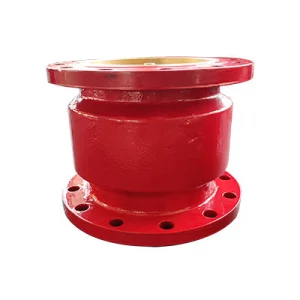
China Silencing Check Valve Non Return Valve Manufacturers, Factory
View Specifications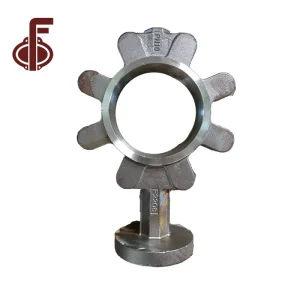
OEM Lug Type Butterfly Valve with Body Factory, Exporter
View Specifications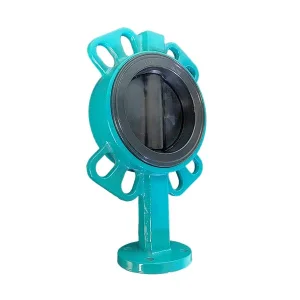
China DN100 EPDM Fully Lined Wafer Butterfly Valve Multi-standard Manufacturer, Factories
View Specifications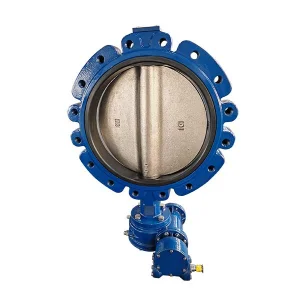
OEM 18" Hard Back Seat Lug Butterfly Valve with Pin DN450 PN10 Manufacturer, Exporters
View Specifications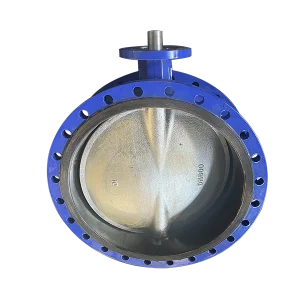
OEM Bare Shaft Vulcanized Seat Flanged Butterfly Valve Manufacturer, Factory
View Specifications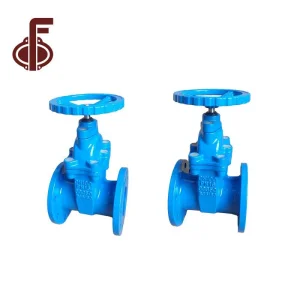
OEM DI PN10/16 Class150 Soft Sealing Gate Valve for Water Pipe Factory, Exporters
View Specifications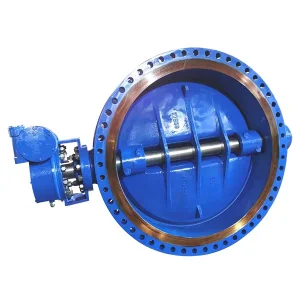
OEM Short Pattern U Shape Double Eccentric Butterfly Valve Factories, Exporters
View Specifications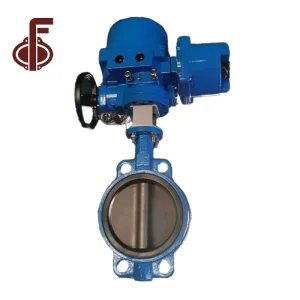
OEM Electric Actuator Wafer Butterfly Valve Factories, Exporter
View SpecificationsConnect Directly with ZFA Valve Engineering Center
Submit your engineering specifications, pipeline isometric drawings, or tender data sheets. Our technical sales engineers in Tianjin provide formal compliance offers, dimensional drawings, and complete quality dossiers within 24 hours.
