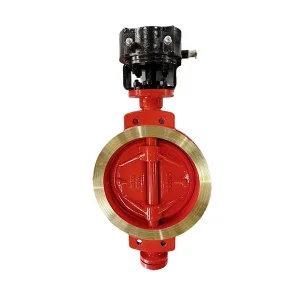
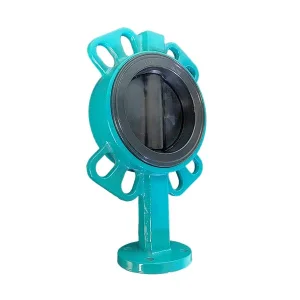
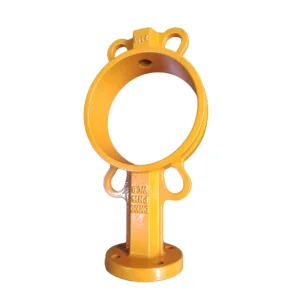
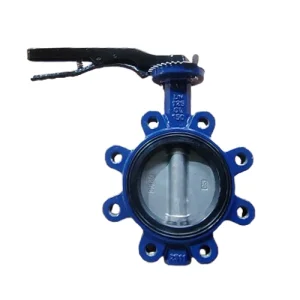
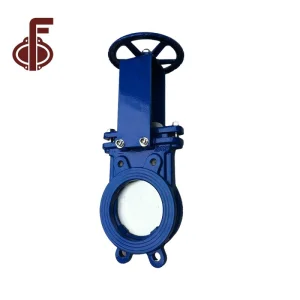
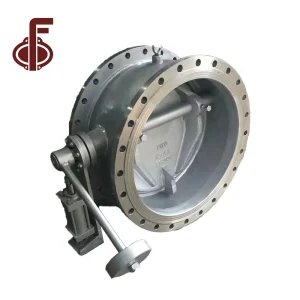
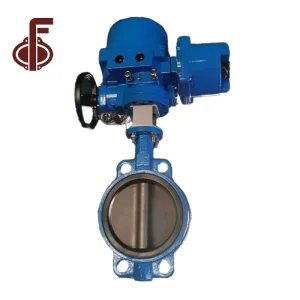
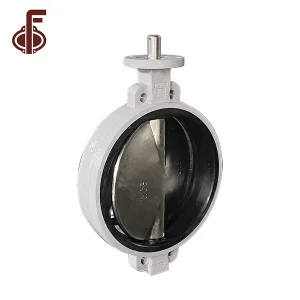
Featured Industrial Valve Solutions (Set I)
Precision-machined butterfly, gate, and check configurations manufactured to ASTM, ANSI, DIN, and ISO standards for worldwide infrastructure projects.
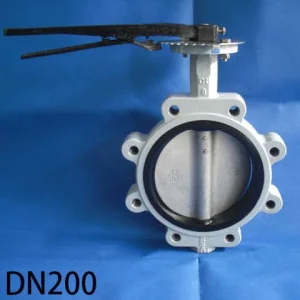
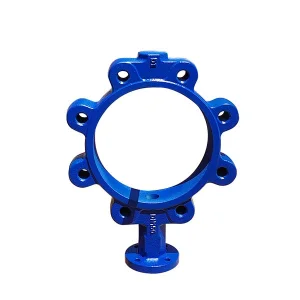
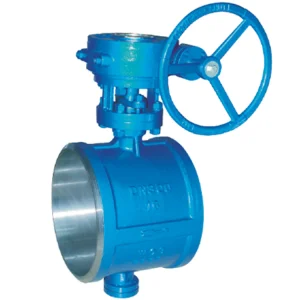
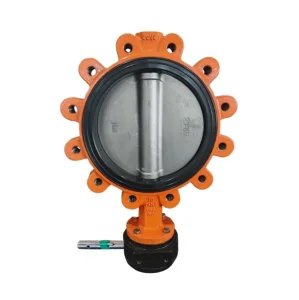
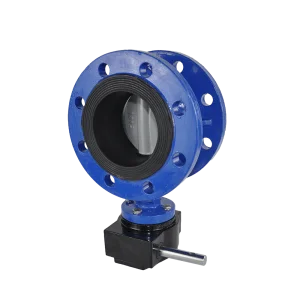
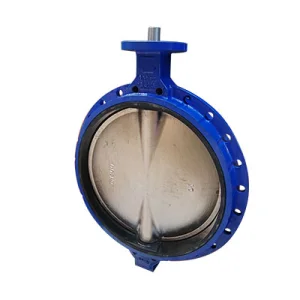
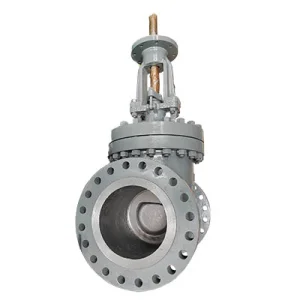
Kinematic Design Principles: Double Offset (High Performance) vs Triple Offset (TOV)
Navigating high-cycle industrial isolation requires an explicit thermodynamic and mechanical comprehension of disc geometry. Discover why Chinese OEM factories utilize specific offset geometries across critical processing loops.
Offset 1: Shaft Axis Shift
The shaft centerline is positioned downstream behind the sealing plane of the disc. This fundamental displacement creates an uninterrupted 360-degree sealing contact path, removing the traditional stem-penetration leak points common to resilient concentric valves.
Offset 2: Pipe Centerline Shift
The shaft axis is placed eccentrically relative to the pipeline center. This offset imparts a camming dynamic: during the initial degrees of disc rotation, the disc lifts cleanly off the seat, virtually eliminating frictional wear across 85% of travel.
Offset 3: Seat Cone Inclination
Exclusive to Triple Offset Valves (TOVs), the seat sealing cone profile is angled away from the bore centerline. This non-conical/elliptical geometry converts rotational action into a pure right-angle wedging action with zero rubbing, enabling bi-directional metal-to-metal seating.
In high-specification manufacturing clusters across China, including Tianjin and Zhejiang, engineering selection balances capital expense (CAPEX) and operational downtime (OPEX). Double Offset Butterfly Valves typically deploy an engineered polymer seat (virgin PTFE, R-PTFE, or PEEK). When the valve initiates closure, the double eccentric action drives the disc into the elastomer or polymeric seat with reduced friction, providing superior throttling resilience in water utility networks, moderate-temperature district energy, and desalination plants.
Conversely, Triple Offset Butterfly Valves (TOVs) are designed for severe service environments. Operating without elastomeric components, TOVs incorporate laminated stainless steel and graphite seals or solid Stellite-welded trim. The third offset eliminates all sliding motion between disc and seat ring: contact occurs only at the final point of mechanical shutoff. This mechanical cam-wedge design achieves API 598 zero-leakage and ISO 5208 Rate A sealing in superheated steam, cryogenic liquefied natural gas (LNG), cracking furnaces, and high-pressure oil refining.
| Evaluation Parameter | Double Offset (High Performance) | Triple Offset (Severe Service TOV) | Engineering Selection Impact |
|---|---|---|---|
| Sealing Principle | Interference Camming Elastic compression | Mechanical Wedging Non-rubbing torque seat | TOV eliminates sliding shear; longer life cycle in abrasive steam |
| Operating Temperature | -50°C to +260°C (Governed by PTFE/PEEK limits) | -196°C (Cryogenic) up to +815°C (Refractory alloys) | TOVs are non-substitutable in extreme thermal conditions |
| Pressure Capability | ASME Class 150 to Class 300 (PN10 to PN50) | ASME Class 150 to Class 1500 (PN10 to PN250) | TOVs accommodate high differential pressures (ΔP) |
| Firesafe Certification | Secondary metal backup required (API 607 partial) | Inherently fire-safe all-metal build (API 607 / ISO 10497) | TOV is standard for flammable hydrocarbons & petrochemicals |
| Torque Characteristics | Moderate dynamic torque, predictable break torque | Torque-seated; requires strict sizing calculation | Actuator selection must match high end-of-stroke torque |
| Capital Investment | Cost-effective baseline (1.0x baseline unit index) | Premium specialized pricing (1.8x - 2.5x unit index) | Double offset offers lower procurement cost for utility loops |
China Valve Foundry & Manufacturing Ecosystem: Scale, Machining, and Metallurgy
China's modern industrial valve manufacturing relies on integrated industrial clusters, advanced metallurgy control, and high-precision CNC automation.
Foundry & Chemical Traceability
Tier-1 Chinese foundries utilize automated vacuum-induction melting and precision resin-sand casting. Every heat run undergoes spark spectrometer inspection to verify low-carbon, low-sulfur content matching ASTM A216 WCB, A351 CF8M, CF3M, and Duplex 2205 with EN 10204 3.1 certification.
5-Axis CNC Offset Profiling
Fabricating the precise elliptical geometry of a triple-offset disc requires continuous simultaneous 5-axis computer numerical control machining. Chinese manufacturing facilities use high-rigidity horizontal machining centers to maintain seat-cone tolerances down to ±0.005mm.
In-House Non-Destructive Testing
Advanced facilities operate ISO 9712 / ASNT Level II/III certified testing stations: Radiographic Examination (RT), Ultrasonic Testing (UT) for casting integrity, Magnetic Particle (MT), and Dye Penetrant (PT) inspections, supplemented by Positive Material Identification (PMI).
Localization Support, Regulatory Compliance, and Global Sourcing Needs
Navigating global industrial procurement requires technical compliance with regional valve safety directives, environmental standards, and quality frameworks.
CE-PED & Pressure Directives
European market supply requires Pressure Equipment Directive (PED 2014/68/EU) Module H compliance. Chinese factories verify design margins using finite element analysis (FEA) to confirm wall thickness compliance per EN 12516 and ASME Section VIII.
Fugitive Emissions Control
Compliance with ISO 15848-1 and API 641 fugitive emission regulations is essential in clean energy installations. Double and triple offset designs feature live-loaded PTFE or die-formed graphite stem packing systems, reducing VOC leaks below 50-100 ppmv.
AWWA C504 & Potable Standards
Municipal water procurement in the Americas requires strict adherence to AWWA C504 and NSF/ANSI 61/372 lead-free certifications. Factories support this via high-potency fusion bonded epoxy (FBE) electrostatic coatings exceeding 250 µm thickness.
Direct Actuation Integration
International EPC projects rely on integrated actuation packages. Valves feature standardized ISO 5211 direct-mount top flanges to simplify pneumatic rack-and-pinion, scotch-yoke, multi-turn electric, and hydraulic safety-shutdown integration without custom brackets.
Localized Application Scenarios: Where Engineers Specify Each Class
Specifying the correct valve topology depends on pressure differentials, media abrasiveness, thermal cycling, and chemical compatibility.
District Energy & HVAC Systems
Primary Selection: Double Offset (R-PTFE / Metal Seat)
District heating and cooling networks require balanced flow control, low lifecycle torque, and bi-directional shutoff up to 200°C. Double offset designs deliver the optimal balance of longevity and cost efficiency across large pipe diameters.
LNG, Cryogenics & Liquefaction
Primary Selection: Triple Offset (Stainless + Graphite)
Cryogenic media like liquid methane down to -196°C embrittle resilient polymer seats. Triple offset valves with extended bonnets keep packing seals above freezing while metal-to-metal seating maintains tight shutoff despite thermal contraction.
Refining & Steam Distribution
Primary Selection: Triple Offset Butt-Welded / Flanged
Superheated high-pressure steam quickly degrades soft elastomer seals. Solid Stellite seat faces combined with torque-driven metal seals withstand thermal shocks, high velocities, and scale abrasion over extended duty cycles.
Future Trends: Additive Metallurgy, Digital Twins & Decarbonization
The high-performance industrial valve market is advancing through additive manufacturing, computational optimization, and stricter fugitive emissions benchmarks.
Additive Hardfacing & Cladding
Plasma Transferred Arc (PTA) and High-Velocity Oxygen Fuel (HVOF) robotic thermal spraying now automate Stellite Grade 6 and tungsten carbide deposition on valve seats, eliminating porosity and micro-cracking risk across extreme thermal environments.
CFD Hydrodynamic Disc Geometry
Modern Chinese R&D departments utilize 3D Computational Fluid Dynamics (CFD) modeling to refine disc cross-sections. Streamlined profiles reduce cavitation potential, increase flow capacity (Cv values by up to 15%), and lower system pressure drops.
Clean Hydrogen & Carbon Capture
Decarbonization pipelines carrying supercritical carbon dioxide and pure hydrogen require specialized metallurgy to mitigate hydrogen embrittlement. Modern TOVs use certified Austenitic alloys and specialized micro-machined dynamic seals for low-leakage containment.
Frequently Asked Technical Questions (FAQ)
Clear technical answers addressing critical sourcing, testing standards, and operational questions for engineering and procurement teams.
Why is a Triple Offset Valve considered bi-directional while some claim it is uni-directional?
True Triple Offset Valves engineered with symmetrical elliptical geometry achieve zero-leakage shutoff in both directions per API 598. However, preferred flow direction leverages line pressure to supplement seating mechanical force, slightly reducing operational torque. Reverse-flow applications require careful actuator sizing to maintain reliable shutoff margins against backpressure.
When is a Double Offset Valve preferable over a Triple Offset design?
Double offset valves offer clear advantages in ambient to medium-temperature applications (under 200°C) with clean fluids or non-corrosive water. They provide reliable class-tested shutoff at roughly 40% to 60% of the cost of severe-service all-metal TOVs, delivering an optimal balance of performance and capital efficiency.
How do Chinese manufacturers guarantee casting integrity on severe-service pressure retaining bodies?
Tier-1 Chinese valve manufacturers employ computerized solidification simulations (such as MagmaSoft) to prevent shrinkage porosity. Production castings undergo Non-Destructive Testing (NDT) via Radiographic Examination (RT) per ASME B16.34 Appendix-I or Ultrasonic Examination (UT), accompanied by 100% Positive Material Identification (PMI) on alloy chemistries.
What are the mechanical distinctions between laminated and solid Stellite seats?
Laminated seats alternate 316 stainless steel with flexible graphite layers, allowing slight compliance that readily achieves API 598 Class VI zero-leakage. Solid Stellite-welded seats lack flexible laminations and rely entirely on high-precision CNC metal matching, making them superior for high-abrasion pipelines with suspended particulates, fly ash, or catalyst fines.
Featured Industrial Valve Solutions (Set II)
High-durability butterfly, knife gate, and actuated systems built for harsh chemical processing, slurry lines, and primary power plant distribution.