
Engineered Valve Portfolio · Part I
Explore precision-machined flow control equipment produced in Tianjin, China. Each valve is 100% shell and hydrostatic tested under ISO 9001 and CE inspection protocols.
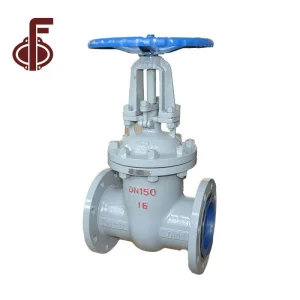
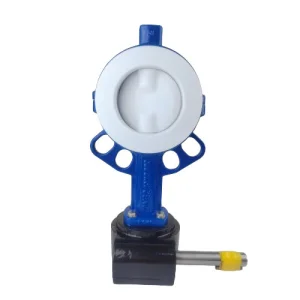
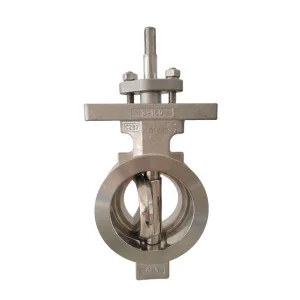
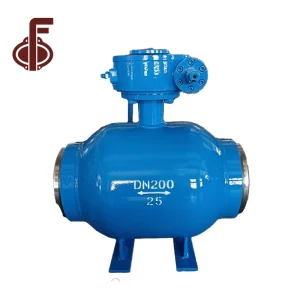
Engineering Architecture of Dual Plate Check Valves
A comprehensive analysis of dual plate non-return mechanisms, hydraulic slam mitigation, and compact wafer metallurgy designed for critical municipal, power, and industrial piping networks.
Dynamic Water Hammer Elimination
Traditional swing check valves rely exclusively on gravity and reverse fluid velocity to swing their heavy single disc into the closed seat. In rapid pump trip scenarios, reverse velocity builds exponentially, slamming the disc shut with destructive hydraulic shock waves ($P = \rho c \Delta v$). Dual plate valves employ twin semicircular plates loaded by calibrated torsional Inconel springs, closing instantaneously before flow reversal occurs, virtually eliminating water hammer.
Ultra-Compact API 594 Footprint
Dual plate check valves conform strictly to API 594 short face-to-face standards. Compared to flanged swing check valves or piston lift non-return valves, wafer dual plate units reduce piping structural load by up to 80% and axial length by up to 75%. This eliminates the requirement for heavy foundation supports, reduces structural pipe rack stresses in offshore modules, and lowers global ocean shipping freight costs substantially.
Fugitive Emission Prevention
Standard dual plate check valves utilize retainer pins penetrating the outer valve body to position hinge and stop pins. For hazardous chemicals, sour gas (NACE MR0175), and cryogenic LNG service, ZFA manufactures advanced Retainerless Dual Plate Check Valves. By locking the internal pin carrier within the body without through-body penetrations, the design achieves complete integrity, eliminating external leak paths per ISO 15848-1.
Engineering Takeaway for Piping Designers: Dual plate check valves operate efficiently in both horizontal and vertical upward flow pipelines. The independent dual-spring mechanism ensures the plates do not drag across the seating surfaces, extending resilient seat lifespan beyond 15 years in potable water, desalinated brine, and HVAC cooling circuits.
China Factory Advantages & Precision Manufacturing Ecosystem
Established in 2006, ZFA Valve leverages northern China's premier heavy industrial casting and machining hub to deliver unmatched metallurgical consistency, cost efficiency, and export compliance.
Integrated Foundry Clusters
Situated in the Tianjin valve manufacturing belt, ZFA has direct vertical integration with automated resin-sand and investment casting foundries. This eliminates third-party raw casting markups, reduces porosity defects to under 0.02%, and guarantees metallurgical purity for Ductile Iron (EN-GJS-400-15 / 500-7), Cast Carbon Steel (WCB), and Stainless Steels (CF8, CF8M, CF3M).
In-House CNC Machining
Dual plate check valves require strict micron-level tolerances on hinge pin holes, stop pins, and plate seating planes. Our plant operates multi-axis CNC horizontal boring centers and automated seat grinding machines. This ensures perfect planar contact between plates and resilient or stellite-overlay seats, achieving API 598 zero-bubble tight shutoff.
Full Inspection & 3.1 MTR
Every melt batch undergoes optical emission spectrometer (OES) chemical validation and tensile/Charpy impact mechanical verification. Comprehensive EN 10204 3.1 inspection certification accompanies every shipment. Non-destructive testing including Magnetic Particle (MPI), Dye Penetrant (PT), and Radiography (RT) is available on demand for EPC projects.
Global Export Supply Chain
Located just 45 kilometers from Tianjin Xingang Port—one of northern China's largest maritime gateways—ZFA provides streamlined multimodal logistics. We support FOB, CIF, DDP, and project-specific seaworthy solid wood crating with VCI vapor rust-inhibiting protection designed to withstand 60-day oceanic container transits.
Dual Plate Check Valve Engineering Matrix
Reference technical parameters for design engineers and international procurement teams. Fully configurable to match ASTM, ANSI, BS, DIN, JIS, and KS international pipeline codes.
| Component | Standard Material | Corrosive / Marine Grade | High Temperature / Petrochem | Applicable Standards |
|---|---|---|---|---|
| Valve Body | Ductile Iron (GGG40/50, A536) / WCB | SS304 (CF8) / SS316 (CF8M) / Duplex 2205 | WC6, WC9, LCC, LCB, C5 | API 594, ASME B16.34, EN 12516 |
| Dual Plates | Ductile Iron Ni-Plated / CF8 / CF8M | SS316L, 2507 Super Duplex, Alu-Bronze C95800 | CF8M + Stellite Gr. 6 Hardfacing | ASTM A351, ASTM B148, DIN 17445 |
| Hinge & Stop Pins | AISI 410 / SS304 | SS316 / Monel K-500 / Hastelloy C276 | Inconel 625 / 718 | ASTM A276, ASTM B164 |
| Torsion Springs | AISI 302 / SS316 (Standard) | Inconel X-750 / Inconel 718 (Non-Fatigue) | Inconel X-750 (Up to 550°C / 1022°F) | AMS 5698, ASTM B637 |
| Seat Lining | EPDM (-20°C to 120°C) / NBR | FKM (Viton) / PTFE / PFA | Integral Metal-to-Metal / Stellite Weld Overlay | API 598, ISO 5208 Leakage Rate A/D |
| Pressure Rating | Class 125, 150 / PN10, PN16 | Class 150, 300 / PN16, PN25, PN40 | Class 600, 900, 1500, 2500 / PN100 - PN420 | ASME B16.5, ASME B16.47, EN 1092-1 |
Wafer Type (API 594)
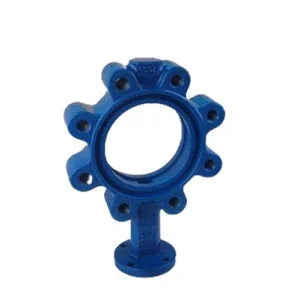
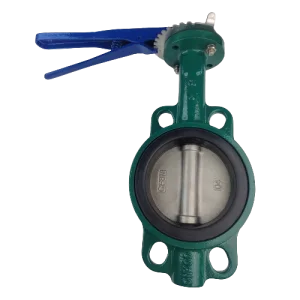
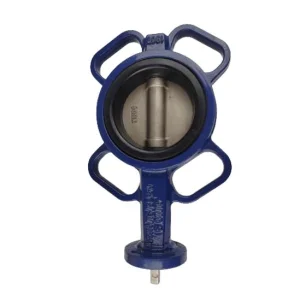
Compact, flangeless body clamped directly between counter-flanges via long through-studs. Offers the lowest weight and lowest initial procurement cost. Perfect for water treatment, commercial HVAC, and compact industrial plant skids.
Lug Type (Full Lugged)
Tapped or through-hole lugs around the periphery allowing independent bolting from both sides. Enables downstream pipeline isolation and terminal dead-end service without losing pipeline pressure upstream.
Double Flanged Type
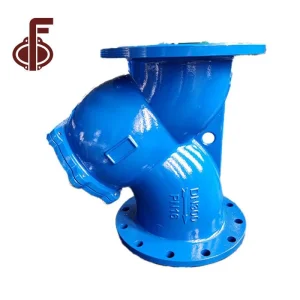
Manufactured with integrated integral flanges for large-diameter lines (DN350 to DN1800+). Delivers exceptional structural rigidity in deep buried pipelines, water transmission networks, and high-pressure pumping stations.
Global Industrial Solutions & Localized Use Cases
From seawater desalination in the Middle East to district energy systems in Northern Europe, ZFA dual plate check valves provide silent, reliable backflow prevention under severe operating duties.
SWRO Desalination Plants
Seawater Reverse Osmosis (SWRO) high-pressure pumping stations require extreme cavitation and crevice corrosion resistance. ZFA manufactures dual plate check valves in Nickel-Aluminum Bronze (C95800) and 2507 Super Duplex Stainless Steel with Inconel X-750 springs. These valves resist pitting in high-chloride brine while defending high-pressure membrane feed pumps from back-surge destruction.
HVAC & District Cooling Centers
Modern ultra-tall skyscrapers and centralized urban district cooling networks utilize multi-megawatt chiller plants. Dual plate wafer valves installed on condenser water pump headers eliminate hydraulic water hammer noise, protect variable-frequency centrifugal chillers, and conserve mechanical plant room space due to their minimal face-to-face dimensions.
Municipal Water & Wastewater
Potable water transmission conduits and wastewater booster stations require non-turbulent, low-head-loss non-return devices. ZFA Ductile Iron (EN-GJS-500-7) dual plate check valves with WRAS-approved EPDM vulcanized liners and high-grade 304/316 discs guarantee zero toxic leaching, corrosion-free sealing, and extended operation without maintenance.
Oil, Gas & Hydrocarbon Refining
In refining crude distillation units, gas processing skids, and petrochemical tank farms, fugitive volatile organic chemical (VOC) containment is paramount. ZFA Retainerless WCB and CF8M dual plate check valves eliminate body penetration leakage risk, conforming strictly to API 6D, API 594, and fire-safe testing standards under extreme operational thermal transients.
Thermal & Hydropower Generation
Boiler feed water lines, steam extraction systems, and turbine bypass circuits experience elevated pressures and temperatures. Our cast chrome-moly steel (WC6, WC9) dual plate check valves with stellite-welded seating rings deliver dependable non-return functionality without thermal binding, safeguarding massive steam turbines from hazardous condensate backflow.
Global EPC Procurement Checklist & Factory Audit Protocol
How Tier-1 engineering contractors evaluate Chinese valve manufacturers. ZFA Valve guarantees total transparency across incoming raw material verification, hydrostatic pressure testing, and container loading inspections.
1. Material Traceability (EN 10204 3.1)
Each casting heat number is laser etched or cast into the dual plate check valve body. Chemical composition (C, Si, Mn, P, S, Cr, Ni, Mo) is verified through spark emission spectrometry, accompanied by full mechanical test reports covering tensile strength, yield point, and elongation.
2. Hydrostatic Testing (API 598 / ISO 5208)
Every single valve undergoes shell pressure testing at 1.5x design cold working pressure (CWP) and resilient seat testing at 1.1x CWP. High-pressure liquid and low-pressure pneumatic air tests (6 bar) ensure Zero-Bubble Rate A closure on all elastomer-seated dual plate models.
3. Spring Dynamic Torque Calibration
Spring failure is the primary failure mode of substandard dual plate check valves. ZFA verifies torque rates and cyclic fatigue on customized dynamic test rigs. Torsion springs must pass over 100,000 continuous deflection cycles without plastic deformation or cracking before installation.
4. Internal Bore & Wall Thickness Verification
Body wall thickness is measured using calibrated ultrasonic thickness gauges to ensure complete conformity to ASME B16.34 and API 594 minimum wall requirements. This protects the valve against pipeline bending stresses, seismic events, and water hammer shockwaves.
5. International Standard Flange Alignment
Valve faces and bolt circles are CNC-indexed to mate smoothly with ANSI/ASME B16.5 Class 150/300, EN 1092-1 PN10/PN16/PN25/PN40, AS 2129 Table D/E, and JIS B2220 10K/16K flanges, preventing costly piping misalignment during field installation.
6. Export Packaging & Ocean Protection
Machined flange serrations and seat bores are coated with rust-preventive oil and shielded with impact-resistant poly end-caps. Valves are packed inside IPPC-certified fumigated solid plywood cases lined with vapor corrosion inhibitor (VCI) film for ocean transit security.
Frequently Asked Questions on Dual Plate Check Valves
Direct answers from ZFA Valve's chief design engineers regarding selection, hydrodynamic performance, spring sizing, and system installation guidelines.
What are the key technical differences between a dual plate check valve and a swing check valve?
Swing check valves utilize a single large disc that swings freely on a top hinge pin. Because the disc travel angle is large (typically 70° to 85°), it takes a comparatively long time to shut when forward flow slows down. When pump failure occurs, reverse fluid velocity accelerates back through the valve before the heavy disc reaches its seat, causing massive dynamic water hammer slamming, high noise, and structural pipeline damage. In contrast, a dual plate check valve divides the disc into two semicircular plates hinged around a central pin. The travel distance is reduced by more than 50%, and calibrated torsion springs provide immediate mechanical closing torque. The plates close precisely at zero velocity before reverse flow can initiate, providing silent, non-slam operation while reducing valve weight by up to 80%.
Can dual plate check valves be installed in vertical piping lines?
Yes. Dual plate check valves can be mounted in vertical pipelines with upward flow. The internal torsion springs hold the plates in the closed position regardless of gravity, ensuring immediate closure upon flow cessation. However, installation in vertical lines with downward flow is strictly not recommended by international valve standards, as gravity would pull the plates open and prevent reliable non-return sealing. When installed horizontally, the hinge pin must always be oriented vertically to allow the dual plates to open symmetrically and equalize wear on both bottom and top hinge points.
What is the difference between Retainer Type and Retainerless Type dual plate check valves?
In standard Retainer Type dual plate check valves, the hinge pin and stop pin are secured through drilled holes in the outer valve body, which are then sealed using threaded plugs and compression gaskets. In Retainerless Type valves, the internal pins are locked inside precision-machined internal body pockets or an internal carrier sleeve without any through-body penetrations. Retainerless valves are specified by major oil, gas, and chemical companies (e.g., Shell MESC, Saudi Aramco, ExxonMobil) because they eliminate external body leak paths, preventing fugitive VOC emissions and ensuring 100% boundary integrity under extreme pressures up to ASME Class 2500.
How do you select the appropriate spring material for a dual plate check valve?
Spring selection depends on fluid chemistry, temperature, and cyclic duty. For general water, wastewater, and HVAC applications below 120°C, AISI 304 or 316 stainless steel springs offer reliable performance. For seawater, high chlorides, sour gas ($H_2S$ per NACE MR0175), or high-temperature steam services above 200°C, ZFA recommends Inconel X-750 or Inconel 718. Inconel alloys resist stress corrosion cracking and retain their spring elasticity under extreme temperatures up to 550°C without relaxation or fatigue failure.
How is pressure drop ($\Delta P$) calculated and minimized across a dual plate check valve?
Pressure drop is governed by the valve flow coefficient ($Cv$), fluid velocity, and the spring opening cracking pressure. At low flow velocities, the plates may only partially open, causing flow constriction and higher differential pressure. To prevent plate flutter and minimize head loss, pipeline engineers should size dual plate check valves to ensure the regular operating flow velocity exceeds the minimum velocity required to hold the plates fully open (typically $1.5 \text{ to } 2.5 \text{ m/s}$ for liquids). ZFA engineering datasheets provide detailed $Cv$ vs Disc Opening curves for every nominal size from DN40 to DN1800.
Which international valve testing standards does ZFA Valve adhere to during factory acceptance?
ZFA dual plate check valves are tested strictly according to API 598 (Valve Inspection and Testing) and ISO 5208 (Industrial Valves - Pressure Testing). Testing includes: 1) Shell Hydrostatic Test at 1.5x PN/Class rating; 2) High-Pressure Back-Seat Hydrostatic Closure Test at 1.1x rating; 3) Low-Pressure Pneumatic Air Seat Test at 6 bar ($0.6 \text{ MPa}$). For resilient EPDM/NBR/Viton seats, zero visible leakage (Rate A) is enforced. For metal-to-metal seats, allowable leakage strictly adheres to API 598 Table 6 or ISO 5208 Rate D.
Engineered Valve Portfolio · Part II
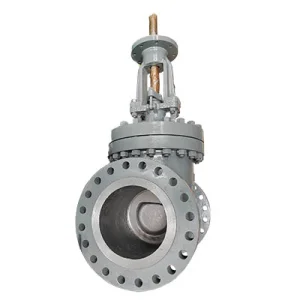
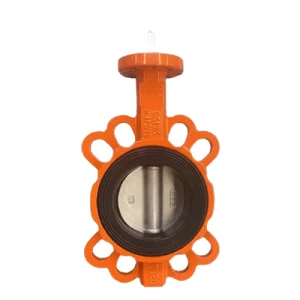
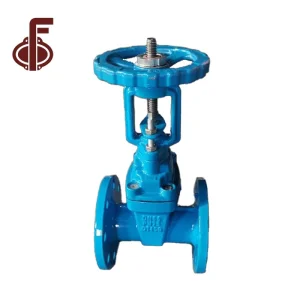
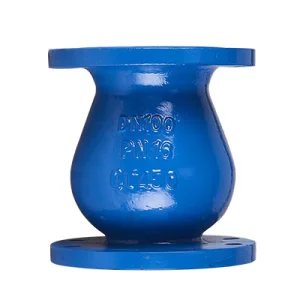
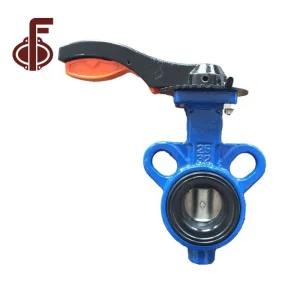
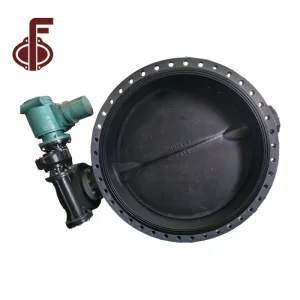
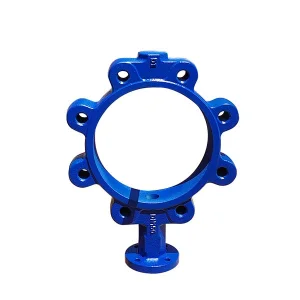
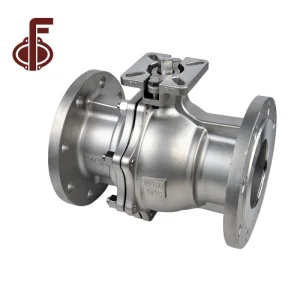
Complementary isolation, non-return, and filtration equipment designed to match dual plate check installations in integrated municipal and industrial pipeline projects.
Connect Directly with ZFA Valve Engineering Desk
Need comprehensive dimensional drawings, 3D CAD step files, pressure drop calculations, or a project quotation within 24 hours? Our factory engineers in Tianjin are ready to support your engineering procurement team.
