
Factory-Engineered Industrial Flow Control Inventory
Explore Tianjin Zhongfa Valve Co., Ltd. (ZFA Valve) high-performance assemblies manufactured under rigorous European CE and ISO quality management protocols.
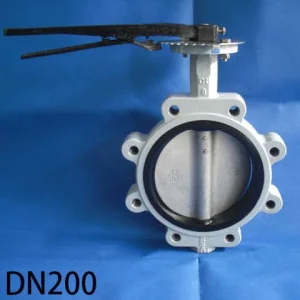
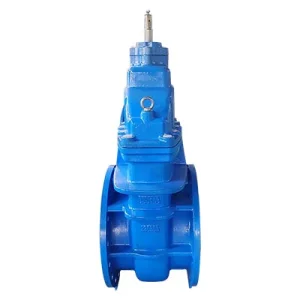
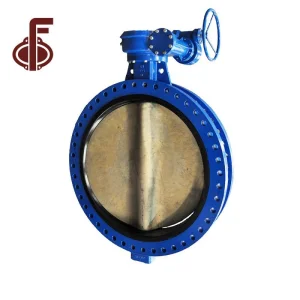
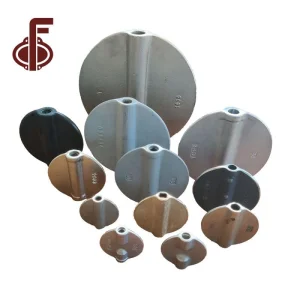
Engineering Architecture & Bi-Directional Sealing Dynamics of Floating Ball Valves
A rigorous metallurgical and mechanical breakdown of floating ball valve design parameters, pressure-assisted seat engagement, and blowout-proof stem dynamics.
In process isolation technology, the floating ball valve serves as the indispensable benchmark for tight shutoff across low-to-medium pipeline diameters, typically spanning DN15 to DN200 (1/2" to 8") and pressure envelopes from ASME Class 150 up to Class 600 (PN16 to PN100). As an established China floating ball valve manufacturer and factory with modern facilities in Tianjin, Tianjin Zhongfa Valve Co., Ltd. (ZFA Valve) designs and machines floating ball valves that rely on natural differential line pressure to create a dependable, bubble-tight downstream seal.
Unlike trunnion-mounted valves where the sphere is fixed upon upper and lower journal bearings, a floating ball valve features a spherical closure member supported entirely between two pre-compressed elastomeric or polymeric seat rings. The valve stem engages the slot situated at the ball's top pole with a sliding clearance fit. Under line pressure ($P_1$), the upstream fluid exerts a lateral force ($F = P_1 \times A_{port}$), displacing the polished ball downstream against the resilient seat ring. This displacement yields increasing seat contact pressure that guarantees complete bi-directional shut-off complying with API 598 and ISO 5208 Rate A (zero allowable leakage) standards.
Engineering Note: Dynamic Sealing Equation
The downstream seat sealing stress ($\sigma_s$) must satisfy: $\sigma_{min} \le \sigma_s \le \sigma_{yield}$, where $\sigma_{min}$ represents the minimum sealing threshold to prevent fluid migration, and $\sigma_{yield}$ prevents permanent plastic deformation of the polymeric seat matrix during peak operating pressure excursions.
Body Configurations: One-Piece Unibody, Two-Piece Split Body & Three-Piece Forged Maintenance Designs
Modern process plants enforce varied mechanical requirements based on piping maintenance criteria, hazardous fluid containment, and mechanical pipeline vibration stresses. ZFA Valve manufactures three standardized body configurations:
1-Piece Unibody (End Entry)
Cast with an integral body shell minimizing external joint leak paths. Ideal for compact skids and chemical loading applications where fugitive emission risks must be strictly controlled.
- Minimized threaded or bolted joints
- Reduced external leak paths
- Strict Class 150/300 service
- Reduced face-to-face dimensions
2-Piece Split Body (Flanged)
The global workhorse for industrial flow control. Bolted flange connection between main body and adapter allowing full port bore configurations and straightforward on-site refurbishment.
- Full bore & reduced bore availability
- Conforms to ASME B16.10 dimensions
- Easy replacement of PTFE/PEEK seats
- Robust bolted flange construction
3-Piece Bolted Body (Swing-Out)
Preferred by pharmaceutical, chemical, and offshore installations. The center body swings out by removing a single tie-bolt, enabling seat and packing inspection without disturbing the piping system.
- Inline maintenance without weld removal
- Socket weld, butt weld, or NPT ends
- High mechanical strength up to Class 600
- Excellent for automated cycling systems
Global Market Evolution: The Next Decade of Floating Ball Valve Engineering
Technological transformations shaping valve manufacturing in China: fugitive emissions mitigation, carbon capture, hydrogen compatibility, and digitalized automation.
ISO 15848-1 Fugitive Emission Standards
With stringent global environmental mandates targeting methane and VOC containment, traditional gland packing is obsolete. High-performance valves incorporate live-loaded Belleville spring packing systems and secondary O-ring or lip seals to achieve Class AH/BH qualification under thermal cycling regimes.
Hydrogen & Clean Fuel Readiness
As international energy operators transition toward hydrogen blending and CCUS (Carbon Capture, Utilization, and Storage), floating ball valves must eliminate micro-porosity through high-purity forging, electro-polished CF8M/CF3M balls, and specialized polymeric seals impervious to hydrogen embrittlement.
Advanced Thermoplastics & Hard Facing
Standard virgin PTFE is rapidly yielding to reinforced TFM 1600, Devlon V-API, and virgin PEEK capable of withstanding temperatures from -50°C to +260°C. For abrasive slurries, high-velocity gas lines, and high-temperature steam, tungsten carbide (HVOF) metal seated valves are taking center stage.
Smart Actuation & Digital Twins
Modern process plants require direct ISO 5211 mounting pads for intelligent pneumatic actuators and electric smart positioners. Digital twin simulations assist engineers in modeling fluid dynamic cavitation coefficients ($K_c$) and hydrodynamic torque spikes during partial-stroke testing.
Global EPC Procurement Dynamics: Minimizing TCO and Eliminating Sourcing Risk
Evaluating total lifecycle cost, casting integrity, non-destructive testing, and sour service compliance when choosing an industrial valve factory in China.
Procurement executives and Lead Piping Engineers working on multi-million dollar EPC projects understand that the purchase price of an industrial valve represents barely 15% to 20% of its Total Cost of Ownership (TCO). The remaining 80% is driven by installation downtime, premature seat wear, unpredicted cavitation erosion, fugitive emissions penalties, and costly refinery shutdowns. When sourcing floating ball valves from Chinese manufacturers, global engineering firms must audit suppliers based on verified quality documentation, metallurgical traceability, and advanced testing infrastructure.
| Evaluation Parameter | Commodity Grade Suppliers | ZFA Valve Engineering Standard | EPC Project Impact |
|---|---|---|---|
| Casting & Material Quality | Recycled scrap melt, non-traceable ingots, frequent sand inclusions | AOD refined virgin metallurgy, direct spectrometry verification, EN 10204 3.1 MTRs | Eliminates wall thickness porosity, body cracking, and catastrophic pipeline fractures |
| Stem Sealing & Emissions | Basic unadjusted PTFE packing; prone to relaxation leaks | Live-loaded Belleville disc springs with multi-ring die-formed graphite & braided PTFE | Complies with ISO 15848-1 Class B and EPA Method 21 zero-leak mandates |
| Fire-Safe Integrity | Uncertified claims or unvalidated historical certificates | API 607 7th Edition & API 6FA certified with secondary precision metal-to-metal lip seals | Protects lives and plant assets during hydrocarbon flash fires |
| Ball Sphericity & Finish | Standard CNC turning ($Ra \approx 0.8\ \mu m$), uneven roundness | Super-finish diamond lapping ($Ra \le 0.1\ \mu m$), sphericity within 0.01 mm | Reduces operating breakaway torque by 30%, doubling seat operational lifespan |
| Sour Gas Metallurgy | Standard carbon steel without controlled hardness | Full compliance with NACE MR0175 / ISO 15156; Rockwell hardness $HRC \le 22$ | Prevents Sulfide Stress Cracking (SSC) and Hydrogen-Induced Cracking (HIC) |
100% Traceability & MTR Packs
Every single floating ball valve shipped from ZFA Valve bears a laser-etched heat number tied to raw material spectrographic test reports, mechanical Charpy V-notch impacts, and foundry ladle logs.
Automated Sizing & Actuation Engineering
Our sales engineering division calculates minimum dynamic safety torque multipliers (1.3x to 1.5x) based on differential pressure, media viscosity, and operating frequency to prevent actuator sizing failures.
Export Seaworthy Packaging Standard
Machined flange faces are coated with rust-preventive oil, sealed with heavy-duty end caps, and crated inside vapor-barrier lined, fumigated marine plywood cases to guarantee zero transit damage.
Macro Industry Solutions: Engineered for Demanding Fluid Envelopes
From cryogenic liquefied gases to aggressive caustic acids, explore how our floating ball valve solutions deliver uninterrupted operation in severe process environments.
Petrochemical & Refinery Refining
Handling light hydrocarbons, reformate, benzene, and cracking fractions. Configured with fire-safe API 607 graphite secondary seals, carbon steel WCB / LCB bodies, and 316 stainless internals to prevent dangerous pipeline flash fires.
Cryogenic Transmission & LNG Skids
For liquid methane and nitrogen lines down to -196°C. Features extended vapor-column bonnets conforming to BS 6364 to ensure the stem packing gland remains above the freezing threshold, preventing ice formation and packing failure.
Chemical & Caustic Acid Synthesis
Designed for sulfuric, nitric, and hydrochloric acid handling. Fabricated from premium CF8M (316), CF3M (316L), Duplex 2205, or Hastelloy C276 with virgin or modified PTFE linings to resist localized pitting and crevice attack.
Municipal Water & Desalination (SWRO)
Combatting high-chloride seawater corrosion in desalination membrane isolation. Super Duplex stainless steel (2507 / 4A / 5A) floating ball valves ensure years of maintenance-free service with exceptionally high flow coefficients ($C_v$).
Localized Support & International Compliance: Certifications You Can Audit
Comprehensive regulatory approval portfolios ensuring streamlined customs clearance, regulatory compliance, and risk-free integration into European, American, and Middle Eastern projects.
CE / PED 2014/68/EU Module H
Full European compliance for pressure equipment. Complete conformity assessment covering design verification, casting radiography, and hydro-testing protocols authorizing CE marking across the EU economic area.
ISO 9001:2015 Quality Management
Documented Quality Assurance (QA) and Quality Control (QC) frameworks governing raw material receipt, CNC precision machining tolerances, hydrostatic shell and seat pressure testing, and multi-tier inspection records.
API 607 & API 6FA Fire-Testing
Certified emergency shut-off security. When resilient polymeric seats burn out in extreme fires (up to 1000°C), the ball shifts against an integral metal lip seal, retaining process fluid safely and containing line escalation.
Rigorous 6-Point Quality Control Matrix at ZFA Valve Factory
Every single floating ball valve passing through our Tianjin assembly plant completes rigorous verification before release:
1. Spectrographic Analysis
Direct optical emission spectrometry (OES) verifies exact percentage ratios of Cr, Ni, Mo, and Carbon in casting heats, verifying 316/316L and WCB chemical bounds.
2. Non-Destructive Testing
Radiographic (RT) testing on critical high-pressure bodies, Liquid Penetrant (PT) across sealing faces, and Ultrasonic (UT) testing on forged stems.
3. Hydrostatic Shell Testing
Hydrostatic shell test at 1.5 times the maximum rated working pressure, holding pressure for up to 300 seconds to confirm zero porosity and wall soundness.
4. Low-Pressure Gas Testing
Submerged or electronic mass-spectrometer pneumatic seat leak testing at 6 bar (80 psi) air pressure, verifying bubble-tight API 598 zero leakage.
5. Torque & Sphericity Audit
Coordinated measuring machine (CMM) dimensional verification of ball sphericity combined with multi-cycle rotational torque logging.
6. Anti-Static Continuity Test
Stem-to-ball and stem-to-body electrical continuity tested under 12V DC, ensuring resistance stays below 10 ohms according to API 6D Section 5.8.
Technology Roadmap: Pioneering High-Performance Flow Architectures
Our long-term engineering vision combines smart material science, topology-optimized castings, and automated additive manufacturing.
Topology-Optimized Lightweighting
Utilizing FEA structural optimization to reduce valve body mass by 15-20% without compromising pressure boundary rigidity, directly slashing freight costs and skid structural loadings for offshore applications.
Advanced Laser Cladding
Pioneering automated robotic laser cladding of Stellite 6, Inconel 625, and Tungsten Carbide coatings directly onto carbon steel bodies and balls, delivering super-alloy corrosion resistance at a fraction of solid exotic costs.
IoT Predictive Torque Monitoring
Integrating wireless non-intrusive strain gauges into the ISO 5211 drive interface, feeding real-time stem torque evolution into plant SCADA systems to forecast seat wear before catastrophic downtime occurs.
Frequently Asked Questions: Technical & Commercial Insights
Authoritative answers to the most common engineering, metallurgical, and sourcing questions asked by international project buyers and valve distributors.
What is the fundamental engineering difference between a floating ball valve and a trunnion-mounted ball valve?
In a floating ball valve, the spherical closure member is unconstrained by anchor bearings and is free to displace downstream under fluid pressure, compressing against the downstream seat to establish a seal. In a trunnion-mounted ball valve, the sphere is fixed upon top and bottom pivots, and dynamic floating seat rings are driven by line pressure against the fixed ball. Floating valves are generally more cost-effective and compact for pipe sizes DN15 to DN200 (up to Class 300/600), while trunnion designs are specified for large diameters or higher pressure classes where operating torques in floating designs become excessive.
How does ZFA Valve ensure compliance with API 607 Fire-Safe testing standards?
ZFA Valve designs floating ball valves featuring dual-stage sealing. Under standard operating conditions, primary shut-off is achieved by resilient polymeric seats (such as PTFE or PEEK). If a plant fire consumes the soft seats, our integrated, precision-machined secondary metal lip seat stops the ball from blowing through. The ball shifts into direct metal-to-metal contact with the valve body lip, preventing dangerous hydrocarbon leakage into the surrounding fire zone in compliance with API 607 and ISO 10497.
What seat material is recommended for high-temperature steam vs. chemical service?
For saturated and superheated steam applications up to 260°C, virgin PEEK or Carbon-filled PTFE is recommended due to superior thermal stability and creep resistance. For aggressive chemical processing, pure virgin PTFE or modified TFM 1600 offers universal chemical inertness across nearly the entire pH range. For severe abrasive slurries or temperatures exceeding 300°C, a Metal-to-Metal seated valve featuring Stellite or High-Velocity Oxygen Fuel (HVOF) Tungsten Carbide coating must be deployed.
Why is a blowout-proof stem essential in high-pressure floating ball valves?
A blowout-proof stem features an integral, machined shoulder that seats from the interior of the valve body cavity rather than from the exterior. Under internal line pressure, this internal shoulder is mechanically restrained by the body casting, completely eliminating the danger of the stem ejecting outward if packing bolts are loosened or if severe pressure surges strike the piping network, conforming to ASME B16.34 requirements.
How does ZFA Valve guarantee low fugitive emissions under ISO 15848-1?
Our valve stem packing arrangements utilize precision die-formed flexible graphite rings sandwiched between braided anti-extrusion rings, loaded under continuous compression by Belleville spring washers. This live-loading mechanism automatically compensates for thermal expansion, contraction, and mechanical wear cycles, maintaining tight stem seals qualified to ISO 15848-1 Class BH and TA-Luft compliance.
Can ZFA Valve supply floating ball valves meeting NACE MR0175 / ISO 15156 for sour gas?
Yes. For upstream and midstream oil & gas systems containing wet hydrogen sulfide ($H_2S$), ZFA supplies forged or cast valves with strict metallurgical controls: maximum carbon equivalence, heat-treatment solution annealing, and Rockwell hardness levels audited below $HRC\ 22$. We provide full EN 10204 3.1 Material Test Reports certifying compliance against Sulfide Stress Cracking (SSC).
What is the standard production and delivery lead time for custom OEM ball valves?
Standard carbon steel (WCB) and stainless steel (CF8M) floating ball valves in sizes DN15 to DN100 with manual lever actuation are maintained in factory stock with dispatch available in 7 to 14 days. Custom engineered configurations, exotic alloys (Duplex, Monel, Hastelloy), or automated packages with pneumatic/electric actuators typically complete production within 30 to 45 days, including testing and third-party inspection (TVI).
Does ZFA Valve accommodate third-party inspections such as SGS, BV, or DNV?
Absolutely. We routinely host international third-party inspection agencies including SGS, Bureau Veritas (BV), TÜV, and DNV at our Tianjin manufacturing plant. Our quality engineers prepare complete inspection test plans (ITP), witness hydrostatic testing, review radiography films, verify dimensions, and ensure export packing sign-offs before container loading.
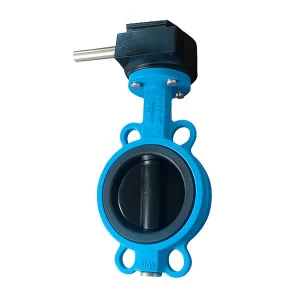
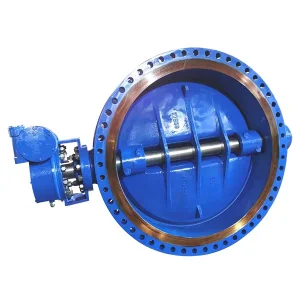
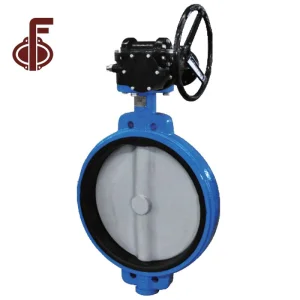
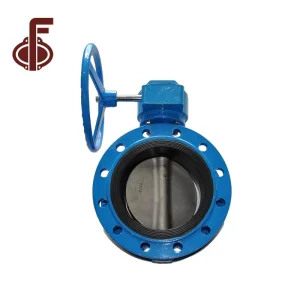
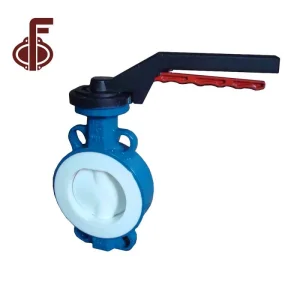
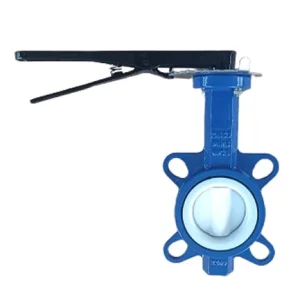
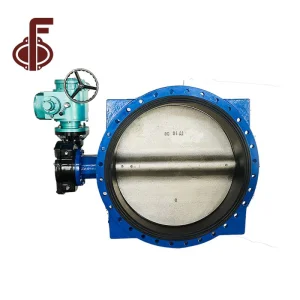
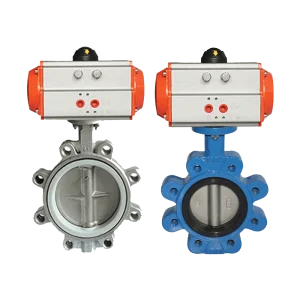
Complementary Industrial Valves & Heavy-Duty Components
Explore our wide-diameter, eccentric, and customized OEM flow control configurations manufactured in Tianjin for global industrial clients.
Partner Directly with a Precision Valve Factory in China
Whether you require complete project take-offs, custom OEM casting dimensions, or fast-track valve quotes with comprehensive MTRs, our Tianjin engineering team provides technical responses within 24 hours.
