
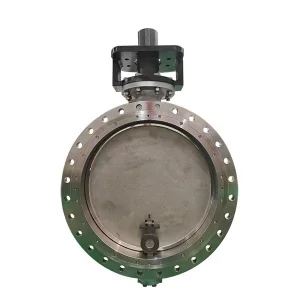
Direct Factory Precision Portfolio
Engineered Lug & Flanged Valve Solutions
Explore our industrial-grade butterfly valves built to ASTM, ANSI, DIN, and BS standards with zero-leakage bidirectional sealing.
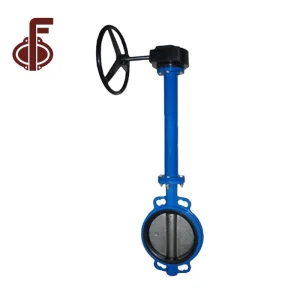
China Extention Stem Wafer Butterfly Valve Manufacturer, Exporters
Explore Product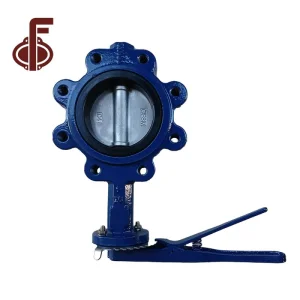
China Hand Lever Actuated Ductile Iron Lug Type Butterfly Valves Manufacturer, Exporters
Explore Product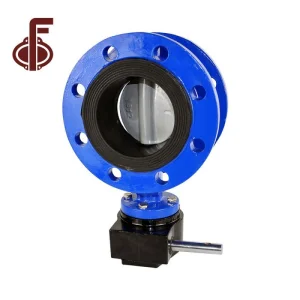
China Ductile Iron Body Worm Gear Flange Type Butterfly Valve Manufacturers, Exporters
Explore Product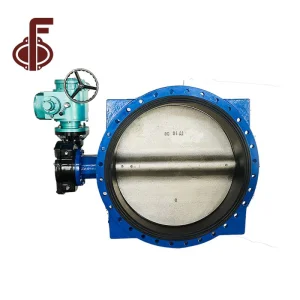
China Large Diameter Electric Flange Butterfly Valves Factories, Exporters
Explore Product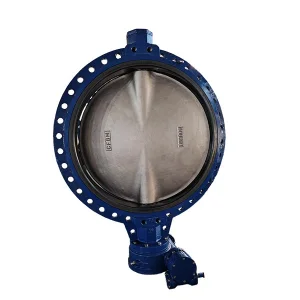
China DN1000 DI Hard Back Seat Mono Flange Butterfly Valve with Worm Gear Exporter, Exporters
Explore Product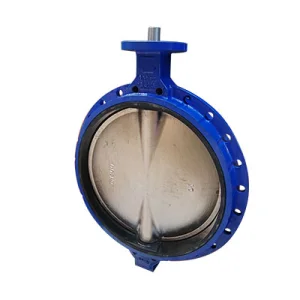
OEM DN800 DI Single Flange Type Wafer Butterfly Valve Manufacturers, Exporter
Explore Product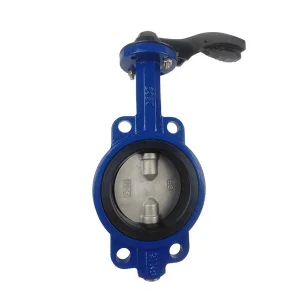
China DN100 4inch Hard Back Seat Wafer body Butterfly Valve Exporter, Exporters
Explore Product
Industrial Macro Dynamics
The Global Commercial Landscape of Lug Body Butterfly Valves
An engineering shift toward compact, dead-end capable quarter-turn valves is transforming process piping across modern municipal, energy, and marine infrastructure.
Structural Supremacy in Dead-End Service
Unlike standard wafer butterfly valves that rely on compressive clamping between adjacent pipe flanges, the lug body valve incorporates internally threaded ear lugs flanking the valve perimeter. This structural configuration permits independent mechanical bolting from either side.
This design allows operators to disconnect downstream piping for maintenance, pump overhaul, or plant expansion while maintaining full upstream line pressure up to rated differential ratings (typically 10 to 16 Bar). This dead-end service capability eliminates catastrophic facility shutdowns in municipal water systems and thermal power plants.
Global Market Expansion Corridors
The global industrial quarter-turn valve market is undergoing rapid capital allocation away from bulky wedge gate valves toward high-integrity lug body butterfly valves. Driven by stringent fugitive emission targets and urban spatial constraints, major projects across North America, Europe, the Middle East, and Southeast Asia specify lug butterfly valves for central plant mechanical rooms.
In mega-scale district cooling projects in the GCC and desalination facilities across the Mediterranean, the compact face-to-face dimensions according to ISO 5752 Series 20 / API 609 provide up to a 65% reduction in valve assembly weight and an 80% reduction in structural envelope.
Bi-Directional Sealing Integrity
Resilient-seated lug butterfly valves provide bubble-tight shutoff (ISO 5208 Rate A / API 598 zero leakage) across dual flow directions. Precision mold engineering ensures that the elastomeric liner (EPDM, NBR, or FKM) encapsulates the internal body bore, serving simultaneously as the dynamic disc seal and the integrated flange sealing gasket.
Eliminating supplementary flange gaskets substantially reduces bolt torque relaxation risks, joint leakage failure modes, and long-term maintenance overhead across automated continuous-flow transmission pipelines.
Manufacturing Precision & Foundry Ecosystem
China's Industrial Valve Manufacturing Advantages: The Tianjin Epicenter
How localized metallurgical supply chains, automated CNC machining, and rigorous QA architectures create unmatched quality-to-cost leadership for international valve importers.
Integrated Metallurgy & Foundry Clustering
Operating from Tianjin—the historical and technological nucleus of China's flow-control industry—Tianjin Zhongfa Valve Co., Ltd. leverages direct proximity to heavy ductile iron foundries and continuous electric induction casting lines. Controlled metallurgy guarantees spheroidization rates exceeding 85% for Ductile Iron QT450-10 and ASTM A536 65-45-12, yielding superior tensile strength and impact resistance under hydraulic hammer events.
Automated CNC Multi-Axis Machining
Lug body drilling, tapping, and seat cavity profiling are executed on advanced vertical and horizontal CNC machining centers in single clamping setups. This robotic precision guarantees concentricity within ±0.03 mm between the top mounting flange (ISO 5211), internal stem bore, and rubber seat pocket, eliminating localized seal wear, irregular operational torque, and premature stem packing failure.
Electrochemical Surface Protection
Every cast valve body undergoes rigorous shot-blasting to SA 2.5 standard prior to automated electrostatic fluidized-bed epoxy powder coating (FBE). The cross-linked polymer coating achieves a uniform dry film thickness (DFT) of 250 µm to 300 µm, offering complete pinhole-free corrosion isolation compliant with WRAS and NSF 61 drinking water immersion standards.
100% Non-Destructive Pressure Testing
Unlike intermittent lot sampling commonly observed in lower-tier facilities, our ISO 9001 quality system subjects 100% of manufactured lug butterfly valves to bidirectional hydrostatic shell testing at 1.5× PN and resilient seat tightness testing at 1.1× PN, supplemented by pneumatic low-pressure air testing at 0.6 MPa in direct adherence to API 598 and EN 12266-1.
Engineering Specification Matrix
Technical Architecture & Material Cross-Reference
Authoritative selection guidelines for design engineers, procurement directors, and plant managers specifying lug butterfly valves for international industrial service.
| Parameter / Component | Standard Specification | High-Performance / Corrosive Options | Compliance / Test Standard |
|---|---|---|---|
| Nominal Diameter | DN50 – DN1200 (2" to 48") | Custom Large Bore up to DN2400 (96") | EN 558 Series 20, API 609, ISO 5752 |
| Pressure Rating | PN10 (1.0 MPa), PN16 (1.6 MPa) | Class 150 (2.0 MPa), PN25 (2.5 MPa) | ASME B16.42, EN 1092-2, BS 4504 |
| Body Metallurgy | Ductile Iron GGG40 / GGG50 / A536 | WCB Cast Steel, CF8, CF8M, Duplex 2205 | ASTM A536, ASTM A216, ASTM A351 |
| Disc Substrate | Ductile Iron (Nylon / Epoxy Coated) | CF8M (SS316), C95400 Aluminum Bronze, Hastelloy | EN 10204 3.1 Certified Material Traceability |
| Resilient Seat Liner | EPDM (Drinking Water & HVAC, -20°C to 120°C) | NBR (Oils/Fuels), Viton/FKM (180°C), PTFE Lined | FDA, WRAS, NSF 61 Certified Resins |
| Stem / Shaft Design | SS416 / SS420 Stainless Steel (One-Piece) | SS316, 17-4PH, Monel K-500 (Two-Piece Pinless) | API 609 Blowout-Proof Stem Retention |
| Actuator Mounting Flange | ISO 5211 Standardized Top Flange | Custom Keyed or Splined Extended Shafts | Direct Mount Lever, Worm Gear, Pneumatic, Electric |
| Leakage Classification | Zero Leakage (Soft Resilient Seated) | Class VI (High-Temp PTFE), Rate A (EN 12266-1) | ISO 5208 Rate A, API 598 Inspection Standard |
Application Engineering
Mission-Critical Industrial Applications & Field Performance
Engineered to excel in demanding environments where pressure drops, cavitational erosion, and corrosive chemicals demand uncompromising valve integrity.
Municipal Water Treatment & SWRO Desalination
In municipal potable water transmission networks and Seawater Reverse Osmosis (SWRO) intake headers, electrochemical corrosion presents severe risks to valve lifespans. ZFA Valve engineers lug butterfly valves featuring C95400 aluminum bronze discs and vulcanized EPDM rubber seats.
The aluminum bronze alloy generates a self-healing copper-aluminum oxide barrier that resists high salinity, micro-organism fouling, and high-velocity brine cavitation, ensuring maintenance-free performance across 50,000 continuous operating cycles.
- High Salinity ASTM B148 C95400 disc construction
- Certifications Non-toxic NSF/ANSI 61 compliant EPDM
District Cooling & High-Rise Commercial HVAC
Modern data centers and skyscrapers rely on large-bore chilled water distribution loops operating under continuous thermal cycling and vibrational stresses. Resilient seated lug valves allow mechanical isolation of modular cooling towers, chillers, and circulation pumps without draining vertical building risers.
Our hydrodynamic streamlined disc contour dramatically decreases turbulence and localized pressure drop ($\Delta P$), lowering pump motor energy expenditure across commercial infrastructure lifecycles.
- Energy Efficiency Low hydrodynamic drag disc profile
- Dead-End Isolation Full 16-bar downstream shutoff rating
Petrochemical, Process Chemistry & Marine
For chemical refiners handling caustic reagents, aggressive effluent, and hydrocarbon fuels, standard resilient elastomeric liners are supplemented by virgin PTFE/PFA full encapsulation or heavy-duty NBR/FKM elastomers. Split-body wafer and lug configurations provide total isolation between the corrosive fluid and the ductile iron pressure envelope.
On offshore vessels and FPSO marine ballast systems, our valves provide space-efficient, lightweight fire-safe isolation complying with rigorous marine classification societies.
- Chemical Inertness PTFE / PFA fully lined split body
- Fuel Handling High-aromatic resistance NBR liners
Future Engineering Trends
Technological Frontiers in Industrial Valve Engineering
How automation, smart diagnostics, and materials science are reshaping the next generation of quarter-turn butterfly valve manufacturing.
Intelligent IoT Actuation & Predictive Maintenance
The global transition to Industry 4.0 has made manual valves obsolete in critical industrial arteries. Modern lug butterfly valves from ZFA Valve integrate standardized ISO 5211 direct-mount pads paired with smart electric and electro-pneumatic actuators.
These assemblies feature smart positioners equipped with HART, Modbus, and Profibus communication protocols. Real-time telemetry monitoring operating torque signatures, stroke velocity, and seat friction profiles enables predictive maintenance algorithms that detect cavitation wear and scale accumulation months before mechanical leakage can occur.
Ultra-Low Torque Optimized Sealing Geometry
Traditional concentric butterfly valves required excessive compressive interference between disc edges and rubber seats, producing high dynamic break-away torque and accelerating seal degradation. Next-generation computer-aided flow dynamic simulations (CFD) and finite element analysis (FEA) have engineered elliptical disc geometries and radiused spherical contact edges.
This design reduces operating break-away torque by up to 28%, allowing plant operators to specify smaller, more economical pneumatic and electric actuator sizes, cutting capital expenditure and electrical draw across plant operations.
Fugitive Emission Compliance (ISO 15848-1)
With environmental oversight intensifying worldwide, valve stem emissions are coming under rigorous regulatory scrutiny. Traditional packing systems are being replaced with multi-tier secondary O-ring barriers, self-adjusting Belleville spring-energized live-loaded gland packings, and precision-broached stem drives that meet ISO 15848-1 Class AH/BH standards.
This sealing integrity safeguards operations against dangerous VOC escapes in refinery environments, protects operators, and supports global decarbonization benchmarks.
EPC & Sourcing Intelligence
Global EPC Procurement Intelligence: Mitigating Quality Risks
A systematic framework for supply chain managers, international stockists, and procurement engineers evaluating Chinese valve manufacturing partners.
Mill Test Certificate (MTC) Verification
Global procurement teams must mandate EN 10204 3.1 chemical composition and mechanical test verification for every casting heat code. Tensile strength, elongation, yield point, and optical emission spectrometer (OES) assays must be logged to confirm ductile iron nodularity.
ZFA Valve assigns individual heat serial numbers cast directly into every valve body, ensuring full raw-material traceability from foundry pour to final port dispatch.
Pressure Test Verification Protocols
Ensure that factory testing complies strictly with API 598 or ISO 5208 standards, maintaining minimum test hold times (15 to 60 seconds depending on bore diameter) rather than fast-cycle transient bursts. Hydrostatic shell tests must achieve 1.5× the cold working pressure rating with zero weeping or structural deformation.
Bi-directional low-pressure pneumatic seat testing must show zero air bubbles over the full test duration under water immersion.
Epoxy Coating Porosity Testing
FBE coating failures can result in accelerated body oxidation in buried or marine installations. Procuring entities should require high-voltage spark testing (holiday detection at 1.5 kV to 2.0 kV) to verify that internal and external epoxy barriers are free of microscopic pinholes, fissures, and thin spots below 250 µm thickness.
Actuation Sizing Safety Factors
When procuring bare-stem lug valves for automated field retrofitting, engineers must factor in real-world fluid dynamic variables. While catalog torque reflects clean water at ambient temperature, slurry, scaling, dry gas, and high-viscosity media require safety torque multipliers between 1.25× and 1.6× to prevent actuator stall during break-away actuation.
Full-Cycle Manufacturing Workflow
Five-Stage Controlled OEM Production Architecture
From technical drawing validation through CNC machining and export-ready seaworthy crating, our turnkey manufacturing operations protect your brand equity.
01
Engineering Spec Review
Comprehensive 2D/3D CAD and datasheet audit confirming flange compatibility (ANSI 150, PN10/16, JIS 10K), face-to-face dimensions, media pH, temperature parameters, and actuation interface requirements.
02
Casting & Chemistry Validation
Optical spectrometry check on ductile iron and stainless steel melt batches, verifying phosphorus, sulfur, and carbon levels alongside ultrasonic thickness testing for raw cast shells.
03
Precision CNC Machining
Single-clamping multi-axis machining of top flange, lug hole threading, disc profile polishing to Ra 0.4 µm mirror finish, and internal liner retention groove broaching.
04
Assembly & Double Testing
Dust-controlled cleanroom assembly followed by dual-direction hydrostatic shell testing (1.5× PN) and resilient seat air tightness testing (0.6 MPa) with zero allowable pressure drop.
05
Finishing & Export Packaging
Custom OEM laser marking, 250 µm electrostatic FBE coating, flange end cap protection, desiccant sealing, and reinforced fumigated solid-plywood crate packaging for safe ocean transit.
Specialized Industrial Valve Selection
High-Performance, Lined & Actuated Valves
Explore our specialized portfolio including chemical-grade PTFE lined valves, check valves, and pneumatic/electric automated packages.
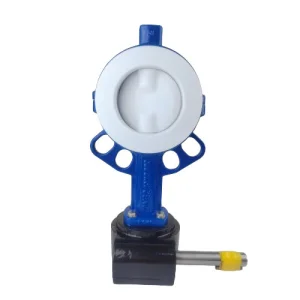
China DN80 Split Body PTFE Full Lined Wafer Butterfly Valve Manufacturers, Factory
Explore Product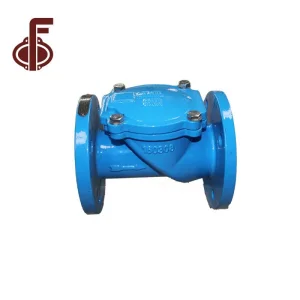
China Ductile Cast Iron Rubber Flap Check Valve Factories, Exporter
Explore Product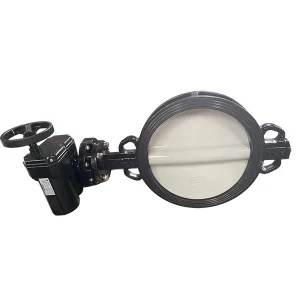
OEM Nylon Disc Wafer Type Honeywell Electric Butterfly Valve Manufacturer, Exporters
Explore Product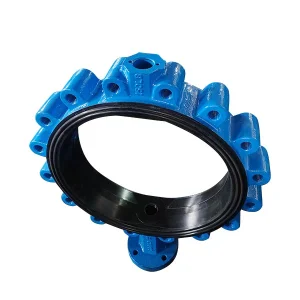
China EPDM Replaceable Seat Ductile Iron Lug Type Butterfly Valve Body Manufacturer, Exporter
Explore Product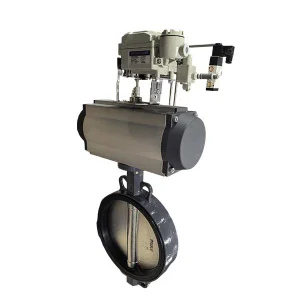
OEM DN100 PN16 E/P Positioner Pneumatic Wafer Butterfly Valves Exporter, Exporters
Explore Product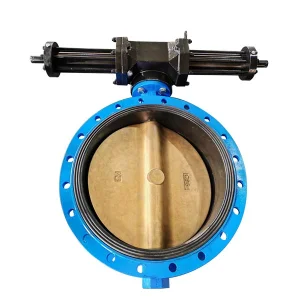
China EPDM Seat C954 Disc Hydraulic Flange Butterfly Valve Manufacturers, Exporters
Explore Product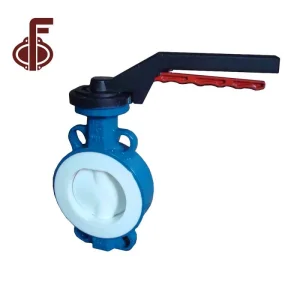
OEM Concentric Cast Iron Full Lined Butterfly Valve Manufacturers, Factories
Explore Product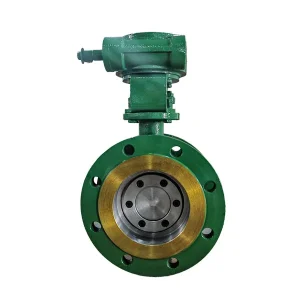
OEM WCB Double Flanged Triple Offset Triple Eccentric Butterfly Valve Exporter, Exporters
Explore Product
Technical Knowledge Base
Frequently Asked Questions: Industrial Lug Butterfly Valves
In-depth engineering answers addressing installation, metallurgy, flange compatibility, and international sourcing criteria.
What is the fundamental engineering difference between a Lug body and a Wafer body butterfly valve?
A wafer body butterfly valve features smooth, unthreaded alignment holes and is sandwiched entirely between two companion pipe flanges using long continuous threaded studs. If piping on either side of a wafer valve is dismantled, the valve and remaining line depressurize immediately. In contrast, a lug body butterfly valve features metal protrusions (lugs) around its circumference that are precision drilled and tapped with female threads conforming to specific flange standards (e.g., UNC for ASME B16.1/B16.5, or Metric for EN 1092-1 / DIN PN16). This threaded design allows independent bolting from either side of the pipeline, enabling dead-end isolation where one side of the line can be removed for service while the opposite side maintains full operational line pressure.
Can a resilient-seated lug butterfly valve be operated in continuous dead-end service at its full rated pressure?
Under general industrial practice (API 609 and EN 593 guidelines), standard resilient seated lug valves provide full rated bidirectional shutoff (e.g., 16 Bar / 232 PSI) when installed between two flanges. However, when deployed in dead-end service—where the downstream flange is completely detached and the valve body acts as the end-of-line isolation barrier—standard concentric valves are often derated to approximately 10 Bar (150 PSI) unless engineered with a mechanical seat retaining ring. ZFA Valve manufactures heavy-duty cartridge hard-back seats and bolted mechanical retaining designs that allow full 16 Bar dead-end service without liner displacement or unseating.
How do I select the proper elastomer seat material (EPDM, NBR, Viton, or PTFE) for my application?
Elastomer selection must balance chemical compatibility, operating temperature ranges, and abrasion factors:
• EPDM: Best for potable water, wastewater, low-pressure steam, and commercial HVAC chilled/hot water loops (-20°C to +120°C). Resistant to ozone and sunlight, but incompatible with mineral oils, petroleum hydrocarbons, and greases.
• NBR (Nitrile/Buna-N): The industry standard for lubricating oils, crude oil, hydraulic fluid, diesel, and compressed air systems (-10°C to +82°C). Incompatible with ozone, ketones, and strong acids.
• Viton (FKM): High-temperature resilience (-10°C to +180°C) with broad chemical resistance against chlorinated hydrocarbons, acids, and harsh petroleum media.
• PTFE / PFA: Maximum chemical inertness across corrosive acids, alkalis, and pharmaceutical fluids (-20°C to +180°C), though requiring higher operating torque than rubber elastomers.
• EPDM: Best for potable water, wastewater, low-pressure steam, and commercial HVAC chilled/hot water loops (-20°C to +120°C). Resistant to ozone and sunlight, but incompatible with mineral oils, petroleum hydrocarbons, and greases.
• NBR (Nitrile/Buna-N): The industry standard for lubricating oils, crude oil, hydraulic fluid, diesel, and compressed air systems (-10°C to +82°C). Incompatible with ozone, ketones, and strong acids.
• Viton (FKM): High-temperature resilience (-10°C to +180°C) with broad chemical resistance against chlorinated hydrocarbons, acids, and harsh petroleum media.
• PTFE / PFA: Maximum chemical inertness across corrosive acids, alkalis, and pharmaceutical fluids (-20°C to +180°C), though requiring higher operating torque than rubber elastomers.
Why is Ductile Iron (GGG40 / ASTM A536) preferred over Gray Cast Iron (GG25 / ASTM A126) for valve bodies?
Gray cast iron features flake graphite microstructure, making it brittle and vulnerable to crack propagation under thermal shock, mechanical vibration, or hydraulic water hammer. In contrast, Ductile Cast Iron (such as EN-GJS-400-15 or ASTM A536 Grade 65-45-12) undergoes magnesium inoculant treatment, creating spherical (nodular) graphite formations. This metallurgy gives ductile iron mechanical properties approaching carbon steel: a minimum tensile strength of 400–450 MPa, 10–15% elongation before yield, and superior impact toughness. This structural resilience minimizes casting fracture risks during pipeline pressure surges and extreme temperature changes.
Which international flange drilling standards can ZFA Valve lug butterfly bodies accommodate?
Our CNC machining centers tap lug holes to accommodate any global piping standard specified by your engineering team:
• American: ASME / ANSI B16.1 Class 125, ASME B16.5 Class 150 (UNC imperial threads).
• European / International: EN 1092-1, EN 1092-2, DIN 2501, BS 4504, ISO 7005 (Metric threads for PN6, PN10, PN16, and PN25).
• British / Commonwealth: BS 10 Table D and Table E.
• Japanese / Korean: JIS B2220 / KS B1503 (5K, 10K, 16K).
Universal multi-standard drilled bodies are also available for inventory optimization across international distribution stockists.
• American: ASME / ANSI B16.1 Class 125, ASME B16.5 Class 150 (UNC imperial threads).
• European / International: EN 1092-1, EN 1092-2, DIN 2501, BS 4504, ISO 7005 (Metric threads for PN6, PN10, PN16, and PN25).
• British / Commonwealth: BS 10 Table D and Table E.
• Japanese / Korean: JIS B2220 / KS B1503 (5K, 10K, 16K).
Universal multi-standard drilled bodies are also available for inventory optimization across international distribution stockists.
What quality control documentation is delivered with export valve orders from Tianjin Zhongfa Valve?
Every export shipment includes comprehensive quality assurance packs for EPC contractors and auditing inspectors:
• Material Test Reports: EN 10204 Type 3.1 certification verifying heat numbers, chemical spectral composition, and mechanical tensile/elongation properties.
• Pressure Test Reports: Certified logs of 100% shell hydrostatic testing at 1.5× PN and bidirectional seat leakage testing at 1.1× PN per API 598 / ISO 5208.
• Surface Inspection Reports: Coating thickness gauge reports (DFT) verifying 250 µm to 300 µm FBE coverage alongside high-voltage holiday continuity tests.
• Compliance Certificates: CE Declaration of Conformity and ISO 9001:2015 management system certificates.
• Material Test Reports: EN 10204 Type 3.1 certification verifying heat numbers, chemical spectral composition, and mechanical tensile/elongation properties.
• Pressure Test Reports: Certified logs of 100% shell hydrostatic testing at 1.5× PN and bidirectional seat leakage testing at 1.1× PN per API 598 / ISO 5208.
• Surface Inspection Reports: Coating thickness gauge reports (DFT) verifying 250 µm to 300 µm FBE coverage alongside high-voltage holiday continuity tests.
• Compliance Certificates: CE Declaration of Conformity and ISO 9001:2015 management system certificates.
Does ZFA Valve provide complete OEM branding, custom colors, and private labeling services?
Yes. We support global valve brands, wholesalers, and EPC equipment manufacturers through complete OEM/ODM production. This includes casting customer trademarks and logos directly into the valve body iron, laser-engraved riveted stainless steel identification nameplates with custom model designations, customized electrostatic epoxy colors (standard RAL 5005, 5010, 5015, or project-specific paints), custom hand lever and gear operator markings, and branded seaworthy export crates with barcoded labeling.
Global Engineering Support
Request Detailed Datasheets, 3D CAD Models & Factory Quotations
Connect directly with Tianjin Zhongfa Valve's engineering team for project take-offs, custom OEM specifications, or immediate price quotations. We review project drawings and return complete commercial proposals within 24 hours.
