
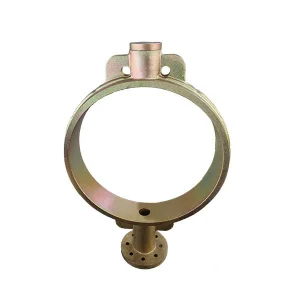
Primary Line-Up
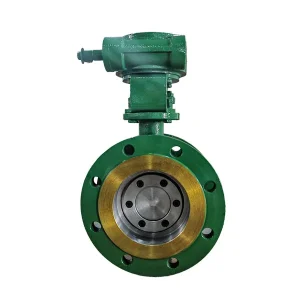
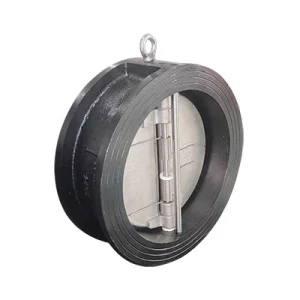
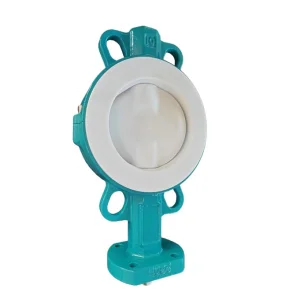
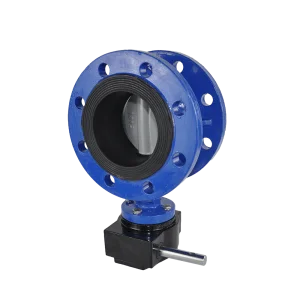
High-Integrity Manual Butterfly Valves & Valve Components
Engineered to international specifications (ASME, DIN, JIS, BS) for potable water infrastructure, municipal wastewater, desalination, and chemical transport pipelines.
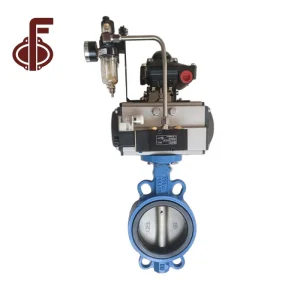
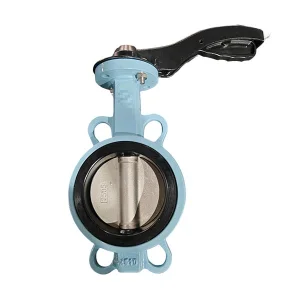
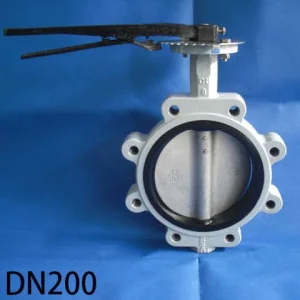
Technical Whitepaper
Manual Butterfly Valve Engineering Architecture & Bi-Directional Tightness
In modern industrial hydraulic and chemical piping systems, manual butterfly valves are critical mechanical isolation assets designed for minimal footprint, rapid quarter-turn operation, and zero leakage.
A manual butterfly valve utilizes a quarter-turn circular disc mounted on a rotating stem to regulate or isolate flow. As seasoned Chinese manufacturers and tier-1 exporters, our manufacturing facility engineers valve geometries strictly around bubble-tight isolation, predictable operational torque curves, and extended thermal cycling resilience. While automated actuators are deployed across continuous process control loops, manual valves equipped with heavy-duty ductile iron levers or self-locking worm gearboxes remain mandatory safety isolation barriers across utility battery limits, cooling towers, and pump discharge headers.
Concentric (Resilient Seated)
The stem axis and disc seal are positioned directly along the centerline of the valve bore. Elastomeric seats isolate the body casting from the wetted media.
- Zero-leakage bi-directional sealing up to PN16/25
- Replaceable or vulcanized EPDM/NBR/FKM seat liners
- Optimized for HVAC, wastewater, and general utilities
Double Eccentric (High Performance)
The stem is offset from the valve bore and sealing plane, generating a camming trajectory that lifts the disc off the seat during initial opening.
- Substantially reduced seat wear and low opening torque
- PTFE/R-PTFE seats capable of handling Class 150/300
- Ideal for power generation and chemical processing
Triple Eccentric (TOV Metal-to-Metal)
Incorporates an angular cone profile alongside dual offsets, completely eliminating operational friction until the final closure point.
- Stellite hard-faced metal-to-metal bubble-tight sealing
- Temperatures up to +550°C; cryogenic down to -196°C
- Inherently fire-safe design adhering to API 607
Material Science Matrix
Macro-Industry Fluid Control Solutions & Metallurgy
Matching dynamic mechanical stresses, corrosive pipeline media, and working temperatures with validated metallurgical and elastomeric formulations.
| Application Sector | Recommended Configuration | Body / Disc Metallurgy | Seat Liner Selection | Engineering Standards |
|---|---|---|---|---|
| Municipal Water & Desalination | Wafer / Double Flanged Concentric | Ductile Iron GGG40/50 / Al-Bronze C95800 | EPDM (NSF-61 / WRAS certified) | AWWA C504, BS EN 593, ISO 5752 |
| District Heating & HVAC | Concentric / Double Offset Wafer | Cast Iron GG25 / CF8 (SS304) Disc | High-Temp EPDM (-20°C to +130°C) | DIN EN 1092-2, ASME B16.1 Class 125 |
| Chemical & Petrochemical | Full Lined Split-Body Butterfly | WCB / Ductile Iron + PFA/PTFE encapsulation | Virgin PTFE / R-PTFE Backed | API 609 Cat A/B, ASME B16.34 |
| High-Pressure Steam & Energy | Triple Eccentric Lug / Flanged | Cast Steel ASTM A216 WCB / SS316 CF8M | Laminated SS316 + Flexible Graphite | API 609, API 607 (Fire Safe), ASME B16.5 |
Quality Assurance Criterion: Every valve produced in our facility undergoes rigorous shell testing at 1.5× PN rating and bi-directional seat testing at 1.1× nominal design pressure per ISO 5208 and API 598 prior to protective painting and export crating.
Smart Manufacturing
China Factory 4.0: Supply Chain Resilience & Lean Delivery
Combining Tianjin's extensive casting clusters with digital CNC machining centers, automated electrostatic powder coating, and full material heat traceability.
Robotic Machining Cells
Multi-axis CNC horizontal machining centers guarantee micro-tolerance bore-to-stem coaxiality, reducing break-away friction and guaranteeing seat seal repeatability.
Fusion Bonded Epoxy
Automated internal and external electrostatic FBE coating lines achieve uniform coating thickness (≥250μm), preventing underfilm corrosion in subterranean pipelines.
Spectral PMI Verification
Incoming raw castings and bar stock undergo positive material identification (PMI) using XRF spectrometers, eliminating unauthorized steel substitute grades.
Port Proximity Logistics
Strategically situated within Tianjin's industrial corridor, our manufacturing plant provides express maritime container consolidation via Tianjin Xingang Port.
Extended Catalog
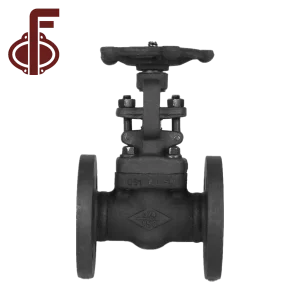
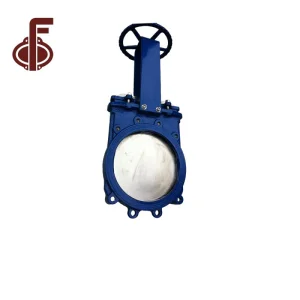
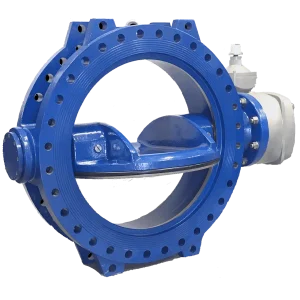
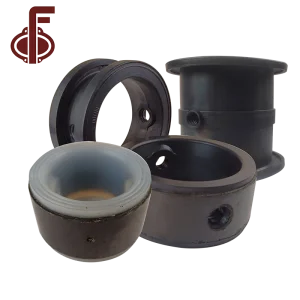
Engineered High-Performance, Gate, Strainer & Part Solutions
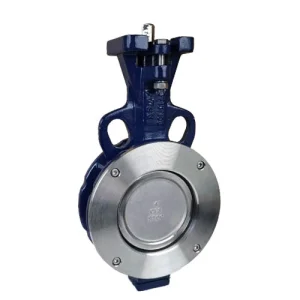
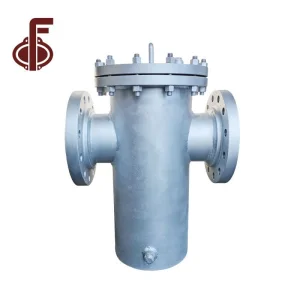
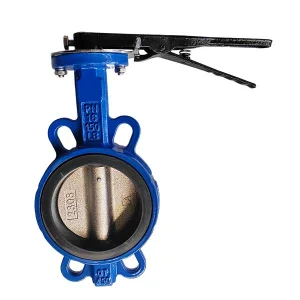
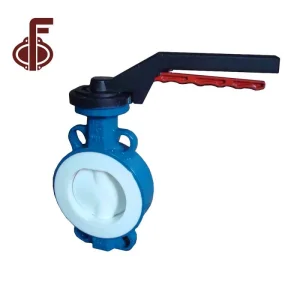
Complete project sourcing directly from the manufacturing source: multi-offset butterfly valves, gate isolation valves, strainers, and factory-direct replacement components.
EPC & Distribution Compliance
Global Enterprise Procurement Checklist & Localized Engineering
Addressing international procurement requirements: Material Test Reports (EN 10204 Type 3.1), non-destructive testing (NDT), customized OEM branding, and documentation dossiers.
Audit-Ready Dossiers
Full traceability packages issued with every export consignment: EN 10204 3.1 chemical/physical mill certificates, hydrostatic testing certificates, and coating thickness reports.
Private Label & OEM Casting
Complete custom branding options including customer-specific cast logos, customized stainless steel nameplates, barcode/QR asset tracking tags, and project RAL color finishes.
Export Seaworthy Packaging
Valves are fitted with flange end protectors, wrapped in moisture-barrier film, and securely braced inside ISPM 15 heat-treated fumigation-free wooden crates.
Engineering Roadmap
Technology Roadmap & Smart Pipeline Innovations
Adapting manual valve architectures for low-emission standards, composite disc metallurgy, and intelligent digital manual position sensing.
Fugitive Emission Mitigation
Redesigning valve stem packing to meet stringent ISO 15848-1 and TA-Luft requirements, utilizing live-loaded PTFE or graphite chevron packing to eliminate VOC emissions.
Smart IoT Manual Gearboxes
Integrating non-intrusive wireless position transmitters onto manual worm gear operators, enabling DCS networks to verify manual valve status without electrical wiring.
Advanced Hydrodynamic Disc Contours
Computational Fluid Dynamics (CFD) optimized disc thin-profiles that lower dynamic flow resistance (elevating Cv/Kv factors) and curb cavitation erosion under throttling.
Procurement Knowledge Base
Frequently Asked Questions by Valve Engineers & Importers
Authoritative insights regarding design standards, torque calculations, seat selection, and international logistics.
When should a manual butterfly valve utilize a worm gearbox instead of a hand lever?
According to standard valve engineering practices, manual lever operation is restricted to valves DN150 (6") and smaller under nominal differential pressures (PN10/16). For valves DN200 (8") and above, or high-performance valves operating at higher pressures, dynamic hydrodynamic torque and break-away seat torque necessitate a self-locking worm gearbox (with handwheel) to ensure manageable operator handwheel effort (under 360 N per EN 12570) and to eliminate line-surge water hammer caused by rapid lever closure.
What are the critical distinctions between Wafer, Lug, and Double Flanged bodies?
Wafer-type valves are clamped between pipe flanges using through-bolts; they are the most economical and lightweight, but cannot be used for dead-end pipe isolation. Lug-type valves feature threaded bolt holes, enabling full downstream pipeline disconnection while retaining line pressure upstream. Double flanged butterfly valves feature integral raised or flat-face flanges that match standard pipeline bolt holes, delivering maximum mechanical rigidity in large-diameter pipelines (DN600+) and heavy underground installations.
How do temperature limits and fluid chemistry dictate seat material selection?
EPDM seats are suitable for water, chilled loops, and air services across -20°C to +120°C, but will rapidly degrade in petroleum hydrocarbons. NBR (Buna-N) provides superior resistance to hydrocarbons, oils, and fuels up to +82°C. For aggressive industrial acids and pharmaceutical purity, virgin PTFE or PFA liners handle -20°C to +180°C. For extreme high-temperature steam or thermal fluid services above +200°C, triple offset metal-to-metal seating is mandatory.
Can our engineering team specify custom top-flange drilling for future actuator retrofits?
Yes. All ZFA manual butterfly valves are machined with standard ISO 5211 direct-mount top flanges. Even when ordered with a hand lever or manual gearbox, the operating mechanism can be dismounted in the field to install pneumatic, electric, or hydraulic actuators without modifying the valve stem or requiring specialized adapter brackets.
What non-destructive examination (NDE) and documentation are available for project tenders?
We provide extensive inspection services including Radiographic Testing (RT), Magnetic Particle Testing (MT), Dye Penetrant Testing (PT), and Ultrasonic Testing (UT) on critical pressure-containing castings upon request. Project documentation packages include EN 10204 3.1 inspection certificates, hydrostatic/pneumatic test certificates, paint thickness verification, and formal Certificate of Origin (CO) credentials.
