
Engineered Actuation & Industrial Valve Series
Precision-machined butterfly valves, strainers, and gate systems compliant with API 609, EN 593, DIN 3202, and ISO 5211 direct-mount automation pads.
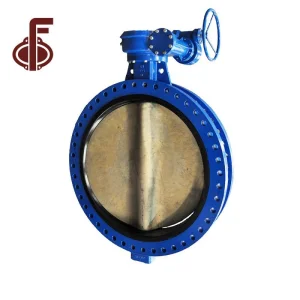
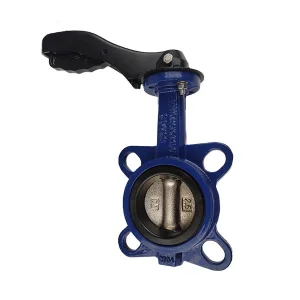
China Casting Iron Body EPDM Hard Back Seat Wafer Butterfly Valve Manufacturers, Exporter
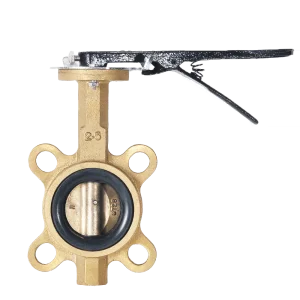
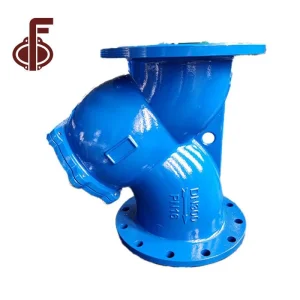
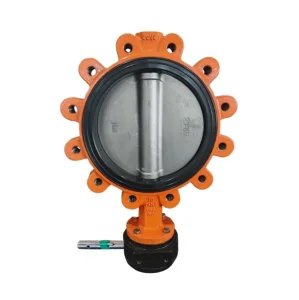
OEM Replaceable Seat CF8M Disc Lug Butterfly Valve DN250 PN10 10Inch Manufacturer, Factories
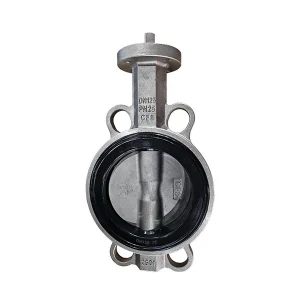
China PN25 DN125 CF8 Wafer Butterfly Valve with Soft Seat Manufacturer, Manufacturers
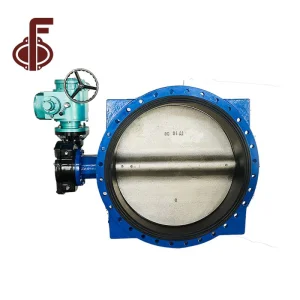
Global Commercial & Industrial Status of Motorised Valves
Analyzing the massive transition from manual valve operations toward networked, automated quarter-turn flow systems across municipal networks, HVAC plantrooms, and industrial processing.
HVAC & District Energy Automation
Modern mega-scale commercial buildings, data centers, and urban district heating/cooling systems demand real-time thermal balancing. Motorised butterfly valves coupled with intelligent variable speed drives (VFD) and Building Management Systems (BMS) through BACnet or Modbus allow dynamic hydronic balancing, slashing annual pumping energy consumption by up to 28%.
Municipal Water & Desalination
Severe global water stress has accelerated capital expenditure into seawater reverse osmosis (SWRO) desalination facilities and intelligent drinking water transport grids. High-pressure large-diameter motorised butterfly valves—engineered with aluminum-bronze discs and vulcanized EPDM hardback liners—provide absolute bubble-tight isolation with remote telemetry.
Petrochemical & Process Lines
In downstream oil refining, biofuel production, and chemical blending, quarter-turn automation delivers rapid emergency shut-down (ESD) capabilities. Triple-offset metal-seated motorized configurations guarantee zero-leakage performance under extreme thermal gradients (-50°C to +450°C), outperforming bulkier gate valves in both installation footprint and operational speed.
The macroeconomic shift toward Industry 4.0 and autonomous industrial facilities has transformed the motorised butterfly valve from an isolated mechanical throttle into a sophisticated edge device. Within modern enterprise piping systems, electric quarter-turn actuators do not merely rotate a valve disc 90 degrees; they report operational data back to distributed control systems (DCS). Continuous telemetry—including operational torque curves, motor winding temperatures, cycle count tracking, and seat friction profiles—empowers predictive maintenance algorithms. As a result, unanticipated plant outages due to jammed valve stems or torn resilient seats are virtually eliminated.
Furthermore, engineering procurement practices have shifted drastically over the past decade. Engineering, Procurement, and Construction (EPC) conglomerates managing projects across Southeast Asia, the Middle East, Central Europe, and Latin America now prioritize modular, factory-assembled actuated valve packages. Sourcing bare-shaft valves from one vendor and marrying them to third-party electric actuators in the field introduces mounting misalignment, stem sideloading, incorrect torque sizing, and disputed warranty liabilities. Forward-thinking project owners source integrated, factory-tested motorised butterfly valve assemblies directly from premier Chinese manufacturing hubs.
Supply Chain Integration & Chinese Factory Efficiency
How Chinese valve manufacturing clusters leverage automated sand casting, multi-axis CNC machining centers, and localized actuator electronics to deliver unmatched cost-to-performance benchmarks.
Captive Foundries & Metallurgy
Tianjin and coastal industrial clusters feature advanced automated DISA molding lines and electric induction furnaces. Ductile iron (QT450-10 / GGG40), cast steel (WCB), and duplex stainless steel melt chemistries are continuously tracked with on-site optical emission spectrometers, ensuring zero porosity and superior tensile elongation.
High-Precision CNC Machining
Eliminating human tolerance variance, valve bodies, internal seat bores, and disc sealing edges are machined in single-clamping operations on multi-axis CNC horizontal machining centers. Disc spherical profiles achieve micro-inch surface finishes (Ra ≤ 0.4 μm), drastically reducing seal friction and extending actuator motor lifespan.
Integrated Actuator Assembly
Actuator gear trains, aluminum housings, printed circuit boards (PCBs), and brushless DC motors are integrated within proximate domestic ecosystems. Direct adherence to ISO 5211 mounting flanges enables rapid robotic assembly of actuator to valve shaft without custom intermediary brackets, maintaining strict axial alignment.
The Scale Economics Differential: By uniting high-grade casting foundries, automated powder coating lines, precision gear hobbing, and solid-state actuator electronics within an integrated 50-kilometer industrial corridor, Chinese manufacturers reduce order-to-shipment lead times by 40% compared to Western counterparts, while maintaining strict compliance with CE-PED and ISO 9001 quality standards.
Vertical Integration: From Raw Pig Iron to Certified Actuated Package
The primary vulnerability in international valve sourcing stems from fractured sub-tier supplier tiers. In decentralized supply networks, a valve body is cast in one region, machined in another, shipped to an assembler for manual seat installation, and eventually married to a third-party actuator by an overseas distributor. Each handoff adds margin compounding, logistical lag, and introduces cumulative dimensional tolerances that compromise seat torque characteristics.
Top-tier Chinese valve exporters operate fully vertically integrated operations. Sand reclamation systems feed automated green-sand molding operations, producing consistent ductile iron (ASTM A536) bodies with uniform wall thickness and zero inclusions. Internal elastomer rubber compounding and vulcanization facilities produce food-grade EPDM, hydrogenated NBR, and high-purity virgin PTFE liners with certified anti-aging properties. When the automated valve package is assembled, the actuator's electronic torque cut-off switches are dynamically calibrated on automated hydro-pneumatic test benches under actual differential line pressures, ensuring zero field calibration failures.
Quarter-Turn Actuation Taxonomy & Architecture
Engineering guidelines for matching eccentric valve geometries with quarter-turn electric actuators, positioners, fieldbuses, and fail-safe safety mechanisms.
| Architecture Type | Offset Geometry | Seating Mechanism | Actuator Torque Dynamic | Typical Applications |
|---|---|---|---|---|
| Concentric (Resilient Seated) | Zero Offset: Shaft centered in disc & body bore | Elastomeric compression (Interference fit into EPDM/NBR) | Constant break torque; high seating/unseating force | HVAC, potable water, low-pressure air, wastewater lines |
| Double Eccentric (High Performance) | Shaft offset from seat centerline & pipe centerline | Camming action pulls disc away from seat within 5° rotation | Significantly reduced running torque; lower wear on PTFE seat | Steam utilities, condensate recovery, water treatment filtration |
| Triple Eccentric (TOV / Zero Leakage) | Double offset + conical angled cone seal axis | Pure non-rubbing geometric wedging into laminated Stellite/graphite | Torque-seated; requires precision actuator torque cut-off control | High-pressure hydrocarbons, superheated steam, cryogenic gas |
Quarter-Turn Electric Actuators
Standard motorised configurations utilize compact, high-torque quarter-turn actuators with planetary and worm gearing. Built-in thermal protection prevents motor winding burnout during heavy modulating duties. Manual override handwheels with declutchable mechanical interlocks ensure uninterrupted line operation during power outages.
Intelligent Modulating & Bus Control
For proportional flow throttling, integrated micro-positioners accept standard 4-20mA current loops or 0-10V DC analog inputs. For modern smart factories, actuators interface directly with industrial fieldbus networks—including Modbus RTU, Profibus-DP, Foundation Fieldbus, and Industrial Ethernet—enabling multi-drop topology and diagnostics.
Ingress & Explosion-Proof Enclosures
Housed in rugged die-cast aluminum enclosures finished with marine-grade epoxy polyester powder coating, standard units feature IP67/IP68 ingress ratings (submersible up to 10 meters for 72 hours). For hazardous locations, certified flameproof ATEX/IECEx Ex d IIB/IIC T4/T6 enclosures safeguard operations against flammable vapors.
Torque Calculation Margins & Safety Factors for Electric Actuation
A common pitfall in motorised butterfly valve procurement is undersizing the actuator motor based solely on published "clean water" hydrodynamic torque. The actual operating torque demanded from an electric quarter-turn actuator consists of three distinct components:
- Breakaway Torque (Seat Friction): The static force needed to unseat the valve disc from its compressed elastomer or metal seat pocket after prolonged closed-position dormancy.
- Hydrodynamic Dynamic Torque: The fluid-dynamic rotational moment created as fluid velocities act unevenly across the tilted disc faces during mid-stroke throttling.
- Hydrostatic Stem Bearing Friction: The mechanical resistance generated when high line differential pressure forces the valve stem against body bushings.
Professional Chinese valve engineering teams apply strict safety sizing multipliers to prevent actuator stall: a minimum of 1.25x for clean lubricating media, 1.35x to 1.5x for general water and wastewater, and up to 1.8x to 2.0x for slurry, dry bulk powder, or crystallizing chemical services.
Metallurgical Formulations & Seat Tribology
Balancing chemical resistance, tensile elongation, and wear resistance: The foundational material science ensuring multi-year seal tightness without actuator overload.
| Component | Material Standard | Microstructure & Treatment | Engineering Benefit |
|---|---|---|---|
| Valve Body | Ductile Iron EN-GJS-400-15 / ASTM A536 65-45-12 | Ferritic matrix with nodular spheroidal graphite | High tensile strength (400 MPa) and impact resistance; prevents body rupture under water hammer. |
| Disc (Stainless) | CF8 / CF8M (SS304 / SS316) / ASTM A351 | Austenitic cast stainless steel, mirror buffed | Resists pitting and crevice corrosion; low coefficient of friction against resilient seats. |
| Disc (Marine Bronze) | Nickel Aluminum Bronze (NAB) C95800 | Copper-aluminum alpha-beta crystalline matrix | Immune to bio-fouling and cavitation attack in high-velocity raw seawater environments. |
| Valve Stem | SS416 / SS420 / SS431 / 17-4PH | Martensitic precipitation hardened & ground finish | High torsional shear yield strength to transfer high actuator torque without torsional deflection. |
| Resilient Liner | EPDM / NBR / FKM / High-Purity PTFE | Compression-molded with phenolic or aluminum hard back | Prevents seat collapse under high vacuum; guarantees bi-directional Class VI bubble-tight shutoff. |
Hard-Back vs. Soft-Back Seats
Traditional soft-backed slip-in rubber seats deform under medium velocity, shifting torque and causing early actuator trip. Chinese automated production lines utilize rigid phenolic or extruded aluminum bonded cartridge backings. The seat stays geometrically locked under PN16/PN25 pressures and full vacuum conditions.
Pinless Disc-to-Stem Architecture
Through-pin disc connections introduce potential leakage paths along the stem axis and create galvanic corrosion cells. Leading factories deploy polygonal drive shafts, double-D flats, or precision broached splines entirely enclosed within the disc hub, preserving dry-shaft isolation and maximizing torsional rigidity.
Electrostatic Powder Coating
Valve bodies undergo automated abrasive shot-blasting to Sa 2.5 profile standards, followed by fluidized-bed electrostatic epoxy fusion bonding (AkzoNobel or equivalent) to a dry film thickness of 250 to 300 microns. The pore-free coating resists cathodic disbondment and corrosive coastal salt-fog atmospheres.
Global Procurement Specifications & Compliance
How Chinese export factories fulfill rigorous EPC tender conditions, third-party inspection audits (SGS, TÜV, BV, Lloyd's), and international valve compliance mandates.
Design & Standards
API 609 Cat A/B, EN 593, AWWA C504, ISO 5752 series 20/13 dimensions.
Spectro Metallurgy
Direct-reading emission spectrometer verifies C, Si, Mn, Cr, Ni, and Mo melt ratios.
Hydrostatic Test
100% shell testing at 1.5x PN and bi-directional seat testing at 1.1x PN per ISO 5208.
Actuator Calibration
Stroke travel limit switch setup, electronic torque limiter profiling, and Hi-Pot motor checks.
EN 10204 3.1 Pack
Full traceability dossier: mill test certificates, CE-PED declaration, and test reports.
Critical Checkpoints for Global Procurement Engineers
Procurement teams navigating international tenders must evaluate prospective factory partners beyond basic unit pricing. The overall lifecycle profitability of a motorized flow valve project is determined by adherence to these foundational criteria:
- Actuator ISO 5211 Pad Geometry: Verify that top-flange dimensions, PCD bolt patterns, and shaft drive shapes (square, keyway, or double-D) follow ISO 5211 exactly. This ensures emergency actuator interchangeability with local field inventory.
- Elastomer Vulcanization Integrity: Ensure rubber seats are not simply glued into place. Mechanical locking ridges or direct hot vulcanization prevents seat creep during high flow velocities (> 3.0 m/s).
- Motor Duty Cycle Ratings: Differentiate strictly between Open/Close isolation service (typically S2 15-minute rated motors) and continuous modulating duty (requiring S4/S5 50% to 1200 starts-per-hour rated servo-drive motors).
- Third-Party Witness Protocols: Premier exporters routinely facilitate unhindered witness inspections by global testing bodies including Bureau Veritas (BV), Société Générale de Surveillance (SGS), and DNV, welcoming hydrostatic pressure hold verifications and paint adhesion cross-hatch testing.
Industrial Application Environments & Trends
Field-proven deployments of motorised quarter-turn butterfly valve packages across mission-critical utility, process, and industrial infrastructures worldwide.
Hyper-Scale Data Center Cooling
Data halls require continuous, failure-free liquid cooling circulation. Large-diameter motorized butterfly valves serve as the master throttling gates across chiller headers and cooling towers. Fast-acting fail-safe battery back-up (BBU) or supercapacitor actuators automatically restore cooling loops in milliseconds upon mains power failure.
Seawater Desalination (SWRO)
Desalination plants present intense chloride corrosion conditions. Motorised butterfly valves featuring Super Duplex (2507) or C95800 Nickel Aluminum Bronze discs combined with split-body PTFE lining isolate energy recovery turbines and reverse osmosis membrane racks reliably over extended operational campaigns.
Pulp, Paper & Mining Slurries
Viscous mining slurries, bauxite tailings, and wood pulp will quickly erode standard gate and ball valve internal cavities. Streamlined disc profiles across wafer and lugged motorised butterfly valves prevent particulate bridging and packing, supported by heavy-duty worm-drive gearboxes capable of pulverizing entrained fiber deposits.
Emerging Industry Trends: The Rise of IoT-Integrated Smart Valves
The horizon of flow automation is characterized by the convergence of electromechanical actuation with industrial Internet of Things (IIoT) protocols. Chinese manufacturing leaders are pioneering smart actuators embedded with high-frequency acoustic emission sensors and multi-axis vibration monitors. By monitoring localized ultrasonic signals created during minuscule micro-leakage events, plant control rooms receive early warnings of seal erosion weeks before a visible external leak occurs.
Concurrently, wireless connectivity standards—including WirelessHART and LoRaWAN—are being integrated directly into remote solar-powered valve stations across thousands of kilometers of crude oil distribution networks and municipal irrigation canals. This rapid democratization of low-power industrial connectivity drastically lowers installation wiring expenses, allowing facilities to automate remote manual valves at a fraction of historic greenfield cabling budgets.
Specialized Flow Isolation & Control Products
High-performance resilient, PTFE-lined, multi-flange, and non-return check valve solutions direct from factory production bays.
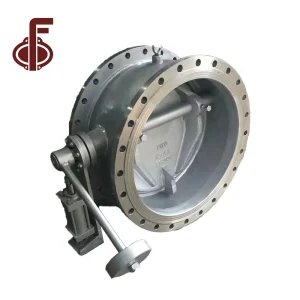
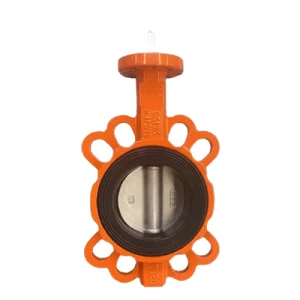
OEM 5K/10K/PN10/PN16 DN80 Aluminium Body CF8 Disc Wafer Butterfly Valve Factory, Factories
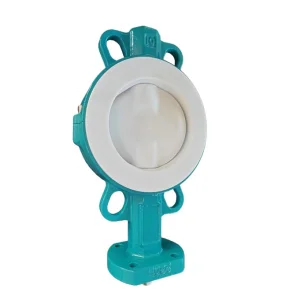
China 4 inch Ductile Iron Split Body PTFE Full Lined Wafer Butterfly Valve Factories, Exporters
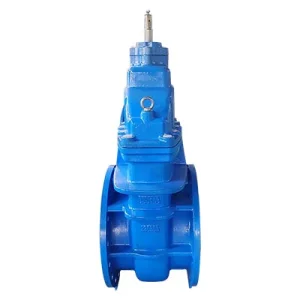
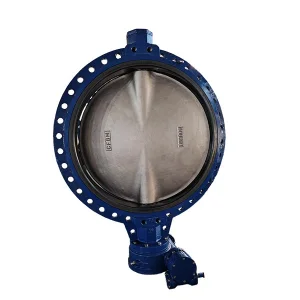
China DN1000 DI Hard Back Seat Mono Flange Butterfly Valve with Worm Gear Exporter, Exporters
Frequently Asked Questions by Global EPCs
Direct engineering answers addressing critical design choices, sizing calculations, electric actuator protocols, and international shipping logistics.
How do you accurately size an electric actuator for high-differential water lines?
Actuator sizing begins with calculating the required breakaway seat unseating torque at maximum shut-off differential pressure (ΔP), adding dynamic fluid hydrodynamic torque based on disc geometry, and factoring in shaft packing friction. We apply an engineering safety factor of at least 1.35x for clean water and 1.5x to 1.8x for media containing solids or high temperatures to ensure the actuator never trips on torque limit switches during transient surges.
What is the difference between On/Off and Modulating motorized butterfly actuators?
On/Off actuators are designed for open or close isolation service (typically rated for S2-15 minute duty) driven by standard single-phase AC or DC voltages. Modulating actuators feature intelligent digital servo-positioners and continuous duty motors (IEC S4/S5 rated, up to 1200 starts/hour) capable of positioning the valve disc anywhere between 0° and 90° proportionally in response to 4-20mA or 0-10V analog input signals.
Can Chinese factory valves be mounted directly to European or American actuators?
Yes. Our motorized valve bodies are manufactured with mounting flanges and stem square/keyway dimensions that strictly follow ISO 5211 (flange designations F05, F07, F10, F12, F14, F16, F25). This ensures direct, bracketless mounting compatibility with all major global quarter-turn actuator brands (e.g., Rotork, Auma, Limitorque, Bernard) without alignment discrepancies.
How do you guarantee bubble-tight bi-directional isolation in large-diameter valves?
Bi-directional Class A (zero leakage) tightness per EN 12266-1 / API 598 is achieved by precision spherical grinding of the disc edge, combined with a molded-in phenolic or aluminum hard-back elastomer seat ring. The rigid back prevents rubber migration or displacement along the axis when differential pressure is applied from either direction across the pipeline.
What fail-safe options are available for electric butterfly valves during power failure?
To prevent water hammer or system drain during a blackout, we supply electric actuators equipped with integral lithium-ion battery backup packs (BPU) or supercapacitor banks that drive the valve to an engineered fail-close (FC) or fail-open (FO) position immediately upon utility power interruption. Mechanical spring-return electric actuators are also available for smaller bore lines.
What quality testing documentation is provided with every shipment?
Every export shipment is supported by an EN 10204 3.1 Inspection Certificate bundle. This includes chemical composition and mechanical tensile test reports from the foundry heat melt, certified 1.5x shell and 1.1x seat hydrostatic test charts, electrostatic coating dry-film thickness (DFT) logs, and electrical actuator insulation and stroke travel calibration sheets.
When should an engineer specify a U-section flanged valve over a standard wafer body?
Wafer valves are cost-effective and light, but cannot easily be used for end-of-line isolation service where downstream piping may be unbolted for pump maintenance. U-section flanged or lugged butterfly valves feature tapped or through-drilled flange bolt holes that provide independent clamping on each pipe flange, allowing full line pressure retention on one side while the other side is open to atmosphere.
What are typical lead times for custom-cast motorized valve packages from China?
Standard stocked body components (DI/WCB with EPDM/NBR seats from DN50 to DN600) assembled with standard 220V/380V or 24V DC electric actuators ship within 10 to 15 business days. Custom metallurgical orders (CF8M, Hastelloy, Nickel Aluminum Bronze) or heavy bore sizes (> DN1200) with ATEX explosion-proof actuators typically ship within 30 to 45 calendar days, supported by integrated maritime logistics from Tianjin or Shanghai ports.
