
Engineered Non-Return & Primary Flow Control Systems
Direct factory supply manufactured in accordance with ASTM, ANSI, ISO, BS, DIN, GOST, JIS, and KS compliance protocols for global distribution.
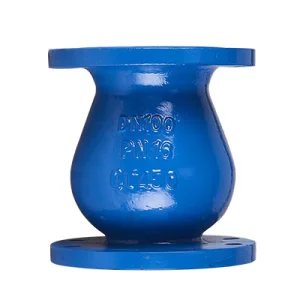
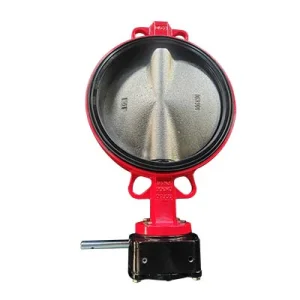
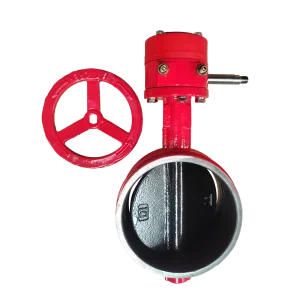
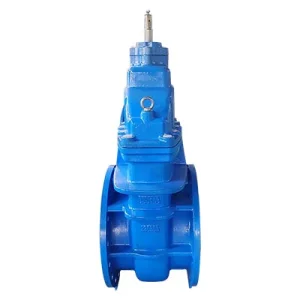
Executive White Paper: The Next-Generation Architecture of No Return Valves
Evaluating fluid mechanics, elastomeric versus metallic seat integrity, dynamic surge mitigation, and supply chain resilience for enterprise-scale engineering procurements.
Hydraulic Surge Mitigation
Sudden pump stoppage causes rapid fluid deceleration, precipitating destructive pressure waves known as Joukowsky water hammer. Our axial flow silent check and dual plate spring-assisted check valves execute zero-velocity closure prior to reverse flow propagation.
- Eliminates acoustic reverberation and pipe fatigue
- Dynamic response threshold below 0.08 seconds
- Minimizes peak system overpressure by up to 68%
Hydrodynamic Profile Optimization
Energy expenditure across utility transmission lines correlates directly with valve flow coefficients (Cv/Kv values). Through Computational Fluid Dynamics (CFD), disc profiles and internal body venturis are sculpted to limit head losses and turbulence.
- Streamlined axial body contour reduces drag coefficient
- Lower net lifecycle operating energy expenditure
- Prevents vortex shedding and cavitation pitting
Severe-Service Tribology
Industrial media demand specialized seat contact pairs. From high-grade EPDM/NBR elastomers vulcanized to cast bodies, to Stellite hardfaced metal seats, our check valves resist abrasive slurries, brackish seawater, and hydrocarbon shear forces.
- Zero-leakage resilience compliant with API 598 & ISO 5208
- Dual plate torsion springs in Inconel X-750 for corrosion life
- Full vulcanization inhibits liner peel and crevice attack
Global Enterprise Procurement Dynamics: Shifting from CapEx to Total Cost of Ownership
Why leading International Engineering, Procurement, and Construction (EPC) consortiums align their tier-1 supply matrix with Chinese manufacturing hubs.
Total Cost of Ownership (TCO)
Initial valve purchase price reflects less than 15% of complete operational lifecycle cost. Modern procurement teams prioritize maintenance intervals, seal longevity, and uninterrupted mean time between failures (MTBF).
- Standardized modular components reduce replacement stock
- Quick seat replacement without dismantling line structures
- Elimination of check valve slam stops pipeline rupture risks
Material Traceability & MTRs
Non-destructive examination (NDE) and strict 3.1 Mill Test Certification according to EN 10204 guarantee chemical composition and tensile strength. Spectral alloy verification stops grey-market casting compromises.
- Rigorous spectrometer alloy verification per pour charge
- Ultrasonic, dye-penetrant, and magnetic particle screening
- Full traceability from heat number to pressure test bench
Lead Time Agility & Scalability
Global supply disruptions necessitate high-throughput foundries capable of delivering large nominal diameters (up to DN2000) on compressed turnaround cycles without compromising manufacturing precision.
- Direct maritime consolidation out of Tianjin Port
- In-house pattern tooling and CNC machining clusters
- Parallel production lines for project-critical milestone delivery
China Industry 4.0: Supply Chain Resilience & Modern Foundry Prowess
Inside Tianjin Zhongfa Valve Co., Ltd. (ZFA Valve): Transforming conventional valve casting into a digitalized, high-precision engineering discipline.
Automated Sand Reclamation
Disamatic automatic green sand moulding plants guarantee ductile iron (GGG40/GGG50) casting density, zero sand inclusions, and superior surface aesthetics exceeding ISO 8062 Grade CT7.
CNC Multi-Axis Milling
Flange faces, hinge pin bores, and disc seating faces undergo single-clamping CNC processing, preserving micron-level geometric tolerances and concentric alignment.
Automated Hydro Testing
Every single valve undergoes digital hydrostatic shell and seat leak detection according to API 598 and EN 12266-1. Pressure holds and leak rates are captured via automated telemetry.
Electrostatic Fusion Epoxy
Fluidized bed and electrostatic spray booths apply non-porous WRAS-approved epoxy coatings (≥250 microns), providing resistance against dielectric soil corrosion and aggressive wastewater.
No Return Valve Kinematic Profiles & Application Suitability
Comprehensive comparative assessment of check valve variants across operating parameters, surge susceptibility, and mechanical attributes.
| Valve Topology | Dynamic Response (Closure) | Head Loss Coefficient (ΔP) | Water Hammer Vulnerability | Installation Vector | Ideal Application Domain |
|---|---|---|---|---|---|
| Dual Plate Wafer Check | Fast (Spring-Assisted <0.12s) | Moderate (Compact cross-section) | Extremely Low | Horizontal / Vertical Upward | HVAC, Compact Skids, Clean Water Lines |
| Axial Flow Silent Check | Ultra-Fast (Center-Guided <0.05s) | Low to Moderate (Streamlined Venturi) | Zero Slam Mitigation | Omnidirectional | High-Lift Booster Pumps, Municipal Mains |
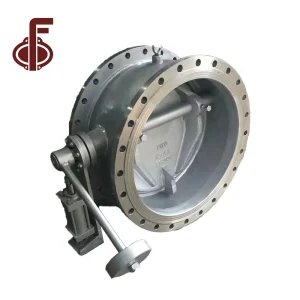
| Butterfly Check with Heavy Hammer | Controllable (Hydraulic Damper) | Very Low (Full disc clearance) | Tunable Alleviation | Horizontal Primary | Pumping Stations, Raw Water Intakes |
| Swing Check (Resilient Seat) | Slow (Gravity / Flow Dependent) | Lowest (Full waterway opening) | High if reverse velocity spikes | Horizontal Only | Wastewater, Gravity Sewers, Slurry Run |
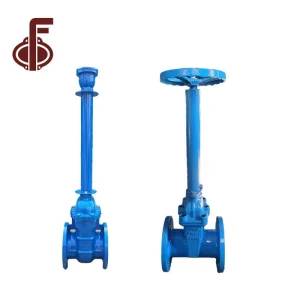
| Non-Rising Stem Gate (Isolation Pair) | Manual / Actuated Turn | Absolute Minimum (Full Port) | Not Applicable (Zero dynamic return) | Horizontal / Vertical | Underground Potable Isolation & Fire Line |
Global Industrial Infrastructure & Localized Operating Paradigms
Meeting exacting engineering conditions across international markets: municipal, thermal, marine, and process engineering scenarios.
Municipal Water Treatment & Mega Desalination
Desalination facilities operating on Reverse Osmosis (SWRO) encounter severe chloride concentrations and aggressive transmembrane pressure spikes. Non-return valves fabricated with high-purity Nickel Aluminum Bronze (NAB) or Duplex Stainless Steel (2205/2507) prevent pump impellers from reverse overspin during high-pressure tripping.
Standards: AWWA C504, AWWA C508, BS EN 1074-3.
District Cooling & High-Rise Building HVAC
Towering skyscraper chiller loops present massive static hydraulic head pressures. Here, compact dual plate wafer check valves and axial silent non-return valves are positioned in multi-pump header configurations to arrest fluid inertia quietly, eliminating building structure vibrations and tenant acoustic complaints.
Standards: ASME B16.34, EN 12334, DIN 3202-K3.
Thermal Power Generation & Petrochemical Utilities
Steam condensate return, boiler feed pump discharge, and cooling tower circulating circuits experience thermal cycling from ambient to +220°C. Fabricated WCB or CF8M cast check valves engineered with PTFE/Graphite or Stellite 6 trim provide thermal resilience without galling or seat extrusion.
Standards: API 594, API 6D, ISO 14313, BS 1868.
Frequently Asked Engineering & Procurement Questions (FAQ)
In-depth responses from our senior fluid application engineers regarding check valve design, selection metrics, and export quality controls.
Traditional swing check valves rely on gravity or fluid deceleration to pull a hinged disc back to its seat. In pump trip conditions, reverse flow velocity accelerates rapidly before the disc travels through its full 80-to-90-degree swing arc, causing the disc to slam violently into the seat ring. Conversely, axial flow silent check valves feature a spring-assisted, center-guided poppet moving horizontally over a short stroke (typically only 15% to 20% of pipe diameter). Because the spring begins closing the poppet the instant forward velocity diminishes, the valve seals at absolute zero flow velocity, completely eliminating water hammer and pressure waves.
We employ strict melt-charge spectrometer assays prior to tapping, analyzing magnesium inoculation levels for ductile iron (QT450 / GGG50) to verify nodularity >85%. For stainless alloys (CF8, CF8M, CF3M), we evaluate chromium-nickel equivalents to avoid brittle delta ferrite formation. Castings undergo real-time radiographic examination (RT) or ultrasonic testing (UT) on high-stress sections, followed by 100% digital hydrostatic shell testing to 1.5 times the rated cold working pressure (CWP) according to API 598 and EN 12266-1 standards.
For municipal drinking water, raw wastewater, and HVAC systems (-20°C to +120°C), EPDM (Ethylene Propylene Diene Monomer) with WRAS/NSF-61 certification is ideal due to superior ozone and chloramine resistance. For hydrocarbon services, petroleum fluids, hydraulic oils, and compressed air containing lubricants (-10°C to +82°C), NBR (Nitrile/Buna-N) provides excellent resistance against swelling. For aggressive industrial acids, organic solvents, or operating temperatures climbing to +180°C, virgin or filled PTFE (Polytetrafluoroethylene) or fluorocarbon elastomers (Viton/FKM) are specified. For superheated steam lines or abrasive slurries, Stellite 6 metal-to-metal seating is mandatory.
On large pumping mains (DN300 to DN2000), pump shutdown induces high inertia backflow. A butterfly check valve equipped with an external lever, heavy hammer counterweight, and two-stage hydraulic damping cylinder controls the closing speed profile. The counterweight assists rapid closure for the first 80% to 85% of travel to minimize backflow volume, while the hydraulic dashpot dampens the final 15% of disc travel to prevent mechanical shock and seat impact destruction. This dual-speed action allows field technicians to calibrate closure curves exactly to the hydraulic wave period (2L/a) of the specific pipeline.
Standard dual plate check valves are engineered for horizontal lines (with the central hinge pin oriented vertically) and vertical lines with fluid flowing upwards. Vertical flow-downward installations are strictly discouraged and usually unfeasible because static fluid gravity opposes spring closure, causing the plates to hang open or vibrate erratically, resulting in excessive seat leakage, accelerated hinge wear, and violent water hammer when the column separates.
Every export dispatch from our Tianjin plant is accompanied by a comprehensive documentation dossier including EN 10204 Type 3.1 material test certificates, hydro-pressure testing logs, coating thickness holiday inspection reports, CE conformity declarations, and Certificate of Origin (CO). Valves are chemically cleaned, dried, fitted with flanged end protectors, sealed in moisture-barrier PE shrink film, and secured in fumigated solid plywood cases compliant with ISPM 15 standards for ocean freight integrity.
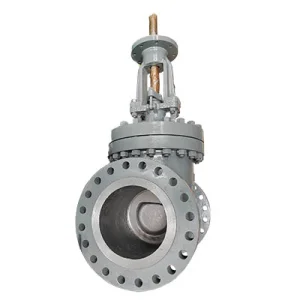
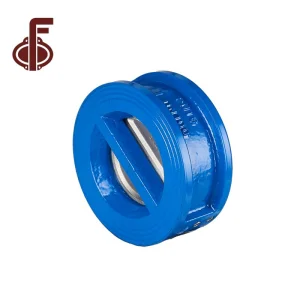
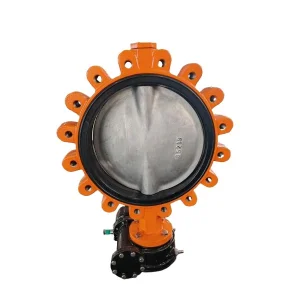
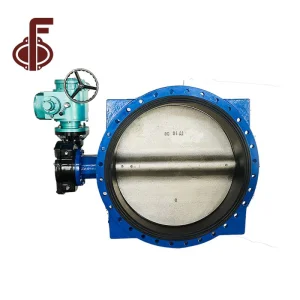
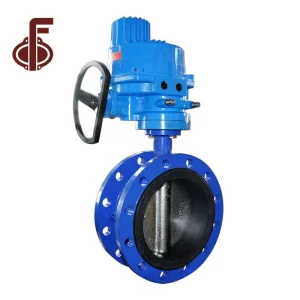
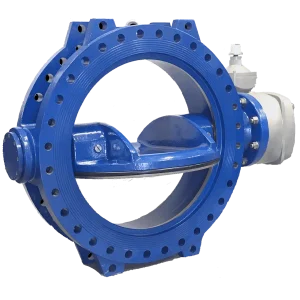
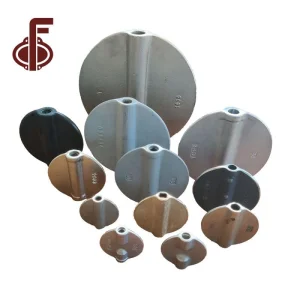
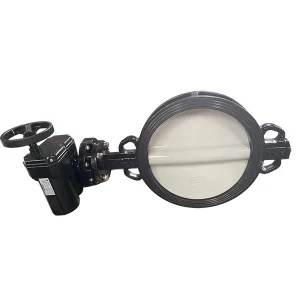
Large-Bore Check, Gate & Actuated Control Assemblies
Engineered for industrial isolation, backflow prevention, and remote automated loop integration across modern global infrastructures.
Engineering Procurement Consultation & Specification Support
Specifying check and non-return valves without comprehensive hydraulic transient calculations can precipitate severe system downtime, pipe bursts, or early impeller damage. Our factory application engineering team provides complete support for engineering firms and EPC contractors worldwide:
- Fluid Dynamics & Valve Sizing: Calculation of dynamic cracking pressure, Cv values, and seat closure dynamics mapped against maximum anticipated reverse velocity.
- Custom Metallurgy & Trim Alloys: Casting solutions in Ductile Iron GGG50, Carbon Steel WCB/LCC, Austenitic Stainless Steel (CF8/CF8M), Super Duplex (2507), and Aluminum Bronze (C95800) for marine salinity.
- Documentation Packs for Global Tenders: Complete GA drawings, 3D STEP models, calculation sheets, pressure drop curves, and EN 10204 3.1 inspection certification furnished on demand.
