
High-Integrity Valve Solutions: Phase I
Explore our baseline precision-engineered industrial valve catalog, engineered directly in our Tianjin manufacturing facilities with full material traceability.
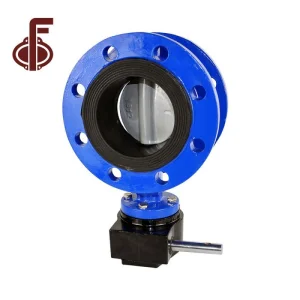
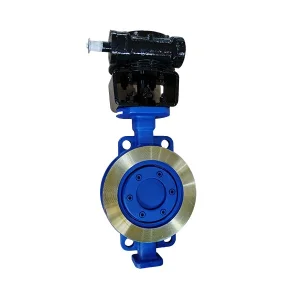
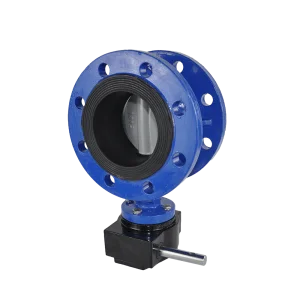
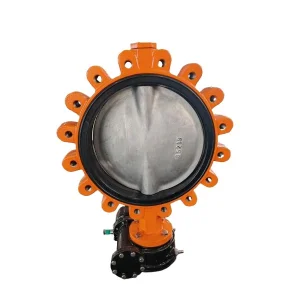
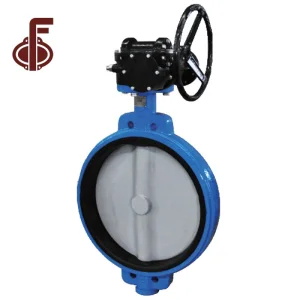
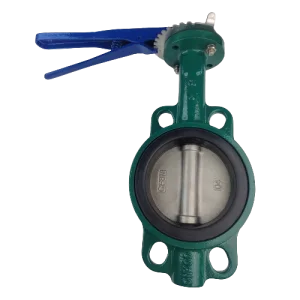
The Engineering Evolution of PTFE Seated Butterfly Valves
A rigorous examination of fluoropolymer barrier engineering, polymer cold flow kinetics, and resilient energized sealing matrices in harsh industrial service.
Virgin vs Modified TFM PTFE
Standard virgin Polytetrafluoroethylene (PTFE) exhibits near-universal chemical inertness across pH 0-14. However, in continuous high-cycling or high-differential pressure duty, virgin PTFE can experience cold flow (plastic deformation). At our Tianjin foundry and machining facility, we utilize modified PTFE (TFM™ / RPTFE) compound liners with engineered glass or carbon reinforcements to drastically reduce creep deformation under constant mechanical load, extending operational shutoff life by over 300%.
Resilient Elastomer Backing
Unlike monolithic plastic valves, our PTFE-seated concentric and offset butterfly valves feature an energizing elastomeric backing ring (typically high-tensile EPDM, Silicone, or Viton). The outer elastomer serves as a dynamic continuous spring, absorbing mechanical line shocks, thermal dimensional shifts, and cycling fatigue, while the pure PTFE wetted contact envelope isolates the toxic, corrosive, or ultra-pure media entirely from the metallic valve body.
Fugitive Emission Mitigation
Modern international safety directives such as ISO 15848-1, TA-Luft, and Clean Air Act updates require stem seals to prevent hazardous volatile organic chemical (VOC) leakage. Our China-manufactured PTFE-seated series incorporates live-loaded Belleville spring washers and dual primary/secondary dynamic V-ring PTFE shaft packings, preserving zero external leakage even during extreme thermal swings from -29°C up to +180°C.
"In critical chlor-alkali, semiconductor slurry, and wet sulfuric acid applications, a pinhole perforation or cold-flow deformation of a butterfly valve seat causes unscheduled unit trips costing upwards of $100,000 per hour. Precision compression-molded PTFE liners with vulcanized resilient backings deliver the definitive economic optimum between initial capex and operational longevity."
Macroeconomic Procurement Demands & Technical Supply Trends
How international EPC firms, water utilities, and multinational chemical producers balance risk, compliance, and Total Cost of Ownership (TCO).
Shifting Procurement Patterns in Heavy Process Industries
Over the past decade, international procurement teams have moved decisively away from low-spec, commodity butterfly valves toward application-specific, certified assemblies. End users in North America, Western Europe, and the Middle East are experiencing heightened regulatory oversight regarding PFAS lifecycle safety, toxic discharge limits, and energy efficiency in automated piping loops.
Consequently, procurement managers require manufacturers who can provide comprehensive MTRs (Mill Test Reports to EN 10204 3.1), PED/CE certifications, and strict dimensional conformance to ASME B16.34, API 609, and EN 593. A failure in valve sealing integrity cannot simply be solved by swapping components; it halts massive processing trains. China's leading valve factories, led by Tianjin Zhongfa Valve Co., Ltd., have upgraded from mere casting foundries to integrated engineering research and smart manufacturing powerhouses capable of fulfilling turnkey technical dossiers for global tenders.
Lifecycle Total Cost of Ownership (TCO) Metrics
While the purchase price of a standard EPDM-seated valve may appear 20-30% lower than a PTFE-lined equivalent on paper, the true cost equation reverses dramatically in corrosive or aggressive media:
- Reduced Actuator Sizing: Low-friction PTFE seat interfaces yield reduced breakaway and seating torques, allowing project engineers to select smaller pneumatic actuators and electric gearboxes.
- Extended Service Intervals: Elimination of elastomeric swell, hardening, and ozone deterioration pushes typical maintenance intervals from 18 months to over 60 months.
- Line Contamination Protection: In food processing, pharmaceutical batching, and high-purity microelectronics, PTFE's chemical inertia prevents process medium contamination and downstream micro-particulate shedding.
| Evaluation Parameter | EPDM Rubber Seat | NBR Nitrile Seat | Virgin / Modified PTFE Seat | Metal-to-Metal Seat (Offset) |
|---|---|---|---|---|
| Operating Temp Range | -20°C to +120°C | -10°C to +82°C | -29°C to +180°C (up to 200°C TFM) | -50°C to +450°C+ |
| Acid & Alkali Resistance | Fair (Dilute only) | Poor to Moderate | Exceptional (pH 0-14) | Material dependent (Hastelloy/SS) |
| Hydrocarbon / Solvent Resistance | Unsuitable (Swelling) | Good (Oils & Fuels) | Near Universal Immunity | Excellent |
| Dynamic Friction Coefficient | High (0.5 – 0.8) | High (0.6 – 0.9) | Ultra-Low (0.05 – 0.10) | Moderate (Lubricated) |
| Torque Drift Over Cycle Life | Moderate to High | Moderate | Minimal Steady Torque | Low (Precision Ground) |
| Relative Sourcing Cost Index | Baseline (1.0x) | 1.05x – 1.15x | 1.35x – 1.60x | 3.0x – 5.5x |
China Factory 4.0: Supply Chain Resilience & Quality Systems
Tianjin Zhongfa Valve Co., Ltd. (ZFA Valve) leverages automated casting, CNC machining cells, and 100% digital leak detection to deliver zero-defect international shipments.
Modern Automated Foundry
Our raw ductile iron (QT450-10, GGG40/50), WCB carbon steel, and stainless steel (CF8, CF8M, CF3M) valve bodies undergo strict spectroscopic chemical verification before pouring. High-precision resin-sand mold automation ensures casting density, uniform wall thicknesses conforming to ASME B16.34, and structural freedom from internal porosities or micro-cracks.
5-Axis CNC Precision Finishing
The seat-retaining bore, disc sealing perimeter, and stem passages are machined on high-speed CNC machining centers in a single clamped setup. This eliminates cumulative geometric runout error, ensuring that when the PTFE liner is hydraulically seated or molded into place, the seal compression profile is concentric within ±0.02 mm for uniform operational torque.
100% Dual-Stage Pressure Testing
Every single valve undergoes shell hydrostatic testing at 1.5× PN and low/high-pressure bi-directional seat leakage testing at 1.1× PN according to API 598 and EN 12266-1. For gas and volatile fluid configurations, nitrogen or helium pneumatic bubble leak tests are performed in submerged immersion tanks to confirm strict Zero Bubble / Rate A tight shutoff.
Total Component Traceability
From metallurgical ladle charge numbers to final electrostatic epoxy coating thickness gauges, every production batch is logged in our internal ERP system. Valve bodies feature cast or laser-engraved QR tracking plates providing instant access to heat treatment certificates, hydro test recordings, and QA sign-offs for seamless field audits.
Localized Engineering Applications & Critical Case Studies
Real-world integration parameters across petrochemical, desalination, bio-pharmaceutical, and metallurgy sectors.
Chlor-Alkali & Chemical Processing
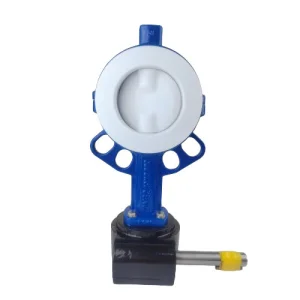
In chlorine cell rooms, hydrochloric acid lines, and caustic wash towers, standard elastomeric rubber linings disintegrate within weeks due to severe chemical attack. ZFA fully PTFE-lined split-body wafer butterfly valves isolate all metallic components from wet chlorine and aggressive brine. The self-lubricating PTFE seat prevents chemical scaling adhesions, maintaining bubble-tight isolation across 50,000+ continuous cycles.
Semiconductor Ultrapure Water (UPW)
Wafer fabrication plants demand zero micro-particulate shedding, zero Total Organic Carbon (TOC) leaching, and non-extractable valve materials in their 18.2 MΩ·cm deionized water distribution networks. Our cleanroom-assembled, ultrasound-degreased PTFE butterfly valves deliver pristine media purity without lubricating greases or plasticizer outgassing, ensuring absolute process yields.
Seawater Reverse Osmosis (SWRO)
High chloride concentrations and extreme differential pressures induce catastrophic pitting corrosion in conventional cast irons and austenitic stainless steels. By combining ductile iron epoxy-coated bodies with full-contact PTFE seats and Hastelloy C-276 or Duplex 2205 discs, ZFA delivers cost-effective, long-lasting brine reject and intake isolation solutions for global desalination facilities.
Flue Gas Desulfurization (FGD)
Power generation FGD scrubbers circulate abrasive gypsum limestone slurries saturated with sulfurous acid. Standard soft seats suffer premature erosion, while metal-seated valves lock up. ZFA's heavy-wall, compression-molded PTFE liners absorb slurry impingement, while the aerodynamic spherical disc contour reduces dynamic drag and turbulence wear.
Biotech & Food Grade Processing
Hygienic batch processing demands FDA 21 CFR 177.1550 compliance and steam-in-place (SIP) / clean-in-place (CIP) tolerance. Our PTFE-seated butterfly valves with mirror-polished CF8M discs (Ra < 0.4 µm) eliminate dead zones where bacterial colonies or residue could accumulate, withstanding recurring 134°C sterilization steam purges without seat deformation.
Lithium Battery Slurry Production
Cathode and anode slurry transfer pipelines involve organic solvents like N-Methyl-2-pyrrolidone (NMP) paired with highly abrasive metallic lithium, nickel, and cobalt particles. The chemical inertness of modified PTFE, coupled with reinforced carbon-matrix sealing lips, prevents swelling and mechanical scouring, ensuring safe handling in modern battery gigafactories.
Frequently Asked Questions (FAQ) for Valve Engineers & Buyers
Comprehensive engineering clarifications addressing design, actuation, standards, and field maintenance.
What is the difference between concentric split-body and high-performance eccentric PTFE butterfly valves?
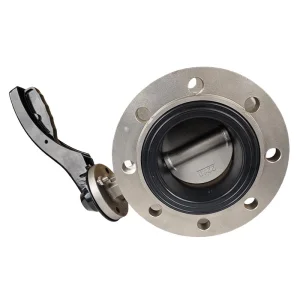
Concentric PTFE butterfly valves have the stem positioned directly along the center axis of the disc and seat bore. In lined split-body concentric models, the entire wetted body and disc surface are enveloped in PTFE, making them the premier choice for zero-metallic-contact corrosive fluid lines up to PN16/Class 150. In double-eccentric high-performance butterfly valves, the shaft is offset both from the seat center and the valve bore centerline. This causes the disc to lift immediately off the PTFE seat upon opening, virtually eliminating rotational rubbing wear and enabling duty up to Class 300 / Class 600 pressure envelopes.
How does ZFA solve the phenomenon of PTFE "cold flow" or creeping under compressive load?
Pure PTFE has a tendency to deform slowly over time when placed under continuous static mechanical pressure (known as cold flow or creep). ZFA mitigates this through three distinct engineering techniques: First, by utilizing modified PTFE (TFM1600 / RPTFE) with tighter molecular cross-linking; second, by housing the seat in a precision-cast contour groove within a split body, mechanically constraining the polymer from migrating; and third, by incorporating a high-elasticity vulcanized EPDM or Silicone energizing cushion underneath the seat that maintains constant, controlled sealing load regardless of polymer thermal expansion or minor creep.
Can PTFE-seated butterfly valves be deployed for vacuum and slurries?
Yes, provided the proper configuration is selected. For vacuum service (such as evaporator bottoms or vacuum distillation), loose replaceable slip-in liners can collapse inward toward the pipe center. In such cases, ZFA recommends our fully molded or bonded PTFE/PFA designs, where the fluoropolymer is chemically anchored to the ductile iron or cast steel body, guaranteeing full vacuum resistance down to 0.01 mbar absolute. For abrasive slurries, we recommend TFM or carbon-reinforced PTFE seats combined with polished ceramic or Stellite-overlay discs to resist both chemical corrosion and mechanical abrasion.
What testing and quality documentation is supplied with each China factory export order?
Every commercial consignment exported from Tianjin Zhongfa Valve Co., Ltd. is accompanied by a standardized Quality Assurance Pack. This dossier includes EN 10204 3.1 Material Test Reports for the valve body, disc, and stem; Spectrographic Chemical Analysis; Mechanical Tensile & Impact Test Certificates; 100% Hydrostatic and Pneumatic Leak Test Reports conforming to API 598 or EN 12266-1; Coating Dry Film Thickness (DFT) verification; and CE / ISO 9001 Compliance Declarations. For critical sour or pharmaceutical service, third-party inspection reports (SGS, TÜV, BV, Lloyd's) can be arranged prior to container dispatch.
What ISO mounting patterns are used for electric or pneumatic actuator automation?
All ZFA butterfly valves are built with standardized top flanges conforming directly to ISO 5211 (from F05 up to F30 depending on nominal diameter and torque class). Stem drives are available with standard double-D, square, or keyway machining to seamlessly mount pneumatic scotch-yoke or rack-and-pinion actuators, electric multi-turn/quarter-turn actuators (including Honeywell, Rotork, Auma, and Siemens protocols), or manual worm gearboxes without requiring costly custom bracket adaptations.
High-Integrity Valve Solutions: Phase II
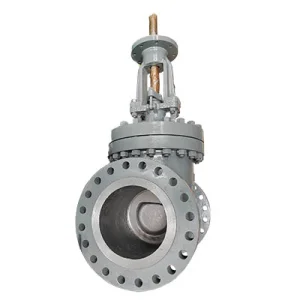
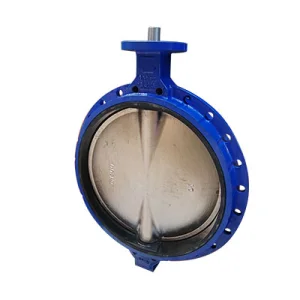
Explore our heavy-duty industrial valves, split-body fluoropolymer lined configurations, large-bore isolation, and non-return check valves.
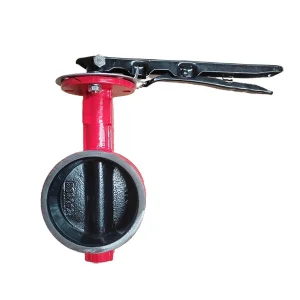
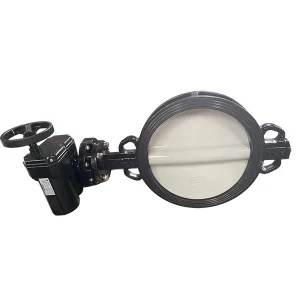
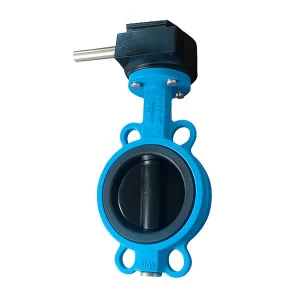
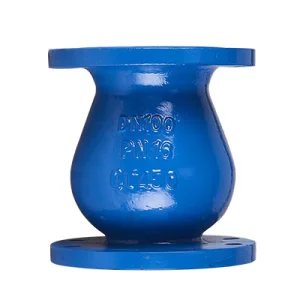
Standard Engineering Specifications for Project Procurement
Reference technical parameters for engineering bid packages, EPC datasheets, and OEM client white-label specifications.
| Design & Quality Attribute | Concentric PTFE Lined Butterfly Valve | High Performance Double Offset (PTFE Seat) | Triple Offset Metal / PTFE Composite Seat |
|---|---|---|---|
| Nominal Size Range | DN40 – DN1200 (1.5" to 48") | DN50 – DN1600 (2" to 64") | DN80 – DN2400 (3" to 96") |
| Pressure Rating Classes | PN10 / PN16 / Class 150 | PN16 / PN25 / PN40 / Class 150 & 300 | PN10 – PN100 / Class 150, 300, 600 |
| Body Geometries | Wafer, Lugged, Flanged (Split / 2-Piece) | Wafer, Lugged, Double Flanged | Double Flanged, Butt Weld, Lugged |
| Design Standards | API 609 Cat. A, EN 593, ISO 10631 | API 609 Cat. B, ASME B16.34, EN 593 | API 609 Cat. B, ASME B16.34, ISO 5752 |
| Face-to-Face Standards | ISO 5752 Series 20, API 609, DIN 3202 | ISO 5752 Series 16/20, ASME B16.10 | ISO 5752 Series 13/14, API 609 Short/Long |
| Flange Compatibility | ASME B16.5, EN 1092-1, JIS B2220, AS 2129 | ASME B16.5, EN 1092-1, BS 4504 | ASME B16.5 / B16.47, EN 1092-1 |
| Body Base Castings | Ductile Iron (GGG40/50), WCB, CF8, CF8M | WCB, LCC, CF8M, CF3M, Duplex 2205 | WCB, CF8M, Hastelloy C, Inconel 625 |
| Disc Materials | PFA/PTFE Encapsulated SS, CF8M, Hastelloy | CF8M, CF3M, Duplex SS, Monel | CF8M + Stellite, 316SS Nitrided, Alloy 20 |
| Seat Materials | Virgin PTFE, Modified TFM1600, RPTFE | PTFE + 15% Glass Fiber, RPTFE, PEEK | Laminated 316SS + Graphite / Solid Stellite |
| Pressure Leakage Class | API 598 Rate A, ISO 5208 Rate A (Zero Bubble) | API 598 / ANSI FCI 70-2 Class VI | API 598 Rate A (Zero Visible Leakage) |
