
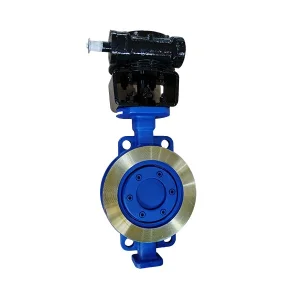
Triple Offset · WCB
Explore Technical Specs
Engineered to international specifications (ASTM, ANSI, ISO, BS, DIN, GOST, JIS, KS) for critical applications in process plants, chemical treatment, and utility pipelines.
A comprehensive examination of industrial manufacturing capabilities, investment casting modernization, and global trade economics driving stainless steel flow equipment.
China's valve industrial ecosystem, spearheaded by advanced clusters in Tianjin, Jiangsu, and Zhejiang, offers integrated vertical supply networks. From precision silica sol investment casting to CNC 5-axis machining and automated cryogenic testing cells, this centralization eliminates intermediate logistical overhead. Procurement engineers secure aerospace-grade CF8M/CF3M austenitic stainless steel components with documented chemistry at competitive unit costs.
Global environmental mandates—including the EPA Clean Air Act revisions, EU Methane Regulations, and Net Zero 2050 benchmarks—demand rigorous control of fugitive emissions from industrial piping. Contemporary stainless steel ball valve factories incorporate live-loaded stem packing sets, certified to ISO 15848-1 Class AH/BH and API 641, safeguarding against VOC leaks in refining, upstream gas, and synthetic chemical processing.
International Engineering, Procurement, and Construction (EPC) consortiums operate across jurisdictional boundaries. Leading Chinese exporters eliminate cross-border friction by manufacturing multi-flange configurations complying simultaneously with ASME B16.5, EN 1092-1, JIS B2220, and GOST 33259. This agility enables plant operators in North America, Europe, the Middle East, and APAC to deploy uniform valve assets across multiple processing lines.
A technical reference guide for mechanical design engineers, specifying casting grades, temperature parameters, yield strengths, and resistance envelopes.
| Casting Grade (ASTM) | Wrought Equivalent | Microstructure / Key Alloying | Operating Temperature | Tensile / Yield (MPa) | Optimal Media Envelope |
|---|---|---|---|---|---|
| ASTM A351 CF8 | AISI 304 / 1.4308 | Austenitic (18% Cr, 8% Ni) | -196°C to +425°C | 485 / 205 | Potable water, HVAC, non-oxidizing mild organics, beverage, ethanol |
| ASTM A351 CF8M | AISI 316 / 1.4408 | Austenitic (16-18% Cr, 10-14% Ni, 2-3% Mo) | -196°C to +550°C | 485 / 205 | Chlorides, coastal marine, acetic acid, refining fuels, chemical synthesis |
| ASTM A351 CF3M | AISI 316L / 1.4404 | Extra-Low Carbon (C ≤ 0.03%, Mo 2-3%) | -269°C to +450°C | 485 / 205 | High intergranular corrosion resistance post-welding, biopharma, urea lines |
| ASTM A995 4A (CD3MN) | Duplex 2205 / 1.4462 | Ferritic-Austenitic (22% Cr, 5% Ni, 3% Mo, N) | -50°C to +280°C | 620 / 450 | Desalination brine, sour crude oil, wet H2S (NACE MR0175), brackish water |
| ASTM A494 CW-12MW | Hastelloy C-276 | Nickel-Molybdenum-Chromium-Tungsten | -196°C to +650°C | 690 / 280 | Wet chlorine gas, hypochlorite, hot sulfuric/hydrochloric acids, flue gas scrubbers |
Virgin PTFE provides universal chemical inertness across pH 0–14 with exceptional low-friction dynamics for quarter-turn actuation. Reinforced PTFE (with 15% glass fiber or 25% carbon) increases mechanical creep resistance, elevating differential pressure capacity up to ASME Class 300 ratings while retaining Class VI bubble-tight shutoff.
Polyetheretherketone (PEEK) and specialized high-molecular-weight polyamides (Devlon) serve as primary sealing barriers in high-pressure ASME Class 600 through Class 2500 ball valves. They resist explosive decompression in hydrocarbon services and tolerate sustained temperature fluctuations from -50°C up to +250°C without plastic deformation.
For abrasive catalyst slurries, coal gasification, and ultra-high temperatures exceeding +450°C where polymers disintegrate, valves feature Tungsten Carbide (TCC) or Stellite No. 6 hardfaced balls and seats. Laser-cladded and computer-lapped to micron tolerances, these trims guarantee ISO 5208 Rate A or Rate B leakage containment under extreme friction.
Field-proven stainless steel flow isolation architectures configured for extreme thermodynamic, corrosive, and mechanical operational envelopes.
Cryogenic LNG pipelines operating at -162°C to -196°C utilize extended bonnet floating and trunnion ball valves in ASTM A351 CF8M. The vapor column extension positions the live-loaded stem gland packing outside the freezing zone, preventing thermal contraction leaks while an internal cavity pressure relief mechanism vents over-pressurized boil-off gas back upstream.
Seawater reverse osmosis (SWRO) facilities expose valves to severe pitting and crevice corrosion. ZFA Valve supplies 2-piece and 3-piece ball valves cast in Duplex 2205 (A995 4A) or Super Duplex 2507 (A995 5A) with Pitting Resistance Equivalent Numbers (PREN ≥ 40), ensuring decade-long operational life under high-pressure brine rejection cycles.
Fabrication plants require chemical distribution loops devoid of metallic ion leaching and particulate entrapment. Exporters produce CF3M (316L) body assemblies with internal bore electropolishing down to Ra < 0.38 μm (15 μin), assembled inside Class 10,000 cleanrooms and verified using deionized water helium leak detectors.
In mineral tailing and hydrometallurgical leaching conduits, conventional resilient elastomeric seats scour away within weeks. Metal-seated stainless ball valves with vacuum-fused Chromium Carbide overlays maintain bi-directional shutoff under heavy solids, minimizing unplanned maintenance downtime across extraction skids.
Tianjin Zhongfa Valve Co., Ltd. (ZFA Valve) implements transparent quality governance aligned with European, American, and Middle Eastern EPC project charters.
Every casting heat charge undergoes strict optical emission spectrometry (OES) analysis prior to shakeout. Handheld XRF analyzers perform 100% PMI testing on bodies, bonnets, balls, and stems upon machining to ensure compliance with ASTM composition limits. Radiographic (RT), Ultrasonic (UT), and Dye Penetrant (PT) inspections verify structural integrity per ASME B16.34 criteria.
Transparency is foundational for international procurement. Every dispatched consignment includes authenticated Mill Test Certificates (MTC) conforming to EN 10204 Type 3.1, encompassing physical tensile tests, Charpy V-notch impact values, hardness surveys (HRC ≤ 22 for NACE MR0175 sour service compliance), and pressure test charts. Third-party inspections (DNV, Lloyd's, BV, SGS) for Type 3.2 are routinely coordinated.
Zero-tolerance testing protocols dictate that every individual valve undergoes hydrostatic shell testing at 1.5 times the cold working pressure (CWP), high-pressure hydrostatic seat testing at 1.1 times CWP, and low-pressure pneumatic seat testing at 6 bar (80–100 psig). Bubble-tight isolation (Rate A) is recorded and archived within our quality records management system.
The progression of flow architecture from purely mechanical hardware to intelligent, digitized, and zero-emission industrial control nodes.
Modernized ball valve assemblies feature ISO 5211 direct-mount automation pads paired with intelligent electric and electro-pneumatic actuators. Embedded sensor arrays log operating breakway torque profiles, stroke speeds, thermal shifts, and cycle counts in real time. Anomalies in torque curves alert predictive maintenance engines to seat wear or scale buildup before line leakage occurs.
By leveraging advanced Computational Fluid Dynamics (CFD) and FEA structural stress modeling, engineers re-contour internal ball orifices and flow transitions. This increases the valve flow coefficient (Cv/Kv) by up to 18%, significantly lowering pump discharge head requirements, suppressing cavitation noise, and reducing systemic energy consumption across chemical distribution loops.
Direct Metal Laser Sintering (DMLS) 3D printing is emerging for custom flow-modulating ball cores, such as characterized V-notch and micro-slotted balls in Titanium Grade 5 and Inconel 718. This allows fine linear throttling within a quarter-turn ball footprint, eliminating the need for oversized globe control valves in space-constrained offshore skids.
In-depth answers addressing standards compliance, metallurgical verification, minimum order terms, and automation integration.
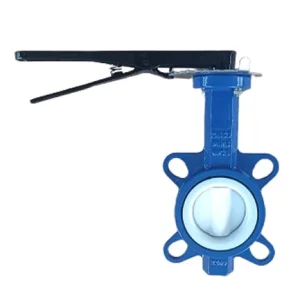
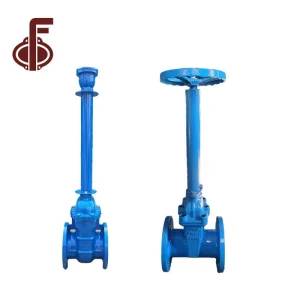
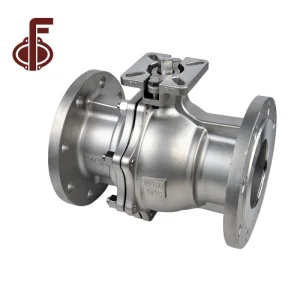
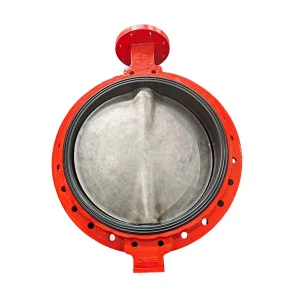
Complete your pipeline bill of materials with heavy-duty gate valves, flanged ball valves, pipeline strainers, and resilient butterfly valves from Tianjin Zhongfa Valve.
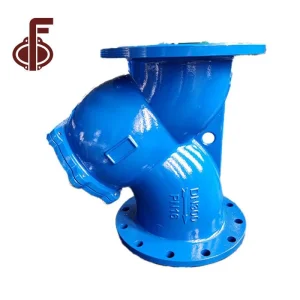
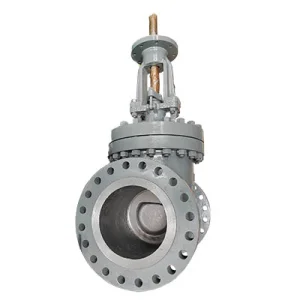
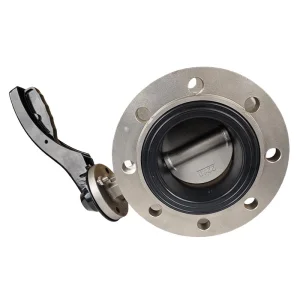
Connect directly with our valve engineering and technical sizing department in Tianjin, China. Submit your fluid medium parameters, nominal pressure, operating temperature, and end connection standard for a complete CAD drawing pack and formal quotation within 24 hours.
Includes 2D/3D CAD Dimensions, Torque Curves, and Kv Ratings
