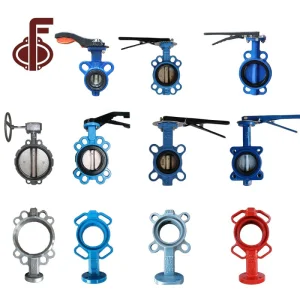
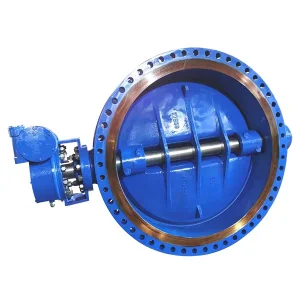
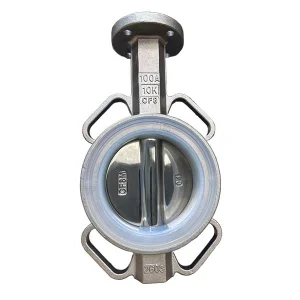
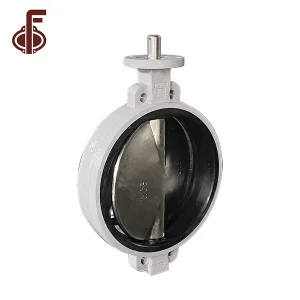
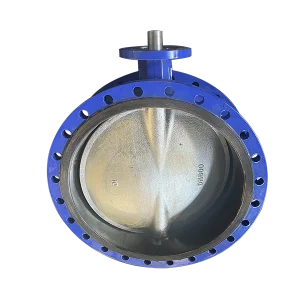
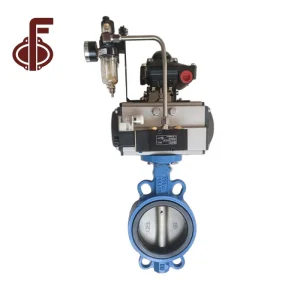
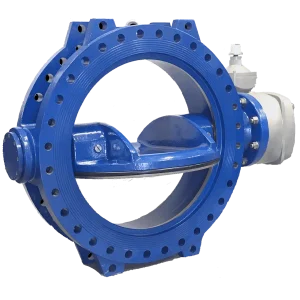
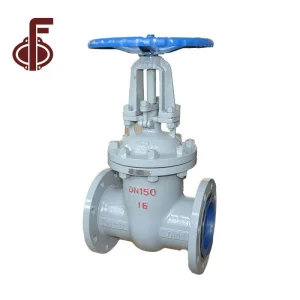
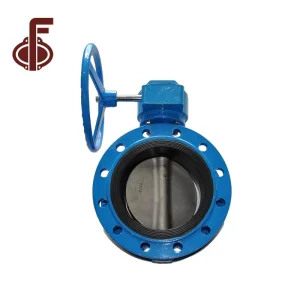
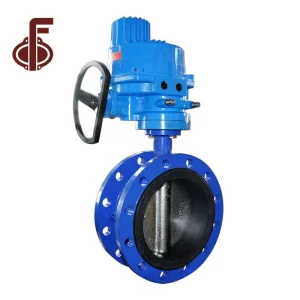
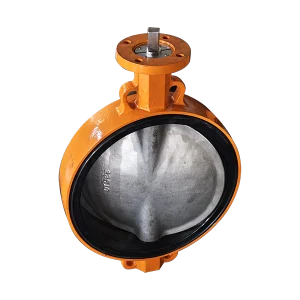
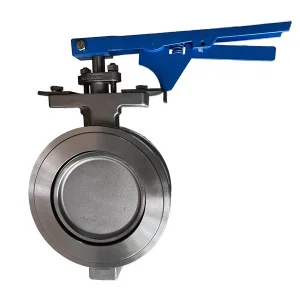
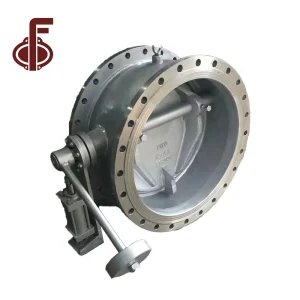
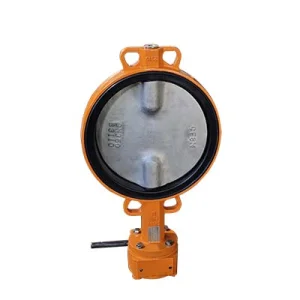
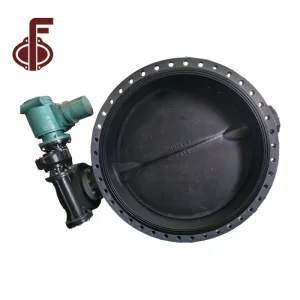
Primary Export Valve Configurations
Direct manufacturer supply for international EPC contractors, OEM valve distributors, and municipal operators.
Global Industry Evolution & Procurement Demands
How shifting engineering specifications, automation requirements, and decarbonization targets drive modern wafer butterfly valve sourcing from Chinese manufacturing hubs.
Lightweight & Compact Piping Demands
Global plant designers are transitioning away from heavy gate and globe valves toward wafer-style concentric and eccentric butterfly valves. The compact face-to-face dimensions (ISO 5752 series 20 / API 609) minimize structural pipe weight by up to 70%, drastically decreasing installation costs and pipe rack stress in offshore and modular industrial plants.
Zero Fugitive Emission Standards
Environmental compliance protocols, such as TA-Luft and ISO 15848-1, require leak-free operations. As a leading exporter, ZFA implements blow-out-proof two-shaft configurations, precision stem seals, and vulcanized EPDM/NBR or live-loaded PTFE packing glands that eliminate stem leakage in chemical and HVAC loop operations.
Actuation-Ready Direct Mount Platforms
Industry 4.0 process systems demand intelligent electric and pneumatic actuation. Modern wafer butterfly valves feature standardized ISO 5211 top flanges, enabling seamless direct coupling of multi-turn and quarter-turn actuators, smart positioners, and digital feedback sensors without bracket misalignment.
Macro Industry Application Solutions
Engineered sealing and metallurgy matched to the rigorous duty cycles of worldwide infrastructure projects.
Municipal Water & Desalination
For drinking water distribution, raw water transmission, and reverse osmosis plants. Utilizing WRAS/FDA-grade EPDM vulcanized liners and CF8M/Duplex stainless steel discs to resist chloride pitting, cavitation erosion, and biofouling while guaranteeing bubble-tight bidirectional shutoff.
HVAC & District Energy Networks
Chilled water loops, condensing water systems, and low-pressure district heating. Ductile iron wafer valves equipped with double-stem torque-reduction geometry deliver precise throttling control, low operational torque, and extended seal life over millions of cycles.
Aggressive Chemicals & Mining Slurries
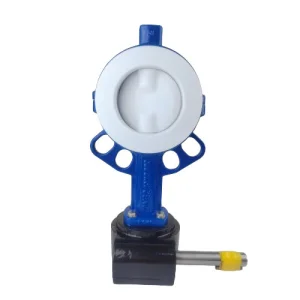
Split-body wafer valves featuring virgin PTFE/PFA complete lining isolate corrosive acids, alkalis, and crystalline slurries from touching the cast body. Fully encapsulating the disc and stem, this configuration delivers reliable service where standard stainless steels degrade.
Engineering Specification Matrix
Cross-standard dimensional alignment and seat elastomer performance guidelines for procurement engineers.
| Material / Feature | Applicable Media | Working Temp. | Applicable Pressure | Standards Conformity |
|---|---|---|---|---|
| EPDM Resilient Seat | Potable water, wastewater, HVAC chilled water, low-concentration alkalis | -20°C to +120°C | PN10 / PN16 / Class 150 | ISO 5752, API 609, BS 5155 |
| NBR (Nitrile) Seat | Mineral oils, hydraulic oils, compressed air, natural gas, oily wastewater | -10°C to +82°C | PN10 / PN16 / Class 150 | DIN EN 593, JIS B2064, KS B2813 |
| PTFE Lined Body & Disc | Sulfuric acid, hydrochloric acid, aggressive solvents, ultrapure fluids | -20°C to +180°C | PN10 / PN16 / Class 150 | ASME B16.34, EN 12266-1 |
| WCB / CF8M High-Performance | Steam lines, hydrocarbons, industrial utility lines, condensate | -29°C to +260°C | Class 150 / 300 (PN25-40) | API 609 Cat. B, ASME B16.5 |
Global Quality Compliance & OEM Support
Full traceable supply chain governance from raw iron foundry casting to final export crating.
100% Dual Testing Protocol
Every single valve undergoes pressure boundary testing in strict compliance with ISO 5208 and API 598. Shell tests at 1.5x working pressure and dual-direction seat closure tests at 1.1x rating ensure Zero Leakage (Rate A) prior to warehouse release.
Full Mill Certification & Traceability
Complete traceability is maintained through heat numbers cast directly on the valve body. Mill Test Reports (MTR) according to EN 10204 3.1 detailing spectral chemical analysis, tensile testing, and elongation metrics are supplied with each export consignment.
Turnkey OEM & Private Labeling
ZFA supports engineering brands worldwide. From bespoke body mold creation, laser-etched stainless nameplates, custom epoxy coating thicknesses (up to 300μm RAL color match) to seaworthy reinforced timber crating with moisture-proof desiccant packaging.
Technology Roadmap & Future Outlook
Pioneering intelligent flow control through advanced computational design and composite metallurgy.
Computational Fluid Dynamics (CFD)
Next-generation streamlined disc geometries designed via CFD modeling to reduce flow resistance (Cv coefficient enhancement) and prevent local cavitation, dropping pump energy consumption across municipal pumping stations.
Embedded IoT Wear Diagnostics
Development of smart actuator integration interfaces that calculate torque signature variances over operating cycles, offering maintenance supervisors predictive notifications on seat wear and impending process leakage.
High-Entropy Alloy Coatings
Integration of plasma-transferred arc (PTA) disc edgings and solid stellite overlays for high-velocity particulate lines, tripling the operational lifetime of wafer valves in abrasive and high-temperature environments.
Frequently Asked Engineering Questions
Clear, technical explanations resolving specification and procurement challenges.
What is the fundamental difference between Wafer and Lug type butterfly valves?
A wafer butterfly valve is designed to be sandwiched between two pipeline counter-flanges using long studs that pass through bolt holes on the perimeter of the valve body or span across the body entirely. This makes wafer valves exceptionally compact, lightweight, and cost-effective. However, they cannot be used for dead-end service. In contrast, lug type butterfly valves feature threaded bolt holes around their circumference, allowing either downstream or upstream piping to be removed while maintaining pressure on the opposite side.
How does ZFA verify bubble-tight sealing on concentric wafer butterfly valves?
Tianjin Zhongfa Valve tests 100% of manufactured units to API 598 and ISO 5208 standards. concentric resilient seated valves must pass hydro-testing at 1.1 times the nominal pressure with zero detectable air or liquid leakage (Rate A - no bubbles) from both flow directions. Shell testing is executed at 1.5 times nominal pressure for structural integrity.
Can ZFA wafer butterfly valves install across both ANSI 150 and DIN PN16 flanges?
Yes. ZFA manufactures multi-standard universal locating-hole wafer bodies. The locating lugs and outer dimensions are engineered to align with ASME B16.5 Class 150, EN 1092-1 PN10/PN16, and JIS 10K flanges without requiring separate castings, simplifying inventory management for stockists and contractors.
What seat materials should be specified for seawater or reverse osmosis service?
For seawater and saline applications, standard ductile iron with nickel plating or 304 stainless steel discs should be avoided due to severe crevice corrosion. We recommend our high-grade vulcanized EPDM seat paired with an Al-bronze (C95800) or Duplex Stainless Steel (2205/2507) disc to prevent corrosion and premature seal hardening.
What is the typical production and delivery cycle for customized OEM valve orders?
Standard ductile iron and stainless steel wafer butterfly valves are ready within 15–25 business days. Bespoke OEM castings, special alloy materials (Monel, Hastelloy), or custom multi-layer epoxy coatings typically ship within 30–45 days. Expedited air shipment for critical replacement parts is available within 48 hours.
Specialized Industrial Valve Solutions
Explore our heavy-duty industrial components, bare shaft assemblies, and custom-lined valve options.